

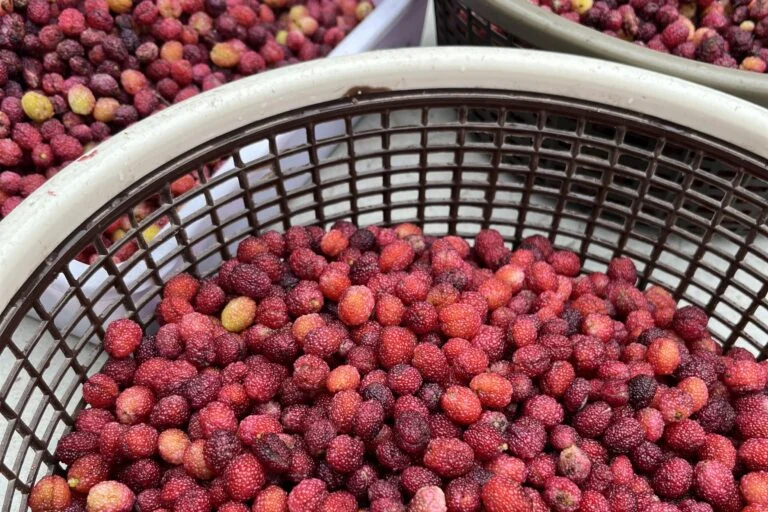
In the bustling fruit markets of Guwahati, Assam, the vibrant green of imported kiwis and the creamy textures of avocados from distant continents have become commonplace. Yet, for many locals returning to their roots, a simpler, more nostalgic treasure is increasingly difficult to find. The Leteku (Burmese grape), once a ubiquitous staple of the Assamese summer, has retreated from the mainstream stalls to the peripheral, makeshift haats—weekly village markets where small-scale farmers sell what remains of their homestead produce.
This scarcity is not merely a matter of changing consumer tastes; it represents a systemic decline in indigenous biodiversity that threatens food security, nutritional health, and the ecological resilience of India’s Northeast and Himalayan regions.
Main Facts: The Displacement of the "Underutilised"
The decline of local fruits like Leteku, Poniol (water apple/governor’s plum), and Thekera (garcinia) is part of a broader global trend known as food homogenization. While global agricultural systems focus on a handful of high-yield, commercially viable crops, thousands of indigenous species are relegated to the status of "underutilised."
According to a study published in 2023, these "underutilised" fruits are often "protective foods." They are rich in phytochemicals, essential minerals, and medicinal properties that are frequently absent from mass-produced commercial fruits. In Meghalaya, fruits like Sohthang and Sohlong are following a similar trajectory, moving from common backyard staples to rare sightings.

The crisis is characterized by three primary factors:
- Market Incompatibility: Local fruits often have uneven ripening patterns, thin skins that bruise easily, and short shelf lives, making them unsuitable for long-distance transport.
- Economic Pressure: Farmers are increasingly incentivized to convert diverse homestead gardens into monocultures of exotic crops like strawberries or kiwis, which offer more predictable financial returns.
- Knowledge Erosion: As older generations pass away, the specific names, seasonal timings, and medicinal uses of these fruits are being forgotten by the youth, leading to a collapse in demand.
Chronology: From Abundance to Endangered Status
The transition from a landscape of diverse indigenous orchards to one of commercial horticulture has occurred over several decades, accelerating with the rise of globalized supply chains.
The Era of the Homestead (Pre-1990s)
Historically, the "home garden" or bari was the primary source of nutrition for families in Northeast India. These gardens were self-sustaining ecosystems where fruit trees like the Poniol grew alongside medicinal herbs and vegetables. During this period, fruits were shared within communities rather than sold, maintaining a high level of genetic diversity.
The Shift to Market-Oriented Agriculture (1990s–2010s)
As infrastructure improved and the demand for cash crops grew, government extension programs began emphasizing "market-oriented" crops. In states like Meghalaya and Himachal Pradesh, the focus shifted toward temperate fruits that could be sold in metropolitan markets. Indigenous trees were often cleared to make way for standardized varieties of apples, pears, and later, exotic berries.

The Current Crisis (2020–Present)
Today, the decline has reached a tipping point. Dharindra Nath Hazarika, head of the horticulture department at B.N. College of Agriculture under Assam Agriculture University, notes that the lack of systematic documentation makes it difficult to measure the exact magnitude of the loss, but the anecdotal evidence from local markets is overwhelming. The "Leteku" that was once a childhood staple is now a "rare find."
Supporting Data: The Nutritional and Ecological Stakes
The disappearance of these fruits is a significant blow to public health. Research into the micronutrient content of indigenous fruits highlights their role in combating "hidden hunger"—deficiencies in essential vitamins and minerals.
Nutritional Powerhouses
- Iron Sources: Pilu (Salvadora oleoides) and Chironji (Buchanania lanzan) are noted for their high iron content, vital for combating anemia in rural populations.
- Vitamin A: Karonda (Carissa carandas), Mahua (Madhuca indica), and Khirni (Manilkara hexandra) are dense sources of Vitamin A, essential for vision and immune function.
- Antioxidants: Many Himalayan berries, such as the Hisar (Himalayan raspberry), contain high levels of anthocyanins and antioxidants that are superior to many store-bought "superfoods."
Ecological Resilience
Beyond nutrition, indigenous fruit trees are essential for environmental stability. Home gardens in Kerala and the Northeast have been found to act as significant carbon stocks, mitigating climate change. These trees are often better adapted to local pests and weather patterns than exotic varieties, requiring fewer chemical interventions.
In Africa, the baobab fruit serves as a global case study. Once ignored and left to rot, it was "discovered" as a superfood in the West, leading to a surge in demand that incentivized the conservation of the trees. However, as experts warn, this commodification must be handled ethically to ensure local communities are not priced out of their own heritage.

Official Responses and Expert Insights
Experts across the fields of agriculture, ecology, and gastronomy are sounding the alarm, though their approaches to the solution vary.
The Scientific Perspective
Dharindra Nath Hazarika is taking a grassroots approach by establishing a botanical garden on his college campus. By planting seeds and saplings of minor fruits and herbs from across Assam, he aims to create a living gene bank. "People are letting go of their homesteads and cutting down these trees without realizing their importance," Hazarika warns. He emphasizes that research must move beyond commercial staples to include these "minor" fruits.
The Agroecology Approach
Pius Ranee, Executive Director of the North East Society for Agroecology Support (NESFAS), highlights the socio-economic pressures on farmers. "Farmers are encouraged to grow non-native crops which can offer better economic returns," Ranee explains. He argues that the disappearance of these species is a loss of "ecological resilience," as indigenous crops are often the only food sources available during "lean seasons" or periods of climate-induced crop failure.
The Culinary and Cultural Lens
Chef Thomas Zacharias, founder of The Locavore, views the problem through the lens of cultural value. He argues that heavily marketed foods acquire a higher social status, causing people to look down upon local produce. "If people no longer know a fruit’s name, season, or uses, demand naturally weakens," Zacharias says. He advocates for storytelling and advocacy to bridge the knowledge gap, making local fruits "cool" again for the urban consumer.

Implications: A Future Without Genetic Diversity
The continued decline of indigenous fruits has far-reaching implications that extend beyond the dinner table.
Loss of Genetic Diversity
Every time a local variety of Thekera or Sohthang goes extinct, we lose a unique genetic blueprint. These genes may hold the key to drought resistance, pest immunity, or heat tolerance—traits that will be vital for global food security as the climate changes. Strengthening germplasm collections and gene banks is now a matter of national security.
Economic Vulnerability
While exotic fruits currently fetch high prices, they also require high inputs—pesticides, specific fertilizers, and intensive irrigation. If a new pest emerges or the market for kiwis becomes oversaturated, farmers who have cleared their diverse homesteads will have no safety net. Indigenous fruits, which require minimal maintenance, provide a vital economic cushion.
The Risk of Ethical Commodification
The "way forward" often involves value addition—turning perishable fruits into jams, jellies, and powders. Enterprises like Himalayan Haat are already doing this with Hisar (Himalayan raspberry) and Kafal (bayberry). However, Pius Ranee warns that this carries the risk of turning an everyday food into an expensive "exotic" product. "Commodification can shift control away from the local community," he notes. The challenge lies in creating markets that reward the keepers of biodiversity without alienating the local population.

Conclusion: Reclaiming the Landscape
The decline of indigenous fruits in India is a silent crisis of biodiversity. To reverse this trend, a multi-pronged approach is required:
- Documentation: Systematic mapping of existing species and their traditional uses.
- Policy Support: Government incentives for maintaining diverse home gardens rather than just large-scale monocultures.
- Consumer Awareness: Education campaigns to help urban populations understand the nutritional and cultural value of local produce.
- Sustainable Markets: Developing local value-addition chains that keep profits within the community.
The Leteku and the Poniol are more than just fruits; they are symbols of a landscape that was once rich, resilient, and deeply connected to the people who inhabited it. Bringing them back into our diets is not just an act of nostalgia—it is an essential step toward a sustainable and food-secure future.
