

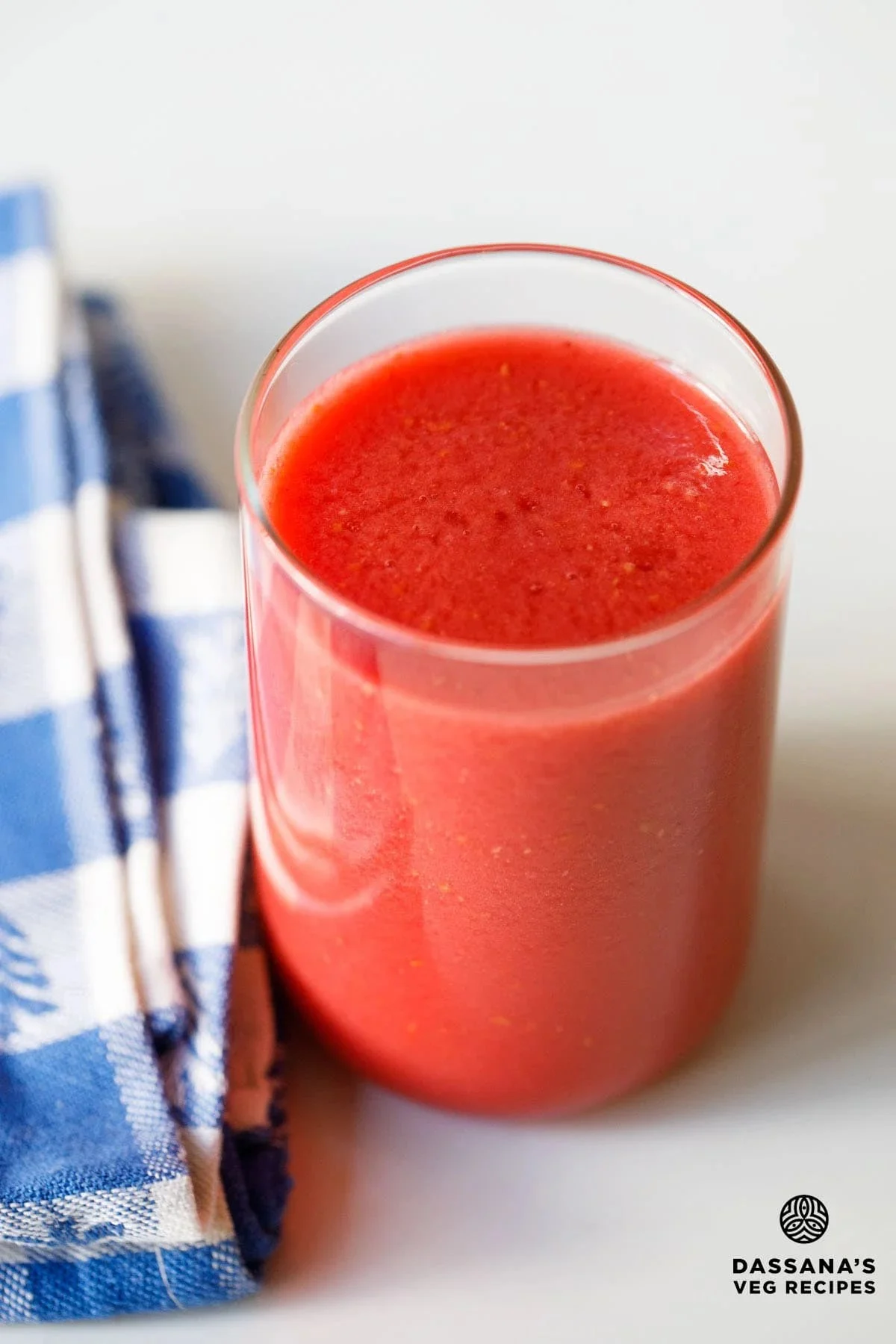
In an era increasingly dominated by ultra-processed beverages and synthetic flavorings, a significant shift toward "clean label" domestic mixology is taking place. At the heart of this movement is the humble raspberry—a fruit that has transitioned from a mere garnish to the centerpiece of a sophisticated, health-conscious beverage culture. Leading culinary experts, including renowned vegetarian chef Dassana Amit, are championing a return to basics: the three-ingredient raspberry juice.
This report examines the resurgence of homemade raspberry juice, analyzing its preparation techniques, nutritional profile, and the broader implications of the "slow beverage" movement on modern health and gastronomy.
I. Main Facts: The Anatomy of a Pure Fruit Beverage
Raspberry juice, in its purest form, is a vibrant, sweet-tart liquid extracted from the Rubus idaeus plant. Unlike commercial varieties often found in supermarket aisles—which frequently contain high-fructose corn syrup, preservatives, and artificial red dyes—the artisanal approach focuses on three core components: fresh or frozen raspberries, a controlled sweetener, and filtered water.

The Flavor Profile
The primary appeal of raspberry juice lies in its complex flavor matrix. Raspberries are naturally high in organic acids, such as citric and malic acid, which provide a sharp tartness. This is balanced by natural sugars (fructose and glucose) and volatile aromatic compounds that give the berry its signature "floral" scent. In regions like India, where raspberries may lean toward a more acidic profile, the addition of small amounts of sugar or natural sweeteners is not merely for sweetness but to act as a flavor enhancer, rounding out the sharp edges of the fruit’s acidity.
Versatility in Medium
A key fact highlighted by culinary professionals is the flexibility of the medium. While fresh berries are preferred during peak season for their delicate aroma, frozen raspberries have emerged as a superior alternative for texture-focused drinks. Because frozen berries are picked and flash-frozen at peak ripeness, they often retain a higher nutritional density than "fresh" berries that have spent days in transport. Furthermore, using frozen berries allows for a "slushy" consistency without the dilution that typically occurs when adding ice.
II. Chronology: The Evolution of the Juicing Process
The transition from a whole berry to a refined juice involves a specific sequence of steps designed to preserve the fruit’s volatile nutrients and vibrant color.

1. Preparation and Sanitization
The process begins with the careful rinsing of approximately 250 grams of berries. Because raspberries are aggregate fruits—consisting of many small "drupelets"—they are prone to trapping dust or debris. Professional guidelines suggest a gentle cold-water rinse followed by thorough draining. This stage is crucial for ensuring the juice remains "bright" and free of earthy aftertastes.
2. The Blending Phase
The berries are introduced to a high-speed blender alongside 1.5 cups of water and 4 to 5 tablespoons of sweetener. The ratio here is critical; a 1:1.5 ratio of fruit to water ensures a "medium-thick" consistency that satisfies the palate without feeling overly heavy. Blending at this stage is more than mechanical breakdown; it is the emulsion of the berry’s juice with the added water, creating a uniform suspension.
3. The Texture Refinement (The Straining Debate)
Historically, raspberry juice was often consumed "whole" to retain fiber. However, modern culinary trends have seen a split. The "rustic" approach keeps the seeds, providing a gritty, fiber-rich texture. The "artisanal" approach involves passing the mixture through a fine-mesh strainer. This removal of the seeds—which contain tannins—results in a smoother mouthfeel and a clearer, more brilliant red hue. This step is particularly recommended when the juice is being served as a pairing for light brunch meals or to demographics with sensitive palates, such as children or the elderly.

4. Final Adjustments and Service
The final stage involves "balancing." If the berries lack sufficient tartness, a half-teaspoon of lemon juice is introduced to provide the necessary "zing." The juice is then either served immediately to capture the peak enzymatic activity or chilled for up to five hours to allow the flavors to meld.
III. Supporting Data: The Nutritional Powerhouse
The move toward homemade raspberry juice is backed by compelling nutritional data. A standard serving (approximately two glasses) provides a dense array of micronutrients that are often lost in commercial pasteurization.
Macronutrient Breakdown
According to nutritional analysis, a recipe using 250g of raspberries yields approximately:

- Calories: 157 kcal
- Fiber: 8 grams (if unstrained)
- Protein: 2 grams
- Sugar: 29 grams (primarily from the added sweetener and natural fructose)
Micronutrient Density
The true value of the drink lies in its vitamin and mineral content. A single batch provides:
- Vitamin C: 33 mg (approx. 55% of the Daily Value), essential for collagen synthesis and immune function.
- Manganese: High levels of this trace mineral support bone health and metabolic regulation.
- Potassium: 189 mg, which aids in electrolyte balance and heart health.
- Antioxidants: Raspberries are rich in anthocyanins (the pigments that give them their red color) and ellagitannins, which have been studied for their anti-inflammatory and potential anti-cancer properties.
The Fiber Factor
One of the most significant data points is the 8 grams of fiber. For a beverage, this is exceptionally high. Fiber slows the absorption of sugar into the bloodstream, preventing the "insulin spike" typically associated with fruit juices. Even when strained, some soluble fiber remains, though the "whole" version is a functional food for digestive health.
IV. Official Responses: Expert Insights from the Field
Dassana Amit, a Le Cordon Bleu-trained pastry chef and vegetarian expert with over 16 years of experience, provides a professional perspective on why this specific juice has become a staple of the modern vegetarian diet.

The Importance of Technique
Amit emphasizes that "tradition and technique" must meet "honest, soulful cooking." From a professional standpoint, the decision to use 1.5 cups of water for 250g of berries is a calculated one. "Avoid adding too much water," Amit warns, "as it can dilute the fresh berry flavor." This focus on concentration over volume is what separates a gourmet juice from a standard "fruit drink."
Regional Adaptability
Amit also notes the geographical challenges of working with berries in the Indian subcontinent. Fresh raspberries in India often possess a higher acidity than their Western counterparts. Her recommendation to use sugar is not an endorsement of high-sugar diets but a culinary necessity to achieve a "balanced flavor" that enhances the natural fruitiness. For the health-conscious, she suggests that the sweetener can be substituted with alternatives like stevia or monk fruit, provided the "sweet-tart" balance is maintained.
The Role of Frozen Produce
In the professional kitchen, there is often a stigma against frozen ingredients. However, Amit clarifies that for raspberry juice, "Frozen raspberries work equally well… They create a thicker and slightly slushy drink." This validation allows home cooks to enjoy the beverage year-round, regardless of seasonal availability, without sacrificing quality.

V. Implications: The Future of Domestic Mixology
The rise of the homemade raspberry juice recipe has broader implications for the food industry, public health, and environmental sustainability.
1. The "Clean Label" Shift
As consumers become more adept at reading ingredient lists, the demand for beverages with fewer than five ingredients is skyrocketing. Raspberry juice represents the pinnacle of this "Clean Label" movement. By making juice at home, consumers eliminate exposure to sodium benzoate, potassium sorbate, and Red Dye 40—additives common in bottled berry drinks.
2. Environmental Impact
The environmental implications are significant. The production of one liter of homemade juice eliminates the need for a single-use plastic bottle and the carbon footprint associated with the refrigerated transport of heavy liquids. The "home-juicing" trend aligns with the zero-waste movement, especially if the leftover raspberry pulp from straining is repurposed into smoothies or baked goods.

3. Economic and Health Synergies
While fresh berries can be expensive, the cost-per-serving of homemade raspberry juice is often lower than high-end "cold-pressed" juices sold in retail outlets. Furthermore, the ability to control sugar content allows individuals with metabolic concerns, such as Type 2 diabetes or insulin resistance, to enjoy a fruit-based beverage by using low-glycemic sweeteners—a level of customization unavailable in mass-produced products.
4. Psychological Wellness
Beyond physical health, the act of preparing a vibrant, colorful drink like raspberry juice has psychological benefits. The "Slow Food" movement suggests that the process of rinsing, blending, and straining provides a mindful break from the digital world. The aesthetic appeal of the "vibrant red color" serves a dual purpose: it is visually stimulating and indicates a high concentration of phytonutrients, satisfying the biological urge for nutrient-dense foods.
Conclusion
The resurgence of raspberry juice is more than a fleeting summer trend; it is a manifestation of a deeper cultural desire for authenticity in our diets. By combining the rigorous techniques of professional chefs like Dassana Amit with the undeniable nutritional data of the Rubus idaeus, the domestic kitchen has become a laboratory for health and flavor. As we move forward, the simple, three-ingredient raspberry juice stands as a testament to the fact that in nutrition, as in art, sometimes the most profound results come from the simplest components.
