

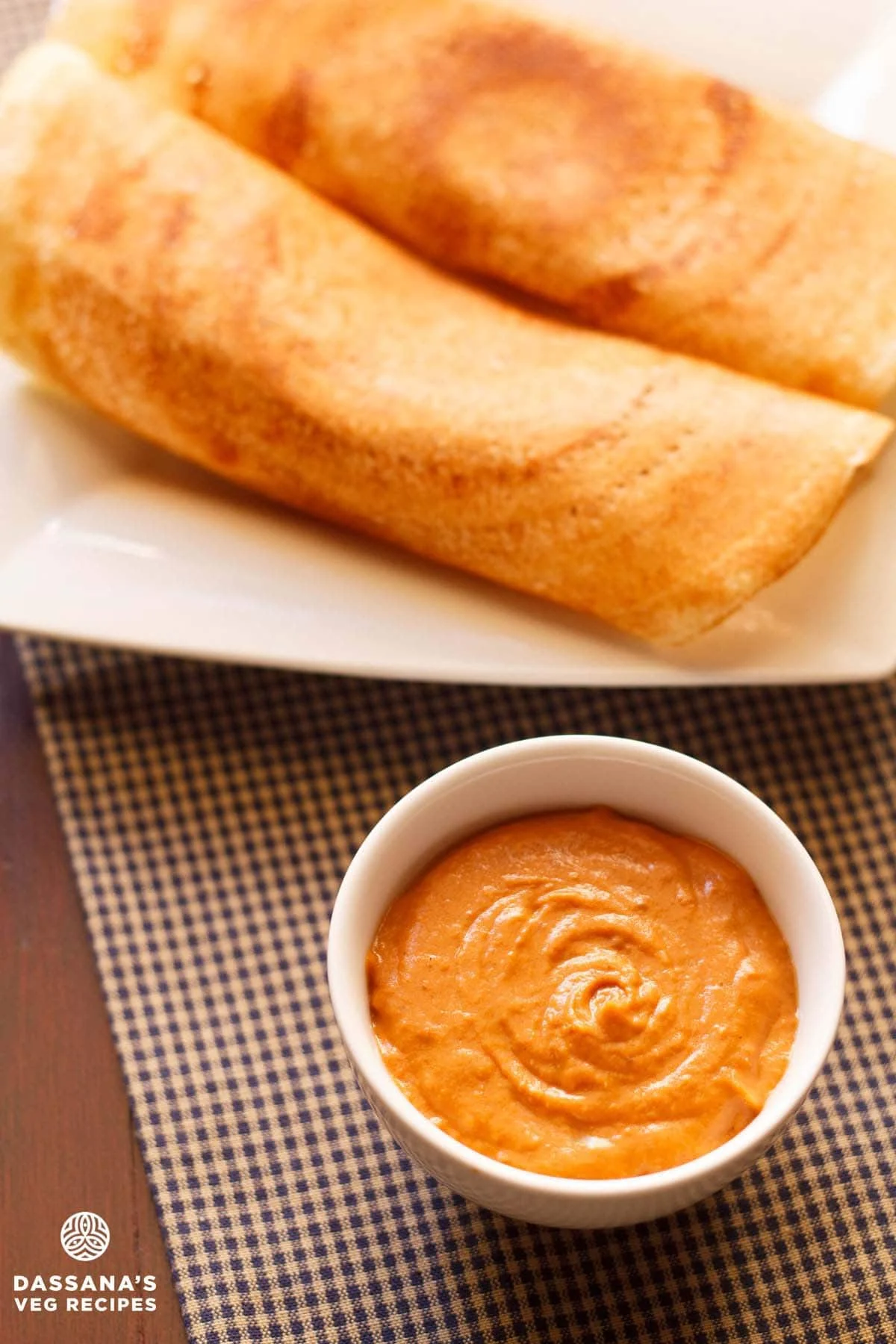
CHENNAI – In the vast and intricate tapestry of South Indian gastronomy, few elements are as vital, yet frequently overlooked, as the chutney. While the dosa and idli often claim the spotlight as the protagonists of the breakfast table, it is the condiment that provides the necessary narrative arc of flavor. Among these, the Onion Tomato Chutney stands as a testament to the region’s ability to balance the "five tastes." A staple in households from Bengaluru to Madurai, this specific preparation has recently seen a resurgence in contemporary culinary discourse, prized for its nutritional density, ease of preparation, and sophisticated flavor profile.

Main Facts: The Anatomy of a Culinary Staple
The Onion Tomato Chutney is a vibrant, reddish-orange condiment characterized by a harmonious blend of sweetness, tanginess, and a measured capsaicin heat. Unlike its more delicate cousin, the coconut chutney, the onion-tomato variant is robust, shelf-stable for longer periods, and offers a complex umami depth derived from the slow-cooking of alliums and nightshades.
At its core, the recipe relies on a specific ratio of ingredients that define its final character. The primary components include red onions, ripe tomatoes, urad dal (split black gram), dried red chilies, and tamarind. The preparation is a study in texture and chemical transformation: the urad dal provides an earthy, nutty undertone; the onions contribute natural sugars through caramelization; the tomatoes offer acidity and moisture; and the tamarind acts as a brightening agent, elevating the overall sensory experience.

A notable feature of the modern iteration of this dish—particularly the version popularized by culinary experts like Dassana of Veg Recipes of India—is its accessibility. Requiring only 20 minutes from start to finish, the recipe can be prepared without the traditional "tempering" (the process of blooming spices in hot oil), making it a lower-fat, high-efficiency option for the modern kitchen without sacrificing the traditional "tiffin" flavor profile.
Chronology: The 20-Minute Evolution of Flavor
The construction of a superior Onion Tomato Chutney follows a precise chronological sequence, where each stage of cooking builds upon the previous one to create a multi-layered end product.

Phase I: The Foundation of Crunch and Heat (Minutes 1–5)
The process begins with the "blooming" of lentils and spices. In a neutral oil, such as sunflower or peanut oil, urad dal is sautéed over a low flame. This is a critical stage where the protein-rich lentil undergoes the Maillard reaction, turning a light golden brown. Before the lentils reach a burnt state, dried red chilies are introduced. The heat of the oil releases the essential oils within the chilies, infusing the base with a smoky, sharp pungency.
Phase II: The Sweet and Savory Transition (Minutes 5–12)
Once the aromatic base is established, chopped onions are introduced. In the professional journalistic view of South Indian cooking, the treatment of the onion is paramount. For this specific chutney, the onions are not browned to the point of deep caramelization, which would make the chutney too heavy. Instead, they are cooked until translucent and "light golden," preserving their structural sweetness and providing a soft, pulpy base for the blend.

Phase III: Acidification and Softening (Minutes 12–18)
The introduction of tomatoes, salt, and asafoetida (hing) marks the final cooking stage. The salt serves a dual purpose: seasoning the dish and drawing out the moisture from the tomatoes through osmosis, allowing them to break down into a jam-like consistency. The asafoetida provides a savory, garlic-like aroma that bridges the gap between the onions and the spices. This mixture is simmered until the raw scent of the tomatoes evaporates, ensuring a mellow, integrated flavor.
Phase IV: The Final Fusion (Minutes 18–20)
After the cooked mixture has cooled to room temperature—a vital safety step for blending—it is processed with a small amount of seedless tamarind. The tamarind provides a sharp, tart "high note" that cuts through the richness of the sautéed onions. The result is a smooth, velvety paste that requires little to no additional water, maintaining a concentrated flavor profile.

Supporting Data: Nutritional Profile and Chemical Composition
From a nutritional standpoint, the Onion Tomato Chutney is more than a mere flavor enhancer; it is a dense source of micronutrients. According to standardized nutritional data for a typical serving (approximately three servings per recipe), the chutney remains a calorie-conscious choice:
- Caloric Intake: 67 kcal per serving.
- Macronutrients: 6g of carbohydrates, 5g of total fat (primarily heart-healthy monounsaturated fats from neutral oils), and 1g of protein.
- Micronutrients: The dish is particularly rich in Vitamin A (324 IU) and Vitamin C (7mg), largely due to the high concentration of cooked tomatoes.
- Antioxidants: The presence of lycopene (from tomatoes) and quercetin (from onions) provides significant antioxidant properties.
- Fiber: Each serving offers approximately 1g of dietary fiber, aided by the inclusion of whole lentils and skin-on tomatoes.
The chemical synergy of the ingredients is also noteworthy. The capsaicin in the red chilies is fat-soluble, meaning the initial sautéing in oil ensures the heat is distributed evenly throughout the chutney. Furthermore, the addition of tamarind not only impacts flavor but also acts as a natural preservative, slightly lowering the pH of the mixture to extend its refrigerated shelf life.

Official Responses and Culinary Perspectives
Culinary professionals and home cooks alike have weighed in on the "tempering debate." Traditionally, South Indian chutneys are finished with a tadka—a garnish of mustard seeds, curry leaves, and urad dal crackled in hot oil.
Dassana, a prominent voice in Indian vegetarian cuisine, suggests that for this specific Onion Tomato Chutney, tempering is "optional." She notes, "I usually skip the tempering because the chutney already has plenty of flavor from the sautéed onions, tomatoes, urad dal, and dried red chilies." This perspective reflects a broader shift in Indian home cooking toward "streamlined traditionalism," where the essence of the dish is maintained while reducing prep time and oil consumption.

However, for festive occasions or weekend "tiffin" meals, experts agree that a tempering of mustard seeds and curry leaves can provide a necessary aromatic "finish" and a textural contrast to the smooth-blended chutney. This flexibility has allowed the recipe to remain a "family favorite," adaptable to both the hurried weekday breakfast and the elaborate guest meal.
Implications: The Global Rise of South Indian "Tiffin" Culture
The enduring popularity of Onion Tomato Chutney has significant implications for the global perception of Indian cuisine. For decades, Western interpretations of Indian food were dominated by North Indian cream-based curries. However, the rise of "Tiffin" culture—the light, fermented, and steamed breakfasts of the South—has introduced a global audience to a healthier, more diverse side of the subcontinent.

1. Versatility Beyond Tradition
While the chutney is the "classic accompaniment" to idli, dosa, and medu vada, its utility is expanding. Gastronomic innovators are now utilizing Onion Tomato Chutney as a spread for fusion wraps, a sandwich base, or even a dip for Western savory snacks like potato wedges. Its balance of acid and sugar makes it a viable alternative to commercial ketchups or salsas.
2. The Rise of "Quick-Fix" Nutrition
As urban populations face increasing time constraints, the 20-minute preparation time of this chutney makes it a model for "efficient nutrition." It proves that traditional, slow-food flavors can be achieved in a fast-food timeframe without resorting to processed ingredients or artificial preservatives.

3. Preservation of Regional Heritage
The fact that "every household has its own way of making this chutney" highlights the importance of oral tradition in Indian cooking. By documenting these variations—adjusting proportions of onion to tomato or the intensity of the tamarind—the culinary community ensures that regional nuances are not lost to homogenization.
4. Storage and Sustainability
The chutney’s ability to stay fresh in an airtight container for up to 24 hours (and often longer in modern refrigeration) addresses the growing consumer demand for "make-ahead" meal components. This reduces food waste and allows for better meal planning in busy households.

Conclusion
The Onion Tomato Chutney is more than a side dish; it is a sophisticated culinary construct that embodies the principles of South Indian cooking: balance, nutrition, and efficiency. Whether served alongside a crispy Ragi Dosa or used as a modern sandwich spread, its vibrant flavor and rich history continue to make it an indispensable part of the global pantry. As the world moves toward plant-based, nutrient-dense diets, this humble chutney stands ready to provide the necessary zest to a new generation of meals.
