

The production of single malt Scotch whisky is perhaps the world’s most deliberate act of faith. It is an industry where the primary stakeholders—the distillers and the blenders—often work on projects they will never see reach maturity. It is a craft defined by the slow, invisible alchemy of wood, spirit, and time.
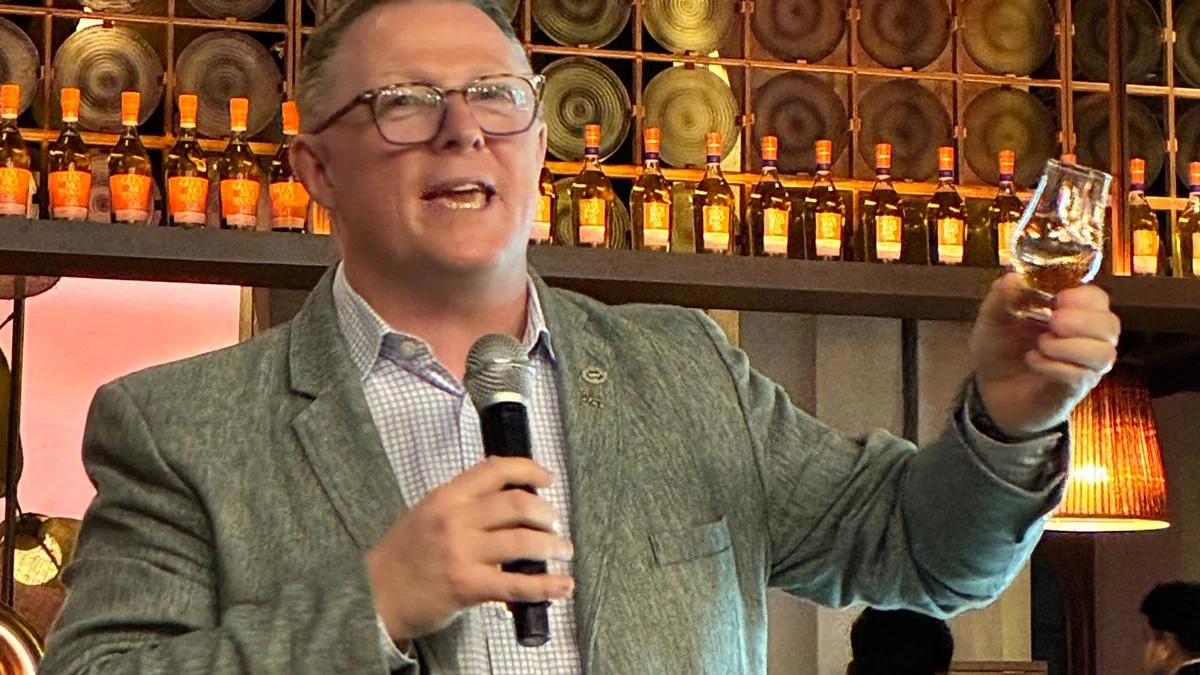
On June 11, this philosophy of endurance was brought to the forefront at Olterra, a sprawling Greek-themed bar and microbrewery in Kolkata. Hosted by Glenmorangie and Moët Hennessy India, the "Cask and Conversation" evening served as more than just a tasting event; it was a deep dive into the liquid history of the Scottish Highlands and the rugged shores of Islay. Led by David Blackmore, the Global Brand Ambassador for Glenmorangie and Ardbeg, the evening invited Kolkata’s connoisseurs to pause and appreciate the years of silence required to produce a single dram.
Main Facts: A Convergence of Heritage and Hospitality
The event centered on the presentation of four distinct expressions from the LVMH (Louis Vuitton Moët Hennessy) portfolio, highlighting the diversity of the "House Style" of Glenmorangie and the peated complexity of Ardbeg.
The gathering served a dual purpose: to introduce the newly unveiled Lasanta 15-Year-Old to the Indian market and to foster a deeper educational connection between the brand and the growing demographic of premium spirit consumers in West Bengal. David Blackmore, a veteran of the industry who has spent decades traversing the globe to share the nuances of Scotch, acted as the evening’s "custodian of stories," bridging the gap between the Tain-based distillery and the vibrant nightlife of Kolkata.

The selection of Olterra as the venue provided a striking juxtaposition. The bar’s neoclassical Greek aesthetics—complete with statues and high arches—contrasted with the rustic, rain-swept imagery of the Scottish warehouses described by Blackmore. Yet, the common thread remained a celebration of heritage.
Chronology: A Sensory Journey Through the Highlands and Islay
The evening was structured as a progressive tasting, moving from the light and floral to the deep and elemental.
The Introduction: Glenmorangie 12-Year-Old (The Core Expression)
The tasting commenced with the Glenmorangie 12-Year-Old. This expression serves as the fundamental DNA of the distillery. Blackmore explained that Glenmorangie is famous for having the tallest stills in Scotland—standing at the height of an adult giraffe. This height ensures that only the lightest, purest vapors reach the top, resulting in a "fruity and floral" spirit.
Attendees were encouraged to identify the "House Style": notes of honey, vanilla, and bright citrus. Blackmore offered a professional tip that resonated with the room: "If you like to add a dash of water to the whisky, that’s great; it will open the whisky up and blossom a little. I recommend trying it neat and then adding a dash of water to see the transformation."

The New Arrival: Lasanta 15-Year-Old
The highlight of the evening for many was the Lasanta 15-Year-Old. A product of "extra-maturation," this whisky spends its first 12 years in American oak ex-bourbon casks before being transferred to Spanish Oloroso and Pedro Ximénez sherry casks for a final three-year finish.
The name "Lasanta" is Gaelic for "warmth and passion," a sentiment reflected in its deep amber hue and its profile of orange marmalade, dark chocolate, and toasted hazelnuts. The transition from the 12-year-old to the 15-year-old demonstrated how wood can fundamentally pivot the character of a spirit.
The Masterpiece: Glenmorangie 18-Year-Old
As the evening matured, so did the liquid in the glasses. The 18-Year-Old expression was presented as a study in elegance. Blackmore noted that this particular whisky is his personal favorite—the "desert island bottle."
Having spent nearly two decades in the dark of a warehouse, the spirit emerges with a silk-like texture. Approximately 30% of the liquid is aged in Oloroso sherry casks, while the remainder stays in bourbon casks. Blackmore described the sherry influence as a "gentle kiss," providing complexity without overwhelming the delicate floral notes inherent to the Glenmorangie spirit.

The Turning Point: Ardbeg and the Islay Smoke
The final act of the evening moved away from the "sunshine in a bottle" Highlands style to the "untamed spirit" of Ardbeg. Unlike the Glenmorangie expressions, the Ardbeg served was a No Age Statement (NAS) whisky, focusing instead on the intensity of the peat.
The atmosphere in the room shifted as the scent of medicinal smoke, sea salt, and wet earth filled the air. Blackmore acknowledged that Ardbeg is a "polarizing" dram—an acquired taste that mimics the rugged, storm-lashed coastlines of the Isle of Islay. For the uninitiated, it was a bold introduction to peated Scotch; for the enthusiasts in the room, it was greeted as an "old friend."
Supporting Data: The Science of Maturation and Wood
To understand the depth of the "Cask and Conversation" event, one must look at the technical data that governs these spirits. Whisky experts generally agree that up to 60% to 70% of a whisky’s flavor is derived from the wood in which it ages.
The Role of Terroir and Distillation
- The Stills: Glenmorangie’s stills are 5.14 meters (16 feet, 10 inches) tall. The height forces the spirit to interact more with the copper, stripping away heavy oils and sulfur compounds, leaving behind the citrus and peach notes.
- The Water: Glenmorangie uses the Tarlogie Springs, a hard-water source rich in minerals, which is unusual for Highland distilleries and contributes to the spirit’s robust character.
The Chemistry of the Cask
The event highlighted the difference between two primary wood types:

- American White Oak (Quercus alba): Used for the 12-year-old and the base of the 18-year-old. It imparts vanillins, lactones (coconut flavors), and light tannins.
- European Oak (Quercus robur): Used in the sherry casks for the Lasanta. It offers a higher concentration of tannins and dried fruit notes (raisins, prunes) due to the previous occupancy of fortified wine.
The "Angel’s Share"
In the humid climate of Scotland, roughly 2% of the whisky in a barrel evaporates every year. For the 18-Year-Old expression tasted in Kolkata, nearly a third of the original liquid had been lost to the atmosphere before the bottle was ever filled. This "sacrifice" to the elements results in the concentration of flavors that guests experienced during the masterclass.
Official Responses: Insights from David Blackmore
Throughout the evening, David Blackmore provided a narrative framework that elevated the tasting from a simple beverage service to a cultural exchange.
"Wood remembers," Blackmore remarked, emphasizing that every barrel tells a story of its previous life. He spoke at length about the "Slow Aged" movement, noting that in an era of instant gratification, Scotch remains one of the few products that cannot be rushed by technology.
When asked about the Indian palate, Blackmore observed a sophisticated evolution. "People in Kolkata don’t just want to drink; they want to understand. They are looking for the story behind the label. Whether it’s the ‘Shortie’ mascot of Ardbeg (the Jack Russell Terrier) or the specific types of sherry casks used for Lasanta, there is a hunger for authenticity."

Blackmore also addressed the trend of "whisky cocktails," which were served alongside the neat pours. By featuring Ardbeg-based cocktails with the "Shortie" mascot printed on the foam, the event aimed to demystify Scotch, making it accessible to a younger, more experimental demographic without stripping away its prestige.
Implications: The Shifting Landscape of the Indian Spirit Market
The "Cask and Conversation" event is a microcosm of a much larger trend within the Indian alcobev (alcohol and beverage) sector.
1. The Premiumization of the Indian Market
India has long been the world’s largest consumer of whisky, but the market has historically been dominated by domestic blends. However, the last five years have seen a massive pivot toward "Premiumization." Consumers are increasingly choosing "less but better," opting for single malts over mass-market blends. Events like those hosted by Moët Hennessy are designed to cement brand loyalty in this high-growth segment.
2. Kolkata as a Heritage Hub
While Mumbai and Bangalore often dominate the "modern" bar scene, Kolkata is increasingly being recognized by global brands for its "heritage palate." The city’s history of social clubs and appreciation for slow-paced luxury makes it a natural fit for high-end Scotch marketing. The success of the Olterra event suggests that Kolkata is a vital market for "prestige" expressions like the Glenmorangie 18-Year-Old.

3. The Education Gap
The evening highlighted that the future of the spirit industry lies in education. As Blackmore noted, once a consumer understands the difference between a Highland floral note and an Islay peat note, their relationship with the product changes from passive consumption to active appreciation. This "connoisseurship" is what protects the industry from market fluctuations; an educated consumer is a loyal consumer.
4. Climate and Adaptation
The discussion of adding water to whisky—a move often frowned upon by purists but encouraged by Blackmore—reflects a pragmatic approach to drinking in warmer climates like India. By teaching consumers how to "open up" a whisky to suit the local temperature, brands are making Scotch a year-round drink rather than one reserved for the short Indian winter.
In conclusion, the evening at Olterra was a testament to the fact that while whisky is made in Scotland, its language is universal. It is a language of time, of patience, and of the quiet, mysterious work that happens inside a barrel when no one is watching. As the guests left the Greek-themed halls of Olterra and stepped back into the humid Kolkata night, they carried with them a piece of the Scottish Highlands—a reminder that the best things in life are always worth the wait.
