

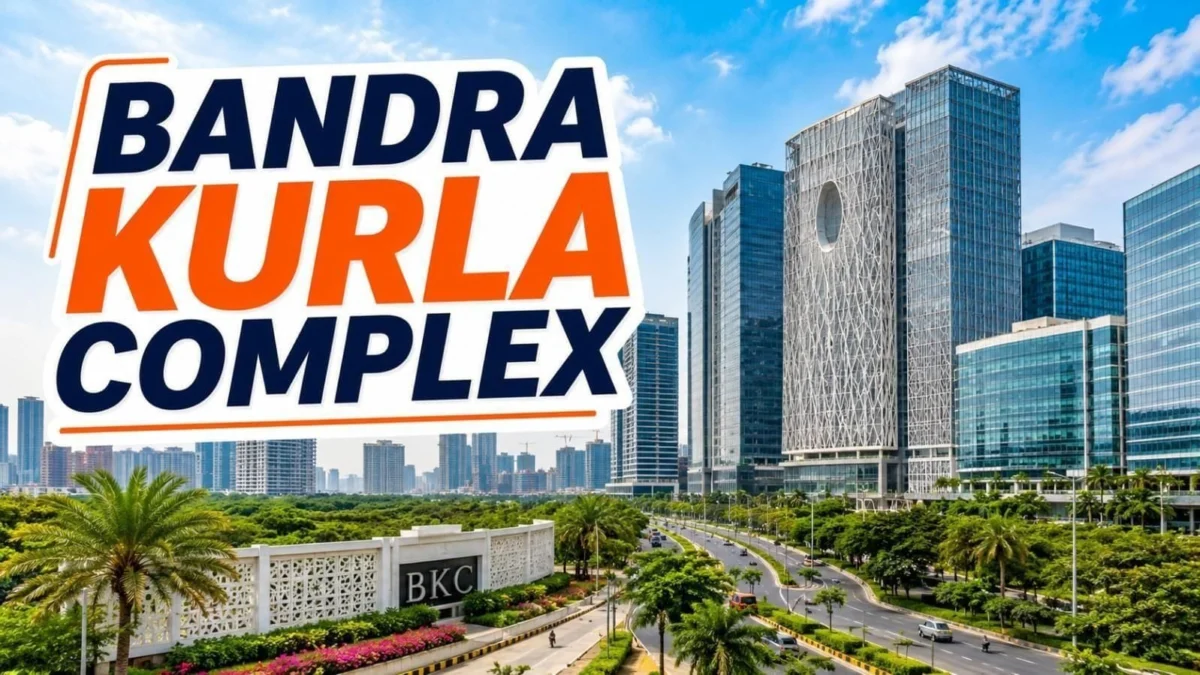
MUMBAI – In the high-stakes world of global finance and urban development, few locations have undergone a transformation as radical or as successful as Mumbai’s Bandra Kurla Complex (BKC). Once a series of low-lying marshlands adjacent to the Mithi River, BKC has emerged as the definitive nerve center of India’s economic ambitions. Designed and managed by the Mumbai Metropolitan Region Development Authority (MMRDA), this meticulously planned district now rivals the world’s leading financial hubs, blending high-octane commerce with ultra-luxury living and international diplomacy.
Main Facts: The Central Pillar of Mumbai’s Economy
Bandra Kurla Complex stands as a testament to modern urban planning, serving as a "city within a city." Strategically located between the suburbs and the city center, it was conceptualized to de-congest South Mumbai’s aging business districts like Nariman Point and Fort. Today, it is the primary corporate hub in the Mumbai Metropolitan Region (MMR).
The district is a multifaceted ecosystem. It houses the headquarters of several Fortune 500 companies, major public sector undertakings, and the nation’s most powerful financial regulators. Beyond the glass-and-steel skyscrapers, BKC has evolved into a lifestyle destination, featuring Michelin-starred restaurants, the Nita Mukesh Ambani Cultural Centre (NMACC), and some of the most expensive residential real estate in the country.
Key highlights of the district include:
- Institutional Gravitas: Home to the Securities and Exchange Board of India (SEBI) and the National Stock Exchange (NSE).
- Diplomatic Significance: Host to major foreign missions, including the United States Consulate General and the British Deputy High Commission.
- Connectivity: A central node connecting the Western, Central, and Harbour lines of Mumbai’s railway network, bolstered by upcoming Metro connectivity.
Chronology: The Evolution of a Power Center
The trajectory of BKC is marked by strategic phases of development that reflect India’s broader economic liberalization.
- The 1970s – The Vision: The MMRDA was appointed as the Special Planning Authority (SPA) for BKC in 1977. The goal was to create a modern alternative to the overcrowded South Mumbai business district.
- The 1990s – The Financial Shift: Following India’s economic reforms, the National Stock Exchange (NSE) moved to BKC. This acted as a catalyst, drawing in major private and foreign banks like ICICI Bank and Citibank.
- The 2000s – Diversification: The district began attracting more than just banks. Luxury hotels like the Trident and Sofitel opened, and the Bharat Diamond Bourse—one of the world’s largest diamond exchanges—commenced operations.
- The 2010s to Present – Residential Metamorphosis: Recognizing the need for a "Walk to Work" culture, the MMRDA opened up plots for luxury residential development. The recent inauguration of the Jio World Drive and the NMACC has cemented BKC’s status as a cultural and retail powerhouse.
Supporting Data: The Commercial and Residential Landscape
BKC’s dominance is supported by its sheer density of institutional and commercial capital. It is currently the most expensive office market in India, with rentals often surpassing those in London or New York on a purchasing power parity basis.
The Commercial Powerhouse
The "G Block" serves as the heart of BKC’s commercial operations. Significant landmarks include:
- The Capital: A LEED Gold-certified building known for its iconic design.
- Maker Maxity: A premium complex that houses global consulting firms and high-end retail.
- One BKC: A hub for technology and finance firms.
The Residential Sector: A New Frontier
Initially envisioned as a purely commercial zone, BKC and its immediate periphery—often referred to as the "BKC Annexe"—have become the preferred choice for Mumbai’s elite.
1. Bandra East (The Luxury Core)
This area, including the G Block core and MIG Colony, offers ultra-luxury 3 BHK and 4 BHK apartments. It is the preferred residence for CEOs and expatriates. Key projects include Adani Ten BKC and Sunteck Signia Pearl, where prices per square foot are among the highest in the city.
2. Kalina (The Academic and Premium Hub)
Bordering the northern perimeter and the University of Mumbai, Kalina offers a quieter, more academic atmosphere. It provides a mix of premium mid-segment towers and serviced residences, ideal for senior executives.
3. Santacruz East (The Connectivity Corridor)
Driven by the redevelopment of older housing societies, Santacruz East offers modern high-rises with immediate access to the domestic airport and the Western Express Highway (WEH).
4. Kurla West (The Strategic Extension)
Bordering the eastern flank, Kurla West serves as a critical support system, offering affordable to mid-segment housing for the thousands of professionals who staff the back offices of BKC’s financial institutions.
Comparative Analysis of BKC Residential Localities
| Residential Locality | Distance to BKC Core | Primary Housing Type | Target Budget Segment | Key Commute Advantage |
|---|---|---|---|---|
| Bandra East (G Block) | 0.5 km – 1.5 km | 3 & 4 BHK Luxury | Ultra-Luxury / HNI | Direct driveway access to offices |
| Kalina | 1.0 km – 2.5 km | 2 & 3 BHK Mid-Premium | Upper Middle / Executive | 5-10 mins via CST Road |
| Santacruz East | 1.5 km – 3.0 km | 1, 2 & 3 BHK Apts | Mid-Segment to Premium | Direct link to Airport & WEH |
| Kurla West | 1.2 km – 3.5 km | Studio, 1 & 2 BHK | Affordable to Mid-Segment | Connectivity via SCLR |
Official Responses and Urban Planning
The MMRDA continues to play a proactive role in the district’s evolution. Officials have frequently highlighted that BKC is designed to be a "sustainable and smart" district.
"The focus for BKC has shifted from mere commercial space to a holistic urban experience," noted an urban planning consultant associated with the MMRDA projects. "By integrating high-speed transport like the Mumbai-Ahmedabad High-Speed Rail (Bullet Train), which will have its terminal at BKC, we are positioning this district as a global gateway."
Furthermore, the implementation of Metro Line 2B (D.N. Nagar to Mandale) and Metro Line 3 (Colaba-Bandra-SEEPZ) is expected to significantly reduce the vehicular load on the district’s roads. These infrastructure projects are part of an official strategy to ensure BKC remains accessible despite the increasing density of its workforce.
Lifestyle and Social Infrastructure
A key factor in BKC’s attractiveness is its world-class social infrastructure. The district is home to:
- Education: The Dhirubhai Ambani International School and the American School of Bombay provide global-standard education, attracting the international diplomatic and corporate community.
- Healthcare: The Asian Heart Institute, a world-renowned specialty hospital, ensures that top-tier medical care is available within the district.
- Hospitality & Leisure: Beyond the hotels, the Jio World Convention Centre has become the venue of choice for international summits, weddings, and trade fairs, further driving footfall and economic activity.
Implications: The Future of the District
The rise of BKC has profound implications for Mumbai’s real estate and economic future.
- Shift in Centrality: The "center of gravity" of Mumbai has effectively shifted from South Mumbai to the Bandra-Kurla belt. This has led to a surge in property values in surrounding areas like Mahim, Sion, and Chembur.
- The "15-Minute City" Concept: BKC is moving toward the global "15-minute city" model, where work, home, and leisure are all within a short radius. This reduces carbon footprints and improves the quality of life for residents.
- Investment Magnet: For real estate investors, BKC remains a "blue-chip" asset. The scarcity of land within the complex ensures that property values and rentals are likely to remain resilient, even during market fluctuations.
- Global Competitiveness: With the upcoming Bullet Train terminal and improved Metro connectivity, BKC is poised to become the most connected business district in South Asia, enhancing India’s ability to attract foreign direct investment (FDI).
In summary, Bandra Kurla Complex is more than just a business district; it is a symbol of a modernizing India. Through meticulous planning by the MMRDA and continuous private sector investment, it has created a blueprint for urban development that balances economic power with lifestyle amenities. As Mumbai continues to grow, BKC stands at the forefront, defining the city’s skyline and its economic destiny.
Disclaimer: This report aims to provide accurate and updated information. However, real estate market conditions and infrastructure timelines are subject to change. Readers are advised to verify critical details independently before making investment decisions.
