

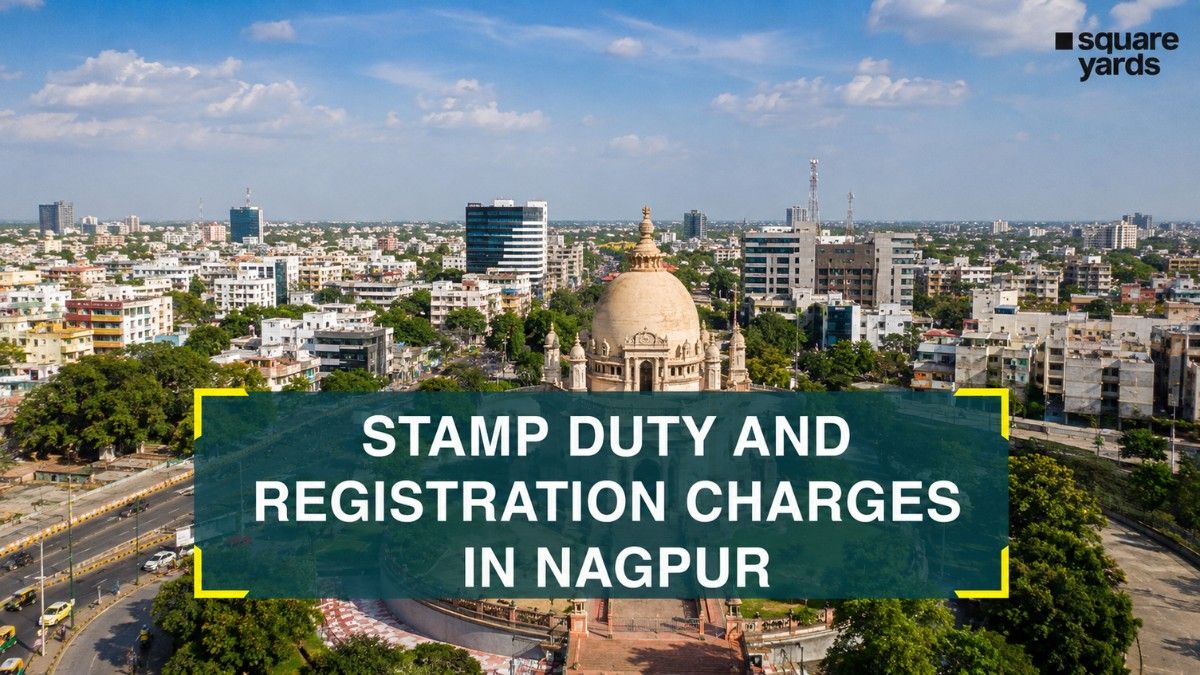
NAGPUR — As the "Orange City" cements its status as the geographic and logistical heart of India, its real estate sector is undergoing a period of robust transformation. Driven by the expansion of MIHAN (Multi-modal International Cargo Hub and Airport at Nagpur), the progress of Metro Phase II, and burgeoning residential hubs in Wardha Road, Besa, and Hingna, the city has become a magnet for both end-users and investors.
However, for any prospective homeowner, the "negotiated price" of a property is only part of the financial equation. In Nagpur, the transition from buyer to legal owner involves navigating a sophisticated layer of state-mandated charges. As of 2026, these statutory costs—primarily stamp duty and registration fees—add approximately 7% to 8% to the total acquisition cost. Notably, these rates are slightly higher than those in Mumbai, a disparity rooted in Nagpur’s specific local body taxes and infrastructure cess.
The Core Components: Understanding the Fiscal Burden
In Maharashtra, property transactions are governed by two primary pieces of legislation: the Maharashtra Stamp Act, 1958, and the Registration Act, 1908.
Stamp Duty is essentially a transaction tax levied by the state government on the legal instrument (the Sale Deed) that facilitates the transfer of property rights. Paying this duty ensures the document is legally admissible in a court of law.
Registration Fees are the service charges paid to the government for the physical recording of the deed within the public archives. In Nagpur, this process is managed across 22 sub-registrar offices.
Why Nagpur Costs More Than Mumbai
A common point of confusion for investors is why Nagpur’s stamp duty (7% for men) exceeds Mumbai’s (6%). The answer lies in the layering of local levies:
- Base Stamp Duty: 5%
- Metro Cess: 1% (Dedicated to funding the Nagpur Metro Rail project).
- Local Body Tax (LBT): 1% (A levy for urban infrastructure development).
While Mumbai only applies the Metro Cess, Nagpur applies both the Metro Cess and the LBT, resulting in a 7% total stamp duty for male buyers.
Current Rates for 2026: A Categorized Breakdown
The Maharashtra government continues to use property taxation as a tool for social engineering, offering significant concessions to women to encourage female homeownership.
Table 1: Statutory Charges in Nagpur (2026)
| Buyer Category | Stamp Duty (Incl. Cess & LBT) | Registration Fee | Total Statutory Impact |
|---|---|---|---|
| Male | 7% | 1% (Max Rs 30,000) | ~8% |
| Female | 6% | 1% (Max Rs 30,000) | ~7% |
| Joint (Male + Female) | 7% | 1% (Max Rs 30,000) | ~8% |
Note: The 1% concession for women applies only if the property is registered solely in the woman’s name. In joint ownership scenarios, the higher male rate typically prevails.
The Valuation Base: Ready Reckoner Rates (RRR)
In Nagpur, stamp duty is not necessarily calculated on the price you pay the seller. Instead, it is calculated on the higher of two values:
- The Agreement Value: The actual price negotiated between buyer and seller.
- The Ready Reckoner Rate (RRR): The government’s estimated market value for a specific locality.
The RRR is updated annually by the state government. If a buyer attempts to register a property below the RRR, they may face a penalty of up to Rs 1 lakh under regulations effective from January 2026. Therefore, checking the IGR Maharashtra portal for the current RRR of areas like Dharampeth, Manish Nagar, or Butibori is a critical first step in budgeting.
Strategic Concessions: Nagpur Smart City and Family Gifts
Nagpur offers two unique avenues for reducing the financial burden of property transfers that are often overlooked by the general public.

1. The Nagpur Smart City Relief
Under the Nagpur Smart City project, the state government introduced a landmark concession to regularize properties and assist buyers who faced historical registration delays. For eligible homes within the Smart City jurisdiction, the stamp duty is slashed to a flat Rs 1,000. This initiative has already benefited thousands of homeowners in East Nagpur, specifically in areas earmarked for Town Planning Schemes.
2. The Family Gift Deed
Transferring property to immediate family members (spouse, children, parents, or siblings) is remarkably affordable in Nagpur.
- Family Gift Stamp Duty: Flat Rs 200.
- Non-Family Gift Stamp Duty: 3% of market value.
- Registration Fee: 1% (Capped at Rs 30,000).
This provision makes Nagpur one of the most tax-efficient cities in India for intergenerational wealth transfer.
Financial Illustrations: Real-World Scenarios
To understand the impact of these percentages, consider the purchase of a residential apartment with an RRR/Agreement value of Rs 50 Lakh.
Scenario A: Individual Male Buyer
- Stamp Duty (7%): Rs 3,50,000
- Registration Fee (1% capped): Rs 30,000
- Total Outlay: Rs 3,80,000
Scenario B: Individual Female Buyer
- Stamp Duty (6%): Rs 3,00,000
- Registration Fee (1% capped): Rs 30,000
- Total Outlay: Rs 3,30,000
- Net Saving: Rs 50,000
For high-value properties, such as a Rs 1.5 Crore villa in Wardha Road, the registration fee cap becomes even more beneficial. While 1% of Rs 1.5 Crore is Rs 1.5 Lakh, the buyer only pays Rs 30,000, saving Rs 1.2 Lakh due to the state-mandated ceiling.
The Digital Workflow: GRAS and IGR Portals
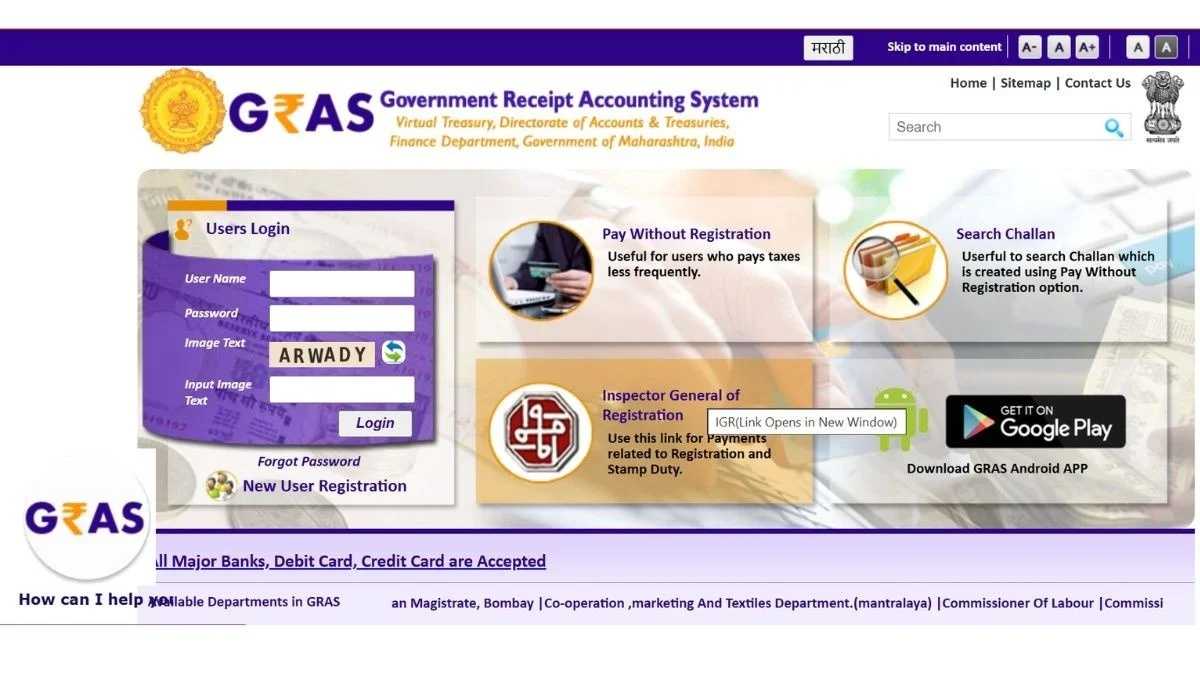
The process of paying these dues has been entirely digitized through the Government Receipt Accounting System (GRAS).

Step-by-Step Payment Process:
- Data Entry: Visit the IGR Maharashtra or GRAS portal and enter property details, including the location code and the type of deed (Sale, Gift, Lease).
- Calculation: The system automatically calculates the duty based on the RRR and the buyer’s gender.
- Payment: Payments can be made via UPI, Net Banking, or Credit/Debit cards.
- Challan Generation: Upon successful payment, a GRN (Government Reference Number) is generated. This challan is a mandatory document for the registration appointment.
- Appointment Booking: Use the e-Step-in facility on the IGR portal to book a time slot at the local sub-registrar office.
Compliance Checklist: Mandatory Documentation
Registration day requires the physical presence of the buyer, the seller, and two witnesses. Missing documentation is the leading cause of registration delays in Nagpur.
Personal Identification:
- Aadhaar Cards: For all parties involved.
- PAN Cards: Mandatory for transactions exceeding Rs 5 lakh.
- Photographs: Recent passport-size color photos.
Property Paperwork:
- Original Sale Deed: Drafted and ready for execution.
- 7/12 Extract / Property Card: To verify the current record of rights.
- No-Objection Certificate (NOC): If the property is in a restricted zone or a cooperative society.
- Encumbrance Certificate: To prove the property is free of legal debt.
- Property Tax Receipts: Proof that all municipal dues to the Nagpur Municipal Corporation (NMC) or NIT are cleared.
Market Implications and Expert Perspectives
Real estate analysts suggest that the 8% statutory cost in Nagpur acts as a "buffer" that buyers must account for early in their financial planning. Unlike the property cost itself, banks generally do not include stamp duty and registration in the home loan amount.
"Buyers in Nagpur often focus on the EMI but forget the upfront ‘entry cost’ of the property," says a senior consultant at a leading property firm. "With the 1% Metro Cess contributing to the city’s world-class transit system, there is a general acceptance of these rates, provided the infrastructure continues to keep pace with the levies."
Furthermore, the introduction of the Section 80C tax benefit provides some relief. Homeowners can claim a deduction of up to Rs 1.5 lakh on stamp duty and registration charges in their income tax returns, provided the claim is made in the same financial year the property was purchased.
Conclusion: A City on the Rise
Nagpur’s real estate market in 2026 is defined by a balance of high demand and structured regulation. While the 7% to 8% total cost of registration may seem steep compared to other tier-2 cities, the clarity provided by the GRAS portal and the protections of the Maharashtra Stamp Act offer a secure environment for buyers.
Whether it is leveraging the 1% female buyer concession, utilizing the Rs 200 family gift deed provision, or benefiting from the Smart City flat-rate scheme, informed buyers have multiple avenues to optimize their investment. As MIHAN and the Nagpur Metro continue to reshape the city’s skyline, understanding these fiscal nuances is no longer just for lawyers—it is an essential skill for every modern homeowner in the Heart of India.
