

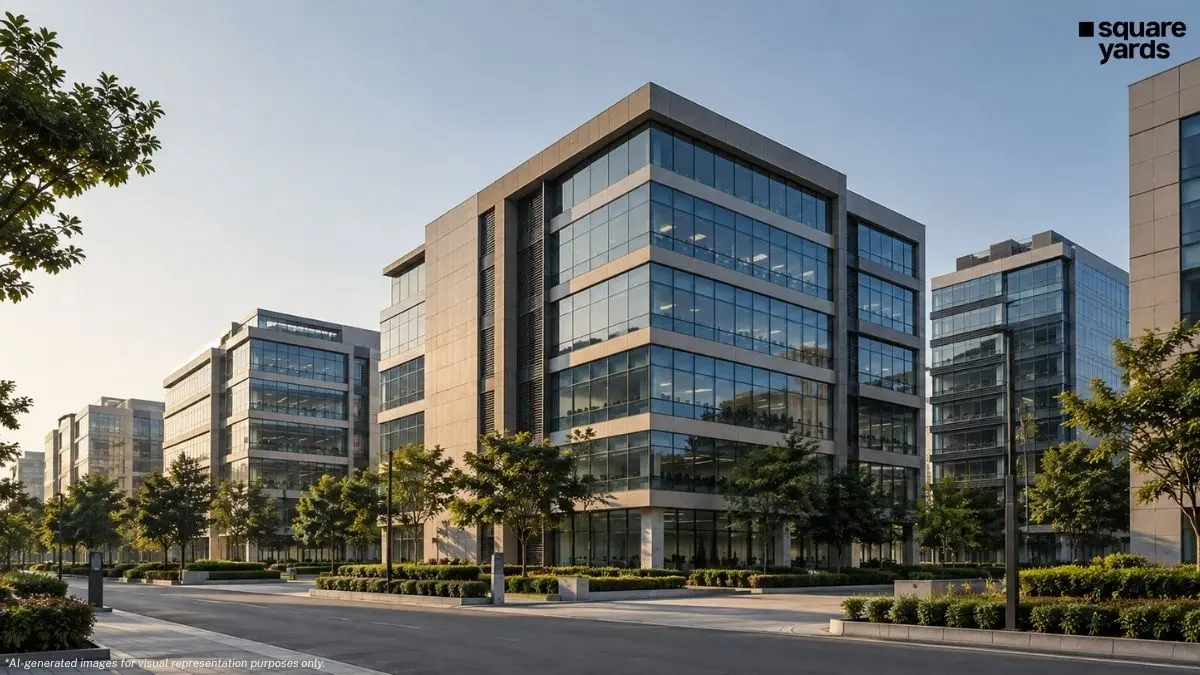
CHENNAI – The skyline of Chennai, once dominated by the smokestacks of automotive giants and the sprawling campuses of early IT pioneers, is undergoing a profound transformation. As of late 2026, Chennai has solidified its position as a premier destination for Global Capability Centers (GCCs), a shift that is fundamentally altering the city’s commercial and residential real estate dynamics. With over 400 GCCs now operational, the city is no longer just a manufacturing hub; it is a global nerve center for high-end engineering, financial analytics, and healthcare innovation.
This surge in corporate interest is not merely a post-pandemic recovery story but a structural realignment of how global multinational corporations (MNCs) view the Indian talent market. As these centers scale, they are driving a massive demand for Grade A office spaces, reshaping residential preferences, and accelerating infrastructure projects like the Chennai Metro Phase II.
1. Main Facts: The GCC Surge and Market Dominance
The primary driver of Chennai’s current real estate cycle is the unprecedented expansion of GCCs. In the first quarter of 2026, GCCs accounted for nearly 50% of all gross office leasing in the city. This represents a significant pivot from previous years, where third-party IT service providers were the dominant occupiers.
Key Drivers of Growth:
- Sectoral Diversity: While the "Detroit of Asia" tag remains relevant, the new wave of GCCs is led by diverse sectors including Aerospace, BFSI (Banking, Financial Services, and Insurance), Healthcare, Logistics, and Engineering R&D.
- Cost Arbitrage: Chennai remains one of the most cost-effective Tier-I markets in India. With average Grade A office rents hovering around Rs 75 per square foot (psf) per month, the city offers a 20% to 60% cost advantage over competitors like Bengaluru, Mumbai, or Gurgaon.
- Talent Pipeline: The presence of premier educational institutions and a steady supply of specialized engineering talent makes the city an attractive "plug-and-play" destination for global firms.
Currently, the city’s commercial footprint is expanding rapidly toward the south and west, with developers racing to deliver "future-ready" workspaces that meet global ESG (Environmental, Social, and Governance) standards.
2. Chronology: From Industrial Hub to Global Tech Pavilion
To understand the current real estate boom, one must look at the chronological evolution of Chennai’s economic identity:
- The 1990s – The Industrial Foundation: Chennai established itself as a manufacturing powerhouse. The focus was on industrial real estate and worker housing in pockets like Sriperumbudur and Oragadam.
- The 2000s – The IT/BPO Wave: The inauguration of the IT Corridor (OMR) marked the first major shift toward commercial office spaces. The demand was largely for massive floor plates to house back-office operations.
- The 2010s – SaaS and Product Development: Chennai emerged as the "SaaS Capital of India," with homegrown giants like Zoho and Freshworks creating a demand for more creative and collaborative office environments.
- 2020–2024 – The Resilience Phase: Despite global headwinds, Chennai’s office market showed resilience, supported by its low vacancy rates and stable rental growth.
- 2025–2026 – The GCC Explosion: Global firms began moving beyond "outsourcing" to establishing "centers of excellence." This required high-end, Grade A+ commercial spaces with sophisticated digital infrastructure, leading to the current real estate spike.
3. Supporting Data: The Impact on Property Valuations
The influx of GCCs has had a direct, measurable impact on property prices, particularly in the southern employment corridors. As high-income professionals flock to these centers, the residential market has responded with sharp price appreciations.
Residential Price Trends (September 2025 – June 2026)
According to data from Square Yards, the following micro-markets have seen significant shifts:
| Location | Price in Sept 2025 (psf) | Price in June 2026 (psf) | % Increase |
|---|---|---|---|
| Sholinganallur | Rs 7,900 | Rs 9,950 | ~26% |
| Pallavaram | Rs 8,500 (est.) | Rs 10,800 | ~27% |
| Perungudi | Rs 9,200 | Rs 11,500 | ~25% |
Commercial Leasing Statistics
In Q1 2026, the leasing volume reached record highs. The demand is concentrated in:
- OMR (Old Mahabalipuram Road): Still the "Golden Corridor," accounting for nearly 40% of all GCC-related office absorption.
- Mount-Poonamallee Road (MPR): Emerging as a secondary hub due to its proximity to the airport and better connectivity to the city center.
- GST Road: Attracting manufacturing-aligned GCCs and logistics-focused firms.
4. Infrastructure as a Catalyst: Chennai Metro Phase II
A news report on Chennai’s real estate would be incomplete without mentioning the Chennai Metro Phase II. This Rs 63,246-crore project is the "connective tissue" that is allowing the real estate market to expand into previously peripheral areas.
The Network Breakdown:
- Madhavaram to SIPCOT (Corridor 3): This is the most critical route for the GCC sector. It connects the northern residential suburbs directly to the heart of the IT/GCC belt in Siruseri (SIPCOT).
- Lighthouse to Poonamallee Bypass (Corridor 4): This route is opening up the western corridor, making areas like Porur and Poonamallee attractive for both commercial developers and homebuyers.
- Madhavaram to Sholinganallur (Corridor 5): This provides a crucial orbital link, ensuring that professionals living in western and northern Chennai can reach southern employment hubs without navigating the city’s notorious road traffic.
The Chennai Metro Rail Limited (CMRL) is also pioneering Transit-Oriented Development (TOD). By planning 7.34 million square feet of commercial and retail space across 37 stations, the government is ensuring that the Metro is not just a transport system, but a commercial ecosystem in itself.
5. Industry Responses and Market Sentiment
Real estate analysts and corporate leaders suggest that Chennai’s growth is "qualitative" rather than just "quantitative."
Commercial Developers’ Perspective:
Developers like DLF, K Raheja Corp, and local giants like Brigade and Casagrand are increasingly focusing on "Wellness-certified" buildings. A senior analyst at a leading property consultancy noted: "GCCs are no longer looking for just four walls. They want campuses that offer high-speed connectivity, sustainable energy, and lifestyle amenities that help them attract and retain top-tier tech talent. Chennai’s ability to provide this at a lower price point than Bengaluru is its biggest USP."
The Residential Shift:
The "Walk-to-Work" concept is gaining traction. However, as property prices in immediate vicinities like Sholinganallur rise, developers are seeing a "spillover effect." Professionals are now looking at "micro-markets" located 5–7 kilometers away from office hubs, provided they have quick access to the Metro. This has led to a boom in mid-segment housing (Rs 60 lakh to Rs 1.2 crore) in areas like Medavakkam, Navalur, and Kelambakkam.
Corporate Strategy:
For many Fortune 500 companies, Chennai offers a "de-risking" strategy. By establishing centers in Chennai alongside existing offices in other Indian cities, they tap into a more stable, less transient workforce. The city’s lower attrition rates compared to other tech hubs are a major draw for GCC heads.
6. Implications: What Lies Ahead for Chennai?
The expansion of GCCs is not a fleeting trend; it is the blueprint for Chennai’s urban future. However, several implications must be considered for the city to maintain its momentum.
The Broadening of the Real Estate Map
We are likely to see the emergence of "Satellite GCC Hubs." As the OMR reaches saturation and prices climb, the focus will shift toward the Grand Southern Trunk (GST) Road and the Chennai-Bangalore Industrial Corridor. This will decentralize the city’s growth, leading to more balanced urban development.
The Rental Market Boom
With the influx of young professionals from across India, the rental market is expected to remain bullish. We may see a rise in organized co-living spaces and "managed apartments," catering to a workforce that values flexibility and amenities over traditional homeownership.
Challenges to Overcome
While the outlook is positive, the impact on property prices will not be uniform. The success of new developments will depend on:
- Last-Mile Connectivity: Metro stations alone aren’t enough; feeder services and improved road infrastructure are essential.
- Infrastructure Resilience: Chennai’s history with monsoons means that GCCs and residential buyers are now prioritizing "flood-proof" locations and robust drainage infrastructure.
- Supply Management: With significant new residential supply entering the market, price appreciation might stabilize in certain pockets, making it a "buyer’s market" in the short term for specific micro-segments.
Final Outlook
Chennai is currently in a "sweet spot" of urban development. The synergy between GCC expansion, a massive infrastructure overhaul via the Metro Phase II, and a competitive cost structure has created a virtuous cycle. As the city moves toward 2030, its ability to integrate these global business hubs with livable, connected, and sustainable residential communities will determine its status as a leading global city. For investors and homebuyers alike, the message is clear: Chennai’s real estate story is no longer about local demand—it is a global narrative.
