

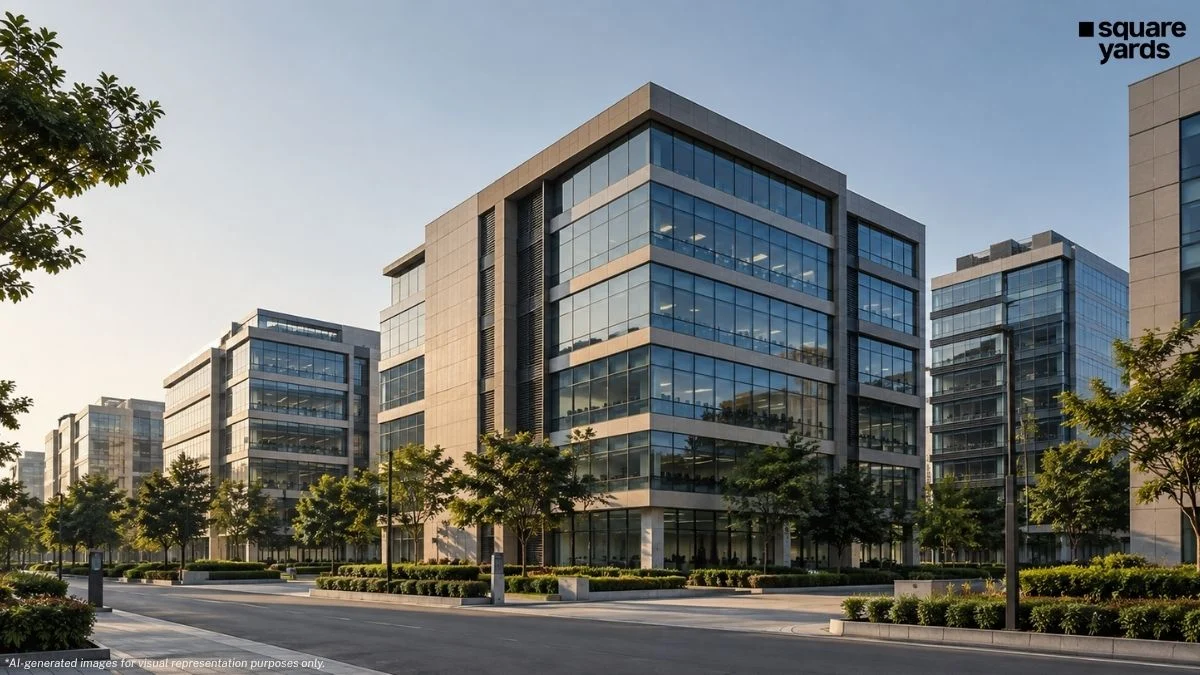
CHENNAI – The skyline of Chennai, once defined by the chimneys of its automotive plants and the sprawling IT parks of the early 2000s, is undergoing a profound metamorphosis. As of late 2026, the city has solidified its position as one of India’s premier destinations for Global Capability Centers (GCCs), a shift that is fundamentally altering the DNA of its commercial and residential real estate markets.
With over 400 GCCs now operational within its limits, Chennai is no longer just a regional hub; it is a global nerve center for high-end engineering, financial services, and healthcare analytics. This surge in corporate interest is creating a domino effect, driving unprecedented demand for Grade A office spaces and triggering a residential boom in corridors that were, until recently, considered peripheral.
Main Facts: The GCC Surge and the Commercial Pivot
The primary catalyst for Chennai’s current real estate upswing is the rapid proliferation of GCCs. Unlike the traditional Business Process Outsourcing (BPO) units of the past, modern GCCs are sophisticated entities that handle core functions such as R&D, digital transformation, and global supply chain management.
According to data reflecting the first quarter of 2026, GCCs accounted for nearly 50% of the city’s gross office leasing. This represents a significant consolidation of market share, as global firms from the manufacturing, engineering, healthcare, logistics, and BFSI (Banking, Financial Services, and Insurance) sectors scale their operations.
The demand is specifically focused on "Grade A" office spaces—buildings that offer sustainable infrastructure, high-end security, and modern amenities. The southern corridors of Chennai, particularly the Old Mahabalipuram Road (OMR) and the Grand Southern Trunk (GST) Road, have become the epicenters of this activity. Developers are racing to meet this demand, with several million square feet of premium office space currently under various stages of construction.
Chronology: From the ‘Detroit of Asia’ to a Global Tech Powerhouse
To understand the current real estate climate, one must look at the chronological evolution of Chennai’s economic landscape:
- The Industrial Era (Pre-2000s): Chennai established itself as a manufacturing giant, particularly in the automotive sector, earning the moniker "Detroit of Asia." Real estate growth was concentrated around industrial belts like Ambattur and Guindy.
- The IT Revolution (2000–2015): The inauguration of the IT Corridor (OMR) marked the first major shift. Large campuses for domestic IT giants like TCS, Infosys, and Wipro transformed Sholinganallur and Siruseri into bustling suburban hubs.
- The GCC Emergence (2016–2023): Global players began moving beyond simple outsourcing, establishing their own captive centers. Chennai’s talent pool in engineering and finance made it an attractive alternative to the saturated markets of Bengaluru and Hyderabad.
- The Post-Pandemic Acceleration (2024–2026): Following the global shift toward distributed workforces and digital-first strategies, multinational corporations (MNCs) accelerated their GCC setups in Chennai. By early 2026, the city hit the milestone of 400+ GCCs, leading to the current spike in commercial leasing and the subsequent rise in residential property values.
Supporting Data: Rents, Rates, and the Cost Advantage
The data underlying Chennai’s growth tells a story of strategic value. Despite the high demand, Chennai remains one of the most cost-effective Tier-I markets in India.
The Commercial Cost Advantage
As of September 2026, average Grade A office rents in Chennai are estimated at approximately Rs 75 per square foot (psf) per month. When compared to other major hubs, the disparity is striking:
- Bengaluru & Mumbai: Occupancy costs in prime business districts can be 20% to 60% higher than in Chennai.
- Operational Savings: For a multinational corporation leasing 100,000 sq. ft., the annual savings in Chennai can run into millions of dollars, allowing for greater investment in talent and technology.
The Residential Ripple Effect
The expansion of employment hubs has led to a sharp appreciation in residential property prices in the southern employment corridors. Data from Square Yards highlights a significant upward trajectory over the last twelve months:
- Sholinganallur: Apartment rates rose from Rs 7,900 psf in September 2025 to Rs 9,950 psf by June 2026—a nearly 26% increase in less than a year.
- Pallavaram: This locality, benefiting from its proximity to both the airport and the OMR, saw asking prices reach Rs 10,800 psf in the same period.
- Perungudi & Tharamani: These established clusters continue to command a premium due to their "walk-to-work" appeal, with rental yields for investors seeing a steady 4-5% annual growth.
Infrastructure and Official Responses: The Metro Phase II Catalyst
State authorities and urban planners have recognized that infrastructure must keep pace with corporate growth. The centerpiece of this effort is the Chennai Metro Phase II project.
A Network of Connectivity
With an approved project cost of Rs 63,246 crore, the 118.9-km Metro Phase II network is designed to integrate the city’s disparate hubs. The network consists of three critical corridors:
- Madhavaram to SIPCOT: Directly connecting the northern residential districts to the heart of the IT/GCC belt in the south.
- Lighthouse to Poonamallee Bypass: Bridging the eastern coast with the western industrial and residential corridors.
- Madhavaram to Sholinganallur: Providing a north-south arterial link that bypasses the congested city center.
Official Strategy for Transit-Oriented Development
The Chennai Metro Rail Limited (CMRL) is not just building tracks; it is venturing into real estate development. CMRL has announced plans for commercial development across 37 locations along the Phase II network, covering approximately 73.4 lakh sq. ft. These projects will include integrated office spaces, retail outlets, and hospitality units, ensuring that the "last-mile" connectivity also serves as a commercial destination.
Industry experts suggest that while the Metro is a massive driver of value, the impact will be nuanced. "Metro connectivity is a force multiplier, but it doesn’t work in a vacuum," says a senior urban consultant. "Price appreciation will be highest in areas that combine Metro access with robust feeder transport and high-quality social infrastructure like schools and hospitals."
Implications: Reshaping the Urban Landscape
The expansion of GCCs in Chennai is doing more than just filling office buildings; it is reshaping the city’s socio-economic fabric in several key ways.
1. Decentralization of the City Center
Historically, Chennai’s commercial life revolved around Mount Road (Anna Salai). The GCC boom has effectively shifted the city’s gravity southward. New "micro-markets" are emerging, where work, play, and living are integrated into a single ecosystem. This reduces the burden on the old city’s infrastructure and allows for more planned urban expansion.
2. Evolution of Housing Preferences
The modern GCC employee is typically a high-income professional with global exposure. This demographic is driving demand for "premium-plus" housing. We are seeing a shift away from standalone apartments toward integrated townships that offer clubhouses, green spaces, and smart home features. Developers are responding by launching projects that cater specifically to this "aspirational" class.
3. The Rise of the Western Corridor
While the South (OMR/GST) remains the leader, the GCC expansion is beginning to spill over into Western Chennai. Improved connectivity through the Lighthouse-Poonamallee Metro route is making areas like Porur and Poonamallee attractive for firms looking for even more competitive rents and a fresh talent pool from the western suburbs.
4. Sustainability and ESG Goals
Global corporations are increasingly bound by Environmental, Social, and Governance (ESG) mandates. This is forcing Chennai’s real estate developers to pivot toward "Green Buildings." There is a growing premium on LEED-certified office spaces that offer energy efficiency and reduced carbon footprints. Buildings that fail to meet these standards risk becoming "stranded assets" as MNCs refuse to lease non-compliant spaces.
Conclusion: A New Era for Chennai Real Estate
As Chennai moves toward the late 2020s, the synergy between Global Capability Centers and real estate development has become the city’s primary economic engine. The transition from a manufacturing-heavy economy to a high-tech services hub is being mirrored in the bricks and mortar of the city.
The success of this next phase will depend on the timely completion of infrastructure projects like Metro Phase II and the ability of developers to provide a diverse range of housing that matches the evolving needs of a global workforce. If these elements align, Chennai’s real estate market is poised not just for growth, but for a sustainable transformation that could serve as a blueprint for Tier-I cities across the developing world.
With affordable Grade A rents, a massive influx of global talent, and a government committed to infrastructure, the "Chennai Story" is currently one of the most compelling narratives in the global real estate sector.
