

Main Facts: The Intersection of Citrus and Confectionery
In the evolving landscape of global pastry arts, the shift toward health-conscious, plant-based alternatives has transformed from a niche market into a culinary mainstream. A primary example of this evolution is the rising popularity of the "Orange Biscuit"—a soft, citrus-infused cookie that bridges the gap between traditional Indian tea-time snacks and modern vegan baking. Unlike the mass-produced, refined-flour biscuits that have dominated the Indian subcontinent for decades, these orange cookies represent a sophisticated departure, utilizing whole wheat flour (atta), gram flour (besan), and fresh, seasonal produce.
The core appeal of the orange cookie lies in its sensory profile: a moist, tender crumb characterized by a vibrant citrus aroma and a balanced sweetness. From a technical standpoint, the recipe is notable for being entirely eggless and vegan, replacing traditional dairy fats with sunflower oil to achieve a lighter, more airy texture. This architectural choice in baking not only caters to the growing vegan demographic but also aligns with the dietary preferences of a large portion of the Indian population who abstain from eggs for religious or cultural reasons.

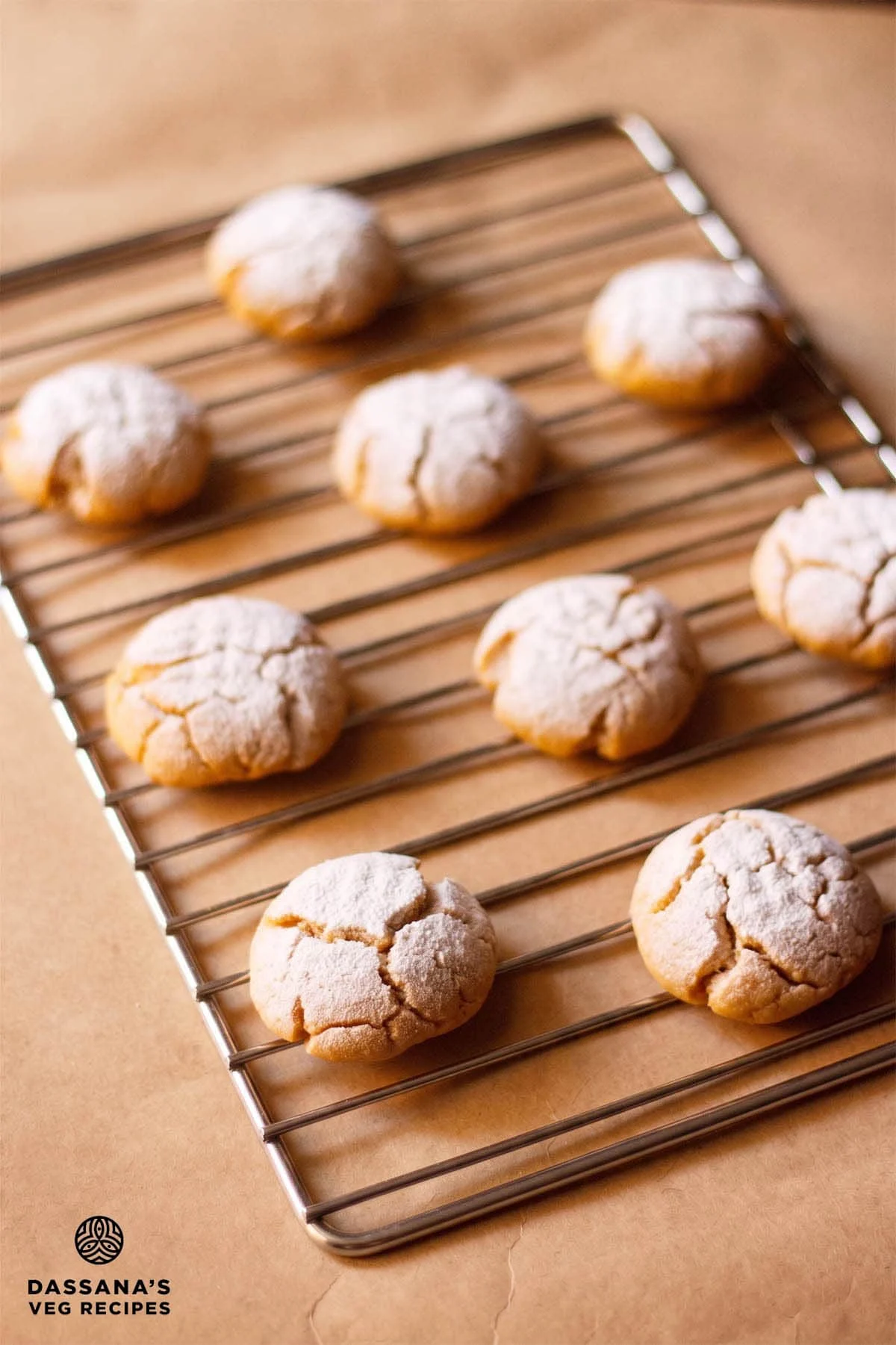
Key to the success of this confection is the dual use of the orange: the juice provides the necessary acidity and hydration, while the zest—the essential oils found in the flavedo of the fruit—delivers the deep, olfactory punch that defines the experience. When baked, these cookies develop a characteristic "crinkle" or "cracked" top, a visual marker of artisanal quality that suggests a soft interior and a slightly structured exterior.
Chronology: The Lifecycle of a Citrus Cookie
The creation of an orange biscuit is a meticulous process that begins long before the oven is preheated. It is a sequence of extraction, emulsification, and gentle integration.

Phase I: The Extraction of Essence
The process commences with the preparation of the fruit. A medium-sized, fresh orange is thoroughly rinsed to remove any surface impurities. The first critical step is zesting. Using a fine grater, the baker extracts approximately one teaspoon of zest. Journalistic precision is required here: only the orange-colored flavedo is harvested. The underlying white pith, or albedo, is strictly avoided to prevent the introduction of limonoid compounds, which would impart a lingering bitterness to the final product.
Following the zesting, the fruit is de-seeded and processed—either through a high-speed blender or a manual juicer—to yield approximately one-third of a cup of fresh juice. This liquid is then strained through a fine-mesh sieve, ensuring a smooth consistency free of fibrous pulp, which could interfere with the cookie’s delicate crumb structure.

Phase II: Emulsification and Integration
The wet foundation is established by whisking together the fresh juice, half a cup of sugar, and half a cup of sunflower oil. This stage is vital for ensuring that the sugar is fully dissolved, creating a uniform emulsion that will carry the flavor evenly throughout the dough.
The dry ingredients—predominantly whole wheat flour, baking powder, and a pinch of baking soda—are then sifted directly into the wet mixture. Sifting is not merely a procedural step; it aerates the flour and removes clumps, which is essential when working with denser grains like whole wheat. At this juncture, the reserved orange zest and half a cup of gram flour are introduced. The gram flour acts as a secret weapon, providing a nutty undertone and a structural robustness that complements the earthiness of the wheat.

Phase III: Thermal Transformation
The final phase involves forming the dough. Unlike bread, cookie dough must not be kneaded; it is "brought together" gently to prevent the overdevelopment of gluten, which would result in a tough, bread-like texture. The dough is divided into 12 to 14 equal spheres, slightly flattened, and arranged on a parchment-lined tray.
The baking occurs at a relatively high temperature of 200 degrees Celsius (392 degrees Fahrenheit). Over a period of 20 to 25 minutes, the leavening agents react with the citric acid from the juice, causing the cookies to expand and the surface to tension-crack, creating the aesthetic crinkle. After a cooling period on a wire rack—essential for setting the internal structure—the cookies are finished with a light dusting of icing sugar.

Supporting Data: Nutritional Profile and Ingredient Efficacy
To understand the impact of the orange biscuit, one must look at the empirical data surrounding its composition. Based on a standard yield of 13 servings, the nutritional breakdown offers a compelling case for the "better-for-you" snack category.
Macronutrient Breakdown
- Caloric Content: Each cookie contains approximately 177 kcal.
- Carbohydrates: 22g, primarily sourced from whole wheat and unrefined sugar.
- Fats: 9g, with a favorable profile of 7g of monounsaturated fats (when using sunflower oil).
- Protein: 3g, a respectable amount for a confection, bolstered by the inclusion of gram flour.
Micronutrient and Functional Benefits
The inclusion of fresh orange juice and zest contributes more than just flavor. Each serving provides approximately 5mg of Vitamin C and 29µg of Folate (Vitamin B9). Furthermore, the use of whole wheat flour increases the fiber content to 2g per cookie, significantly higher than the negligible fiber found in biscuits made with maida (refined flour).

The choice of gram flour (besan) is backed by culinary science. Gram flour has a lower glycemic index than wheat flour and provides a unique binding quality in eggless baking. It also contributes to the "golden" hue of the biscuit, reducing the need for artificial food colorings often found in commercial citrus-flavored products.
Official Responses: Expert Insights and Procedural Tips
Culinary experts and seasoned bakers, including Dassana, the creator of the featured recipe, emphasize that the margin between a mediocre biscuit and a professional-grade cookie lies in the details of execution. The following "Official Tips" serve as a guide for troubleshooting and optimization:

- On Bitterness: The most common failure in citrus baking is the inclusion of the pith. Experts warn that even a small amount of the white layer can ruin the flavor profile of the entire batch.
- On Texture Control: While sunflower oil is recommended for a light, vegan-friendly moisture, professional bakers note that melted butter can be substituted for those seeking a "shortbread-like" richness. However, this will alter the "biscuits" into a heavier, more traditional "cookie."
- On Flour Ratios: The ratio of whole wheat to gram flour is calibrated for the Indian palate. If the dough feels too sticky, it is advised to add wheat flour in small, tablespoon-sized increments rather than all at once.
- On Oven Calibration: There is an official acknowledgment that oven temperatures vary wildly. Bakers are encouraged to use a standalone oven thermometer and to begin monitoring the cookies at the 18-minute mark to prevent over-browning.
- On Storage: Because these are high-moisture, eggless bakes, they are susceptible to humidity. The official recommendation is to store them in airtight glass containers for no more than 3 days at room temperature, or to refrigerate them in humid climates to maintain the integrity of the soft texture.
Implications: The Future of the Indian "Biscuit"
The emergence of the whole-wheat orange biscuit has broader implications for the Indian food industry and domestic lifestyle. Historically, the "biscuit" in India has been a colonial legacy—a hard, dry accompaniment to tea, often laden with hydrogenated fats and refined sugars. The transition to a "soft cookie" style that utilizes local, whole ingredients signals a shift in consumer consciousness.
Health and Wellness Trends
As metabolic disorders rise in urban India, consumers are increasingly scrutinizing the "tea-time" ritual. The implication of this recipe is that indulgence does not have to be synonymous with "empty calories." By incorporating fiber-rich flours and fresh fruit, the orange biscuit positions itself as a functional snack that provides satiety and a modest nutritional boost.

The Vegan Movement
The recipe’s success highlights the viability of veganism in a culture where dairy has traditionally been seen as indispensable. By proving that a superior texture can be achieved with oil and fruit juice rather than eggs and butter, it paves the way for more innovative, plant-based Indian desserts.
Home Baking as a Cultural Shift
Finally, the simplicity of this recipe—requiring no specialized equipment like stand mixers—democratizes gourmet baking. It encourages a move away from ultra-processed, store-bought snacks toward a "scratch-cooking" philosophy. In an era of globalized food chains, the return to a homemade, seasonal orange biscuit is a small but significant act of culinary reclamation, proving that the most sophisticated flavors often come from the simplest, most natural sources.
