The landscape of Indian urban transportation is undergoing a quiet but profound transformation. In the bustling narrow lanes of Tier-2 cities and the high-traffic corridors of metropolitan hubs, the hum of internal combustion engines is increasingly being replaced by the silent whir of electric motors. At the forefront of this transition is Mahindra Last Mile Mobility Limited (MLMML), a subsidiary of the Mahindra Group, which recently announced a historic achievement: the sale of over 400,000 cumulative electric vehicles (EVs).
This milestone does more than just solidify Mahindra’s balance sheet; it marks a pivotal moment in India’s journey toward sustainable logistics and green urban mobility. By becoming the first Indian commercial vehicle manufacturer to reach this figure, Mahindra has established a blueprint for how electric mobility can be scaled in a price-sensitive, high-utility market.
Main Facts: Dominating the Last-Mile Ecosystem
Mahindra Last Mile Mobility Limited has not only crossed the 4-lakh unit threshold but has also maintained its position as India’s largest electric commercial vehicle (e-CV) manufacturer for four consecutive financial years. This dominance is not accidental but the result of a targeted strategy focusing on the "last mile"—the final and often most expensive leg of the supply chain and passenger commute.
The company’s current portfolio is diverse, catering to both passenger and cargo segments. Key models driving this volume include:
The Treo Range: The flagship lithium-ion powered three-wheeler that redefined the e-rickshaw and auto-rickshaw segments.
Zor Grand: A robust electric three-wheeler designed specifically for the cargo and delivery market, boasting higher payload capacities and range.
e-Alfa: An entry-level, highly affordable electric rickshaw aimed at rural and semi-urban markets.
UDO: A conceptual yet functional take on personal and micro-mobility.
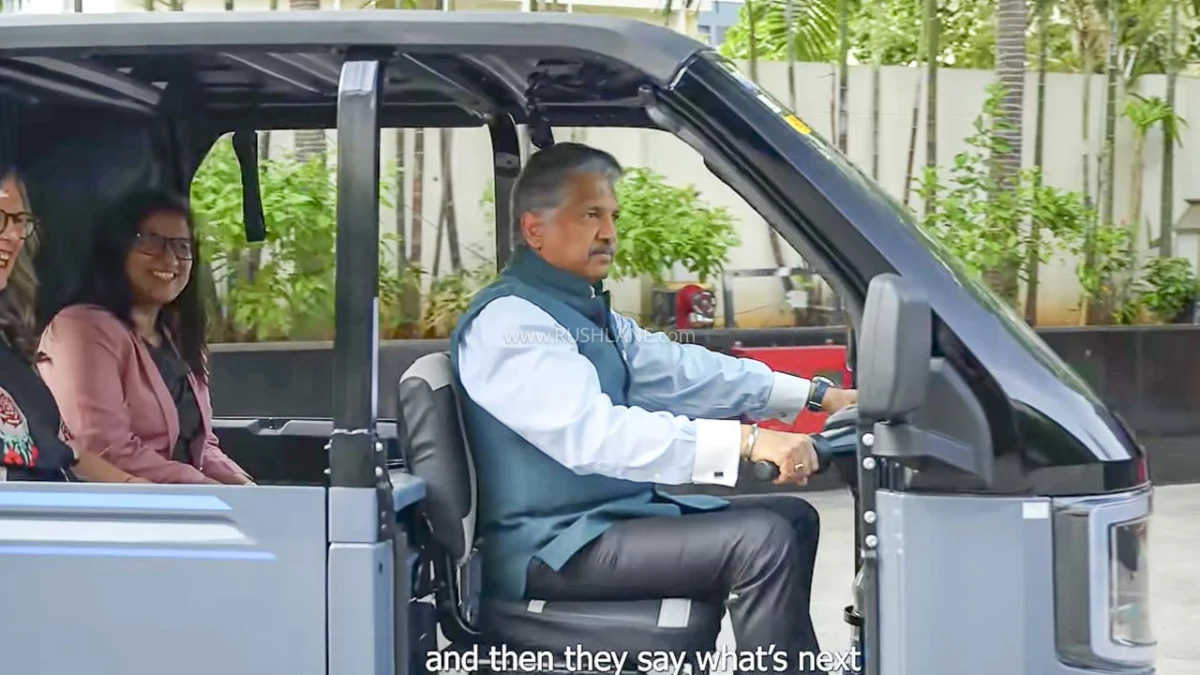
ZEO: The latest addition, a four-wheeler small commercial vehicle (SCV) designed to compete in the high-demand urban delivery segment.
This multifaceted approach has allowed Mahindra to capture a significant share of the L5 (three-wheeler) and increasingly the SCV markets, where the transition to electric is driven more by economics than by environmental sentiment alone.
Chronology: From Early Adoption to Market Leadership
The journey to 400,000 units began long before EVs became a buzzword in Indian policy circles. Mahindra’s involvement in electric mobility can be traced back to its acquisition of Reva Electric Car Company in 2010, which provided the foundational technology for its subsequent ventures.
While the passenger car segment (with the e2o and eVerito) faced challenges due to high battery costs and limited charging infrastructure, Mahindra strategically pivoted its focus toward the commercial segment. The rationale was clear: commercial vehicles have a much higher daily utilization rate, allowing the lower running costs of electricity to offset the higher upfront purchase price of the vehicle much faster than a private car.
In 2018, the launch of the Mahindra Treo marked a significant turning point. It was one of the first mainstream commercial three-wheelers to utilize lithium-ion technology instead of the heavier, less efficient lead-acid batteries. Between 2020 and 2024, the company saw exponential growth, fueled by the Indian government’s FAME-II (Faster Adoption and Manufacturing of Hybrid and Electric Vehicles) subsidies and a growing demand from e-commerce giants like Amazon, Flipkart, and BigBasket for "green" delivery fleets.
By 2023, MLMML was spun off as a separate entity to focus exclusively on last-mile mobility, attracting significant investment and allowing for more agile product development. This specialization culminated in the 4-lakh sales record announced in late 2024.
Supporting Data: The Environmental and Economic Impact
The scale of Mahindra’s achievement is best understood through the lens of data. According to company records, the 400,000 Mahindra EVs on the road have collectively covered more than 9 billion kilometers. To put this in perspective, that distance is equivalent to traveling around the Earth’s circumference over 224,000 times.
The environmental dividends of this massive mileage are substantial:
CO2 Mitigation: The fleet has prevented approximately 1.85 lakh (185,000) metric tonnes of CO2 emissions.
Ecological Equivalent: This reduction in carbon footprint is equivalent to the amount of CO2 absorbed by 8.3 million mature trees.
Beyond the environmental metrics, the economic data supports why this transition is accelerating. Mahindra’s internal research and user feedback suggest that electric three-wheelers have achieved "price parity" with fossil-fuel counterparts when considering the Total Cost of Ownership (TCO). While an electric three-wheeler might cost 20-30% more upfront than a CNG or diesel variant, the daily operational cost is roughly one-sixth. For a driver covering 100 kilometers a day, the savings on fuel and maintenance can increase monthly take-home pay by 30% to 50%, a life-changing margin for micro-entrepreneurs.
Official Responses: A Vision of Enterprise and Livelihoods
The achievement was celebrated by the leadership of the Mahindra Group, who framed the milestone not just as a corporate victory, but as a socio-economic shift.
Anand Mahindra, Chairman of the Mahindra Group, expressed his pride in the "Last Mile" segment being the vanguard of the EV movement.
“What I love is that what we call Last Mile Mobility is proving that they are the first step in India’s electric vehicle revolution,” Mahindra stated.
He emphasized the logic of the transition, noting that three-wheelers were always destined to lead the charge.
“We always knew that three-wheelers would be the first to achieve price parity with fossil fuels because of the intensive usage of these vehicles commercially. This operating-cost advantage is particularly important for drivers, delivery partners, and small businesses, where savings on every kilometer directly influence earnings.”
Mahindra also touched upon the human element, remarking that each of the 9 billion kilometers traveled represents a "story of enterprise"—of individuals who are turning a profit while contributing to cleaner urban air.
Suman Mishra, Managing Director and CEO of Mahindra Last Mile Mobility, echoed these sentiments, focusing on the scale of impact on human lives.
“This milestone represents four lakh livelihoods powered every day,” Mishra said.
She credited the success to a collaborative ecosystem involving drivers, financial partners, and the engineering teams at Mahindra who made electric mobility a "practical, no-compromise option" for the Indian economy.
Implications: Setting the Stage for 2031
The success of MLMML has several far-reaching implications for the Indian automotive industry and the broader economy.
1. The Death of the "Range Anxiety" Myth in Commercial Use
Mahindra’s success proves that for specific use cases—namely fixed-route passenger transport and urban hub-and-spoke delivery—current battery technology is more than sufficient. By focusing on vehicles that can be charged overnight or during midday breaks, Mahindra has bypassed the infrastructure bottleneck that continues to plague long-distance electric trucking and private passenger cars.
2. Economic Empowerment and the Gig Economy
The 400,000 vehicles sold represent a massive fleet of self-employed entrepreneurs. As India’s gig economy grows, the availability of low-cost, reliable electric transport becomes a critical enabler. Lower operating costs mean higher resilience against fluctuating global oil prices, providing a more stable income for the lowest-earning members of the transport sector.
3. Decarbonization of Cities
Urban air quality remains a critical issue in Indian metros. By converting 400,000 high-usage commercial vehicles to electric, Mahindra is helping remove the most polluting "smoke-belchers" from the most congested parts of the city. This sets a precedent for municipal bodies to potentially mandate "EV-only" zones in congested commercial districts.
4. The Path to 1 Million Units
Mahindra has already set its sights on the next mountain: 10 lakh (1 million) EVs on the road by 2031. To achieve this, the company must add another 600,000 units in the next six to seven years. This will require:
Expansion into the 4-Wheeler SCV Market: The newly launched ZEO will be crucial in taking on competitors like the Tata Ace EV.
Advanced Financing: Since the upfront cost remains a barrier for many, Mahindra is deepening ties with NBFCs (Non-Banking Financial Companies) and specialized green-finance institutions to offer low-interest loans.
Technological Evolution: Moving toward faster charging times and even more durable battery chemistries (such as LFP) to ensure the vehicles can withstand the rigors of Indian summers and heavy loading.
Conclusion
Mahindra Last Mile Mobility’s achievement of 4 lakh EV sales is a testament to the power of "frugal engineering" combined with a deep understanding of the Indian consumer. While the world often looks at luxury electric sedans as the face of the EV transition, Mahindra has shown that in emerging markets, the revolution is being driven by three-wheelers and small trucks.
As the company marches toward its 2031 goal of a million vehicles, it isn’t just selling hardware; it is selling a more profitable, cleaner, and more sustainable way of life for the millions of people who keep India’s economy moving at the grassroots level. The 9 billion kilometers already covered are just the beginning of a journey that is reshaping the very fabric of Indian mobility.