

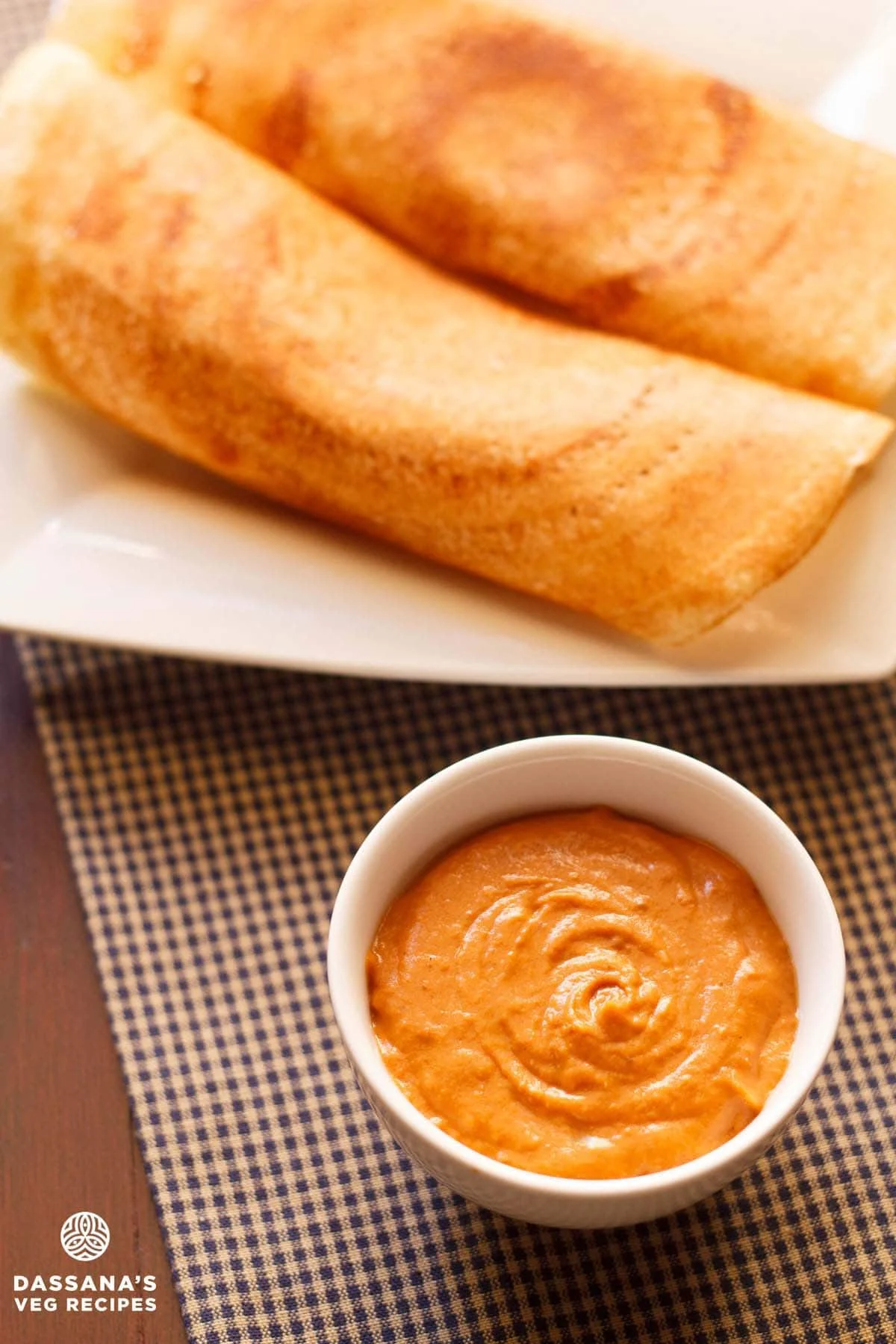
In the vibrant landscape of South Indian cuisine, few condiments hold as much cultural and culinary weight as the humble chutney. Among the pantheon of accompaniments that grace the breakfast tables of millions, the Onion Tomato Chutney stands out as a masterclass in flavor balancing. Combining the sweetness of caramelized onions, the acidity of ripe tomatoes, and the earthy depth of toasted lentils, this condiment is more than a side dish—it is an essential component of the "tiffin" experience.
Recent culinary trends highlight a shift toward traditional, plant-based condiments that offer complex flavor profiles without the need for artificial additives. The Onion Tomato Chutney, a staple in households from Chennai to Bengaluru, has emerged as a focal point for food enthusiasts seeking to replicate authentic South Indian flavors in modern, fast-paced kitchens.

Main Facts: The Anatomy of a Classic
The Onion Tomato Chutney is characterized by its "sweet-tangy-spicy" trifecta. Unlike its cousin, the Coconut Chutney, which relies on creamy fats, or the Mint Chutney, which focuses on herbal freshness, the onion-tomato variant is built on the foundation of cooked aromatics.
The Core Components
The recipe’s success hinges on a specific set of ingredients, each serving a functional and organoleptic purpose:

- The Aromatics: Equal proportions of onions and tomatoes provide the bulk and primary flavor. The onions offer a subtle sweetness (especially when sautéed to a light golden hue), while the tomatoes provide the necessary acidity (tang).
- The Texture Agent: Urad dal (split black gram) is sautéed in oil until nutty and golden. When ground, it acts as a natural thickener and provides a roasted, savory undertone.
- The Heat: Dried red chilies provide a smoky, lingering spice that cuts through the sweetness of the onions.
- The Souring Agent: A small piece of tamarind is often added to brighten the overall profile, ensuring the tanginess is multi-dimensional rather than purely acidic.
- The Flavor Enhancer: Asafoetida (hing) adds a pungent, umami-like depth that mimics the complexity of garlic and leeks, essential for the authentic South Indian "temple food" aroma.
Chronology: The 20-Minute Culinary Evolution
The preparation of Onion Tomato Chutney is a linear process that requires precision in heat management. The transition from raw ingredients to a cohesive paste occurs in four distinct phases.
Phase 1: The Tempering of Lentils and Chilies
The process begins with the heating of a neutral oil, such as sunflower oil, over a low-to-medium flame. The first ingredient to enter the pan is the urad dal. This is a critical juncture; the dal must be toasted until it reaches a light golden brown. If undercooked, the chutney will have a raw, grassy taste; if overcooked, it introduces an unpalatable bitterness. Once the dal begins its transformation, dried red chilies are added, their skins blistering slightly to release essential oils into the base.

Phase 2: Caramelization and Softening
The introduction of roughly 100 grams of chopped onions marks the second phase. Unlike French onion soup, where deep browning is required, South Indian chutney calls for the onions to reach a "translucent golden" state. This preserves the moisture while developing a gentle sweetness.
Following the onions, the tomatoes are introduced along with salt and asafoetida. The goal here is total cellular breakdown. The tomatoes are sautéed until they lose their raw smell and transform into a pulpy, jam-like consistency. This step ensures that the final blend is smooth and that the flavors are fully integrated.

Phase 3: The Cooling and Blending Ritual
Journalistic integrity in culinary reporting requires noting a frequently overlooked step: the cooling period. Grinding hot ingredients can lead to steam buildup in a blender, altering the texture and potentially causing kitchen accidents. Once the mixture reaches room temperature, a small portion of seedless tamarind is added. The mixture is then processed into a fine, smooth paste.
Phase 4: The Optional Tadka (Tempering)
While the base chutney is flavorful enough to stand alone, a final "tempering" is often applied for aesthetic and aromatic brilliance. This involves crackling mustard seeds, curry leaves, and additional dried chilies in hot oil, which is then poured over the finished chutney. This adds a layer of "fresh" spice and a textural contrast of crunchy seeds.

Supporting Data: Nutritional and Chemical Profile
From a nutritional standpoint, Onion Tomato Chutney is a low-calorie powerhouse. A standard serving contains approximately 67 kcal, making it a healthy alternative to oil-heavy dips or sugar-laden ketchups.
Nutritional Breakdown (Per Serving):
- Calories: 67 kcal
- Macronutrients: 6g Carbohydrates, 5g Fat (primarily heart-healthy monounsaturated fats), and 1g Protein.
- Micronutrients: The chutney is particularly rich in Vitamin A (324 IU) and Vitamin C (7mg), thanks to the high tomato content.
- Antioxidants: Tomatoes provide lycopene, which is more bioavailable when cooked with oil, as seen in this recipe. Onions contribute quercetin, an antioxidant known for its anti-inflammatory properties.
The use of urad dal also contributes trace amounts of iron and magnesium, while the tamarind provides a boost of potassium. For those on restricted diets, this chutney is naturally vegan and can be made gluten-free by ensuring the asafoetida used is not processed with wheat flour.

Official Responses: Expert Perspectives on Flavor Balance
Culinary experts and traditional home cooks alike emphasize that the "identity" of the chutney varies by household. Dassana, the creator behind Veg Recipes of India, notes that the equal ratio of onions to tomatoes is her "go-to" for a reason.
"The onions add a gentle sweetness, while the tomatoes bring a pleasant tang," she explains. "I also like adding a small piece of tamarind, as it brightens the flavors and gives the chutney a more rounded taste without making it overly sour."

Professional chefs in the South Indian circuit often refer to this balance as Rasa, the essential juice or essence of a dish. The "official" consensus among South Indian restaurateurs is that a chutney’s success is measured by its ability to complement—rather than overpower—the main dish, such as a fermented Dosa or a steamed Idli.
Implications: The Global Rise of South Indian Condiments
The popularity of Onion Tomato Chutney has implications that extend far beyond the borders of South India. As the global palate shifts toward diverse, plant-based options, condiments like this are being reimagined in various international contexts.

1. The Versatility Factor
While traditionally served with Uttapam, Medu Vada, and Paniyaram, this chutney is increasingly being used as a sophisticated spread for Western-style sandwiches and wraps. Its flavor profile is remarkably similar to a savory tomato jam or a spicy pesto, allowing it to bridge the gap between Eastern and Western cuisines.
2. The "Fast-Casual" Indian Revolution
The 20-minute preparation time makes this chutney an ideal candidate for the "meal prep" generation. Its ability to stay fresh in a refrigerator for up to 24 hours allows busy professionals to enjoy authentic flavors without the time commitment of long-simmered curries.

3. Health and Wellness Trends
As consumers become more wary of processed condiments containing high-fructose corn syrup and preservatives, the Onion Tomato Chutney offers a "clean label" alternative. Every ingredient is a whole food, and the preservation is naturally aided by the acidity of the tomatoes and tamarind.
4. Cultural Preservation
In a world of fusion cooking, the continued popularity of specific recipes like this one serves as a form of cultural preservation. By adhering to the specific techniques—such as the slow sautéing of lentils—cooks maintain a link to a culinary heritage that dates back centuries.

Conclusion
The Onion Tomato Chutney is more than just a recipe; it is a testament to the sophistication of South Indian culinary logic. By utilizing simple, affordable ingredients and applying precise heat-based techniques, one can create a condiment that is nutritionally dense, flavorfully complex, and universally appealing. Whether it is served in a traditional steel bowl alongside a crispy Dosa or used as a bold new spread for a modern wrap, its place in the global pantry is firmly secured. For the home cook, it offers a 20-minute window into a world of balanced, vibrant, and timeless flavor.
