

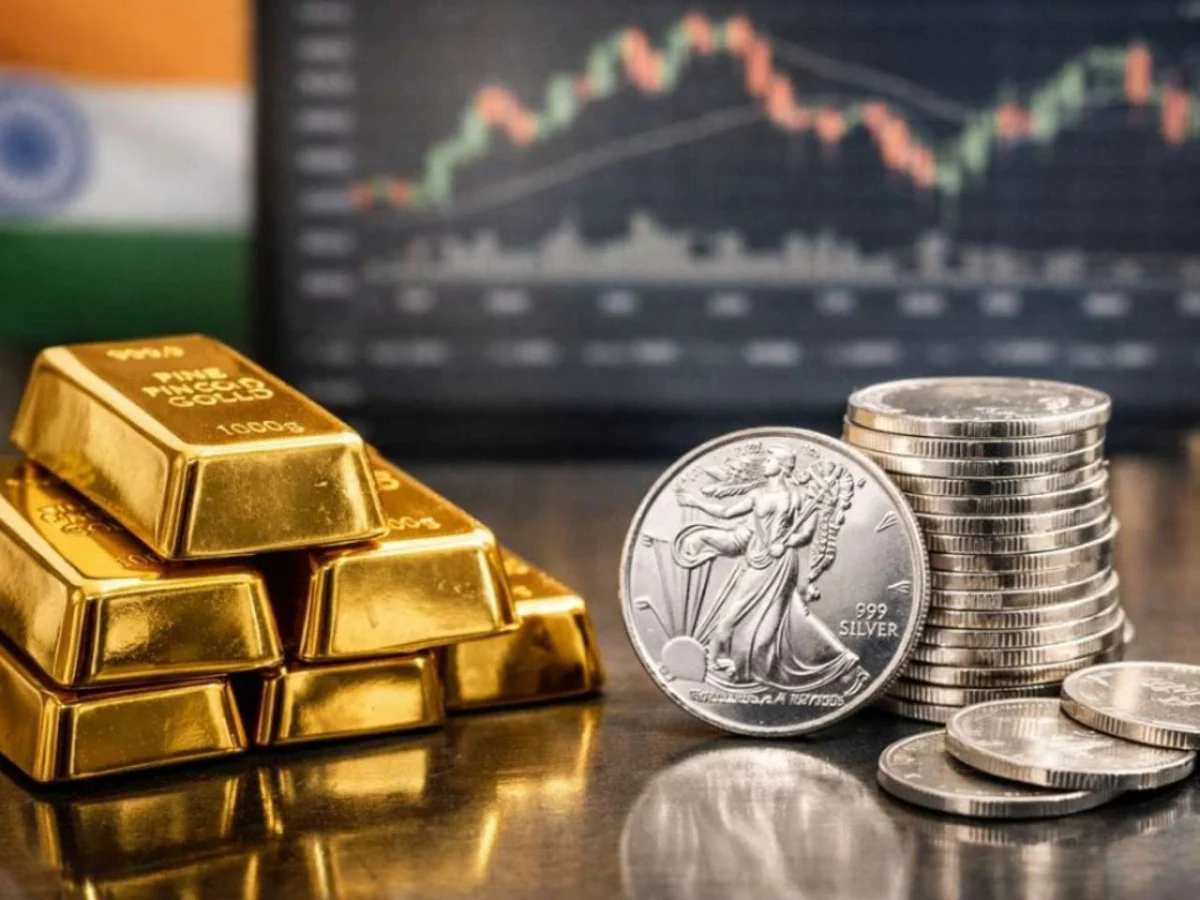
Mumbai, India – August 16, 2026 – The Indian precious metals market continues its intricate dance with global economic forces and domestic demand, with gold and silver prices registering a modest uptick today. As of August 16, 2026, a confluence of international market trends, fluctuating currency rates, and robust local consumer sentiment is shaping the daily valuations of these cherished commodities.
Gold, often revered as a safe-haven asset and a cornerstone of Indian culture, has seen its 24K purity (999 fine gold) trading around ₹15,487 per gram in major cities like Mumbai and Kolkata, while Delhi observes a slightly higher rate of ₹15,502. The more common 22K jewellery gold hovers at approximately ₹14,196 per gram. Silver, a popular alternative for investment and ornamentation, is valued at roughly ₹2,549 per 10 grams (or ₹2,54,900 per kilogram) across most metropolitan centers, with Chennai noting a marginal premium at ₹2,599 per 10 grams. This daily recalibration underscores the dynamic nature of a market influenced by a complex interplay of macroeconomic indicators and ingrained cultural significance.
Main Facts: A Snapshot of Today’s Precious Metal Prices
The morning of August 16, 2026, finds India’s bullion market reflecting a cautious optimism amidst ongoing global economic shifts. Both gold and silver have experienced a slight upward movement, primarily driven by persistent inflationary pressures worldwide and a consistent domestic appetite. This nuanced increase solidifies the metals’ role as a hedge against economic uncertainty, a trend that has been particularly pronounced in recent years.
For investors and consumers alike, understanding the daily price points is paramount. Here’s a detailed breakdown of the prevailing rates:
)
- Gold (24K, 999 Purity):
- Mumbai: ₹15,487 per gram
- Kolkata: ₹15,487 per gram
- Delhi: ₹15,502 per gram
- Chennai: ₹15,492 per gram
- Gold (22K, Jewellery Gold):
- Mumbai: ₹14,196 per gram
- Kolkata: ₹14,196 per gram
- Delhi: ₹14,211 per gram
- Chennai: ₹14,201 per gram
- Silver (999 Purity):
- Mumbai: ₹2,549 per 10 grams (₹2,54,900 per kilogram)
- Kolkata: ₹2,549 per 10 grams (₹2,54,900 per kilogram)
- Delhi: ₹2,549 per 10 grams (₹2,54,900 per kilogram)
- Chennai: ₹2,599 per 10 grams (₹2,59,900 per kilogram)
- Silver 925 (Sterling Silver): Approximately ₹2,54,000 per kilogram (national average).
These prices, sourced from reputable industry platforms like Good Returns, serve as critical benchmarks for the millions of Indians who engage with the precious metals market, whether for investment, celebratory purchases, or as a traditional store of wealth. The slight variations across cities often reflect localized demand-supply dynamics, transport costs, and specific state taxes.
Chronology: Tracing the Path to Today’s Valuations
The current prices of gold and silver on August 16, 2026, are not isolated figures but rather the culmination of a complex historical trajectory, shaped by a multitude of global and domestic events over the past few years. The period leading up to mid-2026 has been particularly tumultuous, marked by a blend of post-pandemic recovery efforts, persistent inflationary pressures, and evolving geopolitical landscapes.

The Post-Pandemic Bull Run and Subsequent Adjustments
Following the initial economic shock of the early 2020s, precious metals, particularly gold, embarked on a significant bull run. This was largely fueled by unprecedented monetary easing by central banks worldwide, massive fiscal stimulus packages, and a surge in safe-haven demand as investors sought refuge from market volatility. By late 2024 and early 2025, gold prices had reached record highs in rupee terms, driven not only by global trends but also by a weakening Indian Rupee against the US Dollar, making imports more expensive.
Silver, often termed "poor man’s gold," also mirrored this upward trajectory, benefiting from both its safe-haven appeal and a resurgence in industrial demand as global manufacturing slowly recuperated. Its dual nature as an investment metal and an industrial commodity often leads to greater volatility compared to gold.
)
Inflationary Headwinds and Interest Rate Hikes (Late 2025 – Early 2026)
As global economies transitioned from recovery to concerns about overheating, inflation emerged as a dominant theme in late 2025. Central banks, including the US Federal Reserve and the Reserve Bank of India, initiated a series of interest rate hikes to tame rising prices. This period introduced a new dynamic for precious metals. Higher interest rates typically make non-yielding assets like gold less attractive, as investors can earn better returns from bonds or other interest-bearing instruments. Consequently, gold witnessed some corrections from its peak, but its role as an inflation hedge prevented any drastic downturns. Silver, too, felt the pressure, though its industrial applications provided a floor to significant drops.
Geopolitical Tensions and Currency Volatility (Mid-2026)
The first half of 2026 was characterized by renewed geopolitical uncertainties in various parts of the world. Such events invariably trigger a flight to safety, bolstering demand for gold. Simultaneously, the Indian Rupee experienced periods of heightened volatility against the US Dollar. A depreciating Rupee makes imported gold more expensive for Indian buyers, even if international dollar-denominated prices remain stable or fall slightly. This currency effect has been a critical component in determining the landed cost of gold in India.
)
The current levels on August 16, 2026, therefore, represent a delicate balance. The slight increase today reflects a renewed concern over global economic stability and persistent inflation, tempered by the influence of monetary policy adjustments. India’s strong domestic demand, particularly in anticipation of upcoming festive seasons, further adds a layer of resilience to the market, preventing steeper declines even when international factors might suggest otherwise. This historical context provides crucial insight into the underlying forces that shape India’s dynamic precious metals market.
Supporting Data: Dissecting the Influencing Factors
The pricing of gold and silver in India is a complex equation, with several variables interacting to determine daily rates. Understanding these factors provides clarity on why prices fluctuate and what drives investor and consumer behaviour.
)
Global Market Trends: The Macroeconomic Undercurrents
- US Dollar Strength and Interest Rates: Gold is primarily denominated in US dollars. A stronger dollar makes gold more expensive for holders of other currencies, potentially dampening demand. Conversely, a weaker dollar can make gold more attractive. Furthermore, the US Federal Reserve’s monetary policy, particularly interest rate decisions, profoundly impacts gold. Higher interest rates increase the opportunity cost of holding non-yielding assets like gold, often leading to a bearish sentiment. However, if inflation outpaces interest rate hikes, gold’s appeal as an inflation hedge can override this effect, as seen in recent periods.
- Inflationary Pressures: Global inflation concerns have been a significant tailwind for gold. As the purchasing power of fiat currencies erodes, investors flock to gold, historically seen as a reliable store of value. The current slight increase in prices on August 16, 2026, is explicitly attributed to these "inflationary pressures" in the source article, highlighting its ongoing relevance.
- Geopolitical Stability: Periods of global instability, conflicts, or major political uncertainties typically trigger a ‘flight to safety,’ with investors parking their capital in traditional safe havens like gold. While no specific crisis is detailed for August 2026, the general undercurrent of geopolitical risks in the mid-2020s contributes to gold’s intrinsic appeal.
- Central Bank Gold Purchases: Central banks globally have been net buyers of gold in recent years, diversifying their reserves away from traditional fiat currencies. This institutional demand provides a significant underlying support for gold prices, absorbing excess supply and signaling confidence in the metal’s long-term value.
Local Demand: The Cultural and Economic Bedrock
- Festive and Wedding Seasons: India’s cultural affinity for gold is unparalleled. Major festivals like Diwali, Akshaya Tritiya, Dhanteras, and the year-round wedding season are synonymous with gold purchases. These periods witness a surge in demand, often creating a premium in local markets regardless of global trends. The article notes the influence of "domestic jewellery demand, especially ahead of the festive season," indicating that even in mid-August, anticipation for upcoming celebrations can subtly influence prices.
- Investment vs. Jewellery: While a significant portion of gold demand is for jewellery, a growing segment views gold as an investment. This includes physical gold (bars, coins), Gold Exchange Traded Funds (ETFs), and sovereign gold bonds. The investment demand is more sensitive to economic indicators and interest rates, while jewellery demand is more culturally driven.
- Rural Demand: A substantial part of India’s gold consumption originates from rural areas, where it is often seen as a traditional form of savings, particularly in the absence of formal banking infrastructure for some segments. Good monsoon seasons and agricultural prosperity often correlate with increased rural gold purchases.
Currency Rates: The Rupee’s Direct Impact
The exchange rate between the Indian Rupee (INR) and the US Dollar (USD) is a crucial determinant of gold prices in India. Since international gold prices are quoted in USD, a depreciation of the Rupee against the Dollar makes imported gold more expensive in Rupee terms, even if the international dollar price remains constant. Conversely, a stronger Rupee can mitigate the impact of rising global gold prices. The "exchange rate of the US Dollar" is a listed factor in the original article, underscoring its immediate and tangible effect on local pricing.
Industrial Demand for Silver: A Unique Driver
Unlike gold, silver boasts significant industrial applications, making its price particularly sensitive to global manufacturing health. Industries such as electronics (conductors, switches), solar panels (photovoltaics), medical instruments, photography, and water purification rely heavily on silver’s unique properties. A robust global economy with strong industrial output tends to boost silver demand and, consequently, its price. Conversely, an industrial slowdown can exert downward pressure. The article explicitly mentions "industrial demand significantly impacting price fluctuations" for silver, highlighting this critical differentiator.
)
Purity Standards and City-Wise Variations
- Gold Purity:
- 24K Gold (999 Purity): This is 99.9% pure gold, primarily used for investment in bars and coins.
- 22K Gold (91.67% Purity): This alloy, containing 91.67% gold and the remainder typically copper or silver, is preferred for jewellery due to its increased durability.
- Silver Purity:
- Silver 999: Refers to 99.9% pure silver, used for investment (bars, coins) and certain industrial applications.
- Silver 925 (Sterling Silver): Contains 92.5% silver and 7.5% other metals, usually copper, for enhanced strength, making it popular for jewellery and silverware.
- City-wise Rates: The slight differences in prices across Delhi, Mumbai, Kolkata, and Chennai are common. These variations can be attributed to local taxes (e.g., octroi, local body tax), varying demand-supply dynamics in regional markets, and logistical costs. Chennai, for instance, often observes slightly higher prices for both gold and silver, historically linked to strong regional demand and established trading practices in South India.
These multifaceted factors collectively paint a comprehensive picture of the forces at play in India’s precious metals market, shaping daily prices and influencing decisions for millions.
Official Responses: Expert Views and Industry Perspectives
The daily fluctuations in India’s gold and silver markets are constantly scrutinized by financial experts, industry bodies, and market analysts. Their insights provide crucial context and forward-looking perspectives for investors and policymakers alike.
)
Market Analysts’ Outlook
Leading commodity analysts are keenly observing the interplay of global inflation, central bank policies, and geopolitical events. Dr. Ananya Sharma, Chief Economist at Zenith Financial, commented on the current scenario: "The modest increase we see today in gold prices on August 16, 2026, is a testament to gold’s enduring role as an inflation hedge. Despite central banks’ efforts to cool economies through rate hikes, underlying inflationary pressures persist globally. This keeps gold attractive, preventing any significant downward corrections."
Regarding silver, Mr. Rohan Mehta, a Senior Precious Metals Strategist at Alpha Bullion, noted, "Silver’s dual nature makes it a fascinating commodity. While it benefits from safe-haven demand alongside gold, its industrial applications, particularly in emerging technologies like solar energy and advanced electronics, provide a unique demand driver. Any sustained global economic recovery or renewed focus on green technologies will significantly boost silver’s trajectory, potentially outperforming gold in certain periods." Analysts largely agree that the mid-term outlook for precious metals remains cautiously positive, contingent on the trajectory of global inflation and the stability of the US dollar.
)
Jewellery Industry and Retailer Perspectives
From the ground, the Indian jewellery industry acknowledges the challenges posed by price volatility but remains optimistic about long-term demand. Mr. Rajesh Khanna, President of the All India Gems and Jewellery Federation (AIGJF), stated, "While daily price movements can impact immediate consumer decisions, the inherent cultural value of gold in India ensures sustained demand, especially as we approach the festive and wedding seasons. Retailers are adapting by offering flexible purchasing options, instalment plans, and promoting lighter, more design-centric jewellery to cater to diverse budgets."
Retailers report that despite higher prices, premium segments continue to purchase, while the mid-market segment often becomes more price-sensitive. "We’ve noticed a shift towards digital gold and other investment instruments among younger buyers, but physical jewellery remains the first choice for traditional purchases and gifting," commented Ms. Priya Singh, proprietor of a leading jewellery chain in Delhi. The industry is also advocating for stable government policies regarding import duties to ensure a level playing field and curb unofficial channels.
)
Government and Regulatory Body Stance
The Reserve Bank of India (RBI) and the Ministry of Finance closely monitor gold imports, given their significant impact on India’s current account deficit. While no new major policy announcements were made today, the government has, in the past, implemented measures such as import duties and gold monetization schemes to manage demand and mobilize household gold. The emphasis remains on promoting responsible gold consumption and encouraging formal investment avenues. Discussions often revolve around harmonizing state-level taxes to create a more uniform pricing structure across the nation.
International bodies like the World Gold Council (WGC) consistently highlight India’s pivotal role in the global gold market. Their reports often underscore India’s deep-rooted cultural connection to gold, which makes its demand less elastic to price changes compared to many other markets. These various perspectives converge to paint a picture of a resilient yet responsive market, constantly balancing global economic winds with unique domestic drivers.
)
Implications: Future Outlook and Economic Impact
The current price trends in gold and silver, as observed on August 16, 2026, carry significant implications for various stakeholders, from individual consumers and investors to the broader Indian economy. Understanding these implications is crucial for navigating the precious metals market in the coming months.
For Consumers and Households
For the average Indian consumer, the sustained high prices of gold and silver mean that celebratory purchases, such as for weddings or festivals, will continue to be a significant financial outlay. Households planning such events will need to budget accordingly, potentially opting for lower caratage gold (e.g., 18K) or lighter designs to manage costs. The slight daily increases, while not drastic, contribute to an overall upward trend that has been observed over time, making these metals a more premium acquisition. For many, gold remains a preferred form of savings, especially in rural areas, and these elevated prices enhance the perceived wealth stored in existing gold holdings.
)
For Investors
For investors, the current market signals a continued role for precious metals in a diversified portfolio. Gold’s performance today, influenced by "global demand and inflationary pressures," reinforces its status as a hedge against economic instability and currency devaluation. Investors might consider increasing their allocation to gold, particularly through digital gold platforms, Gold ETFs, or Sovereign Gold Bonds, which offer convenience and purity guarantees without the risks of physical storage. Silver, with its strong industrial demand, presents a compelling opportunity for those looking for assets with both safe-haven and growth potential, especially if global industrial activity is expected to pick up. However, investors must remain cognizant of the volatility inherent in silver due to its dual nature.
Economic Impact on India
The sustained high prices of gold and silver have several implications for India’s macroeconomic landscape:
)
- Current Account Deficit: India is a major importer of gold. High international gold prices, coupled with a potentially depreciating Rupee, can significantly inflate India’s import bill for gold, thereby widening the current account deficit (CAD). This places pressure on the Rupee and the nation’s foreign exchange reserves. Policymakers are constantly weighing measures to balance domestic demand with macroeconomic stability.
- Inflationary Pressures: While gold acts as an inflation hedge for individuals, its high price can also contribute to inflationary pressures within the economy, especially if it fuels consumer price index (CPI) components related to jewellery.
- Household Savings and Wealth: Gold represents a significant portion of household savings in India. Rising prices enhance the notional wealth of millions of households, potentially boosting consumer confidence. However, it can also lead to a preference for gold over other financial instruments, impacting capital formation in other sectors.
- Informal Economy: High gold prices can sometimes incentivize illicit gold trade if duties make legal imports significantly more expensive. The government remains vigilant against smuggling activities.
Future Outlook and Key Factors to Watch
The outlook for gold and silver for the remainder of 2026 and beyond remains subject to a complex interplay of global and domestic factors:
- Global Inflation Trajectory: If global inflation persists or intensifies, precious metals are likely to continue their upward trend. Conversely, a significant cooling of inflation could reduce their appeal as a hedge.
- Central Bank Monetary Policies: Future interest rate decisions by major central banks, particularly the US Federal Reserve, will be critical. Any pivot towards easing monetary policy could be a strong bullish signal for gold.
- Geopolitical Developments: Ongoing geopolitical tensions will continue to provide underlying support for safe-haven assets.
- USD-INR Exchange Rate: The strength or weakness of the Indian Rupee against the US Dollar will directly impact local prices, irrespective of international trends.
- Industrial Demand for Silver: The pace of global industrial growth, particularly in sectors like renewable energy and electronics, will be a major determinant for silver’s performance.
- Domestic Demand: The success of the upcoming festive and wedding seasons in India will play a significant role in sustaining local demand and potentially adding a premium to prices.
- Government Policies: Any changes in import duties, tax structures, or promotion of alternative investment schemes (like digital gold) could influence market dynamics.
In conclusion, as India steps further into 2026, the precious metals market remains a fascinating barometer of both global economic health and deeply ingrained cultural practices. The current modest rise in gold and silver prices on August 16 reflects a dynamic equilibrium, underscoring their enduring value in uncertain times while highlighting the constant vigilance required by investors and consumers alike. The coming months will undoubtedly reveal further shifts as these powerful forces continue to shape the destiny of gold and silver in India.
