

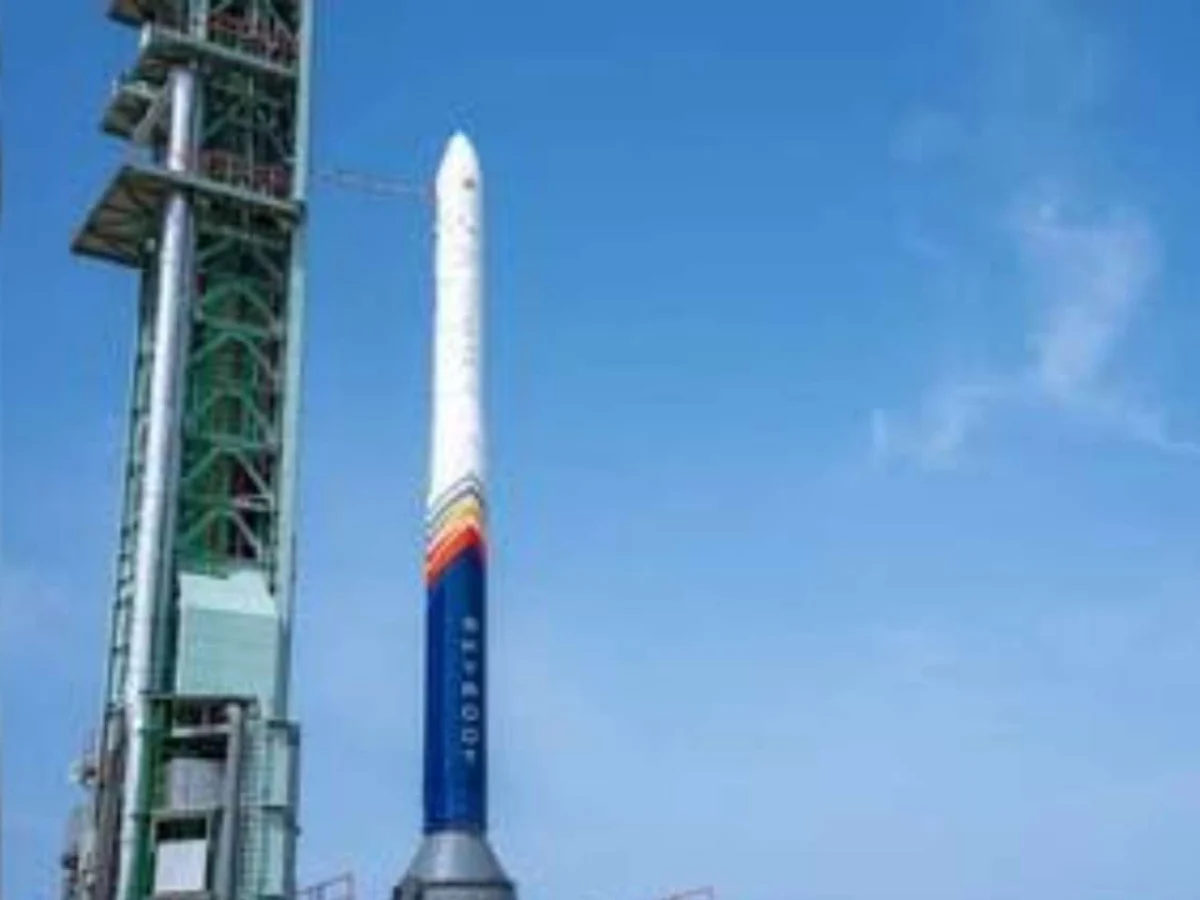
SRIHARIKOTA, India – July 16, 2024 – India stands on the cusp of a new era in space exploration and commercial enterprise as Skyroot Aerospace, a Hyderabad-based private space technology company, prepares for the inaugural orbital test flight of its Vikram-1 rocket. Scheduled for launch at 11:30 AM on July 18 from the First Launch Pad at the Satish Dhawan Space Centre in Sriharikota, this mission marks a monumental stride for the nation’s burgeoning private space sector. The "made-in-India" Vikram-1, following rigorous testing and final flight approval, is set to propel India into the global league of private space launch providers, fundamentally reshaping its role in the international space economy.
Pawan Kumar Chandana, co-founder and CEO of Skyroot Aerospace, encapsulated the profound significance of this moment, declaring the flight approval a "big moment for India." He emphasized the company’s overarching vision, stating, "After passing all tough tests, Vikram-1 is cleared to fly. This first launch is the start of our goal to open up space for everyone." This sentiment underscores a transformative shift from a predominantly state-controlled space program to one embracing dynamic private innovation and commercial accessibility.
A New Dawn for Indian Space: The Vikram-1 Mission
The impending launch of Vikram-1 is not merely another rocket launch; it is a profound declaration of intent and capability from India’s private sector. For decades, the Indian Space Research Organisation (ISRO) has been the sole torchbearer of the nation’s space ambitions, achieving remarkable feats from lunar missions to Mars orbiters. However, the liberalisation of India’s space policy in 2020 opened the floodgates for private enterprises, allowing them to participate actively in space activities, from manufacturing to launch services. Skyroot Aerospace, established in 2018 by former ISRO scientists, has emerged as a frontrunner in this new landscape, embodying the entrepreneurial spirit now driving India’s space narrative.
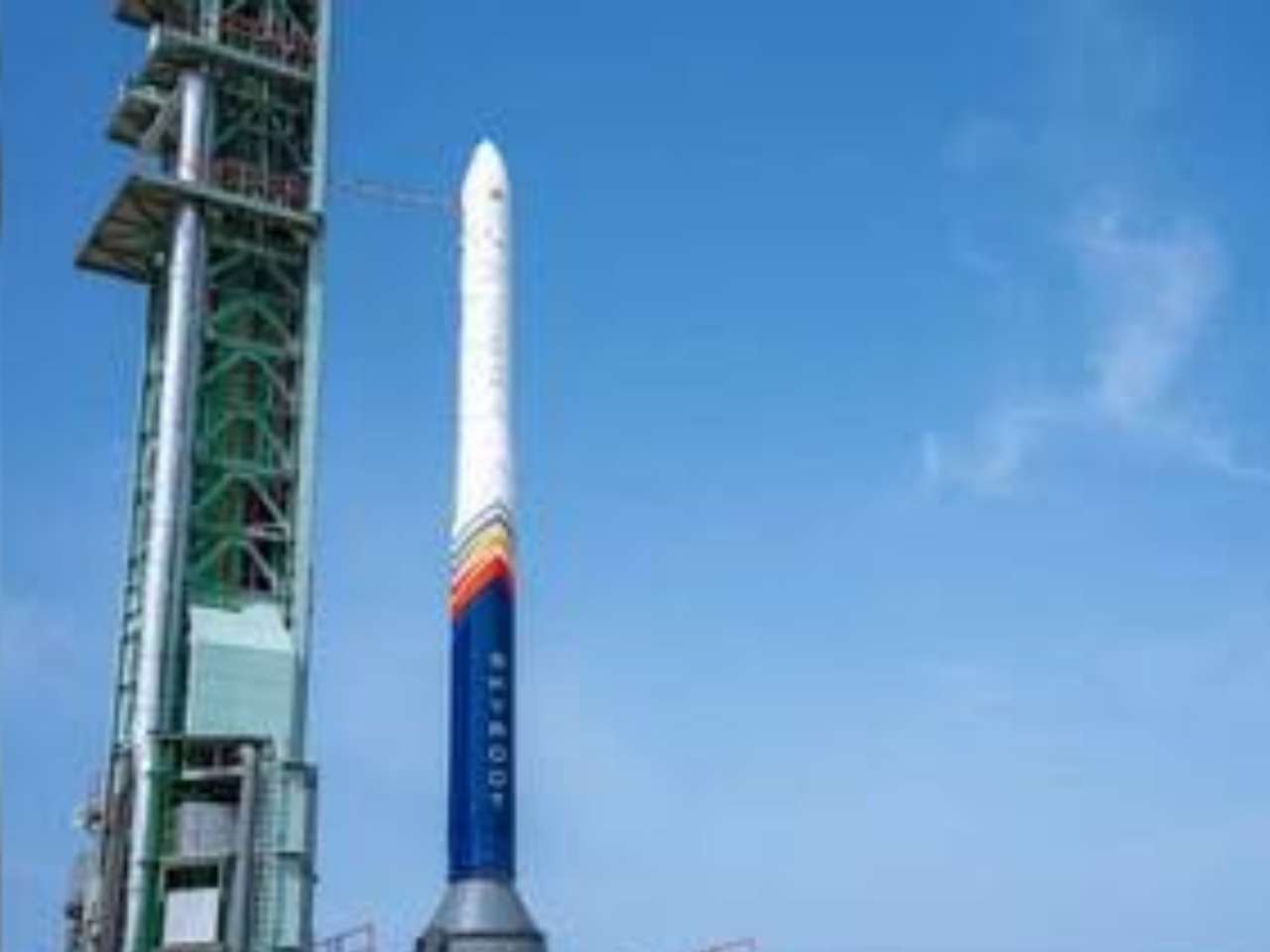
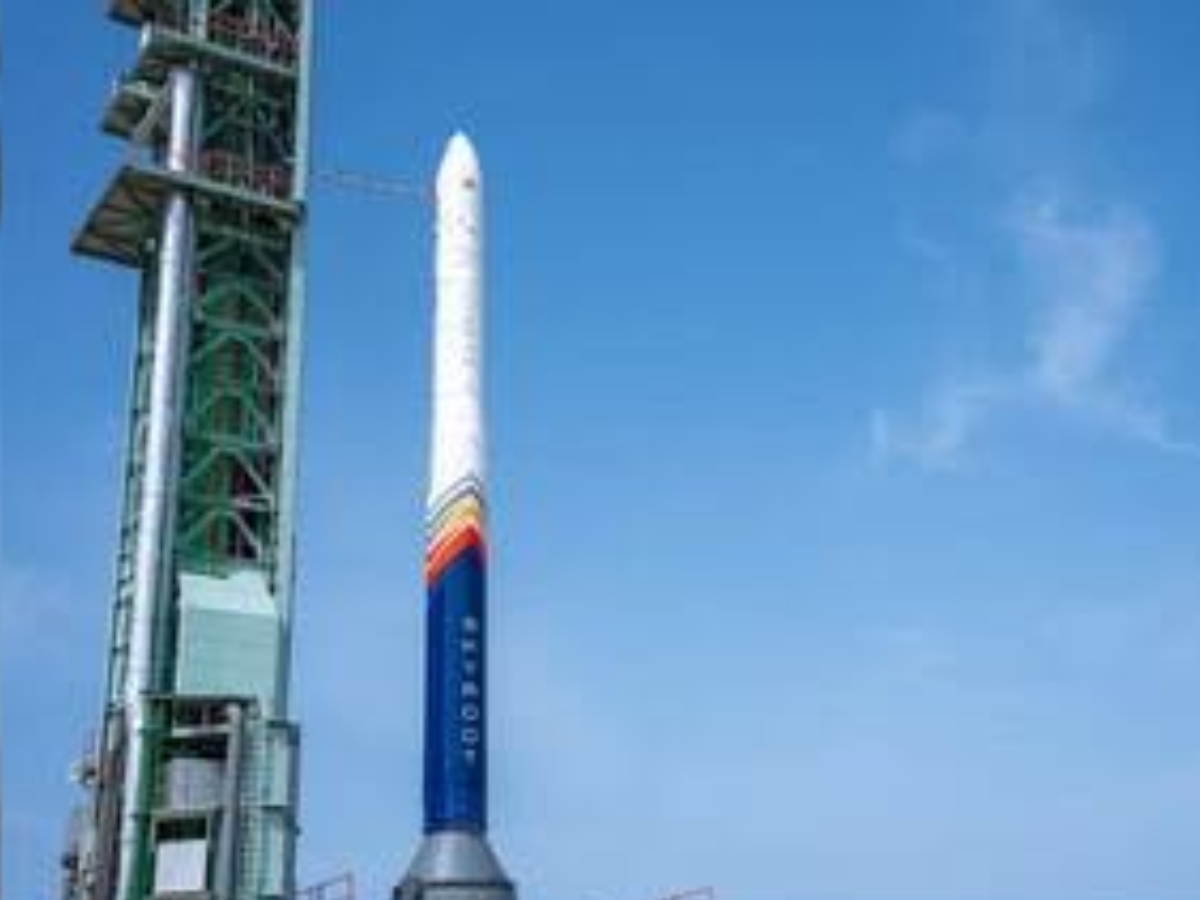
Vikram-1, named in honour of Dr. Vikram Sarabhai, the revered father of India’s space program, is designed as a seven-storey, multi-stage launch vehicle. Its primary objective is to deploy small satellites weighing up to 350 kg into Low Earth Orbit (LEO). This first mission targets an altitude of 450 km with a 60-degree orbital inclination, a critical parameter for validating its performance and precision. The rocket incorporates cutting-edge indigenous propulsion systems, including advanced 3D-printed engines and high-thrust solid-fuel boosters, housed within an all-carbon composite body – a testament to India’s growing self-reliance and technological prowess in advanced manufacturing.
)
The mission aims to gather crucial performance data across various parameters, including propulsion, stage separation, Guidance, Navigation, and Control (GNC) systems, and the overall vehicle’s behaviour in a real flight environment. This data will be instrumental in validating Skyroot’s design philosophies and supporting its transition to full-scale commercial launch operations, paving the way for a regular launch cadence.
Chronology of a Private Space Dream
The journey of Skyroot Aerospace, leading up to the Vikram-1 launch, is a compelling narrative of ambition, innovation, and perseverance within India’s evolving space ecosystem.

2018: Genesis of Skyroot Aerospace
Skyroot Aerospace was founded by Pawan Kumar Chandana and Naga Bharath Daka, both former scientists from ISRO. Their vision was clear: to democratise access to space by developing cost-effective and reliable private launch vehicles. This marked a pivotal moment, signaling the emergence of serious private players in a sector traditionally dominated by the state.
2020: India’s Space Reforms and Bolstered Private Sector
The Indian government’s announcement of sweeping space sector reforms in 2020, including the establishment of the Indian National Space Promotion and Authorisation Centre (IN-SPACe), provided the necessary regulatory framework and encouragement for private companies. This policy shift was crucial for Skyroot and other startups, offering a pathway for collaboration with ISRO and access to its facilities, expertise, and launch infrastructure. Skyroot quickly became a beneficiary of this new environment, gaining momentum for its ambitious projects.
)
2021-2022: Technological Milestones and Funding
Over these years, Skyroot made significant progress in developing and testing various sub-systems for its Vikram series of rockets. This included successful hot-fire tests of its Dhawan-1 cryogenic engine, a 3D-printed liquid engine, and solid-fuel motors. The company also secured substantial funding rounds, attracting both domestic and international investors who recognised the immense potential of India’s private space market. These investments fueled research, development, and the scaling up of their manufacturing capabilities.
November 18, 2022: Vikram-S – The Pathfinder Mission
A defining moment arrived with the launch of Vikram-S, Skyroot’s suborbital demonstrator rocket, on November 18, 2022. This mission, aptly named ‘Prarambh’ (the beginning), etched Skyroot’s name in history as the first private company in India to successfully launch a rocket into space. While Vikram-S was a suborbital flight designed to test critical technologies and validate the company’s propulsion systems, it was a monumental proof-of-concept. It demonstrated the viability of private sector involvement in rocket launches and paved the way for more ambitious orbital missions like Vikram-1. The success of Vikram-S garnered immense national pride and international attention, showcasing India’s readiness for private space ventures.
)
Leading Up to July 18, 2024: Final Preparations and Approvals
In the months leading to the Vikram-1 launch, Skyroot Aerospace has been engaged in an intensive phase of integration, testing, and regulatory approvals. All components of Vikram-1 have been meticulously assembled and integrated onto the launch pad at Sriharikota. The company’s state-of-the-art launch control centre has conducted exhaustive final checks on the rocket’s systems and validated seamless communication links with all telemetry ground stations and tracking radars. Furthermore, concerned authorities have issued the necessary airspace and maritime notices, formally designating restricted zones along Vikram-1’s ascent and impact corridor for launch day. This rigorous process underscores the professionalism and adherence to safety standards characteristic of established space agencies, now being replicated by India’s private sector.
Supporting Data: Engineering Marvels and Diverse Payloads
Vikram-1 is a testament to sophisticated engineering and advanced material science. Its all-carbon composite body offers significant advantages in terms of strength-to-weight ratio, crucial for optimising payload capacity and overall launch efficiency. The indigenous propulsion systems, particularly the 3D-printed engines, represent a paradigm shift in manufacturing. Additive manufacturing reduces lead times, lowers costs, and allows for complex geometries not feasible with traditional methods, leading to more efficient engine designs. The high-thrust solid-fuel boosters provide the initial powerful thrust required to overcome Earth’s gravity, ensuring a robust lift-off.
)
The Mission’s Tech-Demo Payloads:
The maiden flight of Vikram-1 is not just a test of the rocket itself; it also serves as an invaluable platform for four diverse technology demonstration payloads, showcasing the collaborative spirit of India’s space ecosystem:
- Grahaa Space’s Solaras S3 satellite (Bengaluru): Incubated at the Indian Institute of Space Science and Technology (IIST), Solaras S3 is likely designed to test new technologies for Earth observation or communication. Its inclusion highlights the strong academic and startup ecosystem fostering space innovation in India.
- Embrace (space-debris removal robotic arm by Hyderabad startup Cosmoserve Space): This payload addresses one of the most pressing challenges in orbital mechanics – space debris. Embrace aims to demonstrate technologies for actively removing defunct satellites or rocket stages, a critical capability for ensuring the long-term sustainability of space operations. Cosmoserve Space’s contribution underscores the innovative solutions emerging from Indian startups for global space challenges.
- Skyroot’s own Scope satellite: This in-house payload will likely test various proprietary technologies developed by Skyroot, such as new communication systems, sensor arrays, or structural components, gathering data crucial for future missions and product development.
- Orbital demonstration from German firm DCUBED: The inclusion of an international payload from DCUBED, a German company specialising in deployable structures and small satellite components, signifies the global trust and interest in India’s emerging private launch capabilities. It demonstrates Vikram-1’s potential as a competitive and reliable launch service provider on the international stage.
Symbolic Cargo:
Beyond its technological and commercial objectives, the Vikram-1 mission carries a poignant symbolic cargo. It will host 18-carat gold micro-sculptures of three luminaries who profoundly shaped India’s scientific and space journey: Sir C.V. Raman (Nobel laureate in Physics), Dr. Vikram Sarabhai (father of India’s space program), and Dr. A.P.J. Abdul Kalam (renowned scientist and former President of India). These tributes underscore the deep respect for India’s scientific heritage. Additionally, Cosmos Diamonds’ artwork titled "Cosmic Bloom" will journey into orbit, blending art with science and celebrating the human aspiration to explore the cosmos.
)
Official Responses and Endorsements
The enthusiasm surrounding the Vikram-1 launch is palpable, particularly from Skyroot’s leadership. Pawan Kumar Chandana’s earlier statement about "opening up space for everyone" reflects a broader vision that extends beyond commercial success to fostering a vibrant and accessible space industry.
Naga Bharath Daka, co-founder and COO of Skyroot Aerospace, further articulated the collective effort behind this monumental achievement: "The launch represents the hopes and hard work of around 1,000 people, the contributions of over 400 suppliers, and nearly 3,000 days of resolve to build a global offering from India." This statement highlights the extensive ecosystem of engineers, technicians, suppliers, and collaborators who have contributed to making Vikram-1 a reality. He also emphasised the iterative nature of innovation: "With the in-flight data gathered from this mission, we will return to the shop floor to learn, improve, and build further." This commitment to continuous improvement is vital for establishing a reliable and competitive launch service.
)
While specific official responses from government bodies like IN-SPACe or ISRO are often reserved until after a successful launch, the very fact that Skyroot has received flight approval and access to ISRO’s launch facilities speaks volumes. It signifies the government’s strong endorsement of private sector participation and its recognition of companies like Skyroot as integral partners in achieving India’s ambitious space goals. This collaborative model, where ISRO provides mentorship and infrastructure, while private players inject agility and market-driven innovation, is becoming a hallmark of India’s new space strategy.
Implications: Reshaping India’s Space Future
The launch of Vikram-1 carries far-reaching implications, not just for Skyroot Aerospace but for India’s economy, technological landscape, and its standing in the global space arena.
)
Economic Growth and "Make in India":
This mission is a powerful embodiment of the "Make in India" initiative. By designing, developing, and manufacturing a complex orbital launch vehicle entirely within the country, Skyroot demonstrates India’s indigenous capabilities in high-tech manufacturing. This fosters job creation across various skill sets, from advanced engineering to precision manufacturing, and stimulates growth in associated industries. The success of Vikram-1 will likely attract further investment into the Indian space sector, creating a multiplier effect on the national economy.
Democratising Access to Space and Global Market Share:
The global small satellite market is experiencing exponential growth, driven by constellations for broadband internet, Earth observation, and IoT applications. Vikram-1 is specifically tailored to cater to this burgeoning demand, offering a dedicated and potentially more cost-effective launch solution compared to larger, more expensive rockets. By providing reliable access to LEO, India can capture a significant share of this multi-billion dollar market, positioning itself as a preferred launch destination for international customers. This democratisation of space access will empower more startups, universities, and developing nations to deploy their satellites, accelerating innovation worldwide.
)
Technological Advancements and Spin-offs:
The development of Vikram-1 has pushed the boundaries of technological innovation in India. The use of advanced composites, 3D-printed engines, and sophisticated GNC systems will lead to valuable technological spin-offs that can benefit other sectors like aviation, defence, and advanced manufacturing. The expertise gained in systems integration, propulsion, and avionics will contribute to a deeper pool of highly skilled professionals, reinforcing India’s reputation as a hub for scientific and engineering talent.
Strategic Autonomy and International Collaboration:
While ISRO continues its ambitious missions, a vibrant private launch industry enhances India’s strategic autonomy in space. It reduces reliance on foreign launch providers and provides redundancy for critical national assets. Simultaneously, by attracting international payloads like DCUBED’s, India strengthens its position as a reliable global partner in space exploration and commerce. This fosters greater international collaboration, sharing of knowledge, and mutual growth in the global space community.
)
Inspiring the Next Generation:
The success of Skyroot and the visible progress of India’s private space sector will undoubtedly inspire a new generation of scientists, engineers, and entrepreneurs. It demonstrates that audacious dreams can be realised through innovation, perseverance, and a supportive ecosystem. This inspiration is crucial for sustaining the pipeline of talent required to drive India’s long-term space ambitions.
In conclusion, the launch of Vikram-1 on July 18 is far more than a technical demonstration; it is a symbolic ignition of India’s private space dreams. It represents years of relentless effort, strategic policy shifts, and a bold vision to "open up space for everyone." As the countdown to 11:30 AM on July 18 begins, the world watches with anticipation, ready to witness India’s private sector take its definitive leap into orbital space, forever altering the trajectory of the nation’s space journey. The data gathered from this maiden flight will not only be foundational for Skyroot’s future commercial aspirations but will also serve as a beacon for the entire Indian private space industry, signaling its arrival on the global stage.
