

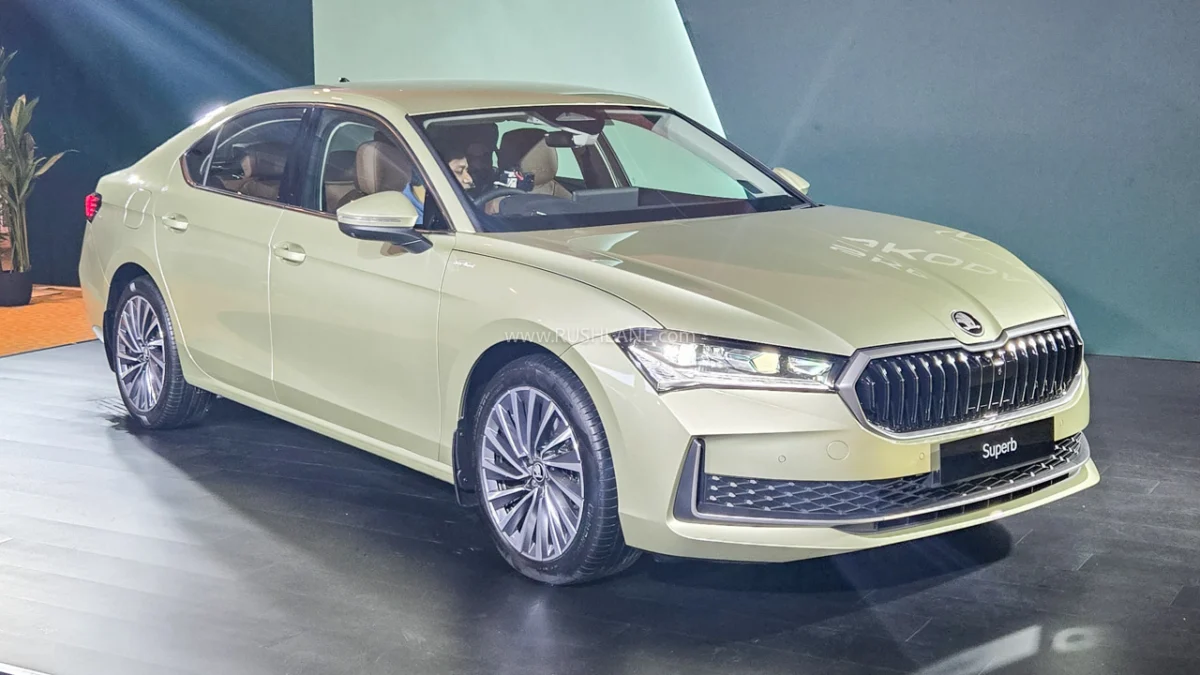
The Indian automotive landscape, currently dominated by a relentless surge in SUV popularity, is about to witness the return of one of its most respected nameplates. Skoda Auto India has officially unveiled the fourth-generation Superb sedan, marking a significant pivot in the brand’s regional strategy. Most notably, the unveiling confirms the return of the "TDI" diesel engine to the Skoda lineup—a powertrain choice that was once the bedrock of the brand’s success in the subcontinent before being discontinued in 2020.
As the flagship of Skoda’s internal combustion engine (ICE) range, the new Superb arrives not just as a luxury vehicle, but as a statement of intent. By reintroducing a diesel variant in a market where many competitors have fled to petrol-only or hybrid-only strategies, Skoda is positioning itself to capture a niche but loyal demographic of long-distance cruisers and executive chauffeurs.

Main Facts: A New Chapter for the "Budget Bentley"
The fourth-generation Skoda Superb for India is a sophisticated evolution of the outgoing model, blending sharper aesthetics with enhanced technological integration. While the previous iteration was eventually restricted to a 2.0-liter TSI petrol engine, the 2027 launch will prioritize the 2.0-liter TDI diesel engine.
Key highlights of the unveiling include:

- Powertrain: A 2.0-liter TDI diesel engine producing 147 bhp and 360 Nm of torque, paired with a 7-speed DSG automatic transmission.
- Drivetrain: Unlike the AWD (All-Wheel Drive) version showcased at previous international events, the India-spec model will be Front-Wheel Drive (FWD).
- Import Status: The vehicle will be brought to India as a Completely Built Unit (CBU), specifically in the top-tier Laurin & Klement (L&K) trim.
- Market Positioning: It will serve as a direct rival to the Toyota Camry Hybrid, though it will occupy a slightly higher price bracket, estimated in the Rs 60 lakh (ex-showroom) range.
- Launch Timeline: A strategic delay has been set, with the official market launch scheduled for June 2027 to align with evolving international trade agreements.
Chronology: The Journey from BS6 Exit to 2027 Return
To understand the significance of this unveiling, one must look at the timeline of Skoda’s powertrain evolution in India.
- April 2020: With the implementation of Bharat Stage 6 (BS6) emission norms, the Volkswagen Group (including Skoda) made the radical decision to phase out all diesel engines in India. The "Dieselgate" aftermath and the high cost of upgrading small diesel engines to meet stricter norms led the company to adopt a "Petrol-only" strategy.
- 2020–2023: The third-generation Superb continued to sell in India as a petrol-only flagship. Despite its merits, the absence of a high-torque, fuel-efficient diesel engine was felt by fleet operators and high-mileage users.
- 2024–2025: Skoda began re-evaluating its stance. At the 2025 Bharat Mobility Expo, the brand showcased the Superb Diesel 4X4, gauging public interest. The overwhelming feedback from enthusiasts and loyalists confirmed that the appetite for a premium diesel sedan remained high.
- Current Unveiling: Skoda officially showcases the 4th Generation Superb TDI alongside the Slavia facelift.
- June 2027: The projected launch date. This timeline is specifically chosen to coincide with the anticipated implementation of the India-EU Free Trade Agreement (FTA), which is expected to lower import duties on European-made vehicles, making the CBU Superb more price-competitive.
Supporting Data: Dimensions, Performance, and Aesthetics
The 4th Gen Superb is not merely a facelift; it is a larger, more aerodynamic vessel designed for maximum presence and efficiency.

Dimensions and Capacity
The vehicle has grown in length, emphasizing its "executive" credentials.
- Length: 4,912 mm
- Width: 1,849 mm
- Height: 1,481 mm
- Wheelbase: 2,841 mm
- Boot Capacity: A staggering 645 liters, accessible via a powered, hatchback-style tailgate that offers SUV-like practicality in a sedan silhouette.
Aesthetics and Exterior Features
The hero color for the Indian unveiling is "Ice Tea," a metallic beige-gold hue that emphasizes the car’s premium positioning. Other available colors will include Pebble Silver, Carmine Red, Cobalt Blue, Ebony Black, Graphite Grey, Energy Blue, and Purity White.

The exterior design language follows Skoda’s "Modern Solid" philosophy, characterized by:
- Matrix LED Headlights: Providing superior illumination and a distinct visual signature.
- The Butterfly Grille: Larger and more pronounced, featuring vertical slats.
- 18-inch Alloy Wheels: Designed for a balance between ride comfort and visual appeal.
- C-Shaped LED Tail Lights: A signature Skoda element, now with a more crystalline, 3D effect.
Interior Luxury and Technology
The cabin is where the Superb truly earns its name. For the Indian market, Skoda has opted for a "Cognac" leather interior, providing a warm, high-end ambiance.

- Infotainment: A massive 12.9-inch floating touchscreen serves as the command center.
- Smart Dials: Skoda has introduced three rotary dials with integrated digital displays below the screen, allowing users to control volume, fan speed, and drive modes without diving into complex menus—a nod to ergonomic traditionalism.
- Audio: A 14-speaker Canton sound system tailored for the sedan’s acoustics.
- Safety: The vehicle is equipped with 10 airbags, a 360-degree camera system, and Level-2 ADAS (Advanced Driver Assistance Systems).
Official Responses: The Strategic Rationale
While official press releases emphasize the "luxury and heritage" of the Superb, internal strategies suggest a two-pronged approach: "Diesel on Demand" and "FTA Leveraging."
Skoda executives have hinted that while the global shift is toward electrification, the Indian market remains unique. The vast distances between cities and the lack of a robust high-speed EV charging infrastructure make a high-efficiency diesel engine a practical luxury. By bringing back the TDI, Skoda is responding to direct customer feedback.

Regarding the 2027 launch date, the company’s stance is one of fiscal prudence. Currently, CBUs (Completely Built Units) attract import duties exceeding 100%. If the India-EU FTA is ratified, these duties could drop significantly. Skoda’s decision to wait suggests they intend to pass these savings to the consumer, allowing the Superb to compete more aggressively with the locally-assembled Toyota Camry.
Implications: A Shifting Segment and the "Diesel Revival"
The reintroduction of the Superb TDI carries several implications for the Indian automotive industry.

1. The Survival of the Premium Sedan
With the departure of the Hyundai Sonata and Honda Accord, the Toyota Camry was left as the sole survivor in the mainstream premium sedan segment. The Superb’s return ensures that the segment remains a two-horse race, providing an alternative to those who prefer European driving dynamics and "oil-burner" torque over Japanese hybrid efficiency.
2. The "Diesel Comeback" for Skoda
If the Superb TDI proves successful, it paves the way for the return of diesel engines in other Skoda-Volkswagen products. There is already significant speculation regarding a Kodiaq Diesel. This would represent a complete U-turn from the Group’s 2020 "Petrol-only" manifesto, signaling a more pragmatic, market-specific approach to powertrains.

3. A Focus on Chauffeur Comfort
Skoda has introduced a "Sleep Package" for the India-spec Superb, featuring winged headrests and rear sunblinds. This acknowledges that a significant portion of Superb owners in India are chauffeur-driven. However, the decision to omit a sunroof—while practically sound for India’s harsh sun—may be a polarizing move in a market where sunroofs are often equated with luxury status.
4. Critical Misses and Competitive Pressure
Despite its many strengths, the India-spec Superb lacks certain features found in lower-tier models like the Slavia or in its direct rival, the Camry. The absence of powered recline for the rear seats and the lack of rear-seat ventilation/massaging functions are notable omissions for a car costing Rs 60 lakh. Skoda will need to rely heavily on its brand equity and the superior torque of the TDI engine to justify the premium over the Camry.

Conclusion
The unveiling of the 4th Generation Skoda Superb TDI is a bold counter-trend move. In an era of downsizing and electrification, Skoda is betting on the enduring appeal of a large, comfortable, diesel-powered executive sedan. By timing the launch with the India-EU FTA, Skoda is playing a long game—one that prioritizes sustainable pricing and long-term market presence over immediate, high-duty sales. For the Indian executive who values range, prestige, and the effortless pull of a TDI engine, the wait until 2027 may well be worth it.
