

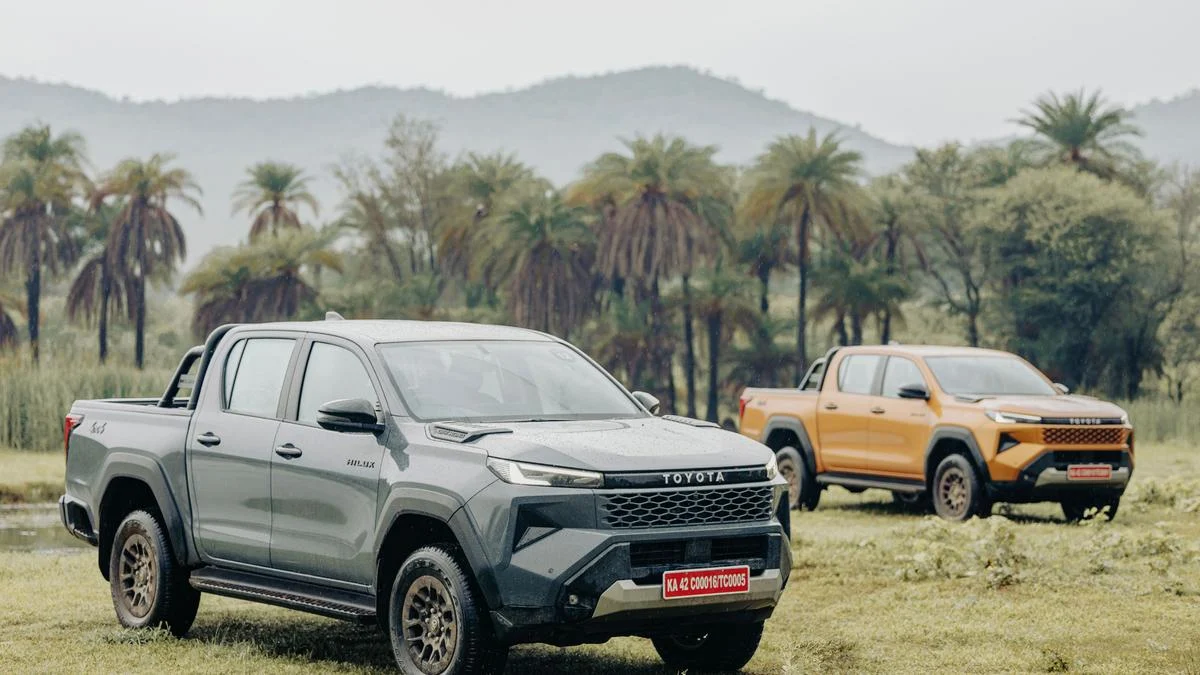
The Toyota Hilux occupies a singular space in the Indian automotive landscape. While the industry often loosely applies the term "lifestyle vehicle" to various SUVs, the Hilux is perhaps the only machine on sale today that truly embodies the term in its most rugged, global sense. It is not merely a pickup truck; it is a cultural phenomenon that has traversed the most inhospitable terrains on Earth—from the frozen wastes of Antarctica to the blistering sands of the Sahara.
In India, the latest update to this legendary nameplate marks a significant moment for enthusiasts. Toyota has not sought to reinvent the wheel; instead, they have applied a meticulous set of refinements designed to modernize the vehicle’s appeal while doubling down on the indestructible DNA that has made it a global icon.
1. Main Facts: The Evolution of an Icon
The updated Toyota Hilux arrives in the Indian market with a revised design language, a streamlined powertrain lineup, and a reconfigured interior that prioritizes utility and modern connectivity over traditional luxury.

Key Highlights of the Update:
- Design Philosophy: The introduction of the "Cyber Sumo" design language, featuring a bolder, more aggressive front fascia.
- Powertrain: The 2.8-litre four-cylinder turbo-diesel remains the heart of the vehicle, now exclusively paired with a six-speed automatic transmission across the range.
- Interior Tech: A larger, high-definition touchscreen infotainment system featuring wireless Apple CarPlay and Android Auto.
- Strategic Deletions: In a move toward rugged utilitarianism, Toyota has replaced leather upholstery with high-grade fabric and transitioned from automatic to manual climate control.
- Pricing: The range is positioned between INR 31.99 lakh and INR 36.69 lakh (ex-showroom), targeting a niche audience of adventure seekers and estate owners.
The Hilux continues to utilize a classic ladder-frame chassis, a construction method increasingly rare in an era of monocoque crossovers. This foundation ensures that the Hilux remains a "proper" truck, capable of handling extreme payloads and mechanical abuse that would sideline most modern SUVs.
2. Chronology: From Workhorse to Lifestyle Statement
The journey of the Hilux in India is a relatively recent chapter in a story that began globally in 1968. For over five decades, the Hilux has been the backbone of industries ranging from mining to agriculture across Australia, Southeast Asia, and Africa.

- The Global Foundation: Over eight generations, the Hilux earned its "indestructible" reputation, famously cemented by media appearances where it survived being placed atop a demolished building and submerged in the ocean.
- The Indian Entry: Toyota Kirloskar Motor (TKM) officially introduced the Hilux to India in early 2022. It was a bold move, entering a segment that had seen limited success with the Isuzu D-Max V-Cross.
- The 2024 Refresh: Recognizing that the Indian buyer uses the Hilux as a mix of a primary luxury vehicle and a secondary adventure tool, Toyota observed market feedback. The latest update addresses the need for better "curb appeal" and modern tech, while curiously stripping back some interior luxuries to reinforce its "tough-as-nails" persona.
This chronological shift reflects Toyota’s understanding of the Indian consumer: the Hilux buyer isn’t looking for a "soft" SUV; they are looking for a vehicle that feels like an investment in capability.
3. Supporting Data: Technical Specifications and Performance Analysis
The "Cyber Sumo" Aesthetic
The most immediate change is the visual presence. The previous Hilux featured a more conservative, almost utilitarian front end. The new "Cyber Sumo" philosophy introduces a flatter, more vertical bonnet line and a redesigned hexagonal grille.
The lighting signature has been updated with revised LED clusters that give the truck a more "techno-rugged" look. The 17-inch alloy wheels, finished in black, provide a stark contrast to the body paint and emphasize the vehicle’s high ground clearance. A subtle but vital addition is the integrated side step in the rear cargo bed, facilitating easier access to the 435-liter load area.

Powertrain and Engineering
Under the hood, the Hilux retains the 2.8-litre 1GD-FTV diesel engine. This unit is a masterclass in torque delivery:
- Power Output: 201 PS at 3,000–3,400 rpm.
- Torque: A massive 500 Nm available from as low as 1,600 rpm.
- Performance: Despite its 2.2-ton kerb weight, the Hilux clocks a 0–100 km/h time of approximately 12 seconds.
The decision to move to a six-speed automatic transmission exclusively reflects the urban-rural mix of the Indian buyer. The gearbox is tuned for torque multiplication rather than lightning-fast shifts, ensuring that when the vehicle is loaded or climbing steep inclines, the power delivery remains linear and predictable.
Interior Dynamics: The Trade-off
The interior of the updated Hilux presents a fascinating study in Toyota’s priorities.

- The Gains: The new infotainment system is the centerpiece. The inclusion of wireless smartphone integration removes clutter from the cabin, and the revised center console features a more premium finish. The new steering wheel design is more ergonomic, feeling substantial in the driver’s hands.
- The Losses: To maintain a competitive price point while upgrading the mechanical and tech aspects, Toyota has removed electric seat adjustment and leather upholstery. The shift to manual AC and the lack of rear AC vents are notable omissions for a vehicle costing nearly 40 lakh on-road. However, from a "lifestyle" perspective, fabric seats are often preferred by off-roaders as they are more breathable and durable under extreme temperature fluctuations.
4. Official Responses and Market Strategy
While Toyota has not released a formal "mission statement" for this specific refresh, their market actions speak volumes. By simplifying the lineup to an automatic-only 4×4 and 4×2 range, TKM is positioning the Hilux as a premium alternative to the Fortuner for those who find the traditional SUV format too restrictive.
Toyota’s strategy in India hinges on Total Cost of Ownership (TCO) and Resale Value. The Hilux is engineered for a 20-year service life. By sticking with hydraulic power steering—despite global moves toward electric systems—Toyota is catering to the "purist" driver who demands feedback from the front wheels when navigating rocky terrain.
Industry analysts suggest that Toyota is deliberately keeping the Hilux’s feature list "essential" rather than "extravagant." This prevents the vehicle from competing directly with their own luxury offerings while ensuring it remains the undisputed king of the pickup segment, where the only real competitor is the aging Isuzu V-Cross.

5. Implications: The Future of the Lifestyle Pickup in India
The updated Toyota Hilux has profound implications for the Indian automotive market, signaling a shift in how "luxury" is defined by a growing segment of buyers.
The Rise of the Adventure Economy
As domestic tourism shifts toward overlanding and remote exploration, the Hilux becomes more than a vehicle; it is a platform. The massive aftermarket support for the Hilux—ranging from canopy tents to specialized suspension kits—means that many of these vehicles will never remain "stock." Toyota’s focus on the ladder-frame’s robustness ensures the vehicle can handle these heavy modifications.
Urban Challenges vs. Rural Mastery
The Hilux’s size remains its greatest hurdle in Indian metros. With a length exceeding 5.3 meters, it is a challenge to park and maneuver in congested cities like Mumbai or Bangalore. However, for the "Farmhouse Class" or those living in Tier-2 and Tier-3 cities, the Hilux offers a level of status and utility that no mid-size SUV can match.

Redefining the Value Proposition
The removal of "luxury" features like leather seats in a 35-lakh-plus vehicle is a risky move in a feature-obsessed market like India. However, the Hilux operates on a different value scale. Its value is not in the softness of its dashboard but in the strength of its driveshafts.
Conclusion:
The updated Toyota Hilux is a reminder that some icons do not need to change their soul to remain relevant. It remains a vehicle of contradictions: it is too big for the city yet perfect for the country; it lacks some modern creature comforts yet offers tech where it matters; it is expensive, yet arguably represents the best long-term value in the 4×4 space.
For the Indian consumer, the message is clear: You don’t buy a Hilux for the features. You buy a Hilux for the freedom to go where the road ends and the confidence that you will always make it back. In an increasingly homogenized car market, that remains a powerful, if niche, proposition.
