Introduction
In the rapidly evolving landscape of the Indian automotive industry, few vehicles have carried the weight of a brand’s transformation as successfully as the Tata Nexon. Since its inception in 2017, the Nexon has evolved from a bold newcomer into the "golden goose" of Tata Motors, consistently topping sales charts and redefining safety standards in the sub-four-meter SUV category. However, as competitors sharpen their knives with high-tech offerings and aggressive styling, Tata Motors is preparing its most significant move yet.
Recent sightings of a next-generation Nexon test mule have sent ripples through the industry. This is not merely another facelift—of which the Nexon has had three—but a ground-up overhaul that promises to align the vehicle with Tata’s new "TATA.CARS" brand identity. With a boxier silhouette, a completely revamped structural philosophy, and a tech-heavy interior, the next-gen Nexon is poised to transition from a mass-market favorite to a premium segment-leader.
Main Facts: A Glimpse into the Future
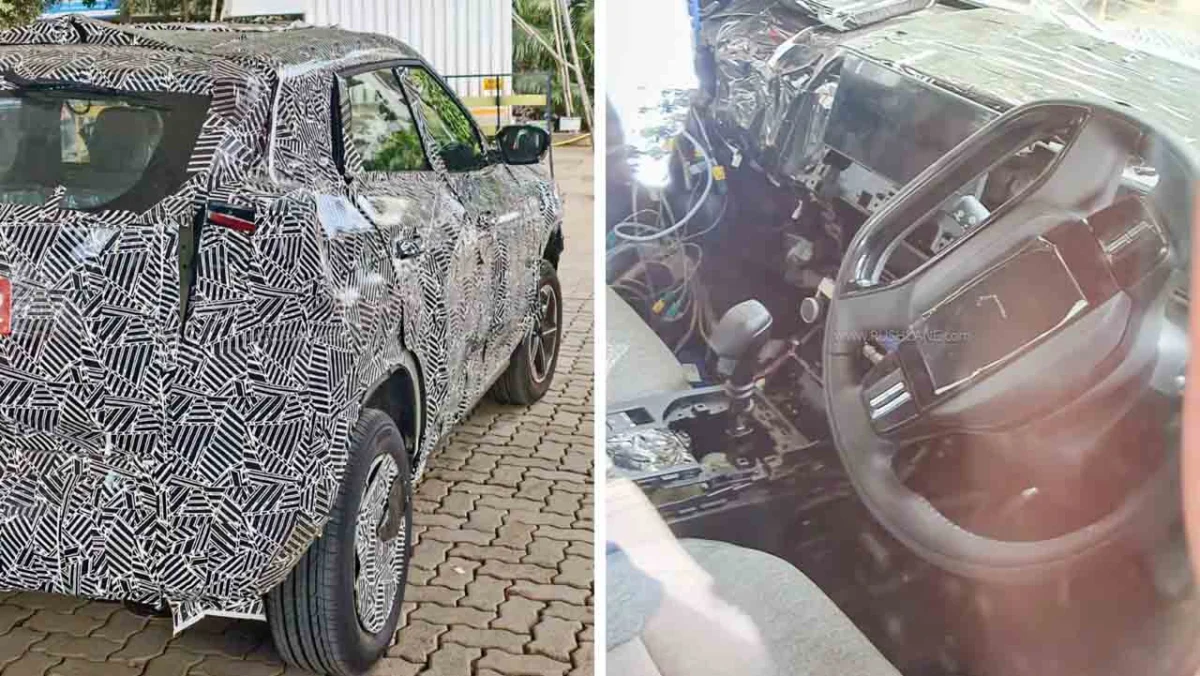
The latest intelligence regarding the next-generation Nexon comes from a series of high-resolution spy shots and video footage captured by automotive enthusiast Punit Patil. These images provide the second recorded sighting of the SUV, offering a rare look at the interior during its early developmental phase.

A New Structural Philosophy
Unlike the current model, which retains the core silhouette of the 2017 original, the next-generation Nexon (internally referred to as a generational leap) features a revised overall structure. The most notable change is the side profile. The sloping, coupe-like roofline that defined the original Nexon appears to have been traded for a straighter, more traditional SUV roofline. This boxier aesthetic serves a dual purpose: it enhances the vehicle’s "road presence" and addresses a long-standing critique regarding rear-seat headroom and ingress/egress for taller passengers.
Interior Revelations
The spy shots of the interior reveal a cabin in a state of "functional chaos," typical of early-stage test mules. Much of the dashboard has been stripped away to accommodate data loggers and diagnostic equipment. However, several key elements remain visible:
- The Infotainment Hub: A large, floating touchscreen remains central to the dashboard, though its final interface is likely to be a significant upgrade over the current unit.
- Transmission and Controls: The test mule was equipped with a six-speed manual gearbox, confirming that Tata will continue to cater to driving enthusiasts and budget-conscious buyers across Petrol, Diesel, and potentially CNG variants.
- The EPB Upgrade: One of the most significant finds is the inclusion of an Electronic Parking Brake (EPB) in an Internal Combustion Engine (ICE) variant. Previously a feature reserved for the Nexon EV or higher-end competitors, this indicates Tata’s intention to move the Nexon upmarket.
Chronology: The Journey of the Nexon
To understand the significance of the next-gen model, one must look at the timeline of the Nexon’s development, which mirrors Tata Motors’ own ascent in the global automotive hierarchy.

- 2017 – The Birth of an Icon: Tata Motors launches the Nexon, introducing the "Impact Design" language and securing a 4-star (later 5-star) Global NCAP rating—a first for an Indian car.
- 2020 – The First Major Refresh: The Nexon receives a substantial facelift to comply with BS6 emission norms, featuring a sharper "Humanity Line" grille and the introduction of the Nexon EV, which would go on to dominate the Indian electric car market.
- 2023 – The Digital Overhaul: Tata launches the third major iteration, bringing in a futuristic LED light bar, a 10.25-inch infotainment system, and a two-spoke steering wheel with an illuminated logo. This version bridged the gap between traditional mechanical engineering and modern software-defined vehicles.
- 2024 (Present) – The Next Generation Begins: The first test mules of the completely redesigned Nexon surface. This marks the end of the original platform’s lifecycle and the beginning of a new era built on more modular, tech-ready architecture.
Supporting Data: Engineering and Market Context
The next-generation Nexon is not being developed in a vacuum. It is a strategic response to shifting market dynamics and engineering possibilities.
Powertrain Continuity and Evolution
While the chassis is undergoing a revolution, the heart of the Nexon is expected to remain familiar yet refined. Industry analysts expect Tata to carry forward the 1.2L Turbo Petrol and 1.5L Turbo Diesel engines. However, these units are likely to be tuned for better efficiency and lower NVH (Noise, Vibration, and Harshness) levels to match the premium aspirations of the new brand identity.
Furthermore, the "TATA.CARS" strategy emphasizes multi-fuel flexibility. The next-gen Nexon is being designed from the outset to accommodate:

- Petrol/Diesel: Refined ICE engines with manual and DCA (Dual Clutch Automatic) options.
- CNG: Utilizing Tata’s innovative Twin-Cylinder technology to maintain usable boot space.
- EV: A dedicated electric version featuring the Acti.ev architecture, promising longer range and faster charging capabilities.
Anticipated Feature Set
Drawing parallels from the upcoming Tata Sierra and the recently refreshed Harrier/Safari, the next-gen Nexon is expected to "trickle down" several luxury features:
- Visual Tech: A QLED infotainment screen and a fully digital instrument cluster with navigation mirroring.
- Comfort: Ventilated front seats (and potentially rear seats in higher trims), powered seat adjustments, and winged headrests for long-distance comfort.
- Safety and Utility: A 360-degree high-definition camera system, camera washers (a segment first), and a comprehensive ADAS (Advanced Driver Assistance Systems) Level 2 suite.
Official Strategy: The "TATA.CARS" Identity
The development of the next-gen Nexon coincides with Tata Motors’ massive rebranding effort. The company is transitioning its passenger vehicle business to the "TATA.CARS" identity, which involves a total makeover of its dealership and service network.
The goal is to shed the "utilitarian" image often associated with the brand’s history in commercial vehicles and replace it with a "Tech-Luxury" persona. The next-gen Nexon is the vanguard of this movement. By giving the vehicle a more premium interior and a more imposing SUV stance, Tata is positioning the Nexon to compete not just with the Maruti Suzuki Brezza or Hyundai Venue, but also to tempt buyers away from the entry-level variants of mid-size SUVs like the Creta or Grand Vitara.

Implications: What This Means for the Industry
The arrival of a truly "new-gen" Nexon has several profound implications for the Indian automotive sector.
1. Pressure on Competitors
The inclusion of features like an Electronic Parking Brake and a boxier, "true SUV" design will force competitors to reconsider their mid-cycle refreshes. The sub-compact SUV segment is the most contested in India; if Tata successfully integrates premium features from the Harrier into the Nexon, it will reset the price-to-value expectations of the entire segment.
2. Strengthening the EV Moat
By developing the next-gen Nexon with an EV-first or EV-parallel mindset, Tata is ensuring its dominance in the electric space remains unchallenged. The structural changes (like the straighter roofline) will likely allow for more optimized battery packaging, potentially leading to a "Nexon EV Long Range" that could cross the 500km-per-charge threshold.

3. Ergonomic Shifts
The move away from the coupe-like silhouette is a significant admission that Indian consumers prioritize "space and stature" over "sporty styling." This shift could signal a broader trend in the industry where even compact vehicles are designed with a "big car" feel to satisfy the ego and comfort of the buyer.
Conclusion
The spy shots of the next-generation Tata Nexon represent more than just a new car in testing; they represent the maturation of an Indian automotive giant. By overhauling its most successful product, Tata Motors is demonstrating a refusal to rest on its laurels.
While the test mule currently sports a "Frankenstein" interior of old parts and exposed wires, the underlying changes—the boxier frame, the EPB, and the structural revisions—point toward a vehicle that will be more comfortable, more capable, and significantly more premium. As Tata Motors rolls out its "TATA.CARS" identity, the next-gen Nexon will undoubtedly be the centerpiece of its showrooms, aiming to prove once again that it is the benchmark by which all other compact SUVs are measured.

For the Indian consumer, the message is clear: the wait for the next evolution of the SUV is on, and if the early glimpses are any indication, the "golden goose" is about to get a lot more formidable.