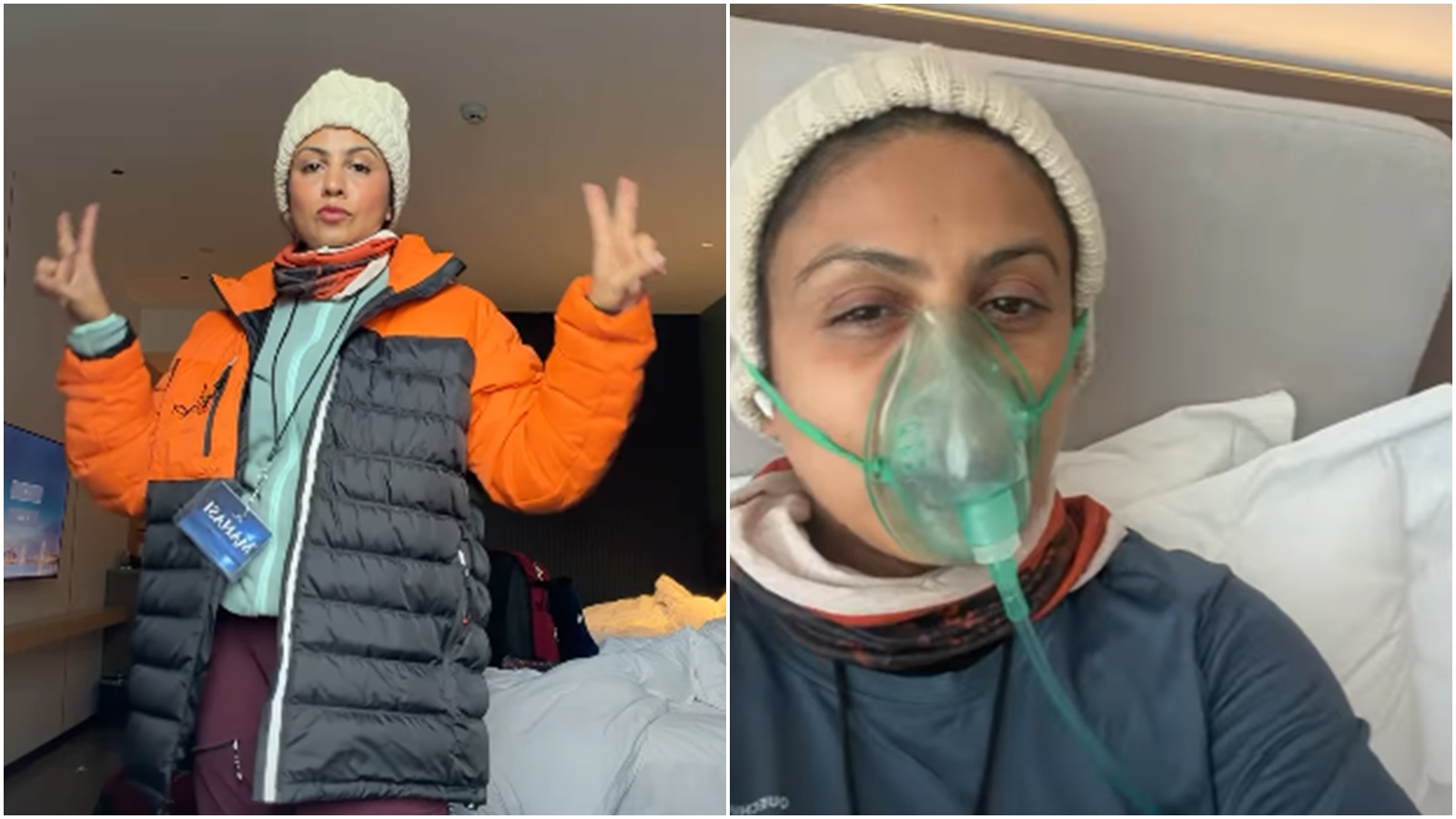
New Delhi | September 1, 2026 – The allure of spiritual journeys to sacred destinations like Kailash Mansarovar often comes with inherent risks, a reality that theatre and television actor Manasi Parekh recently confronted firsthand. Parekh, who had a narrow escape from the devastating Nepal-Tibet floods, has now opened up about a personal health struggle during her pilgrimage: acute mountain sickness (AMS). Her experience, stemming from what she described as a "stupid mistake," highlights the critical importance of understanding and respecting the physiological challenges posed by high altitudes.
Parekh recounted her ordeal in a candid video shared on her Instagram, detailing how washing her hair and then falling asleep with wet hair at high altitude led to a severe bout of AMS. "Mountains are not easy," she stated, emphasizing the severity of her condition. "I was on oxygen supply. And the doctor gave me medicines and told me not to have a head bath at night." Her experience serves as a potent reminder that even seemingly minor actions can have significant consequences in the unforgiving environment of the Himalayas.
The Ascent and the Sickness: A Personal Account
The Kailash Mansarovar Yatra, a pilgrimage revered by Hindus, Buddhists, Jains, and Bonpo, involves traversing some of the world’s highest motorable roads and undertaking strenuous treks. The spiritual rewards are immense, but the journey demands significant physical preparation and awareness of potential health hazards. Parekh’s narrative, while specific to her personal oversight, touches upon a common pitfall for many high-altitude travelers: underestimating the body’s acclimatization needs and the impact of environmental factors.
"In my stupidity, I washed my hair and slept off," Parekh admitted, highlighting the direct correlation she perceived between her actions and the onset of AMS. This candid admission, while perhaps tinged with self-reproach, has inadvertently shed light on a crucial aspect of high-altitude health management – maintaining core body temperature and avoiding prolonged exposure to cold, especially when the body is already working overtime to cope with reduced oxygen levels.
Understanding Acute Mountain Sickness: Expert Perspectives
To contextualize Parekh’s experience and provide broader guidance, medical professionals have weighed in on the complexities of AMS. Dr. Amit Saraf, Director of Internal Medicine at Jupiter Hospital, Thane, clarified the primary causes and symptoms of this condition. "Acute Mountain Sickness mainly occurs because the body is suddenly subjected to lower oxygen levels at high altitude, especially when the ascent is too fast," Dr. Saraf explained to indianexpress.com.
The symptoms of AMS can manifest in various ways, often mimicking other ailments, leading to potential misdiagnosis or underestimation of severity. Common indicators include:
- Headache: Often the most prominent symptom, it can range from mild to severe.
- Nausea and Vomiting: A feeling of sickness in the stomach, which can lead to loss of appetite.
- Dizziness: A sensation of unsteadiness or lightheadedness.
- Unusual Tiredness and Fatigue: A profound sense of exhaustion that goes beyond normal exertion.
- Poor Appetite: A decreased desire to eat, which can impact energy levels.
- Disrupted Sleep: Difficulty falling asleep or staying asleep, often accompanied by vivid dreams or nightmares.
Dr. Saraf was quick to point out that while washing one’s hair is not a direct cause of AMS, the associated exposure to cold and moisture can exacerbate the body’s struggle to acclimatize. "However, if you take a head bath in a cold, high-altitude environment and then sleep with wet hair, your body will be exposed to cold for a longer time, which could increase discomfort, fatigue, or poor sleep and thus make the already tough adjustment even more unpleasant," he elaborated. This suggests that Parekh’s experience, while perhaps not the direct cause of AMS, certainly contributed to her discomfort and potentially hindered her body’s ability to recover.
The Importance of Warmth and Dryness at Altitude
The adage "stay warm and dry" takes on paramount importance when venturing into high-altitude regions. The human body expends more energy at altitude to compensate for the thinner air and lower oxygen availability. When this physiological demand is compounded by external stressors like cold temperatures, wet clothing, or damp hair, the body’s resilience is significantly tested.
"At altitude, the body has to work harder to adjust to lower oxygen availability; when cold temperatures, wet clothes or wet hair, physical activity, and insufficient sleep are added, the stress on the body increases," explained Dr. Saraf. Therefore, maintaining a stable body temperature and avoiding unnecessary exposure to cold becomes crucial for facilitating acclimatization and minimizing discomfort.
While staying warm and dry does not entirely prevent AMS, it plays a vital role in making the acclimatization process more manageable. For individuals who do wash their hair at altitude, Dr. Saraf offers practical advice: "dry it fully, stay warm and do not go straight to bed while still wet." This simple yet effective guideline can significantly mitigate the risk of experiencing increased discomfort and fatigue.
Dr. Manjusha Agarwal, Consultant in Internal Medicine at Gleneagles Hospital, Mumbai, echoed this sentiment, emphasizing the need for complete hair drying and maintaining overall body warmth. "More importantly, people should ascend gradually, stay adequately hydrated, avoid excessive physical exertion during the first few days and pay attention to symptoms such as persistent headache, vomiting, severe dizziness, unusual tiredness or difficulty breathing," she advised.
Recognizing the Red Flags: When to Seek Medical Attention
The line between mild discomfort and a serious medical emergency can be thin at high altitudes. It is crucial for travelers to be aware of the escalating symptoms of altitude sickness and not dismiss them as mere inconveniences. While a mild headache or a slight feeling of nausea might be attributed to the altitude, persistent or worsening symptoms warrant immediate medical attention.
Dr. Saraf outlines critical warning signs that should not be ignored:
- Symptoms that worsen even at rest: If your headache or nausea intensifies despite not engaging in any physical activity, it’s a cause for concern.
- Difficulty in walking: Impaired coordination or an inability to walk normally can indicate a more severe form of altitude sickness.
- Confusion: Disorientation or a lack of clarity in thought processes is a serious symptom.
- Extreme drowsiness: Unusually deep sleepiness or a feeling of being unable to wake up fully.
- Shortness of breath when at rest: Experiencing breathlessness even when not exerting yourself is a critical sign.
- Persistent cough: A cough that doesn’t subside, especially if it’s producing frothy or pink sputum, can be indicative of high-altitude pulmonary edema (HAPE), a life-threatening condition.
"In these cases, oxygen may be necessary and, most importantly, descent to a lower altitude must not be postponed," Dr. Saraf stressed. Prompt evacuation to a lower elevation is often the most effective treatment for severe AMS, HAPE, and high-altitude cerebral edema (HACE), another severe complication characterized by brain swelling.
Pre-Trip Preparation: A Crucial Step for High-Altitude Pilgrims
The success and safety of a high-altitude pilgrimage or trek hinge significantly on thorough preparation. Individuals with pre-existing medical conditions, particularly those affecting the heart or lungs, are strongly advised to consult their physician before embarking on such journeys. A comprehensive medical evaluation can help determine their suitability for high-altitude travel and identify any specific precautions they need to take.
"Individuals who have heart, lung, or some other serious medical condition should talk to their doctor before looking at the itinerary," advised Dr. Saraf. This proactive approach ensures that potential health risks are identified and managed before they become critical.
Beyond medical consultations, travelers must educate themselves about the symptoms of altitude sickness and have a clear plan in place for accessing medical assistance, especially when venturing into remote areas where healthcare facilities may be scarce. This includes:
- Familiarizing oneself with AMS symptoms: Understanding the early, moderate, and severe stages of altitude sickness.
- Carrying a basic medical kit: Including pain relievers, anti-nausea medication, and any personal prescriptions.
- Knowing emergency contact numbers: Having access to local emergency services and information on nearby medical centers.
- Considering travel insurance: Ensuring adequate coverage for medical emergencies, including evacuation.
The Art of Acclimatization: Gradual Ascent and Lifestyle Adjustments
The fundamental principle of safe high-altitude travel is gradual acclimatization. This involves allowing the body sufficient time to adapt to the decreasing oxygen levels as one ascends. Rushing to higher elevations can overwhelm the body’s ability to cope, leading to altitude sickness.
Dr. Saraf emphasizes the importance of pace: "How fast you climb is of much greater importance; it is best that travellers give their bodies time to get used to the altitude rather than rushing to higher elevations."
Key acclimatization strategies include:
- Ascend Gradually: Aim to increase your sleeping altitude by no more than 300-500 meters (1,000-1,600 feet) per day, with a rest day every 1,000 meters (3,280 feet).
- Stay Hydrated: Drink plenty of fluids, such as water, herbal teas, and clear broths. Avoid excessive caffeine and alcohol, which can contribute to dehydration.
- Eat Adequately: Consume a balanced diet rich in carbohydrates, which are easier to metabolize at altitude.
- Get Adequate Rest: Prioritize sleep and avoid overexertion, especially during the initial days at a new altitude.
- Avoid Alcohol and Intense Exercise: These activities can interfere with acclimatization and increase the risk of altitude sickness.
Parekh’s experience, though a personal challenge, serves as a valuable lesson for all aspiring high-altitude adventurers. By understanding the physiological demands of these majestic landscapes, heeding expert advice, and prioritizing careful preparation and acclimatization, pilgrims can embark on their spiritual journeys with greater confidence and safety, ensuring that their focus remains on the profound experience rather than the perils of the peaks.
Disclaimer: This article is based on information from the public domain and/or the experts we spoke to. Always consult your health practitioner before starting any routine or undertaking high-altitude travel.