

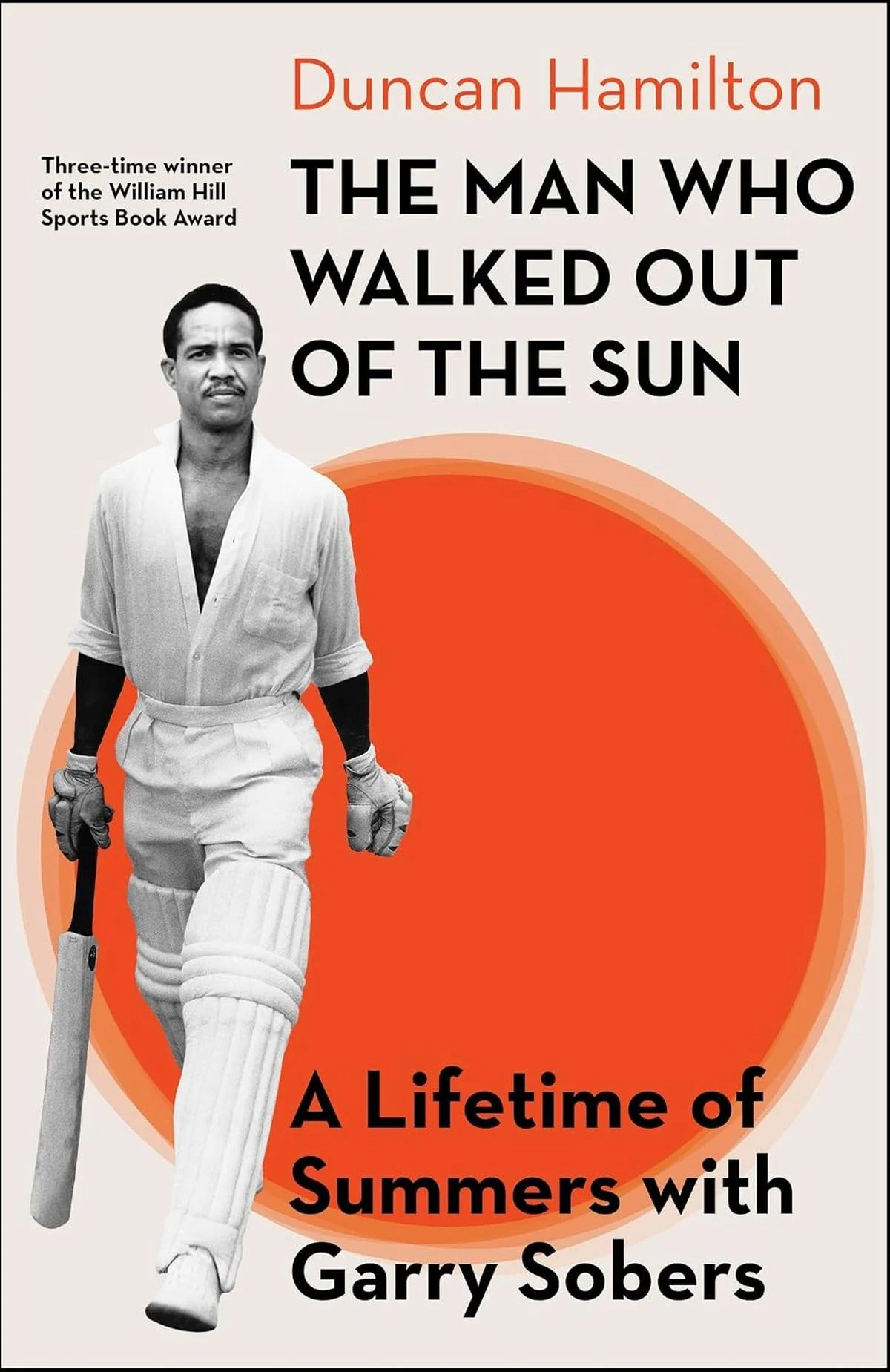
The publication of Duncan Hamilton’s latest work, The Man Who Walked Out of the Sun: A Lifetime of Summers with Garry Sobers, marks a significant moment in sports literature. It is more than a mere biography; it is a meticulous excavation of an obsession that began in the 1960s on a black-and-white television set no larger than a dinner plate. As the cricket world reflects on the legacy of Sir Garfield Sobers, Hamilton’s narrative serves as a bridge between the "spectator of a dream" and the hard realities of a man who carried the weight of a nation—and a sport—on his shoulders.
Main Facts: The Architect of Modern Cricket
Sir Garfield St Aubrun Sobers, known universally as Garry, remains the gold standard against which all cricketing excellence is measured. Born in Barbados in 1936, Sobers did not merely play cricket; he embodied it. His career, spanning from 1954 to 1974, coincided with the emergence of the West Indies as a global cricketing superpower and the transition of the game into the "jet age."
Hamilton’s book captures the essence of a player who was effectively three world-class cricketers in one. Sobers was a masterful batsman capable of brutal elegance, a fast-medium opening bowler who could swing the new ball at a frightening pace, and a versatile spinner who could switch between orthodox left-arm and wrist-spin (chinaman) as the conditions demanded. To round out this impossible toolkit, he was arguably the greatest close-catcher the game has ever seen.
The core premise of Hamilton’s work is that Sobers’ genius was not "frail or flighty." Unlike many sporting icons whose brilliance is intermittent, Sobers was a "genius in spate," a constant flood of talent that redefined the boundaries of what one individual could achieve on a 22-yard pitch.
Chronology: From Kingston to Nottingham
The trajectory of Sobers’ life, as traced by Hamilton, follows a path from the colonial Caribbean to the drably provincial settings of English county cricket, specifically Nottinghamshire’s Trent Bridge.
The Rise of a Prodigy (1954–1958)
Sobers debuted for the West Indies at the age of 17. However, his metamorphosis from a promising youngster into a global titan occurred in 1958 against Pakistan at Kingston. At just 21 years old, he struck an unbeaten 365, eclipsing Sir Leonard Hutton’s world record for the highest individual Test score. This record would stand for 36 years until surpassed by another West Indian, Brian Lara.
The Shadow of Tragedy (1959)
The book poignantly explores the 1959 car accident in England that claimed the life of Sobers’ best friend and teammate, Collie Smith. Sobers was at the wheel. Hamilton delves into the psychological aftermath of this event, suggesting that Sobers’ subsequent superhuman performances were, in part, a tribute to Smith—an attempt to play for two men since one had been tragically silenced.
The Golden Era and Captaincy (1960s)
The 1960s saw Sobers ascend to the captaincy of the West Indies, leading them to a series of historic victories, including the 1965 defeat of Australia. It was during this decade that a young Duncan Hamilton first glimpsed Sobers, falling under the spell of the "pencil-thin moustache" and the "elastic majesty" of his movements.
In 1968, Sobers achieved a feat that would cement his name in popular culture: hitting six sixes in a single over off Malcolm Nash during a match between Nottinghamshire and Glamorgan. It was the first time this had ever been done in first-class cricket, and it remains the defining image of his "debonair blade."
The Twilight and the 254 (1970–1974)
As the 1970s dawned, Sobers’ knees began to fail him, but his spirit remained undiminished. Hamilton highlights the 1972 performance for the World XI against Australia at Melbourne. Facing a young, ferocious Dennis Lillee, a veteran Sobers produced an innings of 254 that Sir Donald Bradman—the ultimate arbiter of batting—described as the greatest he had ever seen on Australian soil.
Supporting Data: The Statistical Weight of a Legend
To understand the scale of Sobers’ dominance, one must look at the data that supports Hamilton’s prose. Sobers retired with a Test batting average of 57.78, a figure that places him among the top tier of specialist batsmen in history.

| Category | Test Match Statistics |
|---|---|
| Matches | 93 |
| Runs Scored | 8,032 |
| Batting Average | 57.78 |
| Centuries | 26 |
| Wickets Taken | 235 |
| Bowling Average | 34.03 |
| Catches | 109 |
His versatility is further highlighted by his bowling splits. While precise data for every over is a product of the modern era, historians note that Sobers took roughly 25% of his wickets with genuine pace, 50% with left-arm orthodox spin, and 25% with wrist-spin. This tactical flexibility allowed his captains (and later himself) to use him as a "blank check" in any game situation.
Furthermore, his impact on Nottinghamshire was transformative. Before his arrival, the club was often languishing in the bottom half of the County Championship. With Sobers, they became a destination for fans across the UK, drawing crowds that wanted to see the man who "walked out of the sun" to brighten the gray English afternoons.
Official Responses and Critical Reception
Hamilton’s biography has been met with critical acclaim for its refusal to settle for hagiography. While the author’s love for his subject is the driving force, he does not shy away from the more contentious aspects of Sobers’ life.
The Rhodesia Controversy
One of the most difficult chapters in the Sobers legacy is his 1970 decision to play in Rhodesia (now Zimbabwe) during the height of the anti-apartheid boycott. At the time, Sobers was criticized as being "soft on apartheid" and a "useful idiot" for Ian Smith’s minority-rule government. Hamilton addresses this with a "sympathetic finger on the tender spots," noting that while Sobers was perhaps politically naive, he was not malicious. The incident caused a diplomatic rift that required the intervention of Caribbean heads of state to resolve.
Peer Perspectives
Cricket historians have praised Hamilton for capturing the "elan" and "joie de vivre" of Sobers. The late Richie Benaud once remarked that Sobers was the finest all-round player he had ever seen, a sentiment echoed by modern greats like Shane Warne and Sachin Tendulkar. Hamilton’s book reinforces this consensus by providing the "narrative aperture" through which new generations can view a genius that existed before the era of high-definition, multi-angle replays.
Implications: The Legacy of the "Jet-Age" Cricketer
The implications of Sobers’ career, as framed by Hamilton, extend far beyond the boundary ropes. Sobers was a symbol of West Indian identity during a period of decolonization and burgeoning independence. His success on the world stage provided a sense of pride and agency to the Caribbean diaspora.
Moreover, Sobers pioneered the role of the modern professional athlete. He was a global celebrity who played in leagues across the world—from the heat of the Caribbean to the suburbs of Adelaide and the industrial heartlands of England. He paved the way for the "global cricketer" seen in today’s T20 franchise era, though he did so with a grace and a lack of protective equipment that seems alien to the modern observer.
Hamilton’s writing also touches on the "burden of genius." The book suggests that the ease with which Sobers played—the "curving-whipped lashes" of his bat—often masked the immense physical and mental toll of being the world’s most scrutinized athlete. His struggles with gambling, alcohol, and the pressures of fame are presented not as tabloid fodder, but as the inevitable shadows cast by a light as bright as his.
Conclusion: Bequeathing the Seeds of Obsession
In The Man Who Walked Out of the Sun, Duncan Hamilton has done more than write a biography; he has preserved a fading era of cricket. By sifting through his memories like a "prospector with a pan sieve," he has retrieved the "nuggets of gold" from Sobers’ career.
As the sun sets on the era of the traditional all-rounder, Sobers stands as a reminder of a time when one man could truly do everything. Hamilton’s work ensures that even those who never saw the "elastic majesty" of Sir Garfield Sobers can understand why he was, and remains, the heartbeat of the game.
Book Details:
- The Man Who Walked Out of the Sun: A Lifetime of Summers with Garry Sobers
- Author: Duncan Hamilton
- Publisher: Abacus
- Price: ₹1,491
- Reviewer Contact: [email protected]
