

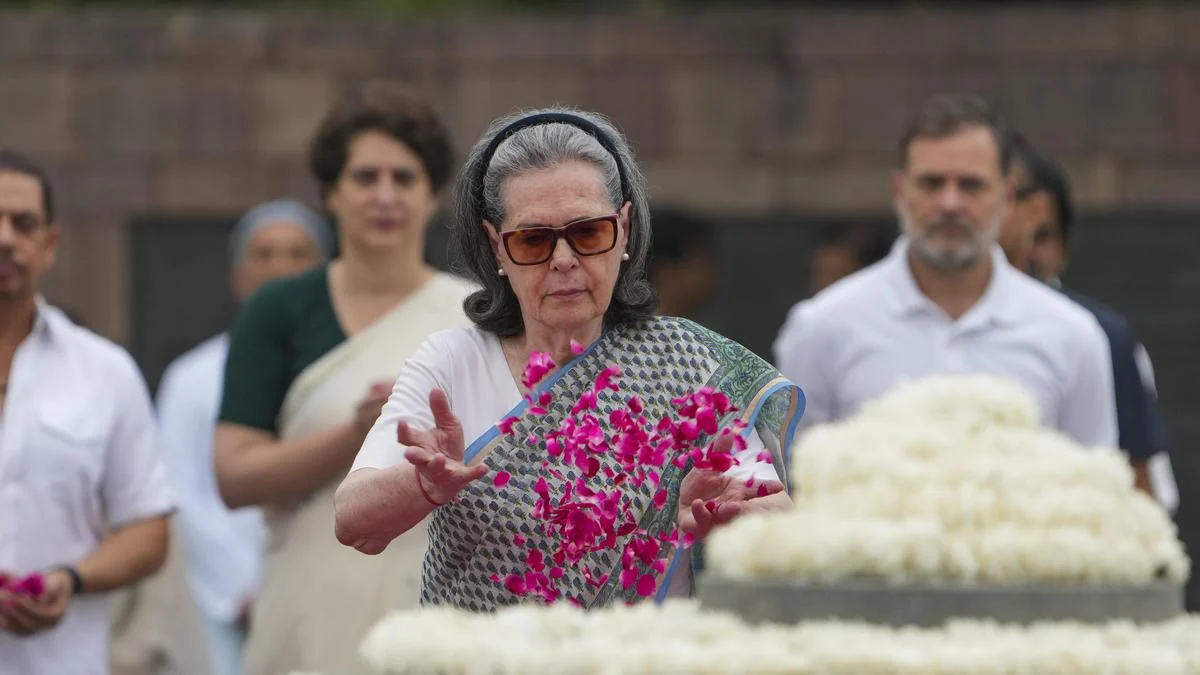
The upcoming release of Belonging: A Journey of Love, the long-awaited memoir of Congress Parliamentary Party chairperson Sonia Gandhi, has become more than just a literary event. It has evolved into a significant flashpoint for debates surrounding editorial freedom, political pressure, and the increasingly cautious landscape of the Indian publishing industry. While the book is set to hit shelves on November 10, the path to its publication has been marked by a high-profile divorce between the author and her initial publisher, Penguin Random House India (PRHI), and a subsequent deal with HarperCollins India.
Main Facts: A Tale of Two Publishers
On November 10, readers in India will finally have access to Sonia Gandhi’s personal account of her life and political career. The book, titled Belonging: A Journey of Love, is being published domestically by HarperCollins India. This announcement effectively ended months of speculation and uncertainty regarding whether the memoir would see the light of day in India at all.
The controversy began when Penguin Random House India, which was originally slated to publish the memoir, announced on August 28 that it would no longer be associated with the project. The withdrawal was not a routine business decision; it followed a protracted impasse between the publisher’s editorial team and Ms. Gandhi’s representatives.
While the international edition of the memoir—published by Alfred A. Knopf, an imprint of Penguin Random House—remained on track for a global release, the Indian arm of the same conglomerate found itself unable to reach an agreement with the author. The entry of HarperCollins India as the new publisher ensures that the Indian edition will be released simultaneously with the international version, likely containing the original manuscript portions that were reportedly the cause of the friction with PRHI.
Chronology: From Announcement to Impasse
The timeline of the memoir’s journey highlights the sudden shift in the relationship between the author and her original publisher:

- August 18, 2024: Alfred A. Knopf, the prestigious New York-based imprint, officially announces the international release of Belonging: A Journey of Love. The announcement generates global interest, promising an "insider’s view" of the Gandhi dynasty and Indian politics.
- Late August 2024: Reports begin to surface in the Indian media suggesting a stalemate between Sonia Gandhi’s team and PRHI. Sources indicate that legal and editorial scrutiny of the manuscript had led to requests for significant revisions.
- August 28, 2024: PRHI issues a formal statement confirming it is no longer the publisher of the memoir in India. This move is met with sharp criticism from the Indian National Congress, who allege government-induced pressure.
- September 2024: Following the PRHI exit, HarperCollins India emerges as the domestic publisher. They confirm the November 10 release date, aligning the Indian launch with the global schedule.
Supporting Data: Content and the "Sensitive" Portions
To understand the weight of the controversy, one must look at what Belonging promises to deliver. According to the publisher’s descriptions, the memoir is a sweeping narrative that begins in post-war Italy, where Sonia Maino was born. It traces her move to Cambridge in 1965, her chance meeting with Rajiv Gandhi, and her subsequent entry into the most prominent political family in India.
The book is expected to cover:
- Personal Adaptation: Her struggles and triumphs in learning Hindi, adapting to Indian customs, and finding her place within the Indira Gandhi household.
- Tragedy and Loss: Personal accounts of the assassinations of Indira Gandhi (1984) and Rajiv Gandhi (1991), as well as the death of Sanjay Gandhi (1980).
- The 2004 "Inner Voice" Moment: An insider’s perspective on her decision to decline the Prime Minister’s post after the UPA’s victory, a move that redefined Indian politics at the time.
However, the "supporting data" that caused the editorial rift involves more contemporary political assessments. According to publishing industry sources, PRHI’s legal and editorial teams raised concerns over sections involving:
- The Prime Minister’s Office: Ms. Gandhi’s impressions of Prime Minister Narendra Modi based on official meetings held since 2014.
- Foreign Policy: A critical assessment of the Modi government’s handling of India-China relations, particularly regarding border tensions and the occupation of territory.
- Ideological Critiques: Portions detailing the activities and influence of the Rashtriya Swayamsevak Sangh (RSS) in modern India.
Reports suggest that PRHI recommended the alteration or removal of these sections to mitigate potential legal risks or political backlash. Ms. Gandhi reportedly refused, viewing such changes as a form of "self-censorship" that would compromise the integrity of her life story.
Official Responses: A Conflict of Perspectives
The fallout from the publishing deal led to a war of words between the publisher and the political establishment.

The Publisher’s Defense
PRHI has maintained a firm stance that its decisions were based on standard industry practices rather than external pressure. In an official clarification, the publisher stated:
"On some [issues], they agreed to changes and on others, we accepted the author’s position. Unfortunately, and ultimately, an understanding could not be reached on a particular issue."
PRHI argued that fact-checking and making recommendations are the "prerogative and responsibility" of a publisher to protect the interests of the book. They denied that the government or any external entity forced their hand, though they notably declined to specify what the "particular issue" of disagreement was, citing confidentiality.
The Political Allegations
The Indian National Congress (INC) was quick to frame the incident as an assault on democratic expression. Senior leader and former Rajasthan Chief Minister Ashok Gehlot took to social media to voice his concerns:
"The real issue is that pressure was put on Penguin India to remove the portions related to Modi, the RSS, and the occupation of Indian territory by China during Modi’s rule. This is the murder of democracy," Gehlot stated on X (formerly Twitter).
He further questioned why an international arm of the same publisher was comfortable with the text while the Indian subsidiary was not, suggesting that the "political climate" in India had created a "chilling effect" on the industry.
Historical Context: Is This an Isolated Case?
The controversy surrounding Sonia Gandhi’s memoir is not an isolated incident but part of a growing trend in the Indian publishing landscape where "sensitive" manuscripts face hurdles.

The General Naravane Case
A striking parallel is found in the case of former Army Chief General Manoj Mukund Naravane. His memoir, Four Stars of Destiny, also slated for publication by PRHI, has faced significant delays. Reports suggest that the Ministry of Defence and other government bodies sought to review the text, particularly portions concerning the Galwan Valley clashes with China in 2020. Despite digital versions of the manuscript leaking online, the physical book remains unpublished, with PRHI asserting its rights over the manuscript while the "review" continues.
The Joe Sacco Precedent
In another instance, PRHI withdrew the publication of graphic novelist Joe Sacco’s The Once and Future Riot, which focused on the 2013 Muzaffarnagar riots. While the publisher cited an "inaccurate map of India" as the reason for the withdrawal, Sacco publicly alleged that the map was a pretext for avoiding a politically sensitive subject in a volatile environment.
Implications: The Future of Political Writing in India
The resolution of the Sonia Gandhi memoir saga—with HarperCollins taking the mantle—offers several takeaways for the future of the Indian literary and political landscape.
1. The "Legal Scrutiny" Phase
Publishing-industry insiders note that "legal scrutiny" has now become as vital as "editorial polish" for any book involving the current administration or national security. Publishers are increasingly wary of Section 153A (promoting enmity between groups) or defamation suits, which can lead to years of litigation and the pulping of entire print runs.
2. The Rise of Global vs. Local Standards
The fact that Knopf (USA) was ready to publish what PRHI (India) was not highlights a growing divergence. It suggests that Indian readers might have been forced to pay "international prices" for an imported edition of a book about their own country, had a domestic publisher like HarperCollins not stepped in. This creates a two-tier system of information where those who can afford expensive imports have access to uncensored narratives, while the general public does not.

3. Freedom of Expression vs. Editorial Responsibility
The dispute brings into focus the delicate balance between an author’s right to their "truth" and a publisher’s need to ensure factual accuracy and legal safety. In a memoir, the line between "fact" and "assessment" is often blurred. When a publisher asks an author to remove their assessment of a political leader, it raises the question: Is the publisher fact-checking, or are they managing political risk?
4. Market Resilience
Ultimately, the transition to HarperCollins demonstrates that for a high-profile author like Sonia Gandhi, the market remains resilient. There is a high demand for "insider" accounts, and if one major house demurs, another is likely to see the commercial and historical value in the project. However, the same might not be true for lesser-known authors or journalists who do not have the political or financial capital to navigate such an impasse.
As November 10 approaches, the focus will likely shift from the controversy of the publication to the content of the pages. Whether Belonging lives up to the hype or if the "contentious" portions have been subtly softened remains to be seen. What is certain, however, is that the journey of this book has already written a new chapter in the history of Indian publishing—one defined by the tension between the power of the pen and the pressure of the state.
