

The Indian publishing industry is currently embroiled in a high-stakes debate over the limits of editorial freedom, legal vetting, and the creeping influence of political sensitivity. At the heart of this storm is Belonging: A Journey of Love, the long-awaited memoir of Sonia Gandhi, the former president of the Indian National Congress and one of the most influential figures in modern Indian history.
Originally slated for publication by Penguin Random House India (PRHI), the book’s fate became a subject of intense speculation after the publisher pulled out following a breakdown in negotiations over the manuscript’s content. The controversy has sparked a wider conversation among authors, lawyers, and industry veterans about whether "legal review" has become a euphemism for self-censorship in an increasingly polarized political climate.

Main Facts: The Shift from Penguin to HarperCollins
In a dramatic turn of events, HarperCollins India (HCI) announced on September 4 that it would be the official publisher of Belonging in the Indian subcontinent. The book is scheduled for release on November 10, aligning with the global launch by Alfred A. Knopf, an imprint of Penguin Random House in the United States.
The shift in publishers followed a period of "editorial and legal review" at PRHI, during which the house reportedly requested significant deletions and changes to the manuscript. Sources familiar with the matter suggest that the disputed sections involved sensitive geopolitical and internal issues, including Prime Minister Narendra Modi’s administration, the Rashtriya Swayamsevak Sangh (RSS), and India’s border tensions with China.

While Penguin Random House India has officially denied any external government pressure, stating that the impasse was purely a result of "normal publishing processes," the incident has raised questions about the "spine" of corporate publishing houses when faced with potentially litigious or politically volatile content.
Chronology of a Controversy
The journey of Belonging from a confidential manuscript to a symbol of free speech concerns has followed a fraught timeline:

- The Original Deal: Sonia Gandhi’s memoir was initially signed by Penguin Random House India. Given her status as the longest-serving president of the Congress party and her witness to the assassinations of both her mother-in-law (Indira Gandhi) and husband (Rajiv Gandhi), the book was poised to be a definitive historical document.
- The Review Process: During the final stages of production, PRHI’s legal and editorial teams conducted a review. This process is standard for non-fiction, intended to protect against libel and defamation.
- The Impasse: PRHI requested changes that Gandhi’s representatives found unacceptable. The publisher cited concerns over "fact-checking" and legal defensibility. Gandhi’s team argued that as an autobiography, the work represents her personal perception and lived experience.
- The Withdrawal: Following a failure to reach a compromise on a "particular issue," PRHI and Gandhi’s team mutually decided not to proceed with the Indian publication.
- The New Partnership: On September 4, HarperCollins India stepped in, announcing they would publish the book in its intended form on November 10.
- The Global Parallel: Interestingly, the U.S. arm of Penguin Random House (through Alfred A. Knopf) maintained its commitment to publish the book, highlighting a discrepancy between how international and domestic branches of the same corporation handle sensitive material.
Supporting Data: Perspectives from the Frontlines
The fallout from the Belonging controversy has prompted various stakeholders in the literary world to weigh in on the delicate balance between legal caution and censorship.
The Question of "Fact-Checking" an Autobiography
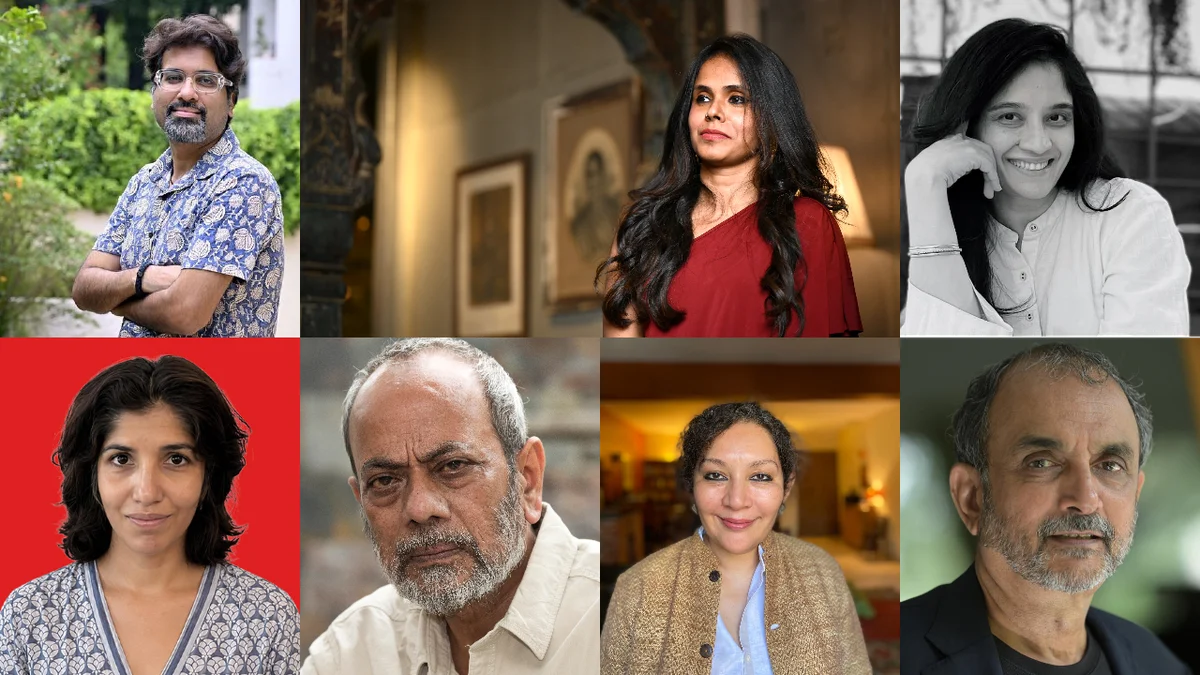
Journalist and author Saba Naqvi points out the inherent contradiction in a publisher attempting to "fact-check" a primary historical actor. "This is an autobiography written by a person about their life as they see it," Naqvi notes. She argues that by framing the disagreement as a "fact-checking" issue, the publisher inadvertently provides ammunition for political opponents to attack the author’s credibility before the book even hits the shelves.

Chiki Sarkar, Publisher of Juggernaut Books, echoes this sentiment, finding the term "fact-check" mystifying in this context. "Typically, it is not my job to say, ‘Why are you saying that?’ to an author’s philosophical viewpoint," Sarkar explains. She emphasizes that while publishers should verify dates and names, they should not push back on an author’s interpretation of events unless it lacks any justification.
Corporate Vulnerability vs. Independent Courage
A recurring theme in the industry’s response is the perceived fragility of large corporate publishing houses compared to independent presses. Meena Kandasamy, a celebrated author known for her radical work, observes that "the corporates are slightly weak in the knees," whereas independent houses like Juggernaut or Navayana often show more "spine" in standing by their writers.

Kandasamy argues that the integrity of a writer is what separates them from an AI chatbot. "I am willing to go to jail for my opinion. I’m willing to face arrest for my opinion. If you want only ‘polite-ese,’ you can get that from any random LLM today," she says, urging publishers to be willing to take risks.
Precedents of Editorial Interference
The case of Belonging is not an isolated incident. Dhirendra K. Jha, author of Gandhi’s Assassin, shared a similar experience with PRHI. After publishing his first book with them, he submitted a manuscript on M.S. Golwalkar. Jha claims he was asked to remove all references to Nazism and certain Home Ministry documents he had obtained from the National Archives.

"I had to withdraw my book and thankfully, Simon & Schuster India was ready to publish it," Jha says. He views these demands not as legal vetting, but as a "disservice to society" when evidence-backed history is suppressed.
Official Responses and the Legal Threshold
Penguin Random House India has maintained a consistent public stance: the decision was a business and editorial one, devoid of outside interference. Their statement emphasizes that the review was part of a standard procedure to ensure the manuscript met their internal standards for publication.

However, legal experts suggest that the "internal standards" of Indian publishers have shifted significantly. Saif Mahmood, an international lawyer and author, argues that legal reviews today focus on what is "risk-free" rather than what is "legally defensible."
"In India, anyone can file a case against anyone," Mahmood explains. "If the threshold for publishing is that no one might sue, then nothing of consequence can be published. The law does not demand risk-free literature; it demands legally defensible literature."

Mukund Padmanabhan, a professor of philosophy at Krea University, adds that publishers should only demand changes if there is a clear violation of Article 19(2) of the Constitution (reasonable restrictions on free speech). "The mere fear of litigation should not lead them to demand alterations," he asserts.
Implications: The Chilling Effect on Indian Letters
The controversy surrounding Sonia Gandhi’s memoir is a bellwether for the state of free expression in India. The implications extend far beyond a single book deal, touching upon the cultural and political health of the nation.

1. The Rise of Self-Censorship
Anuradha Bhasin, Managing Editor of Kashmir Times, warns of a burgeoning culture of fear. She notes that over-sensitivity to books, once largely confined to conflict zones like Kashmir, is now becoming a national norm. "Publishers are already scared of publishing anything deemed controversial," Bhasin says. This self-censorship creates a vacuum where uncomfortable truths are buried to avoid the "hassle" of litigation or political backlash.
2. The Role of Literary Agents
Kanishka Gupta, founder of Writer’s Side, suggests that the role of the agent has become increasingly complex. While agents must push back against unreasonable editorial demands, they also have a duty to protect authors from "unnecessary legal exposure." The challenge lies in distinguishing between a "simple rephrasing" to avoid a lawsuit and a fundamental compromise of the author’s voice.

3. The Future of Political Memoirs
If a figure as powerful as Sonia Gandhi faces hurdles in publishing her story through a major global house in India, the prospects for lesser-known authors, activists, and whistleblowers are grim. Priyanka Pathak-Narain, author of Godman to Tycoon, notes that while legal reviews are intended to protect the reporter and the public interest, they must not become the "decision-making" entity that determines which stories are allowed to be told.
4. Public Interest vs. Profit Generation
Rachita Taneja, founder of Sanitary Panels, highlights the ethical obligation of publishers who commission controversial works. "The publisher should not commission someone to write a book knowing what they are going to write, and then pull the rug out from under them," she says. Taneja argues that stories must be told as intended by the author, not as dictated by corporate risk-assessment modules.

Conclusion
The release of Belonging: A Journey of Love on November 10 by HarperCollins India will likely be one of the most scrutinized literary events of the year. While the "disputed material" remains a matter of speculation until the book is public, the drama surrounding its publication has already provided a window into the anxieties of the Indian publishing industry.
As Narayani Basu, author of A Man For All Seasons, reminds us, even when a book creates "immense controversy," the backing of a steadfast publisher is the only thing that allows history to be preserved. For the Indian reader, the question remains: are we being given the full story, or only the version that has been deemed "safe" for consumption? The fate of Gandhi’s memoir suggests that while some doors may close, the drive to document the truth eventually finds a different path to the printing press.
