

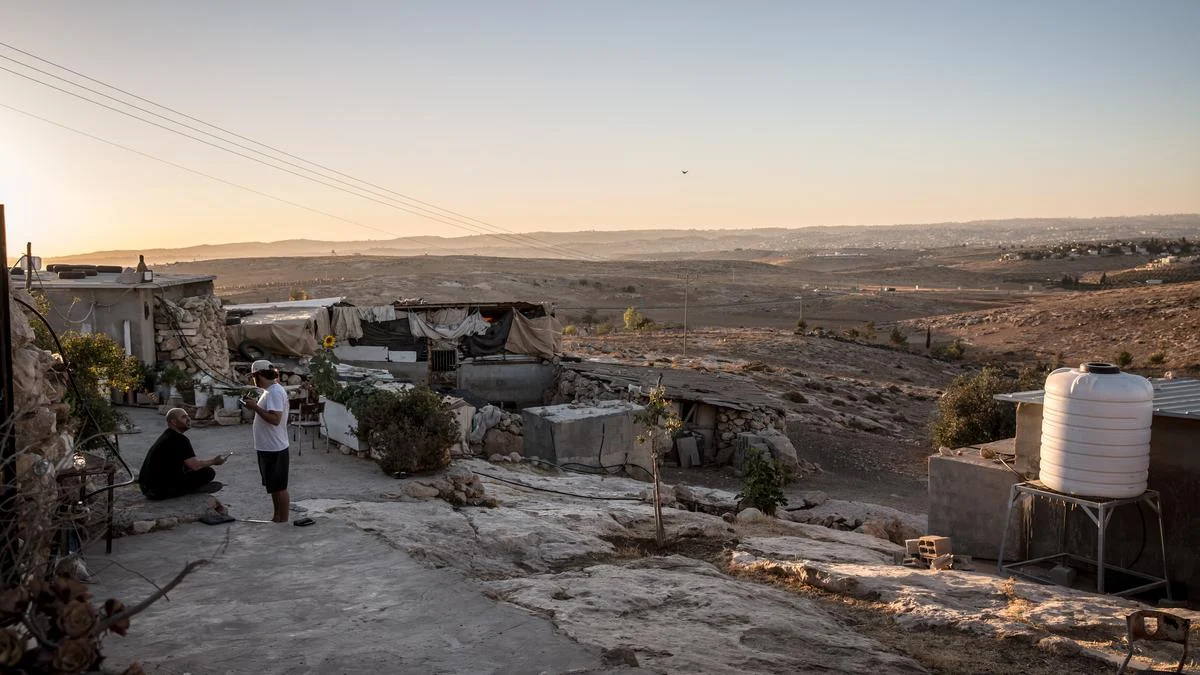
The Israeli-occupied West Bank today exists as a fractured mosaic of jurisdictions, a byproduct of the 1990s peace process that has, in the eyes of many observers, morphed into a permanent apparatus of control. In his seminal work, Freedom and Despair: Notes from the West Bank, David Shulman—an Israeli scholar, Indologist, and veteran activist—peels back the layers of this geopolitical complexity to reveal the human cost of the occupation. Through the lens of the South Hebron Hills, Shulman documents a landscape where "micro-victories" of grassroots resistance clash with a "macro-political" shift toward annexation and radicalization.
Main Facts: The Structural Reality of Occupation
To understand Shulman’s narrative, one must first grasp the administrative labyrinth established by the Oslo Accords. The West Bank is bifurcated into three distinct zones, each with varying levels of autonomy:
- Area A: Comprising roughly 18% of the territory, including major Palestinian cities like Ramallah and Nablus. The Palestinian Authority (PA) exercises both civil and security control here.
- Area B: Covering about 22% of the land, where the PA manages civil affairs, but security remains under Israeli military oversight.
- Area C: The most critical and contentious zone, covering 62% of the West Bank. It contains the majority of the territory’s natural resources and agricultural land. Crucially, Israel maintains full civil and military control over Area C.
Area C is the primary theater of Shulman’s observations. It is home to approximately 300,000 Palestinians who live alongside nearly 500,000 Jewish settlers. In total, when including East Jerusalem, the settler population has swelled to approximately 750,000. These settlements, considered illegal under international law by most of the global community—a stance Israel disputes—have become the focal point of a systemic effort to reshape the demographics of the region.
Shulman argues that the occupation is not merely a military presence but a comprehensive "system." This apparatus includes the Israeli Defense Forces (IDF), the police, military courts, and a government that provides fiscal and structural support for settlement expansion. In Shulman’s view, this system is reinforced by a media and social landscape that often obscures the realities of the rural Palestinian experience.
Chronology: From the 1967 War to the Present Crisis
The current state of the West Bank is the result of a decades-long evolution of policy and paramilitary expansion:
- 1967 (The Watershed Moment): Following the Six-Day War, Israel captured the West Bank and East Jerusalem from Jordan, and the Gaza Strip from Egypt. Shortly thereafter, the first modern Jewish settlements were established, initially framed as security outposts.
- 1993–1995 (The Oslo Accords): The signing of the Oslo I and II Accords created the A, B, and C divisions. While intended as a five-year interim measure leading to a final status agreement, this structure has remained in place for nearly three decades, effectively freezing Palestinian development in 60% of the territory.
- 2000 (The Second Intifada and the Birth of Ta’ayush): The collapse of the Camp David summit led to a violent Palestinian uprising. In response to the escalating conflict and the hardening of Israeli military policy, Shulman and a group of like-minded activists formed Ta’ayush (Arabic for "co-existence"), a grassroots organization of Arabs and Jews dedicated to non-violent resistance.
- The 2020s (The Rise of the Far-Right): In recent years, the settler movement has transitioned from the fringes of Israeli society to the center of political power. With the emergence of far-right ministers in the Israeli cabinet, calls for the formal annexation of Area C have grown louder, accompanied by a documented surge in settler-led violence against Palestinian villages.
Supporting Data: The Mechanics of Displacement
The "terror and horror" Shulman describes in the South Hebron Hills are backed by data from human rights organizations and international bodies. In Area C, Palestinian construction is strictly regulated; according to UN data, over 95% of Palestinian permit applications are rejected by the Israeli Civil Administration. This leads to a cycle of "illegal" construction followed by military demolition orders.

The violence Shulman chronicles is often aimed at the economic heart of Palestinian rural life. Settler attacks frequently target olive groves—the lifeblood of the local economy—as well as water cisterns and livestock. In many instances, activists from Ta’ayush serve as "human shields," accompanying Palestinian shepherds to their grazing lands to deter physical assaults from extremist settlers.
Shulman’s book highlights a grim psychological data point: the "narrowing" of the Israeli soul. He posits that the act of subjugating another people has a reciprocal effect on the occupier. By "impairing the freedom of another," Shulman argues, the Israeli state has become "ill and narrow at heart," prioritizing brute compulsion over the democratic and moral values it claims to uphold.
Official Responses and Political Posturing
The Israeli government’s official stance remains centered on security and historical ties to the land, which they refer to by the biblical names Judea and Samaria. Government spokespeople frequently argue that settlements are not an obstacle to peace and that the military presence in Area C is essential to prevent the West Bank from becoming a launchpad for militant groups like Hamas.
Conversely, the Palestinian Authority characterizes the situation in Area C as a "creeping annexation." PA officials have repeatedly called on the International Criminal Court (ICC) to investigate settlement expansion as a war crime.
International response has been characterized by a widening gap between rhetoric and action. The United Nations and the European Union frequently issue statements condemning settlement expansion and settler violence, yet Shulman notes that these diplomatic overtures have done little to change the "larger political course." The United States, while traditionally supporting a two-state solution, has struggled to exert meaningful pressure on Israel to halt the expansion of outposts in the South Hebron Hills.
Implications: The Gandhian Alternative and the "Hopeless Hope"
The most profound contribution of Shulman’s work lies in its philosophical inquiry into the nature of resistance. As an Indologist, Shulman draws heavily on the Gandhian concept of satyagraha—the non-violent assertion of truth. He argues that this is the only viable path forward, not because it guarantees immediate political success, but because it is "right in itself."

The Efficacy of Micro-Resistance
Shulman acknowledges a "bitter contrast" between the small victories of Ta’ayush—rebuilding a demolished home, restoring a field to its owner, or preventing an unjust arrest—and the macro-political drift toward the right. However, he rejects the idea that despair should lead to passivity. Instead, he proposes "hopeless hope": a dogged persistence to act morally even when the odds of a systemic shift seem non-existent.
The Threat of "Blind Autistic Power"
The implications for Israeli democracy are dire in Shulman’s estimation. He warns against the "fascism that comes with blind autistic power," citing the "primitive malice" of extremist settlers as a symptom of a deeper national malady. He echoes the warnings of Rabbi Joachim Prinz, noting that the most tragic problem in such a system is the "silence" of the majority.
The Future of the Region
As the settler community continues to gain political leverage, the possibility of a viable, contiguous Palestinian state in the West Bank diminishes. Shulman’s accounts suggest that the region is moving toward a single-state reality characterized by deep inequality and perpetual friction.
Yet, the book concludes on a note of "dogged persistence." By invoking the metaphor of "sailing into the wind," Shulman suggests that the peace camp must continue its work not because victory is certain, but because the act of resistance preserves the humanity of both the oppressed and the activist.
In the final analysis, Freedom and Despair is less a political manifesto and more a moral compass. It challenges the reader to look beyond the maps of Areas A, B, and C and see the individual faces of those living in the shadows of the South Hebron Hills. Shulman’s message is clear: while the machinery of occupation is vast and well-funded, the "micro-resistance" of those who refuse to be silent remains the only safeguard against total moral collapse.
Book Details:
- Freedom and Despair: Notes from the West Bank
- Author: David Shulman
- Publisher: Context
- Price: ₹499
- Reviewer: Stanly Johny
