

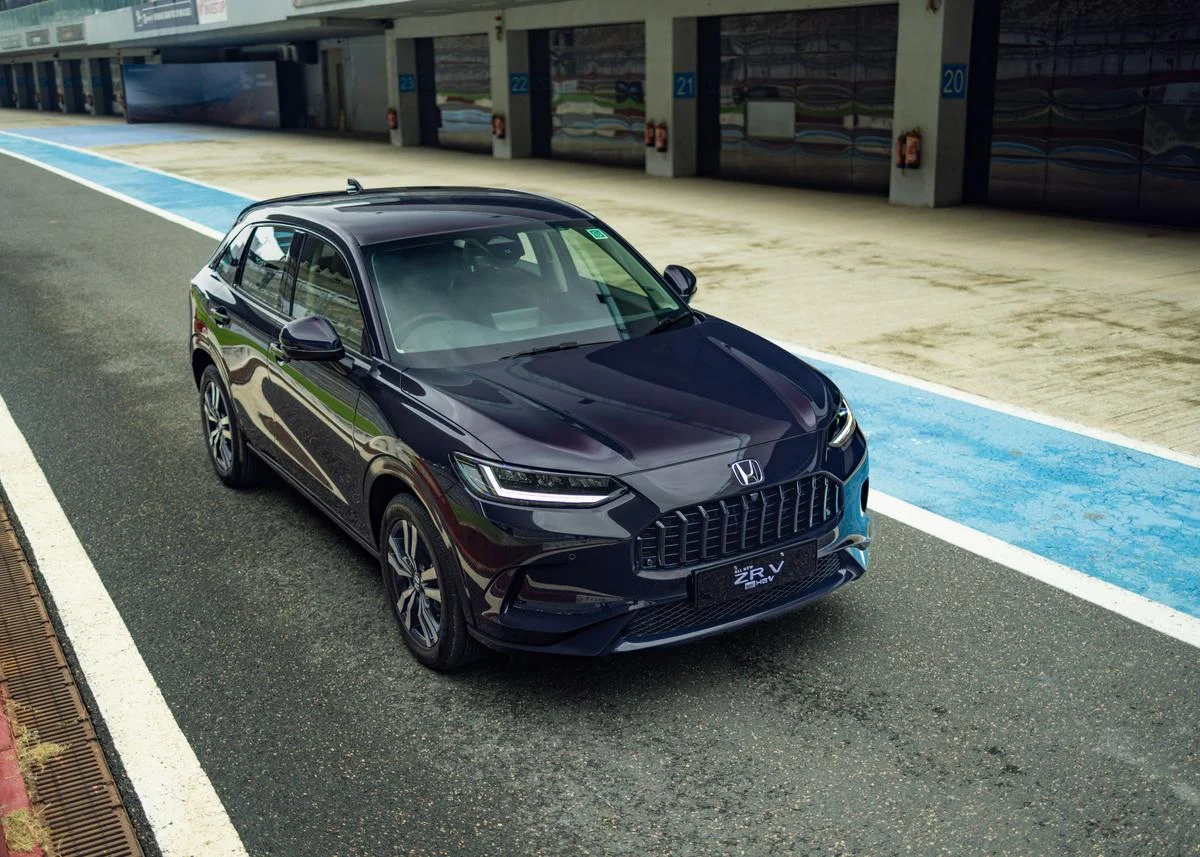
The Indian automotive landscape, particularly the premium SUV segment, has recently devolved into what industry analysts call a "battle of excess." For the modern Indian consumer, the value of a vehicle is often measured by the diagonal inches of its infotainment screen, the sheer surface area of its chrome-laden grille, and a seemingly endless checklist of electronic gimmicks. In this climate of maximalism, Honda’s introduction of the ZR-V represents a daring, perhaps even defiant, departure from the status quo.
Priced at ₹47.99 lakh (ex-showroom), the Honda ZR-V enters a crowded arena not with a loud shout, but with the quiet confidence of superior engineering. Imported as a Completely Built Unit (CBU), the ZR-V is a five-seater that prioritizes the "how" over the "how much." It is a vehicle designed for the driver who values mechanical integrity and long-term refinement over the fleeting novelty of cabin theater.
Main Facts: Positioning the ZR-V in a Competitive Landscape
The Honda ZR-V occupies a unique niche in the Indian market. At nearly ₹48 lakh, it sits in a price bracket where consumers typically expect seven seats, ladder-frame ruggedness, or a badge from a German luxury marque. However, Honda’s proposition is different: they are offering a sophisticated, CBU-quality crossover powered by one of the most advanced hybrid drivetrains in the world.
Key Specifications at a Glance:
- Price: ₹47.99 Lakh (Ex-showroom)
- Powertrain: 2.0-litre i-VTEC Atkinson-cycle engine + Dual-motor e:HEV hybrid system.
- Output: 181 bhp and 315 Nm of peak torque.
- Performance: 0-100 km/h in 7.9 seconds.
- Efficiency: ARAI-tested 22 kmpl; real-world estimates at 17-18 kmpl.
- Safety: 8 Airbags and a 4-star Euro NCAP rating.
The ZR-V does not compete on sheer size. Instead, it competes on "tactile quality." From the dampened movement of the switchgear to the "thud" of the doors, the vehicle exudes a sense of solidity that is often lost in mass-produced, locally assembled rivals. While the lack of a third row or all-wheel drive may deter some, Honda is betting on a demographic that prioritizes urban maneuverability and world-class fuel efficiency.

Chronology: From Global Concept to Buddh International Circuit
The journey of the ZR-V to Indian shores has been one of careful observation. Honda has watched the Indian market’s shift toward electrification and premiumization, choosing this moment to introduce their e:HEV technology in a more aspirational form factor than the City Hybrid.
To demonstrate the vehicle’s capabilities, Honda bypassed the traditional city drive and instead invited the media to the Buddh International Circuit (BIC) in Greater Noida. While a Formula 1-grade racetrack is an unconventional choice for a family-oriented hybrid SUV, it served as a crucible to prove the vehicle’s chassis dynamics.
During the track sessions, the ZR-V was subjected to high-speed stability tests on the back straight and rigorous slalom maneuvers. The chronology of the testing day revealed a vehicle that remained unfazed by extreme lateral loads. At 150 km/h, the ZR-V displayed a level of composure—lacking the "floaty" sensation common in high-riding SUVs—that suggested a suspension tuned with European sensibilities. This track-first introduction was a strategic move to cement the ZR-V’s reputation as a "driver’s SUV" before it ever hit the potholed streets of urban India.
Supporting Data: The Engineering Sophistication of e:HEV
The heart of the ZR-V is the latest generation of Honda’s "e:HEV" strong hybrid system. To understand why this vehicle carries a premium price, one must look at the complexity and efficiency of its powertrain data.

The Three Pillars of the Drivetrain:
- EV Drive Mode: At low speeds and during initial acceleration, the ZR-V operates as a pure electric vehicle. The electric motor drives the front wheels directly, drawing power from the lithium-ion battery. This results in near-silent operation and instantaneous torque.
- Hybrid Drive Mode: When more power is required, or the battery level drops, the 2.0-litre petrol engine kicks in. However, in this mode, the engine does not drive the wheels. Instead, it acts as a generator, supplying electricity to the propulsion motor.
- Engine Drive Mode: At sustained highway speeds (typically above 80-100 km/h), a lock-up clutch connects the petrol engine directly to the front wheels via a single-speed transmission. This is the most efficient way to maintain high speeds, bypassing the energy conversion losses of a hybrid system.
Performance vs. Efficiency
Data from the testing sessions confirms that the ZR-V manages a 0-100 km/h sprint in under 8 seconds. This puts it in the territory of several entry-level luxury sedans. More impressively, the fuel efficiency figures—claimed at over 22 kmpl—mean that a 50-litre tank could theoretically provide a range of over 1,000 kilometers. In real-world Indian conditions, even a conservative 17 kmpl would make it the most efficient vehicle in its price class, significantly outperforming diesel-powered competitors.
Technical Nuances and "Micro-Engineering"
Honda’s focus on engineering is further evidenced by smaller, often overlooked details:
- Integrated Washer Jets: By placing the nozzles on the wiper arms, Honda ensures a cleaner sweep with less fluid waste and no temporary "blind spot" during the spray cycle.
- Intelligent Tailgate: Most powered tailgates begin closing instantly. The ZR-V’s unit features a programmed pause, allowing a parent carrying groceries or a child to step back safely before the mechanism engages.
- Acoustic Management: The use of acoustic glass and extensive sound deadening ensures that the transition between the silent EV mode and the petrol engine is nearly imperceptible to the occupants.
Official Responses and Market Philosophy
While Honda India’s official stance emphasizes "Premium Efficiency," the ZR-V’s positioning speaks to a broader corporate philosophy of "substance over spectacle." Honda executives have noted that the ZR-V is not intended to be a volume-seller like the Elevate or the Amaze. Instead, it serves as a "halo product" that showcases what the brand is capable of when freed from the constraints of aggressive local cost-cutting.
The decision to bring the ZR-V as a CBU (Completely Built Unit) is a double-edged sword. It subjects the car to India’s high import duties, which explains the ₹47.99 lakh price tag. However, it also ensures that the Indian consumer receives the exact same build quality, material selection, and safety standards as consumers in Europe or Japan. Honda’s "official response" to the lack of certain features—like a panoramic sunroof or ventilated seats—is a pivot toward "ergonomic longevity." They argue that a well-designed, supportive seat and a highly efficient dual-zone climate control system provide more long-term value than "flashy" features that may require more maintenance over time.

Implications: The Future of the Premium SUV Segment
The arrival of the Honda ZR-V has significant implications for the Indian market, particularly regarding the "Hybrid vs. EV" debate and the definition of luxury.
1. The Validation of Strong Hybrids
The ZR-V proves that strong hybrids are the most pragmatic "bridge" to full electrification in India. By offering EV-like torque and silence without the range anxiety or charging infrastructure hurdles, Honda is positioning the ZR-V as the ultimate long-distance cruiser.
2. Quality Over Quantity
The ZR-V challenges the Indian buyer to reconsider what "premium" means. If a buyer chooses the ZR-V over a larger, seven-seater rival, they are making a conscious choice for better handling, superior fuel economy, and higher build quality. This could signal a maturing of the Indian market, where "bigger" is no longer automatically equated with "better."
3. The CBU Hurdle
The price of the ZR-V highlights the ongoing challenge for international manufacturers in India. To offer world-class engineering, they must either invest heavily in localizing complex hybrid components or face the "CBU tax." The success of the ZR-V will be a litmus test for whether Indian buyers are willing to pay a "quality premium" for a non-luxury badge.

4. Safety as a Standard
With 8 airbags and a proven crash-test pedigree, the ZR-V raises the bar for safety in the ₹40-50 lakh segment. As Indian consumers become increasingly safety-conscious, the ZR-V’s "no-compromise" approach to structural integrity and ADAS (Advanced Driver Assistance Systems) features will likely force competitors to upgrade their own offerings.
Conclusion: A Niche Masterpiece
The Honda ZR-V is a car that requires a test drive to be understood. On a spreadsheet, it may appear outmatched by rivals with more seats or larger screens. On the road—or the track—it reveals itself to be a meticulously crafted machine that does the "basics" better than almost anything else in its class.
It is a vehicle for the "quietly successful"—those who do not need to shout about their status but appreciate the precision of a well-weighted steering rack and the seamless flow of a sophisticated hybrid powertrain. In a market obsessed with the "next big thing," the ZR-V is a reminder that solid engineering and thoughtful design never go out of style. At ₹47.99 lakh, it is an expensive Honda, but for those who value the ownership experience over the showroom pitch, it might just be the best-valued car in the segment.
