

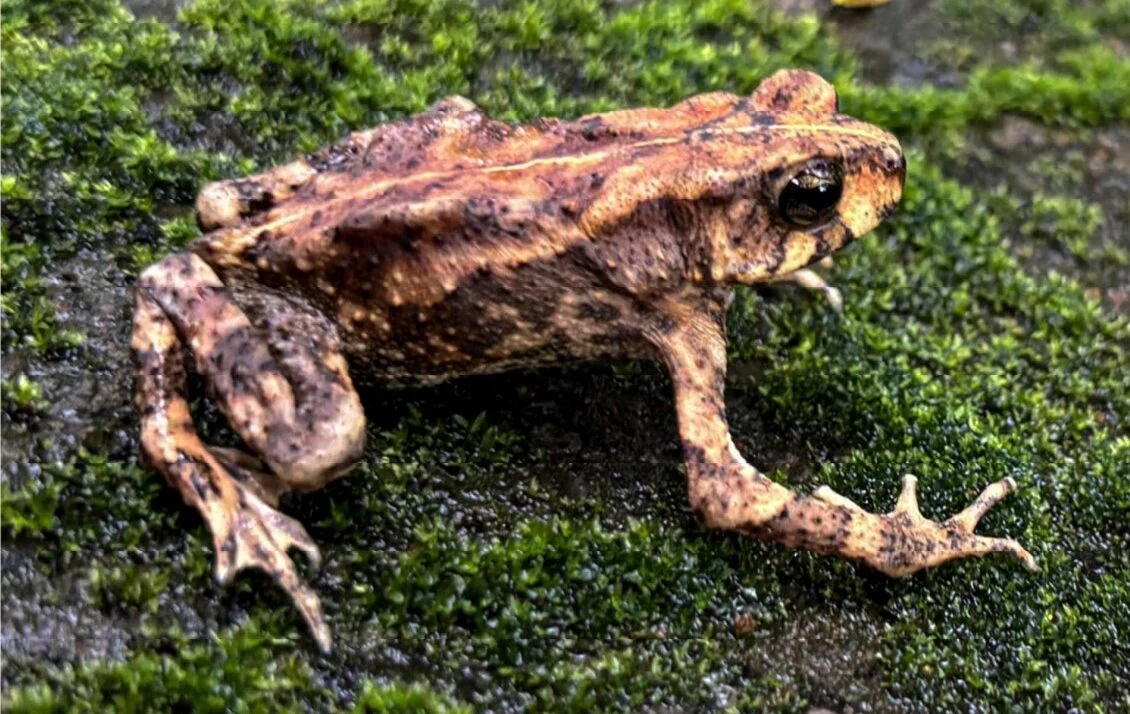
The mist-shrouded peaks of the Indo-Burma biodiversity hotspot have yielded a significant biological secret. In a study published in May 2026, a team of dedicated herpetologists and researchers announced the discovery of a new species of toad, Duttaphyrnus phawngpui, found on the highest reaches of Mizoram, India. Named after the iconic Phawngpui Mountain—also known as the Blue Mountain—this discovery underscores the critical ecological importance of high-altitude "sky islands" and the urgent need for conservation in the face of a warming planet.
Main Facts: A Discovery at the Edge of the Clouds
The discovery of Duttaphyrnus phawngpui marks a vital addition to the genus Duttaphyrnus, a group of "true toads" widely distributed across South and Southeast Asia. While many members of this genus are generalists—often found in urban areas or degraded habitats—this new species is a specialist, adapted specifically to the unique conditions of the montane forests of southeastern Mizoram.
Geographic and Biological Profile
The species was identified within the Phawngpui National Park, situated along the international border between India and Myanmar. The park is home to Phawngpui, Mizoram’s highest peak, which stands at 2,157 meters above sea level. The toad was specifically located at elevations exceeding 2,000 meters, thriving in a micro-ecosystem characterized by high humidity, dense shrubbery, and bamboo patches.
D. phawngpui is morphologically and genetically distinct from its closest relatives, including D. stuarti, D. chandai, and D. dhara. These species form a specific clade of toads that are largely restricted to the higher ranges of the eastern Himalayas and the Lushai Hills. Unlike the common toad found in Indian gardens, this new species is a product of evolutionary isolation, having adapted to the cool, moist, and relatively undisturbed environment of the summit trails.
Identifying Characteristics
The researchers utilized a combination of morphological examination (physical characteristics) and DNA barcoding to confirm the species’ novelty. Key identifying features include:
- Specialized Skin Texture: Distinctive tuberculation patterns on the dorsal surface.
- Parotid Glands: Like other Duttaphyrnus species, it possesses glands behind the eyes that secrete toxic alkaloids, serving as a chemical defense against predators like montane snakes.
- Habitat Specificity: A ground-dwelling nature, requiring specific grassy patches and proximity to forest streams for its reproductive cycle.
Chronology: From the Field to the Laboratory
The journey to describing Duttaphyrnus phawngpui was a multi-year effort involving rigorous field surveys and sophisticated laboratory analysis.
The Initial Survey (Pre-2026)
The discovery began with an expedition into the Phawngpui National Park. Researchers from Mizoram University, Assam Don Bosco University, and the Guwahati-based non-profit Help Earth trekked the steep trails leading to the "Blue Mountain" summit. It was along the edges of these trails, amidst the leaf litter of the forest floor, that two specimens were collected.
The encounter was serendipitous but informed by years of studying the region’s herpetofauna. The individuals were found in an area with minimal human disturbance, suggesting that the species retreats to higher, more pristine altitudes as human activity encroaches on lower elevations.
Laboratory Analysis and Comparison
Once the specimens were secured, the focus shifted to the laboratory. Taxonomic work in the 21st century requires more than just a visual check; it requires genetic proof.
- Morphological Documentation: Researchers measured every aspect of the toads, from snout-vent length to the shape of the parotid glands, comparing these metrics against existing holotypes of known Duttaphyrnus species.
- DNA Sequencing: Molecular analysis was conducted to determine the genetic distance between the Phawngpui specimens and their Himalayan cousins. The results showed a significant divergence, confirming that the Mizoram population had been isolated long enough to become a distinct species.
Publication (May 2026)
The findings were formally peer-reviewed and published in the journal Taprobanica in May 2026. The paper, titled "A New Species of Toad of the Genus Duttaphyrnus from Mizoram, Northeast India," provided the scientific community with the first formal description of D. phawngpui, officially placing it on the global map of biodiversity.
Supporting Data: The Ecology of Isolation
The discovery of D. phawngpui provides critical data regarding the "Sky Island" effect in Northeast India. Sky islands are isolated mountain ranges that possess radically different environments from the surrounding lowlands. For a ground-dwelling toad, the valley floor might as well be an ocean; they are trapped on their cool mountain peaks, leading to high rates of endemism (species found nowhere else).

Dietary and Defensive Traits
While specific feeding observations for D. phawngpui are still being gathered, researchers have extrapolated data from its closest relatives. The genus is known to be opportunistic insectivores.
- Primary Diet: Insects such as termites, locusts, grasshoppers, and cockroaches.
- Ecological Role: As a predator of invertebrates, the toad plays a crucial role in maintaining the balance of the forest floor ecosystem.
- Defense Mechanism: The toxic secretions from its parotid glands make it unpalatable. This is an essential survival trait in a park that also hosts various species of venomous and non-venomous snakes.
Environmental Requirements
The study highlights that D. phawngpui is not a "generalist" species. It requires:
- High Humidity: Necessary for amphibian skin respiration.
- Perennial Streams: Essential for the larval (tadpole) stage.
- Leaf Litter and Ground Cover: Crucial for thermoregulation and protection from avian predators.
Official Responses: A Call to Action
The research team has been vocal about the implications of this find. Jayaditya Purkayastha, a co-author of the study and general secretary of Help Earth, emphasized the precarious nature of this new species.
"They are habitat-specific, not generalists," Purkayastha stated. "This means they cannot simply move to a new area if their current home is compromised. D. phawngpui requires very specific conditions—grassy patches, high humidity, and forest streams—to survive and breed."
The Role of Help Earth
Help Earth has been at the forefront of herpetological conservation in Northeast India since 2006. With the addition of D. phawngpui, the organization has assisted in describing over 38 new species, including the urban bent-toed gecko (Cyrtodactylus urbanus) and Sengupta’s cricket frog (Minerva sengupti).
Official representatives from Mizoram University noted that this discovery highlights the "taxonomic gap" in the region. Many species likely exist in the remote hills of Mizoram and Myanmar that have yet to be documented by science. The collaboration between academic institutions and non-profits like Help Earth is seen as a model for future biodiversity surveys in the Indo-Burma hotspot.
Implications: The Shadow of Dark Extinction
The description of Duttaphyrnus phawngpui is a bittersweet milestone for the scientific community. While it celebrates the richness of Indian biodiversity, it also serves as a stark warning about the future of montane ecosystems.
The Threat of Climate Change
As global temperatures rise, the "ideal" temperature zones for high-altitude species move further up the mountain. For a species already living at the summit (above 2,000 meters), there is no higher ground to retreat to. This phenomenon, often called the "escalator to extinction," makes D. phawngpui particularly vulnerable to climate change.
Preventing "Dark Extinction"
One of the most profound concepts raised by Purkayastha is that of "dark extinction." This refers to the loss of species before they are even discovered or described by scientists.
"Human pressures—ranging from encroachment to climate-induced habitat shifts—can trigger dark extinction," Purkayastha warned. "By the time we realize a species exists, its population may already be below the threshold of viability."
Conservation Recommendations
The study suggests several immediate steps for the protection of D. phawngpui:
- Strengthened Protection for Phawngpui National Park: Ensuring that the summit trails remain free from heavy tourism and infrastructure development.
- Long-term Monitoring: Establishing baseline population data to track how the species responds to changing rainfall patterns in Mizoram.
- Public Awareness: Educating local communities and visitors about the unique "Blue Mountain Toad" to foster a sense of local pride and stewardship.
In conclusion, Duttaphyrnus phawngpui is more than just a new name in a taxonomic ledger. It is a sentinel for the health of our high-altitude forests. Its discovery reminds us that even in the 21st century, the natural world holds deep mysteries—and that we are in a race against time to protect them before they vanish into the mists of the Blue Mountain.
