

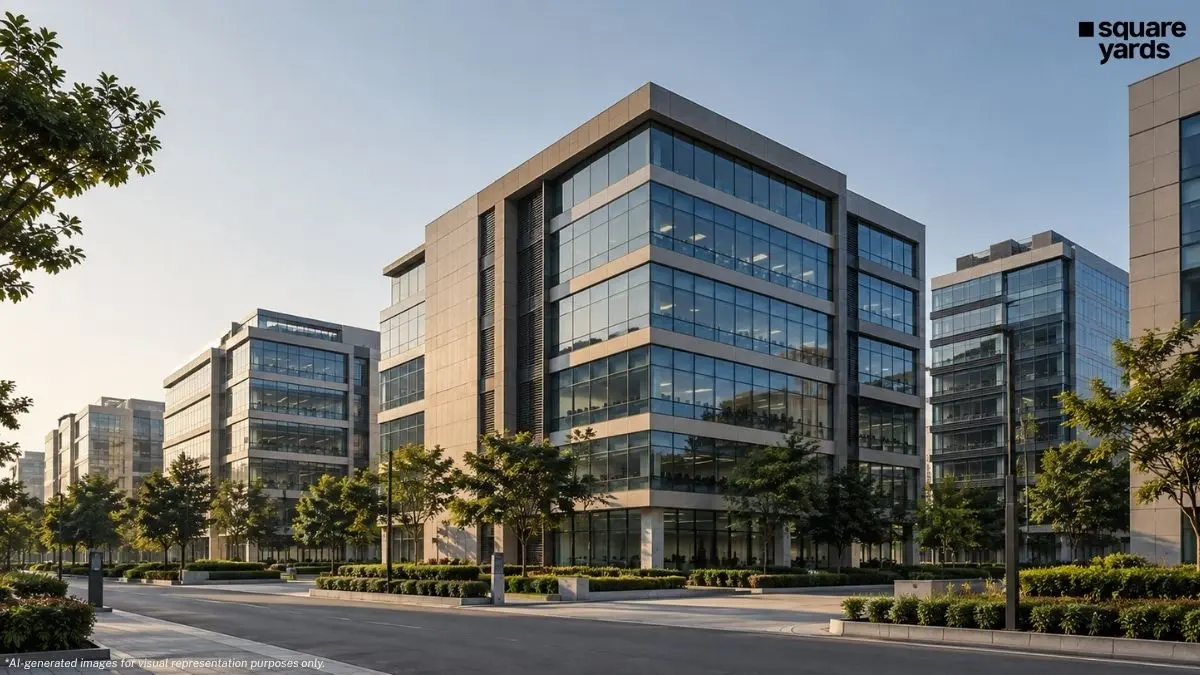
CHENNAI – The skyline of Chennai, traditionally characterized by its industrial heritage and burgeoning IT corridors, is undergoing a profound transformation. As of late 2026, the city has solidified its position as a premier global destination for Global Capability Centers (GCCs), a shift that is fundamentally altering the DNA of its commercial and residential real estate markets. With over 400 GCCs now operational, Chennai is no longer just a "back-office" hub; it has evolved into a strategic nerve center for global giants in manufacturing, engineering, healthcare, and financial services.
This report explores the multi-faceted impact of the GCC surge on Chennai’s urban development, examining the symbiotic relationship between corporate expansion, infrastructure breakthroughs like Metro Phase II, and the resulting spike in residential demand.
Main Facts: The GCC Surge and the Office Market Pivot
The primary catalyst for Chennai’s current real estate cycle is the aggressive expansion of GCCs. In the first quarter of 2026, industry data revealed that GCCs accounted for nearly 50% of the city’s gross office leasing. This represents a significant pivot from previous years, where third-party IT service providers dominated the landscape.
Several factors have converged to make Chennai the "GCC Capital" of the South:
- Cost Arbitrage: Despite the rise in property values, Chennai remains remarkably affordable for global corporations. With average Grade A office rents hovering around Rs 75 per square foot (psf) per month, the city offers a 20% to 60% cost advantage over other Tier-I markets like Bengaluru, Mumbai, or Delhi-NCR.
- Diverse Talent Pool: Unlike cities that rely solely on software talent, Chennai provides a specialized workforce for the manufacturing, automotive, and healthcare sectors, drawing from its "Detroit of Asia" legacy.
- Grade A Supply: Developers have responded to the GCC demand by pivoting toward "Grade A+" spaces—buildings that emphasize sustainability (ESG compliance), smart building technology, and employee wellness.
The demand is most concentrated in Southern Chennai, where established business parks are reaching full occupancy, prompting a wave of new commercial developments further down the Old Mahabalipuram Road (OMR) and the Grand Southern Trunk (GST) Road.
Chronology of Growth: From IT Hub to Global Strategic Partner
The trajectory of Chennai’s real estate evolution can be traced through three distinct phases:
- The IT/BPO Era (2000–2015): The development of the Tidel Park and the initial phases of OMR established Chennai as a software services destination. Real estate growth was linear, following the "IT Corridor" southwards.
- The Maturity Phase (2016–2022): The city saw a diversification into BFSI (Banking, Financial Services, and Insurance) and automotive R&D. Despite the pandemic-induced slowdown, infrastructure projects like Metro Phase I laid the groundwork for better connectivity.
- The GCC Explosion (2023–2026): Post-pandemic, global firms sought to insource critical functions. Chennai emerged as the preferred destination for high-value engineering and R&D centers. By Q1 2026, the demand for large-format offices (over 100,000 sq. ft.) reached record highs, driven almost exclusively by GCCs looking to scale their Indian footprints.
Supporting Data: The Residential Ripple Effect
The commercial boom has triggered a direct and measurable impact on residential property prices. As GCCs hire thousands of high-income professionals, the "walk-to-work" culture has shifted from a luxury to a necessity, driving up prices in proximity to employment hubs.
Key Residential Market Indicators (2025–2026):
- Sholinganallur: A central node on the OMR, Sholinganallur has seen apartment rates jump from Rs 7,900 psf in September 2025 to Rs 9,950 psf by June 2026—a staggering 26% increase in less than a year.
- Pallavaram: Benefiting from its proximity to both the airport and the OMR-GST connecting corridors, Pallavaram saw asking prices reach Rs 10,800 psf in mid-2026.
- Rental Yields: In areas like Perungudi and Tharamani, rental yields have seen a 150-200 basis point increase as the influx of expatriates and out-of-state professionals outpaces the supply of ready-to-move-in Grade A apartments.
The data suggests a flight to quality. Modern professionals are increasingly opting for "integrated townships" that offer amenities such as co-working spaces, gymnasiums, and proximity to retail outlets, rather than standalone apartment blocks.
Infrastructure: Metro Phase II as the Great Connector
If GCCs are the engine of Chennai’s growth, the Chennai Metro Phase II is the tracks upon which this growth runs. The ambitious 118.9-km network, being built at a cost of Rs 63,246 crore, is designed to link the far-flung corners of the city to its economic heart.
The Three Critical Corridors:
- Madhavaram to SIPCOT (Corridor 3): This is perhaps the most vital stretch for the real estate market. It connects the northern residential suburbs directly to the SIPCOT IT Park in Siruseri, effectively shortening the commute for tens of thousands of GCC employees.
- Lighthouse to Poonamallee Bypass (Corridor 4): This route is expected to unlock the potential of Western Chennai, creating a new commercial-residential axis that relieves pressure on the South.
- Madhavaram to Sholinganallur (Corridor 5): This orbital route will allow for seamless transfer between the city’s peripheral business districts.
Transit-Oriented Development (TOD):
Chennai Metro Rail Limited (CMRL) is not just building transport; it is becoming a real estate player. Plans are underway to develop 73.4 lakh sq. ft. of commercial and retail space across 37 metro stations. This TOD model ensures that the "last-mile connectivity" issue is addressed, making the surrounding residential pockets even more attractive to investors.
Official Responses and Industry Perspectives
Real estate analysts and industry bodies have noted that Chennai’s growth is more "sustainable" than that of its peers.
- Market Analysts: "Chennai’s real estate market has historically been conservative, but the GCC influx has introduced a new level of dynamism," says a lead researcher at a global real estate consultancy. "We are seeing a shift from ‘investor-led’ speculation to ‘user-led’ demand, which is a much healthier sign for long-term capital appreciation."
- Developer Sentiment: Prominent developers in the OMR belt indicate that their project pipelines are now heavily influenced by the requirements of GCC employees. "We are no longer just building four walls; we are building ecosystems. The GCC employee wants global standards—EV charging stations, sustainable water management, and high-speed digital infrastructure," noted a CEO of a leading Chennai-based construction firm.
- Government Vision: State officials have emphasized that the government’s "FinTech City" and "Pattabiram IT Park" initiatives are designed to complement the GCC growth, ensuring that infrastructure keeps pace with corporate demand.
Implications: Shaping the Future of the Gateway to South India
The continued expansion of GCCs in Chennai carries several long-term implications for the city’s urban fabric:
1. Decentralization of Business Districts:
While OMR remains the "primary" corridor, the high costs and congestion are pushing development toward "secondary" hubs like Porur, Pallavaram, and the emerging "New Chennai" zones toward Mahabalipuram. This decentralization helps in balanced urban growth.
2. The Rise of Managed Office Spaces:
GCCs often prefer "plug-and-play" environments to mitigate the risks of long-term capex. This has led to a surge in managed office providers taking up large chunks of Grade A buildings, acting as intermediaries between developers and global corporations.
3. Socio-Economic Transformation:
The influx of high-paying GCC jobs is boosting the local retail and hospitality sectors. From high-end malls in Sholinganallur to premium healthcare facilities in Perungudi, the "wealth effect" of the GCC boom is visible across the service economy.
4. Challenges to Overcome:
Despite the optimism, challenges remain. The impact on property prices is not uniform. Areas lacking "feeder transport" to metro stations or those prone to seasonal flooding may see stagnating values despite their proximity to employment hubs. Furthermore, the rapid entry of new residential supply could lead to a temporary overhang in certain micro-markets.
Conclusion
Chennai is currently witnessing a rare alignment of corporate demand, infrastructure investment, and economic affordability. The GCC expansion has acted as a catalyst, transforming the city from a regional player into a global contender for corporate talent and real estate investment.
As the Metro Phase II moves toward completion and more global entities establish their "second headquarters" in the city, the real estate market is expected to remain on an upward trajectory. For stakeholders—be they developers, homebuyers, or global corporations—the message is clear: Chennai’s next phase of growth will be defined by connectivity, quality of life, and its ability to remain the most cost-effective Tier-I destination in India.
