

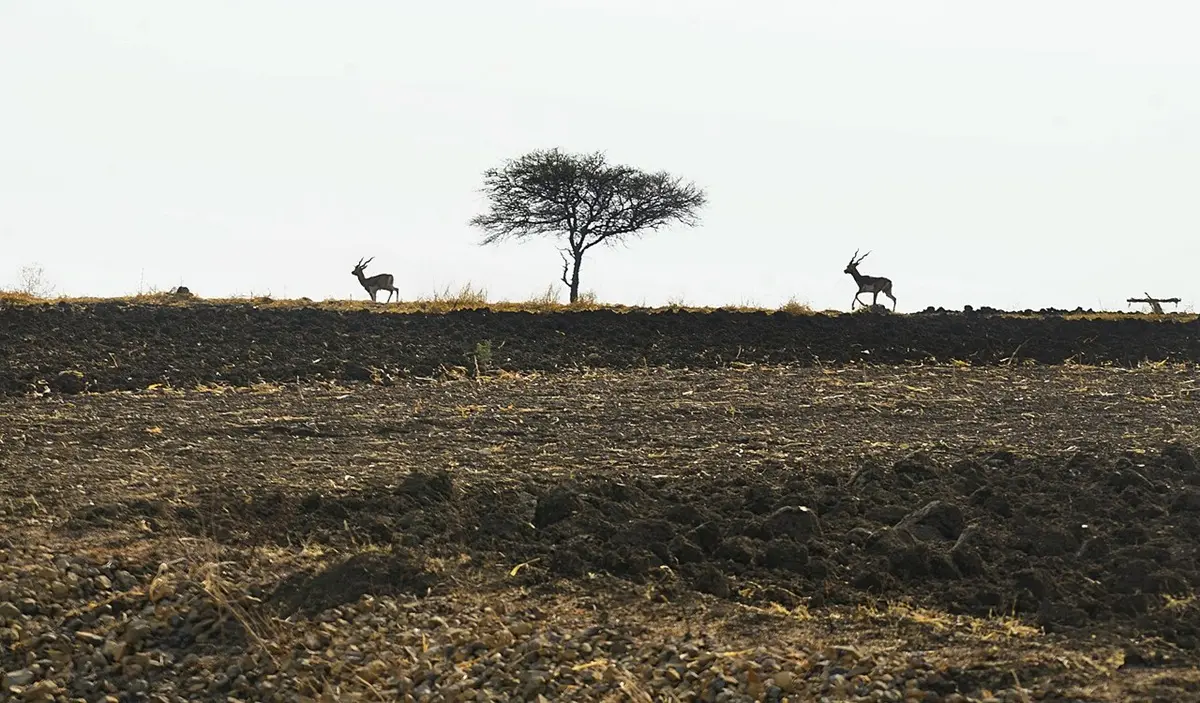
MUMBAI – In a move that underscores the deepening environmental and economic crisis in India’s most industrialized state, the Maharashtra government has officially declared a state of drought across 265 of its 358 talukas. The declaration, triggered by a failing 2026 Kharif season and exacerbated by the global El Niño phenomenon, covers nearly 74% of the state’s administrative subdivisions.
The Government Resolution (GR) issued on September 26, 2026, marks the beginning of a massive state-led intervention aimed at preventing a total collapse of the rural economy. With the monsoon delivering significantly below-average rainfall, the state’s agricultural backbone—spanning from the arid plains of Marathwada to the tribal belts of Gadchiroli—is facing one of its most challenging periods in recent memory.
Main Facts: A State Under Duress
The scale of the drought is staggering, affecting 32 of Maharashtra’s 36 districts. The declaration follows months of monitoring by the Agriculture and Revenue departments, which observed stunted crop growth and rapidly depleting groundwater levels.
According to the official order, the Chhatrapati Sambhajinagar (formerly Aurangabad) division is the hardest hit, with 74 talukas officially designated as drought-affected. This region, often referred to as the "drought capital" of the state, continues to suffer from a lack of perennial water sources. Other divisions follow closely:
- Amravati Division: 56 talukas
- Nashik Division: 49 talukas
- Nagpur Division: 39 talukas
- Pune Division: 35 talukas
The drought is not merely a lack of water for irrigation; it is a systemic failure of the seasonal cycle that impacts drinking water availability, livestock survival, and the financial solvency of millions of farming households. To combat this, the state has activated a multi-layered relief package including loan restructuring, revenue waivers, and educational concessions for the children of affected farmers.
Chronology of the Crisis
The current crisis did not emerge overnight. Its roots lie in the erratic behavior of the 2026 monsoon, which was hampered from the outset by unfavorable atmospheric conditions.
- June – July 2026: The Kharif sowing season began with high hopes, but a prolonged "dry spell" in July—traditionally the wettest month—resulted in widespread germination failure. The India Meteorological Department (IMD) issued warnings that the monsoon was being suppressed by a strengthening El Niño.
- August 2026: While some parts of the Konkan coast received rain, the hinterlands of Vidarbha and Marathwada saw rainfall deficits exceeding 40%. The "break-monsoon" period lasted longer than usual, leading to the wilting of standing crops like soybean, cotton, and pulses.
- September 26, 2026: Following a series of cabinet meetings and district-level reports, the State Government officially issued the drought declaration for 265 talukas. Instructions were sent to district collectors to begin "panchnamas" (on-the-spot damage assessments).
- September 27, 2026: Veteran politician and NCP (SP) President Sharad Pawar intervened, submitting a comprehensive 17-point memorandum to the Chief Minister, arguing that the government’s measures, while welcome, did not go far enough to address the ground reality.
- Late September 2026: The Chief Minister’s Office (CMO) confirmed that further financial assistance would be disbursed following the completion of digital damage assessments involving GPS-tagged photography to ensure transparency.
Supporting Data: The Science of the Shortfall
The 2026 drought is inextricably linked to the El Niño Southern Oscillation (ENSO). Chief Minister Devendra Fadnavis emphasized that the state is closely monitoring the impact of El Niño, which climate models suggest could peak in late February 2027.
Rainfall Deficits and Water Reservoirs
Data from the Water Resources Department indicates that reservoir levels in the Jayakwadi dam and other critical irrigation projects in the Godavari basin are at less than 30% of their total capacity. In the Nagpur and Amravati divisions, the lack of late-season "returning rains" has prevented the recharge of the unconfined aquifers that most small-scale farmers rely on via borewells.
Regional Breakdown of the Declaration
The concentration of drought in specific divisions highlights the uneven nature of climate change impacts:
- Marathwada (Chhatrapati Sambhajinagar): 74 talukas. This region’s heavy reliance on cotton and soybean makes it economically vulnerable to moisture stress.
- Vidarbha (Amravati & Nagpur): Combined 95 talukas. This region faces a dual crisis of crop failure and a rising number of livestock in need of fodder.
- North Maharashtra (Nashik): 49 talukas. Known for onion and grape cultivation, the drought here threatens the export-oriented horticulture sector.
Official Responses and Relief Measures
The Maharashtra government has deployed a "War Room" approach to manage the scarcity. The primary objective is to provide immediate liquidity to farmers and ensure the survival of livestock.
Financial and Administrative Concessions
The state has announced a slew of measures intended to ease the immediate financial burden on rural households:

- Exemption from Land Revenue: Farmers in the 265 talukas will not be required to pay land tax for the current fiscal year.
- Crop Loan Restructuring: Banks have been directed to convert short-term crop loans into medium-term loans, providing farmers breathing room for repayment.
- Moratorium on Recovery: A stay has been placed on the recovery of all agriculture-related loans to prevent coercive actions by financial institutions.
- Electricity Bill Waivers: To assist those who still have access to some groundwater, the government has waived current electricity bills for agricultural pumps.
- Educational Support: In a move to prevent the drought from affecting the next generation, exam fees for school and college students in affected areas have been waived.
Technological Transparency
In a shift toward modernized governance, the government has mandated that district officials submit "panchnamas" accompanied by GPS-coordinated photographs. This digital audit is designed to prevent the misappropriation of funds and ensure that aid reaches the specific plots of land that have suffered the most damage.
Political Landscape and Opposition Demands
The drought has also become a focal point of political contention. Sharad Pawar, a former Union Agriculture Minister with a deep pulse on rural Maharashtra, has challenged the government to expand its relief efforts.
The Pawar Memorandum
On September 27, Pawar sent a detailed letter to Chief Minister Fadnavis containing 17 specific demands. His primary critiques include:
- Universal Declaration: Pawar argued that the remaining 93 talukas are also suffering and should be included in the drought list to ensure no farmer is left behind.
- Direct Cash Support: The NCP leader called for a compensation of ₹100,000 per hectare for farmers and ₹25,000 for landless agricultural laborers, who are often the "invisible victims" of drought.
- Food Security: He demanded the distribution of 25 kg of free grain per family to prevent malnutrition and distress migration.
- Administrative Empowerment: Pawar suggested that Tehsildars (local revenue officers) be given the immediate authority to approve water tankers, bypassing the usual bureaucratic red tape that often delays water delivery to parched villages.
Pawar has also called for a special three-day session of the Maharashtra Legislature to discuss the drought, emphasizing that financial aid must reach the hands of farmers before the major festivals of Dussehra and Diwali.
Socio-Economic and Environmental Implications
The declaration of drought in 265 talukas is a harbinger of a difficult 12 months ahead for Maharashtra. The implications extend far beyond the farm gate.
Rural-to-Urban Migration
Historically, severe droughts in Maharashtra lead to an exodus of laborers from Beed, Latur, and Osmanabad to cities like Mumbai and Pune. This seasonal migration puts immense pressure on urban infrastructure and leaves elderly populations in villages vulnerable.
The Fodder Crisis
With the failure of the Kharif crop, the availability of stalks and green fodder has plummeted. The government’s promise to provide fodder for livestock is a critical intervention; without it, farmers are often forced to sell their cattle to slaughterhouses at throwaway prices, stripping them of their only remaining assets.
Long-term Water Governance
The 2026 crisis highlights the limitations of existing water conservation schemes. While the government has ordered new water conservation works to begin immediately, these are reactive measures. Experts argue that the state must pivot toward more sustainable cropping patterns—moving away from water-intensive crops like sugarcane in drought-prone zones—if it is to survive the "new normal" of El Niño-induced climate variability.
Economic Contraction
Agriculture remains a major contributor to Maharashtra’s GSDP (Gross State Domestic Product). A failure of the Kharif season, followed by a likely diminished Rabi (winter) season due to low reservoir levels, will likely lead to a contraction in rural consumption, affecting industries ranging from FMCG to automobiles.
Conclusion
As Maharashtra enters the final quarter of 2026, the state finds itself at a crossroads. The government’s declaration of drought in 265 talukas is a necessary admission of a brewing catastrophe. However, the success of the intervention will depend on the speed of the "panchnamas" and the efficiency with which the promised relief—from electricity waivers to fodder camps—is delivered to the ground.
With the shadow of El Niño looming until early 2027, the resilience of Maharashtra’s farmers and the political will of its leaders will be tested as rarely before. The coming months will determine whether the state can mitigate a humanitarian crisis or if the 2026 drought will be remembered as a definitive turning point in the state’s agrarian history.
