

On October 2, 2026, the state of Maharashtra will embark on a historic administrative journey that promises to redefine the social and economic fabric of its rural landscape. Coinciding with Gandhi Jayanti, the state government will begin the formal issuance of Women Farmers Certificates (WFCs) under the newly enacted Maharashtra Women Farmer’s Empowerment Act 2026. This legislative milestone represents a paradigm shift in Indian agricultural policy: for the first time, a state has moved to formally recognize women as farmers based on their labor and contribution rather than their status as landowners.
For decades, the term "farmer" in the Indian context has been inextricably linked to the possession of land titles (7/12 extracts in Maharashtra). This land-centric definition has effectively rendered millions of women—who perform the bulk of agricultural labor—invisible in the eyes of the law, banking institutions, and government subsidy programs. The 2026 Act aims to dismantle this barrier, opening doors for lakhs of women engaged in crop husbandry, livestock, poultry, and fisheries.
The Main Facts: Breaking the Land-Ownership Linkage
The crux of the Maharashtra Women Farmer’s Empowerment Act 2026 lies in its expansive and inclusive definition of a "farmer." Traditionally, government schemes like the Pradhan Mantri Kisan Samman Nidhi (PM-KISAN) or access to subsidized seeds and fertilizers have required proof of land ownership. Because land is predominantly held in the names of male heads of households, women are classified merely as "agricultural laborers," despite often managing the entire farm cycle.
The new Act broadens the definition to include any woman engaged in:
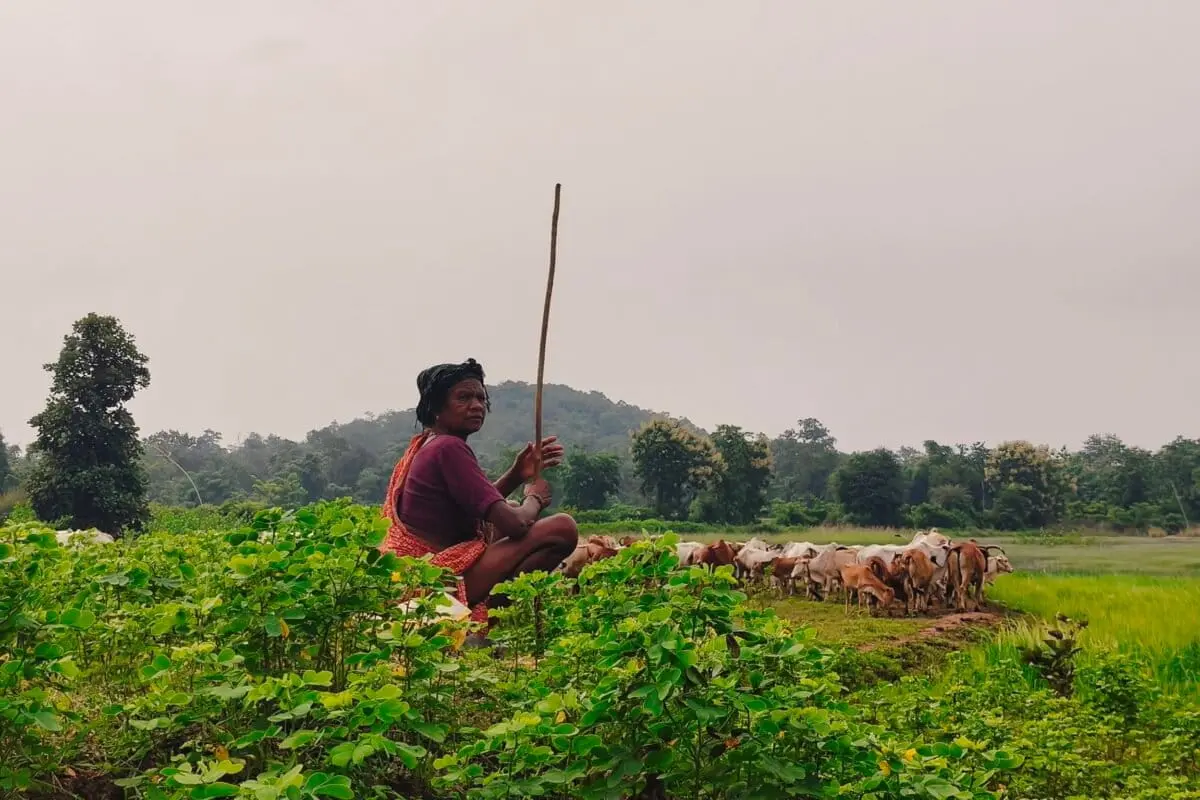
![Maharashtra formally recognises women farmers regardless of land ownership [Commentary]](https://imgs.mongabay.com/wp-content/uploads/sites/30/2026/09/01002543/IMG_20260924_221913_Mahesh-Maske-1200x800.jpg)
- Crop husbandry and agroforestry.
- Animal husbandry and livestock rearing.
- Fisheries and poultry.
- Vermiculture and mushroom cultivation.
- Primary processing of agricultural produce.
By issuing the WFC, the state provides a legal document that validates a woman’s professional identity as a farmer. This certificate is designed to act as a "master key," granting women direct access to credit through the Kisan Credit Card (KCC), crop insurance, irrigation subsidies, and climate-resilient technology—resources that were previously out of reach.
Chronology: From Concept to Legislation
The path to this legislation was characterized by an unusually high degree of political will and a rapid, consultative drafting process. The timeline reflects a state acting with a sense of urgency to address a long-standing systemic injustice.
- September 2025: The journey began with a high-level meeting between Dr. Soumya Swaminathan, Chair of the M.S. Swaminathan Research Foundation (MSSRF), and Maharashtra Chief Minister Devendra Fadnavis. The discussion centered on the "invisibility" of women in agriculture and the need for a legal framework to empower them.
- Late 2025: A formal Memorandum of Understanding (MoU) was signed between the Government of Maharashtra and MSSRF. A technical advisory group was formed, with the Vidhi Centre for Legal Policy joining as the legal drafting partner to ensure the Bill could withstand judicial scrutiny.
- January – March 2026: A series of intensive regional consultations were held across Maharashtra. Meetings in Mumbai, Pune, Chhatrapati Sambhajinagar, and Nagpur brought together women farmers, civil society organizations, bankers, and revenue officials. These sessions allowed women to voice their specific grievances, such as being excluded from the Agristack (the national digital database for farmers) because it was based solely on land records.
- June 2026: Based on feedback from the ground, the draft Bill was refined to include provisions for lowering interest rates for women and incentivizing the Lakshmi Mukti Yojna (a scheme to add women’s names to family land records).
- July 2, 2026: In a rare display of bipartisan support, the Bill was passed unanimously in both the Maharashtra Legislative Assembly and the Legislative Council during the monsoon session.
- October 2, 2026: Official implementation begins with the issuance of the first batch of Women Farmers Certificates.
Supporting Data: The "Feminisation" of the Agrarian Crisis
The necessity for this Act is underscored by stark statistical disparities. For over a decade, economists have noted the "feminisation of agriculture"—a phenomenon where men migrate to urban centers for non-farm employment, leaving women to manage the ancestral lands.
According to the Periodic Labour Force Survey (PLFS), women now constitute nearly 60% of the national agricultural workforce. However, they hold less than 15% of land titles across India. In Maharashtra, the data is even more lopsided: while approximately 82% of the rural female workforce is engaged in agriculture, women hold only about 15.5% of operational farmland.
![Maharashtra formally recognises women farmers regardless of land ownership [Commentary]](https://imgs.mongabay.com/wp-content/uploads/sites/30/2026/09/26113827/Potato_harvest_in_Himachal_Pradesh_India_2011-768x512.jpg)
This "ownership-work gap" has dire consequences:
- Credit Starvation: Without land as collateral, women are often forced to turn to private moneylenders at usurious interest rates.
- Resource Exclusion: Many government subsidies for drip irrigation, tractors, or solar pumps are tied to land ownership, meaning the primary worker cannot access the tools she needs to improve productivity.
- Knowledge Gaps: Extension services and training programs often target "heads of households" (men), bypassing the women who are actually making the day-to-day decisions on the farm.
The M.S. Swaminathan Research Foundation’s work in the Vidarbha region—specifically in Wardha and Yavatmal—provided the empirical evidence needed to support the Act. Through the Mahila Kisan Sashaktikaran Pariyojana (MKSP), researchers found that when women were organized into "samitis" (collectives) and given scientific training, they were faster than men at adopting climate-resilient practices and eco-friendly farming.
Official Responses and Administrative Structure
The Maharashtra government has not merely passed a law; it has established a multi-tiered administrative infrastructure to ensure the Act does not remain a "paper tiger."
The Women Farmer Empowerment Cell: A dedicated state-level body has been established to oversee the policy’s rollout. This cell is tasked with coordinating between the departments of Agriculture, Revenue, and Animal Husbandry.
![Maharashtra formally recognises women farmers regardless of land ownership [Commentary]](https://imgs.mongabay.com/wp-content/uploads/sites/30/2026/09/01002851/IMG20260908140958-768x512.jpg)
State Level Monitoring Committee: This committee will track the implementation of the law, ensuring that banks and insurance companies recognize the WFC as a valid document for service delivery.
District and Block Assistance Officers: To prevent the certification process from becoming a bureaucratic hurdle, the Act mandates the appointment of Assistance Officers at the local level. Their role is to help women navigate the application process and guide them toward the entitlements now available to them.
During the legislative debates, officials emphasized that the Act is designed to integrate with existing digital initiatives. By creating a specific "Women Farmers’ Database," the state ensures that women are no longer excluded from Agristack, allowing them to be part of the modern digital agricultural economy.
Implications: Beyond Recognition Toward Gender Justice
While the issuance of the Women Farmers Certificate is a landmark achievement, experts and advocates suggest it is the beginning of a longer journey toward total gender justice in the agrarian sector.
![Maharashtra formally recognises women farmers regardless of land ownership [Commentary]](https://imgs.mongabay.com/wp-content/uploads/sites/30/2026/10/01090819/IMG20260904113755_Mahesh-Maske-768x512.jpg)
1. Climate Resilience and Adaptation
Women are often the first to feel the impact of climate change—droughts, heatwaves, and erratic rainfall—because they have fewer assets to fall back on. However, they are also the most effective drivers of adaptation. The WFC will allow women to access government support for seed conservation and sustainable resource management. When traditional wisdom is backed by modern scientific knowledge and legal recognition, rural communities become more resilient to climate shocks.
2. Economic Independence and Market Access
Agricultural markets (mandis) remain heavily male-dominated spaces. Due to a lack of formal recognition and poor mobility, women are often forced into "distress sales," selling their produce to middlemen at lower prices. The Act encourages the formation of Women-led Farmer Producer Organisations (FPOs) and Self-Help Groups (SHGs). With the WFC, these collectives can more easily access institutional credit to build storage and processing facilities, moving women up the value chain from laborers to entrepreneurs.
3. The Challenge of Land Governance
Recognition of labor is a critical first step, but it is not a substitute for land ownership. The next frontier for Maharashtra—and other states—is to embed gender-equitable land governance within revenue frameworks. This includes the enforcement of joint land titles. Legal rights over land provide women with a level of negotiating power within the household that a labor certificate alone cannot provide. As Dr. Soumya Swaminathan notes, land ownership ensures a woman’s security even if she exits agricultural work or faces changes in her marital status.
4. A Template for India
Maharashtra’s proactive approach serves as a blueprint for the rest of the country. By delinking the identity of a "farmer" from land ownership, the state has addressed a century-old blind spot in Indian law. If successful, this model could be adopted by other states where the "feminisation of agriculture" is equally prevalent, potentially transforming the lives of millions of women across the subcontinent.
![Maharashtra formally recognises women farmers regardless of land ownership [Commentary]](https://imgs.mongabay.com/wp-content/uploads/sites/30/2026/09/01003312/IMG20260909112911-e1790795014625-768x512.jpg)
Conclusion
The Maharashtra Women Farmer’s Empowerment Act 2026 is more than a legislative document; it is an act of social rectification. It acknowledges that the woman tilling the soil, tending the cattle, and managing the harvest is not just a "helper" or a "wife of a farmer"—she is the farmer.
As the first certificates are handed out this October, the real test will lie in implementation. Success will be measured not just by the number of certificates issued, but by the number of women who can finally walk into a bank, show their WFC, and receive the credit and respect they have earned through generations of invisible labor. Maharashtra has shown the political will; now, the eyes of the nation are on the ground to see how this new identity transforms the future of Indian agriculture.
