

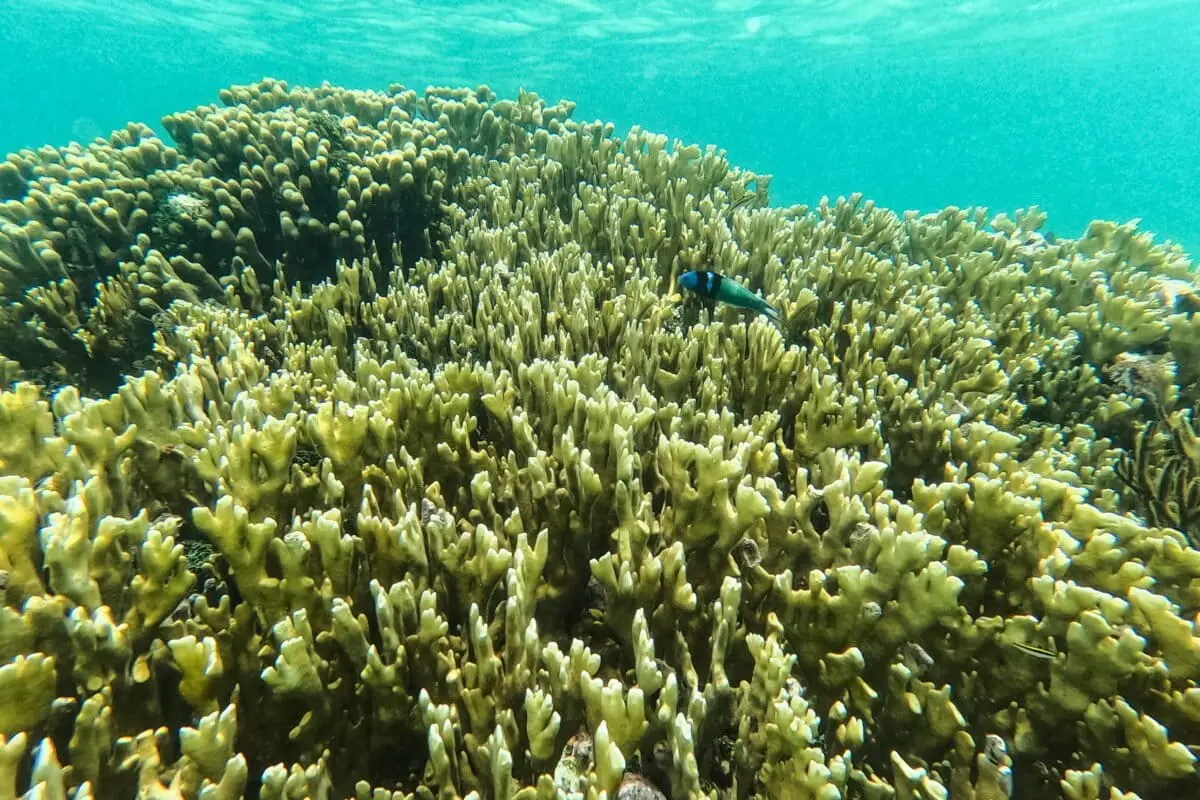
The world’s coral reefs, often described as the "rainforests of the sea," are currently locked in a desperate battle for survival against a backdrop of rapidly warming oceans. While these ecosystems have historically demonstrated remarkable resilience, a new and more frequent threat is emerging: the "supersizing" of El Niño events by human-induced climate change. As the United Nations and global scientific bodies issue increasingly dire warnings, the window for these vital marine habitats to recover between heatwaves is closing, potentially signaling a permanent shift in the planet’s biodiversity.
Main Facts: The Narrowing Window of Recovery
At the heart of the current crisis is a fundamental change in the rhythm of the ocean’s thermal cycles. According to United Nations Secretary-General António Guterres, the naturally occurring El Niño phenomenon—characterized by the warming of surface waters in the central and eastern Pacific Ocean—is being "supersized" by the overarching trend of global warming. This synergy is creating marine heatwaves of unprecedented intensity and frequency.
The United Nations Environment Programme (UNEP) has recently likened the world’s coral reefs to an "overmatched boxer" taking repeated, heavy blows. The primary issue is no longer just the severity of a single bleaching event, but the lack of time between them. Bleaching occurs when corals, stressed by high water temperatures, expel the symbiotic algae (zooxanthellae) living in their tissues, which provide them with food and their vibrant colors. Without these algae, the coral turns white and begins to starve. While corals can recover if temperatures drop quickly, they require years of stability to regrow and reproduce.

Findings from the Global Coral Reef Monitoring Network (GCRMN) and the International Coral Reef Initiative (ICRI) highlight a startling trend: where reefs once had decades to recover after major bleaching events, they are now lucky to receive a five-to-six-year reprieve. For many reefs impacted by the record-breaking marine heatwaves of 2024, the current El Niño cycle means they may have had less than a single year to begin the recovery process before being hit again.
Chronology: From Isolated Events to Global Catastrophes
The history of mass coral bleaching is a relatively short but intensifying timeline that tracks closely with rising global CO2 levels.
- 1982–1983: The first large-scale mass coral bleaching was recorded in the eastern tropical Pacific during a then-record-breaking El Niño. This event served as a "harbinger of the future," causing near-total coral mortality (95–99%) in the Galapagos Islands and severely impacting reefs in Panama, Colombia, and Costa Rica.
- 1998 (GCBE1): The first Global Coral Bleaching Event (GCBE1) occurred, triggered by a powerful El Niño. It is estimated that 8% of the world’s total coral cover died during this single year. The Indian Ocean was particularly devastated.
- 2010 (GCBE2): A second global event further depleted coral stocks, with an estimated 14% loss of global corals recorded between 2009 and 2018 due to the cumulative impact of heat stress.
- 2014–2017 (GCBE3): The third and longest global bleaching event on record impacted more reefs than any previous event. Roughly 15% of the world’s reefs experienced significant mortality.
- 2023–2025 (GCBE4): The world is currently grappling with the fourth global mass coral bleaching event. Preliminary data suggests that global coral cover declined by approximately 8.9% in the 2023–2024 period alone.
As the background temperature of the ocean rises, even "neutral" years are now warmer than El Niño years were forty years ago. Derek Manzello, Coordinator of NOAA’s Coral Reef Watch, notes that sea surface temperatures during current La Niña conditions (the cooler phase of the cycle) are now warmer than they were during El Niño events in the 1980s.
Supporting Data: Regional Impacts and the "Six-Year Rule"
The impact of these "supersized" cycles is perhaps most visible in the Indian subcontinent. A 24-year longitudinal study in Lakshadweep, conducted by researchers from the Nature Conservation Foundation (NCF) and international collaborators, provides a grim data set. Since 1998, coral cover in Lakshadweep has plummeted from approximately 37% to under 20%.

The NCF study, led by researcher Wenzel Pinto, identified a critical threshold for reef survival: the "six-year rule." The data indicates that reefs show robust recovery only when they are granted at least six consecutive years free of bleaching-level heat stress. However, as El Niño events become more frequent, this six-year window is becoming an ecological luxury that most reefs can no longer afford.
The 2023–2025 period saw more than 80% of India’s tropical reefs experience extreme heat stress. However, the data also revealed a complex picture of "winners and losers" based on local conditions:
- Lakshadweep: Emerged as the hardest-hit region in India, with 37% of coral cover bleached or dead.
- Andaman Islands: The Mahatma Gandhi Marine National Park saw a lower mortality rate of 11.5%, suggesting local upwelling or currents may provide temporary refugia.
- Palk Bay: In a surprising reversal of typical vulnerability patterns, the usually fragile Acropora (branching) corals showed higher resilience (13.6% loss) than the typically hardy Porites (boulder) corals, which suffered 61.8% mortality.
This variability suggests that while the global trend is downward, local oceanographic factors—such as water depth, turbidity, and current patterns—will determine which specific reefs might survive as "climate outposts."
Official Responses: A Stark Outlook from Global Bodies
The international community’s response to these findings is characterized by a sense of urgent alarm. The Intergovernmental Panel on Climate Change (IPCC) has issued one of the most sobering statistics in modern environmental science: even if global warming is successfully constrained to 1.5°C above pre-industrial levels, 70% to 90% of the world’s warm-water coral reefs are expected to disappear. If warming reaches 2°C, the loss is projected to be 99%.

The World Meteorological Organization (WMO) recently confirmed that El Niño is now "firmly established," with a near 100% probability of persisting through late 2026 and into early 2027. WMO-designated centers indicate that the phenomenon will likely peak toward the end of 2026, further intensifying the heat stress on already weakened reef systems.
In India, the scientific community is mobilizing. Recently, 188 ecologists and conservationists signed a "Call to Action," formally requesting the government and international agencies to implement stronger research protocols and long-term monitoring. The group emphasizes that without a dedicated framework to track the ecological impacts of the 2026–27 El Niño, the window to implement localized conservation strategies—such as heat-stress mapping and larval restoration—will close.
Implications: The Ripple Effect of Reef Collapse
The disappearance of coral reefs is not merely an aesthetic or environmental tragedy; it is a socio-economic catastrophe in the making. Although coral reefs cover less than 1% of the ocean floor, they support more than 25% of all marine life. Their collapse would trigger a "trophic cascade," potentially leading to the extinction of thousands of fish species that rely on reefs for spawning and protection.
1. Food Security and Livelihoods:
Millions of people in coastal communities, particularly in the Indo-Pacific and Caribbean, depend on reef-associated fisheries for their primary source of protein. In India alone, the reef systems of the Gulf of Mannar and Lakshadweep support tens of thousands of small-scale fishers. As reefs die, fish populations migrate or dwindle, threatening the food security of some of the world’s most vulnerable populations.

2. Coastal Protection:
Coral reefs act as natural breakwaters, absorbing up to 97% of wave energy. In an era of rising sea levels and more intense tropical cyclones—also fueled by climate change—the loss of these natural barriers leaves coastal infrastructure, homes, and human lives exposed to devastating storm surges and erosion.
3. Economic Loss:
The global economic value of coral reefs, including tourism, fisheries, and coastal protection, is estimated in the hundreds of billions of dollars annually. For many island nations, reef-based tourism accounts for a significant portion of their GDP. The transition of vibrant, colorful reefs into grey, algae-covered graveyards represents a total loss of these economic engines.
Conclusion: The Uncertain Future
As the 2026–27 El Niño approaches its peak, the fate of the world’s coral reefs hangs in the balance. The evidence suggests that we are moving past the era of "occasional bleaching" and into an era of "chronic stress." While some reefs may adapt or find refuge in deeper, cooler waters, the majority are being pushed beyond their biological limits.
The current scientific consensus is clear: while local conservation efforts—such as reducing plastic pollution, preventing overfishing, and coral gardening—are essential to give reefs a fighting chance, they are ultimately "Band-Aids" on a systemic wound. The only path to ensuring the long-term survival of coral reefs is the rapid and sustained reduction of global greenhouse gas emissions. Without such action, the "supersized" El Niño events of the future may find nothing left in the ocean to bleach.
