

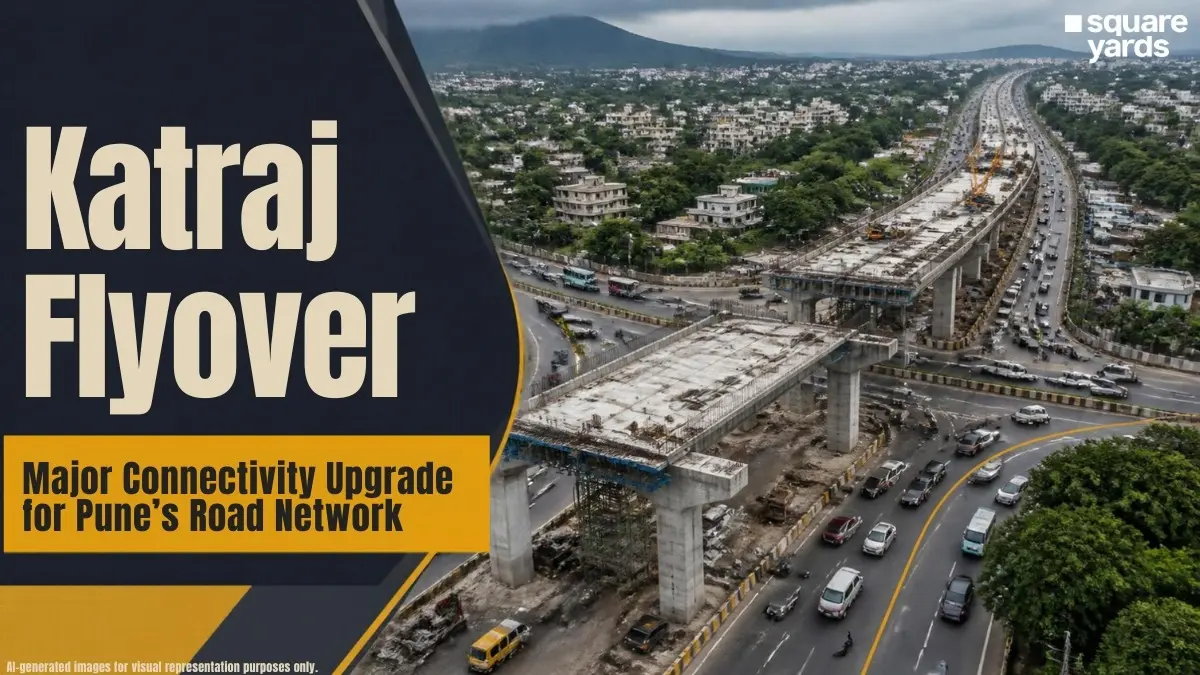
Introduction: Resolving a Decades-Old Bottleneck
For residents of Southern Pune and long-distance commuters traversing the Maharashtra interior, Katraj Junction has long been synonymous with gridlock. As a critical intersection where local city traffic meets the heavy-duty flow of the Bengaluru-Mumbai bypass, the area has struggled to keep pace with Pune’s rapid urbanization. However, a significant infrastructural shift is on the horizon.
The National Highways Authority of India (NHAI), in collaboration with the Pune Municipal Corporation (PMC), is currently executing a multi-layered infrastructure project centered around a massive six-lane flyover at Katraj Junction. This project, aimed at bridging the Katraj-Kondhwa Road with the major highway corridors of Mumbai and Satara, is poised to redefine the socio-economic and logistical landscape of the region. With a recently updated completion target of December 2026, the project represents a cornerstone in Pune’s broader strategy to decentralize traffic and enhance transit efficiency.
1. Main Facts: The Scope and Scale of the Katraj Flyover Project
The Katraj flyover is not merely a local transit improvement; it is a strategic national highway asset. Categorized under the development of NH 548DD, the project serves as a vital link in a chain that connects the eastern and western fringes of the Pune Metropolitan Region.
Project Specifications:
- Structure: A six-lane high-capacity flyover.
- Location: Katraj Junction, situated at approximately km 3/880 of the Vadgaon-Katraj-Kondhwa-Mantarwadi-Loni Kalbhor-Theur Phata-Lonikand road.
- Primary Objective: To provide a seamless transition for vehicles moving from the Pune-Solapur side toward the Pune-Mumbai and Pune-Satara highway corridors.
- Lead Agency: National Highways Authority of India (NHAI), with auxiliary support from the Pune Municipal Corporation (PMC) for land acquisition and service road management.
The flyover is designed to lift heavy-duty transit above the local fray of Katraj’s commercial and residential zones. By doing so, it addresses the "last mile" connectivity issues for freight trucks and interstate buses that currently must navigate the narrow, congested arteries of Katraj and Kondhwa to reach the bypass.
2. Chronology: The Road to December 2026
The timeline of the Katraj flyover has been subject to the complexities typical of large-scale Indian infrastructure projects, including land acquisition hurdles and inter-departmental coordination.
- December 2025 (Initial Projections): The Ministry of Road Transport and Highways (MoRTH) initially indicated a completion target of June 2026. This was based on the preliminary construction schedule and expected land handover dates.
- September 2026 (Site Inspection): Senior officials from the PMC and NHAI conducted a comprehensive site review. This inspection revealed critical "missing links" in the project, specifically ten properties that had been overlooked in the initial acquisition phases and the continued presence of electrical infrastructure in the path of the grade separator.
- October 7, 2026 (The Revised Deadline): Following the review, NHAI Executive Engineer Shruti Naik confirmed a revised target. The six-lane flyover is now scheduled for completion by December 2026.
- 2027–2028 (The Extended Horizon): While the flyover itself has a 2026 deadline, the ancillary road widening projects have separate timelines. The 50-meter widening of the Katraj-Kondhwa Road is targeted for March 2027, while the full 84-meter road development plan is pushed to March 2028 to account for complex land acquisition processes.
This chronological shift underscores the difficulty of executing heavy infrastructure in densely populated urban corridors where every meter of land involves negotiations with private owners.
3. Supporting Data: The Logistics of NH 548DD and Highway Integration
To understand the impact of the Katraj flyover, one must look at the data regarding Pune’s traffic distribution. Currently, the Katraj-Kondhwa Road acts as a primary feeder for the Pune-Solapur National Highway.
Traffic Diversion Efficiency:
The new flyover will allow traffic approaching from the Solapur side to bypass the inner-city congestion of Pune entirely. Currently, a vehicle traveling from Solapur to Mumbai must often navigate through Hadapsar or the narrow stretches of Kondhwa. With the completion of the flyover and the NH 548DD upgrades:
- Travel Time Reduction: Commuters can expect a 20-30 minute reduction in transit time during peak hours between Kondhwa and the Bengaluru-Mumbai bypass.
- Lane Capacity: The transition from current narrow sections to a six-lane flyover increases the Passenger Car Unit (PCU) capacity of the junction by an estimated 150%.
- The 9km Extension: Beyond the flyover, the PMC is planning a 9 km road extension from Khadi Machine Chowk to Wadki Chowk. This will create a secondary outer ring that further pulls heavy traffic away from the city center.
Land Acquisition Data:
The September review highlighted that the primary obstacle to meeting the 2026 deadline is the acquisition of 10 specific properties. Furthermore, the relocation of electricity poles and high-tension transformers is essential for the "grade separator" work—a technical component that allows roads to cross at different heights to prevent intersection collisions.
4. Official Responses: Coordination Between NHAI and PMC
The success of the Katraj project hinges on the synergy between federal and local authorities. NHAI Executive Engineer Shruti Naik has been vocal about the technical requirements for the December 2026 goal, emphasizing that the engineering work is contingent on the PMC’s ability to clear the right-of-way.
Key Official Directives:
- Expedited Negotiations: Following the September inspection, officials were directed to enter immediate discussions with the owners of the 10 outstanding properties. The PMC has been tasked with offering compensation packages that align with the latest land acquisition laws to prevent legal stays that could halt construction.
- Utility Shifting: The Maharashtra State Electricity Distribution Company Limited (MSEDCL) has been brought into the fold to prioritize the removal of transformers that currently obstruct the grade separator’s footprint.
- Clarifying Timelines: Authorities have been careful to distinguish between the flyover (NHAI-led) and the road widening (PMC-led). This distinction is vital for public expectations, as the flyover may be operational while the surrounding road remains under construction through 2027.
5. Implications: Real Estate, Economy, and Urban Living
The completion of the Katraj flyover will have a ripple effect across several sectors, most notably real estate and urban development in Southern Pune.
A. The Real Estate "Aura" Effect
Infrastructure is often the primary driver of property appreciation in Pune. The Katraj-Kondhwa-Undri belt has long been considered a "growth corridor," but it has been hampered by poor accessibility.
- Katraj: As the immediate beneficiary, Katraj will likely transition from a transit point to a more structured residential hub. The ease of access to the Mumbai-Bengaluru bypass makes it a prime location for professionals working in the Hinjewadi IT Park or the industrial zones of Pimpri-Chinchwad.
- Kondhwa and Undri: These areas have seen a surge in "affordable luxury" housing. The March 2027 road widening, coupled with the flyover, will solve the chronic "bottleneck" at Khadi Machine Chowk, making these suburbs significantly more attractive to end-users who previously shunned the area due to the grueling commute.
- Mohammed Wadi and NIBM: These upscale pockets will benefit from improved "exit" routes. Currently, residents of NIBM often face delays when trying to reach the highway for weekend travel or business trips; the new flyover provides a direct, high-speed conduit.
B. Economic and Logistical Gains
Pune is a major hub for the automotive and manufacturing industries. The Katraj flyover serves as a pressure valve for the movement of goods. By linking the Solapur Highway (a major route for agricultural and industrial goods from Central Maharashtra) to the Mumbai-Satara corridor, the project lowers the operational costs for logistics companies. Fewer hours spent idling in Katraj traffic translates to lower fuel consumption and faster turnaround times for the supply chain.
C. Environmental and Quality of Life Improvements
Congestion is a major contributor to localized air pollution. By facilitating a "stop-free" flow of traffic, the flyover will reduce the carbon footprint of vehicles that currently spend significant time in start-stop traffic at Katraj Junction. For local residents, the diversion of heavy trucks to the flyover means quieter, safer surface roads for daily errands and pedestrian movement.
Conclusion: A New Era for Southern Pune
The Katraj Junction flyover is more than just a bridge; it is a symbol of Pune’s transition into a modern metropolis that prioritizes regional integration. While the shift in the deadline to December 2026 may be a point of frustration for some, the meticulous focus on land acquisition and utility shifting suggests that the authorities are prioritizing a sustainable, long-term solution over a rushed, temporary fix.
As the December 2026 target approaches, all eyes will be on the NHAI and PMC to see if they can clear the final hurdles. If successful, the project will not only unlock the potential of Southern Pune’s real estate but will also provide a blueprint for how complex, multi-agency infrastructure projects can eventually overcome the "urban squeeze" to keep a city moving. For the residents of Katraj, Kondhwa, and beyond, the end of the "Great Katraj Gridlock" is finally in sight.
