

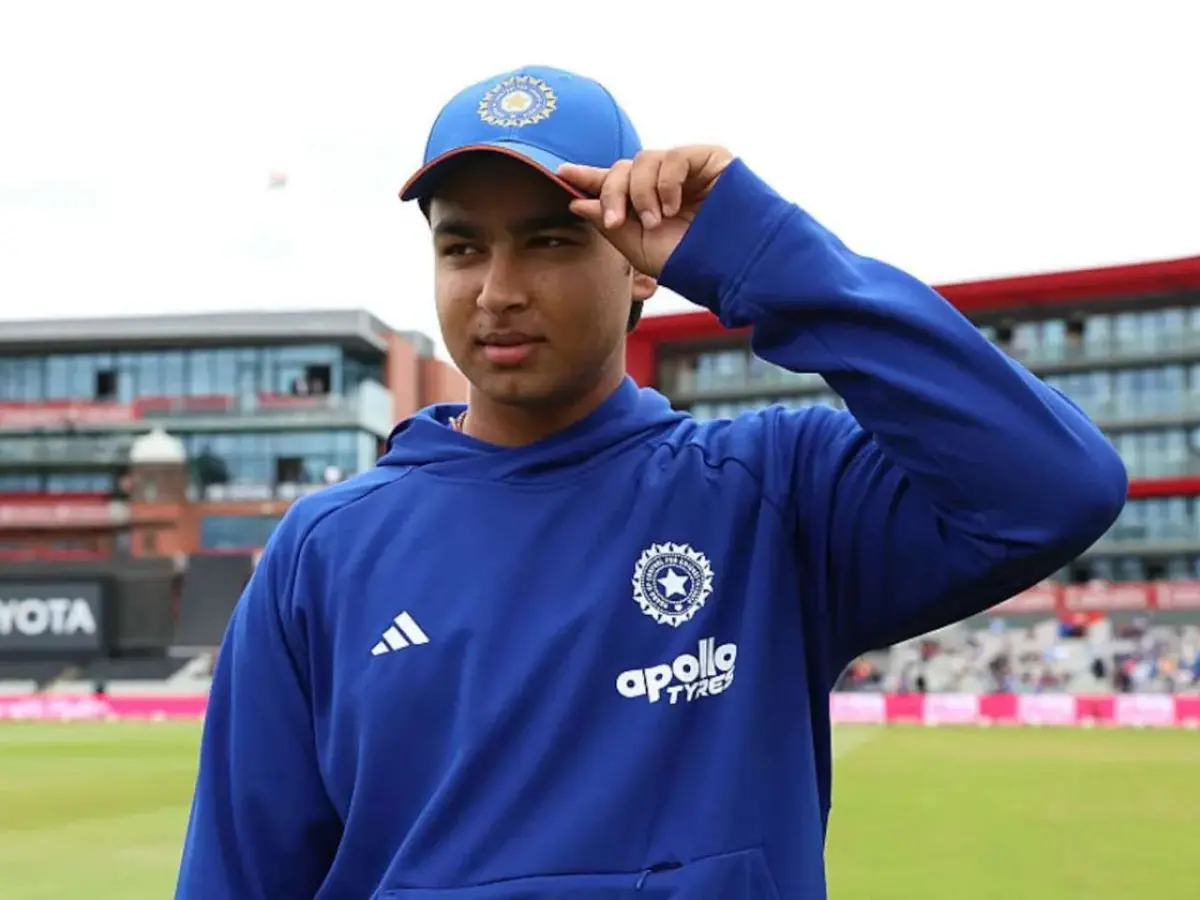
Hyderabad, India – October 14, 2026 – The cricketing world is abuzz with anticipation as India prepares to clash with the West Indies in the fourth T20 International in Hyderabad. However, it’s not just the series-deciding encounter that has captured headlines, but a cryptic social media post from 15-year-old sensation Vaibhav Sooryavanshi. The young left-handed batter, whose international career began just three months ago, shared training snapshots on Instagram accompanied by the intriguing caption, "Stay seated," adorned with tornado and hourglass emojis. This post has fueled widespread speculation across fan forums and media outlets that the prodigious talent might be on the verge of a sensational return to India’s playing XI.
With India leading the five-match series 2-1, the upcoming fixture at the batter-friendly Rajiv Gandhi International Stadium carries immense significance. A victory for the Men in Blue would seal the series with a match to spare, adding an extra layer of strategic consideration for Captain Shreyas Iyer and Coach Gautam Gambhir as they weigh the balance between securing a series win and nurturing future talent. Sooryavanshi’s impressive albeit brief international record – 246 runs from eight T20Is at an astounding strike rate of 186.36, including two half-centuries – makes a compelling case for his inclusion, particularly on a pitch renowned for high-scoring encounters.
A Star on the Rise: Sooryavanshi’s Journey and the India-West Indies Series
The narrative surrounding Vaibhav Sooryavanshi is one of meteoric rise, a testament to the robust talent identification and development systems within Indian cricket. His journey from domestic prodigy to international debutant has been remarkably swift, culminating in his first cap for India just months ago.
The Prodigy’s Rapid Ascent
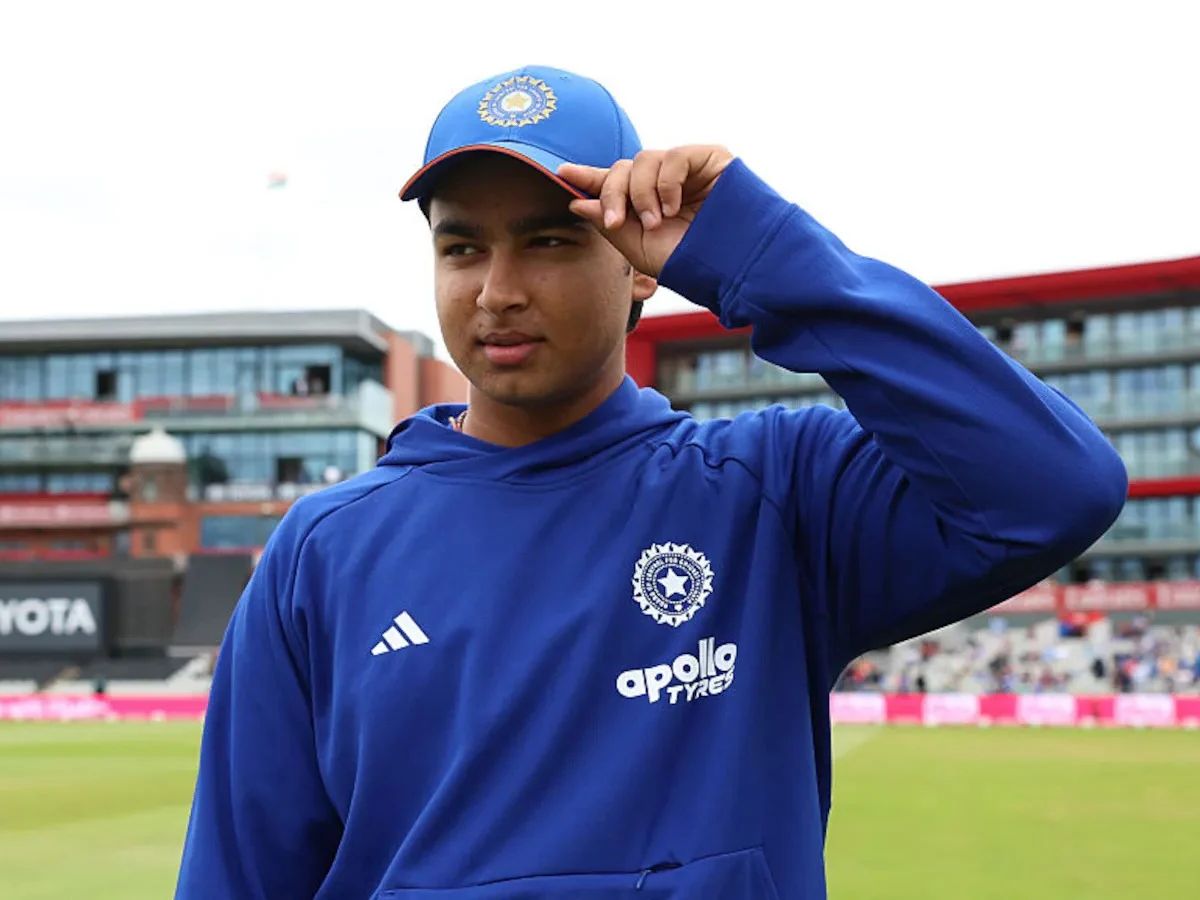
Vaibhav Sooryavanshi officially marked his international debut on July 4th, 2026, against England in a high-stakes T20 International held at Old Trafford, Manchester. While the specific circumstances of his initial call-up remain a subject of fervent discussion among pundits, it is understood that his explosive performances in age-group cricket and a handful of impactful domestic appearances had already caught the eye of national selectors. His introduction to the biggest stage at such a tender age immediately set him apart, drawing comparisons to other young talents who made early breakthroughs.
)
In the eight T20 Internationals he has played since his debut, Sooryavanshi has demonstrated an exceptional aptitude for the format. His aggregate of 246 runs, while modest in volume due to limited opportunities in a packed Indian batting lineup, is underscored by a staggering strike rate of 186.36. This statistic alone speaks volumes about his attacking intent and ability to accelerate the scoring rate, a non-negotiable trait for success in modern T20 cricket. Furthermore, the two half-centuries he has notched indicate not just flashes of brilliance but also the temperament to build significant innings under pressure. These performances, often coming in crucial phases of the game, have firmly established him as a player with immense potential, capable of turning matches on his own. His left-handed stance and aggressive approach add a valuable dimension to India’s batting arsenal, offering a different dynamic from many of his right-handed teammates.
India-West Indies Series Context: A Pivotal Juncture
The current five-match T20I series between India and the West Indies has been a compelling contest, showcasing moments of dominance from both sides. The series commenced with India asserting their authority, clinching the opening match with a comprehensive 8-wicket victory. This commanding performance set a strong precedent, suggesting a comfortable series for the hosts. However, the West Indies, known for their unpredictable and explosive brand of cricket, staged a spirited comeback in the second T20I, securing a 6-wicket win to level the series and inject renewed excitement into the contest.

India, demonstrating their resilience and championship mettle, rebounded impressively in the third match, securing a hard-fought 14-run triumph. This victory swung the momentum back in their favour, putting them in a commanding 2-1 lead heading into the fourth encounter. The stakes for the Hyderabad match are therefore exceptionally high. A win for India would not only seal the series 3-1, but also provide an invaluable opportunity to experiment with their squad depth ahead of future international assignments and major tournaments. Conversely, a West Indies victory would push the series to a decider, ratcheting up the pressure for the final game.
Currently, the Indian team has relied on the dynamic opening partnership of Abhishek Sharma and Sanju Samson. This pair has provided solid starts and aggressive impetus at the top of the order, forming a crucial component of India’s batting strategy. Captain Shreyas Iyer and Coach Gautam Gambhir have, to date, shown a preference for stability and consistency, suggesting they are likely to maintain this opening pair for the crucial fourth encounter. Their primary objective will undoubtedly be to secure the series, and any changes to the established lineup would be carefully considered against this overarching goal. However, the whispers surrounding Sooryavanshi’s potential inclusion highlight the constant balancing act between immediate results and long-term player development that modern cricketing teams face.
)
Statistical Prowess and the Hyderabad Cauldron
The clamour for Vaibhav Sooryavanshi’s inclusion is not merely based on his age or potential but is firmly rooted in his impactful statistical contributions at the international level. Furthermore, the characteristics of the venue for the fourth T20I, Hyderabad, are tailor-made for explosive batting, potentially strengthening the case for an aggressive top-order batter like Sooryavanshi.
Sooryavanshi’s Impactful Numbers: A Modern T20 Maverick
In just eight T20 Internationals, Vaibhav Sooryavanshi has amassed 246 runs at an extraordinary strike rate of 186.36. To put this into perspective, a strike rate above 140 is considered excellent in T20 cricket, while anything approaching or exceeding 180 places a batter among the most destructive in the world. For a 15-year-old, this is not just impressive; it’s almost unprecedented. It signifies an inherent ability to hit boundaries consistently, rotate strike effectively, and maintain a high tempo throughout his innings.
)
His two half-centuries further underscore his capability to convert starts into substantial scores. While the specifics of these innings are not detailed in the original report, one can infer that they were likely match-winning or pivotal knocks, given the high strike rate associated with his overall performance. These aren’t just quickfire cameos; they are innings of substance that demonstrate a maturity beyond his years. His batting style is characterized by fearless aggression, often targeting the powerplay overs to maximize scoring opportunities and put the opposition under immediate pressure. This fearless approach, combined with a natural ability to find gaps and clear boundaries, makes him an exciting prospect and a potential game-changer. In an era where T20 cricket constantly demands innovation and explosive hitting, Sooryavanshi’s numbers present a compelling argument for his consistent presence in the playing XI. His ability to dominate bowlers, regardless of reputation or conditions, suggests he could be a vital asset for India in the shortest format for years to come.
The Hyderabad Pitch: A Batter’s Paradise
The Rajiv Gandhi International Stadium in Hyderabad is renowned across the cricketing fraternity for its exceptionally batter-friendly pitch and relatively compact boundaries. These characteristics consistently contribute to high-scoring affairs, making it a venue that excites batsmen and often gives bowlers nightmares. The conditions typically offer a true bounce and minimal lateral movement, allowing batters to play through the line of the ball with confidence. The fast outfields further reward well-timed shots, often racing to the boundary rope.
)
Historically, Hyderabad has been a stage for remarkable run chases in T20Is. Successful pursuits of challenging totals like 208 and 187 runs attest to the flat nature of the track and the ease with which runs can be scored under lights. India itself has come tantalizingly close to breaching the 300-run milestone here, posting the second-highest T20I total in matches involving ICC Full Member nations. This particular statistic highlights the sheer scoring potential of the venue when batsmen get going.
The stadium also serves as the home ground for the Sunrisers Hyderabad (SRH) franchise in the Indian Premier League (IPL), a team celebrated for its philosophy of aggressive, attacking cricket. Players like Abhishek Sharma (who is currently opening for India), Travis Head, and Heinrich Klaasen epitomize SRH’s commitment to relentless hitting and high-octane batting. Their success here further reinforces the notion that the pitch is perfectly suited for power-hitting.
)
In the last two years alone, the ground has witnessed some astonishing batting performances in both domestic and franchise cricket, with incredible scores of 310, 297, 286, and 277 being posted. These figures are not anomalies but rather a consistent trend, showcasing the sheer volume of runs that can be accumulated. While the pitch has undergone recent renovation, the general consensus among ground staff and expert analysts is that the fundamental nature of the track, favoring batsmen, remains largely unchanged. The renovation was primarily aimed at improving drainage and surface consistency, not altering its core character. Therefore, batters are still overwhelmingly anticipated to find favorable conditions, setting the stage for yet another potential run-fest. For a player like Vaibhav Sooryavanshi, whose game thrives on aggression and exploiting flat pitches, Hyderabad presents an ideal stage to showcase his abilities and potentially make a significant impact.
Voices from the Dugout and Commentary Box
The prospect of Vaibhav Sooryavanshi’s inclusion has naturally sparked debate among former players, coaches, and commentators. While the young prodigy’s talent is undeniable, the strategic considerations for a crucial series encounter often lead to differing opinions on player selection.
)
Abhishek Nayar’s Strategic Counsel: Balancing Victory and Opportunity
Former India assistant coach Abhishek Nayar, a respected voice in cricketing circles known for his keen understanding of player development and team dynamics, offered his perspective on Star Sports. Nayar’s recommendation was clear and strategic: "I believe India should secure a 3-1 lead, and then give Sooryavanshi the opportunity to play in the final match. The strategy is straightforward: clinch a 3-1 advantage, seal the series, and allow Sooryavanshi to feature in the last game."
Nayar’s rationale behind this approach is deeply rooted in player welfare and strategic planning. By advocating for Sooryavanshi’s inclusion in the final match after the series has been secured, he aims to create a low-pressure environment for the young talent. Introducing a 15-year-old into a potentially series-deciding game, particularly after a cryptic social media post has amplified expectations, could place undue pressure on him. A dead rubber scenario, on the other hand, would allow Sooryavanshi to play with greater freedom, express himself naturally, and gain valuable international experience without the immediate weight of a series outcome resting on his shoulders. This approach protects the player while still providing him with a well-deserved opportunity, aligning with a long-term vision for his development within the national setup. Nayar’s comments reflect a pragmatic approach to nurturing young talent, emphasizing the importance of timing and context in their integration into the senior squad.
)
The Team Management’s Dilemma: Stability vs. Experimentation
While expert opinions like Nayar’s provide valuable insights, the final decision rests with the team management: Captain Shreyas Iyer and Coach Gautam Gambhir. Their primary mandate for the fourth T20I will be to clinch the series. Given this objective, sources close to the team suggest that Iyer and Gambhir are likely to prioritize stability and cohesion. The current opening pair of Abhishek Sharma and Sanju Samson has performed creditably, providing solid starts and aggressive impetus at the top of the order. Disrupting a successful combination, especially in a pivotal match, is often seen as an unnecessary risk.
Team management typically favors continuity when a series is on the line. The philosophy often dictates that a winning combination should not be tampered with unless there is a compelling reason, such as injury or a significant dip in form. While Sooryavanshi’s talent is undeniable, integrating a 15-year-old, no matter how gifted, into a high-pressure scenario when the established openers are performing well, presents a complex strategic dilemma. Their focus will be on executing a tried-and-tested game plan to secure the series, and any experimentation might be reserved for later, perhaps once the series is already in India’s favour. The challenge for Iyer and Gambhir is to balance the immediate need for a series win with the long-term imperative of developing future stars, a decision that will undoubtedly be scrutinized by fans and pundits alike.
)
Public and Media Sentiment: The Viral Buzz
Vaibhav Sooryavanshi’s Instagram post, with its enigmatic "Stay seated" caption and symbolic emojis, immediately went viral across social media platforms. The cryptic nature of the message, combined with the player’s age and impressive debut performances, acted as a catalyst for widespread speculation. Fans, eager to see new talent emerge and inject fresh energy into the team, quickly interpreted the post as a strong hint of his imminent return to the playing XI. Hashtags related to Sooryavanshi trended, with countless tweets and comments debating his potential inclusion.
Cricket analysts and media houses were quick to pick up on the buzz, dissecting the post and offering their interpretations. The image of the young cricketer training, coupled with his confident message, resonated deeply with an audience always on the lookout for the next big thing. This social media frenzy not only amplified the discussion around his selection but also underscored the evolving role of digital platforms in shaping cricketing narratives. In the modern era, a single social media post can generate immense public pressure and expectation, adding another layer of complexity to the selection process for team management. The sheer volume of engagement demonstrated the fervent hope among fans that they might witness the return of a prodigious talent in a crucial international fixture.
)
Implications: The Future of Indian Cricket and the Weight of Expectation
The discussion surrounding Vaibhav Sooryavanshi’s potential inclusion transcends merely a single match; it delves into broader implications for the future trajectory of Indian cricket, the delicate balance between youth and experience, and the increasing weight of expectation placed on young athletes in the digital age.
A Glimpse into India’s Batting Future
Vaibhav Sooryavanshi represents the vanguard of India’s next generation of cricketing talent. His emergence at such a young age, coupled with his explosive T20 numbers, provides a tantalizing glimpse into the potential strength of India’s batting lineup in the coming years. Indian cricket has always prided itself on a robust pipeline of talent, consistently producing world-class players. Sooryavanshi’s rapid ascent reaffirms the effectiveness of this system, from grassroots academies to state-level cricket. His potential integration into the senior squad signals a natural evolution, a proactive move to blood young players and prepare them for future challenges.
)
This transition is particularly pertinent in the context of discussions around the longevity of cricketing legends. The article’s reference to the debate surrounding Rohit Sharma and Virat Kohli’s selection for the 2027 World Cup highlights the inevitable cycle of change in sports. While veterans continue to play crucial roles, the consistent emergence of players like Sooryavanshi ensures that India’s cricketing future remains bright and competitive. He embodies the dynamic, fearless approach that modern T20 cricket demands, suggesting that India is well-positioned to maintain its status as a global cricketing powerhouse.
The Balancing Act: Youth vs. Experience
The dilemma faced by Captain Shreyas Iyer and Coach Gautam Gambhir perfectly encapsulates the perennial challenge for selectors: how to judiciously integrate young talent while maintaining a winning combination built around experienced campaigners. While the allure of a prodigious talent like Sooryavanshi is undeniable, the demands of international cricket, particularly in a high-stakes series, often necessitate a cautious approach. Experienced players bring not only their skill but also their temperament, game awareness, and ability to perform under pressure – qualities that are developed over years.
)
However, delaying the integration of young talent for too long risks stifling their development and potentially losing out on their peak years. The pressure on a 15-year-old making an international comeback, especially after a viral social media post, is immense. Managing these expectations, protecting him from undue scrutiny, and providing him with the right opportunities are critical. The team management must weigh the immediate need for a series win against the long-term vision of building a formidable squad for future World Cups and international assignments. This delicate balancing act is a testament to the complexities of modern team selection, where every decision has far-reaching implications.
The ‘Impact Player’ Role and T20 Evolution
The rise of players like Vaibhav Sooryavanshi also reflects the continuous evolution of T20 cricket. The format increasingly rewards explosive batters who can change the complexion of a game within a few overs. Sooryavanshi, with his exceptional strike rate and aggressive style, fits this mould perfectly. His presence offers a strategic advantage, capable of providing quick runs or accelerating the innings when required.
)
The concept of an ‘Impact Player’ or a specialist role for such dynamic batsmen is gaining traction in various T20 leagues globally. While not formally adopted in international T20s in the same manner as some domestic leagues, the principle remains: having a player who can deliver a high-impact performance in limited balls is invaluable. Sooryavanshi’s batting prowess aligns with this modern T20 philosophy, making him a compelling option for any team seeking to maximize their scoring potential. His potential inclusion, even if in a limited capacity, could signal a strategic shift towards prioritizing sheer hitting power and fearless intent in the shorter format.
What’s at Stake for Sooryavanshi and the Team
For Vaibhav Sooryavanshi, a return to the playing XI in the fourth T20I would be a monumental opportunity. It would allow him to build on his impressive debut performances, solidify his position as a future star, and further demonstrate his ability to perform on the biggest stage. The spotlight will undoubtedly be intense, but a strong showing could cement his place in the national squad for upcoming tours and tournaments. Conversely, if he doesn’t play, it will be a test of his patience and mental fortitude, requiring him to continue performing domestically and wait for his next chance.
)
For the Indian team, the stakes are clear: clinch the series against a resilient West Indies side. Beyond the immediate result, the team management faces the broader challenge of managing player expectations, particularly those of a young talent like Sooryavanshi, while fostering a cohesive and high-performing unit. The decision regarding his inclusion will not only impact the outcome of the fourth T20I but also send a strong message about India’s approach to nurturing its burgeoning cricketing stars. As the cricketing world waits with bated breath, all eyes will be on Hyderabad on October 14th, not just for the series-defining clash, but for whether the prodigious Vaibhav Sooryavanshi will indeed "stay seated," or if he will unleash his storm on the international stage once more.
