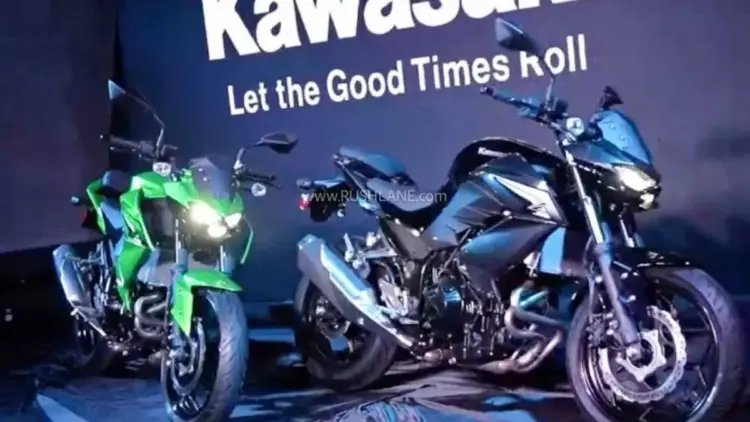
New Delhi, India – In a move that has sent ripples through the Indian motorcycling community, Kawasaki India has officially pulled the wraps off the highly anticipated Z300. This new entry into the "Supernaked" category marks a significant strategic pivot for the Japanese manufacturer as it seeks to regain its foothold in the lucrative sub-middleweight naked streetfighter segment—a space it has left largely uncontested since the departure of the Z250 several years ago.
The official reveal, conducted via the brand’s social media channels and preceded by a private dealer showcase in Bengaluru, confirms that the Z300 is poised to become the most accessible multi-cylinder naked motorcycle in the Team Green stable. With bookings scheduled to commence on October 19th and a formal commercial launch slated for October 20th, the Z300 arrives at a time when the Indian premium motorcycle market is experiencing unprecedented growth and diversification.
A Historical Context: Filling the "Z" Shaped Void
To understand the significance of the Z300, one must look back at Kawasaki’s journey in the Indian market. Years ago, Kawasaki, in partnership with Bajaj Auto, introduced the Z250 via the Completely Knocked Down (CKD) route. While the Z250 was praised for its refinement and parallel-twin smoothness, its high price point and the eventual dissolution of the Kawasaki-Bajaj retail partnership led to its discontinuation.
Since then, Kawasaki’s sub-500cc portfolio in India has been dominated by the legendary Ninja 300—a motorcycle that has survived BS4 and BS6 emission norms to become one of the longest-running premium sportbikes in the country—and the Versys-X 300 adventure tourer. However, the absence of a "Z" bike in this displacement bracket left a gap that rivals like KTM, BMW, and TVS were quick to exploit.
The Z300 is not merely a new model; it is a homecoming for the "Z" brand in the entry-level performance segment. By leveraging the proven and localized platform of the Ninja 300, Kawasaki aims to offer a product that combines Japanese reliability with the aggressive street presence that Indian riders crave.

Chronology of the Launch: From Rumors to Reality
The road to the Z300 reveal has been paved with speculation and strategic leaks. The timeline of the launch unfolds as follows:
- Early October 2024: Whispers began circulating within the industry regarding a new "secret" model being prepared for the Indian market, distinct from the global Z400 or Z500.
- Mid-October 2024: Kawasaki organized a private dealer conference in Bengaluru. Leaked images and videos from this event confirmed the existence of an India-spec Z300, featuring a design language inspired by its larger siblings.
- October 17, 2024: Kawasaki India officially released teaser content and high-resolution reveals on their social media handles, showcasing the bike in its signature Green and Black colorways.
- October 19, 2024 (Scheduled): Official bookings are set to open across all Kawasaki dealerships in India.
- October 20, 2024 (Scheduled): The formal price announcement and launch event, where the brand is expected to detail the localization levels and delivery timelines.
Technical Specifications and Design: The "Sugomi" Influence
The Kawasaki Z300 is a masterclass in aggressive aesthetics, adhering strictly to the brand’s "Sugomi" design philosophy. In Japanese, Sugomi describes the intense aura or energy given off by a person or object of greatness. In the context of the Z300, this translates to a crouched stance, low-positioned headlamps, and an upswept tail section.
Aesthetics and Features
The motorcycle features a striking triple-element LED headlight assembly that gives it a predatory look, reminiscent of the Z900. The fuel tank is heavily sculpted, flanked by aggressive tank shrouds that extend downward to give the bike a muscular, "heavy-front" silhouette.
While much of the bike’s DNA is shared with the Ninja 300, Kawasaki has introduced modern touches to ensure it remains competitive:
- TFT Instrument Cluster: Moving away from the aging semi-digital unit of the Ninja 300, the Z300 receives a full-color TFT display. This unit is expected to feature Bluetooth connectivity, turn-by-turn navigation, and call/message alerts via the ‘RIDEOLOGY THE APP’.
- Lighting: While the primary headlamp is LED, the turn indicators remain halogen units—a move likely made to keep costs in check, though one that may draw criticism from tech-savvy enthusiasts.
- Ergonomics: Unlike the Ninja’s clip-on handlebars, the Z300 utilizes a wide, flat one-piece handlebar. This, combined with slightly mid-set footpegs, results in an upright and commanding riding posture suitable for urban commuting and weekend canyon carving.
The Heart of the Machine: The Parallel-Twin "Screamer"
The Z300 is powered by the venerable 296cc, liquid-cooled, parallel-twin engine with a DOHC 8-valve head. This engine is celebrated for its high-revving nature and smooth power delivery.

- Maximum Power: Approximately 39 bhp at 11,000 rpm.
- Maximum Torque: 26.1 Nm at 10,000 rpm.
- Transmission: A 6-speed gearbox equipped with an assist and slipper clutch, which reduces back-torque during aggressive downshifts and lightens the clutch lever pull.
The choice to use the 296cc engine over the newer 399cc or 451cc units found globally is a strategic one. The 300cc engine is already localized in India, allowing Kawasaki to price the Z300 more competitively than it could a fully imported or low-localization Z500.
Supporting Data: Chassis and Hardware
Despite the modern skin, the Z300 relies on tried-and-tested hardware to handle Indian road conditions.
| Feature | Specification |
|---|---|
| Frame | High-tensile steel tube diamond frame |
| Front Suspension | 37mm Right-Side Up (RSU) Telescopic Forks |
| Rear Suspension | Bottom-link Uni-Trak with gas-charged shock (Preload adjustable) |
| Front Brake | Single 290mm petal disc with dual-piston caliper |
| Rear Brake | Single 220mm petal disc with dual-piston caliper |
| ABS | Dual-channel ABS (Standard) |
| Tyres | 110/70-17 (Front), 140/70-17 (Rear) |
| Estimated Weight | ~165 kg to 168 kg (Curb) |
The use of RSU telescopic forks instead of Upside-Down (USD) forks is a notable point of contention. Competitors like the KTM 390 Duke and the Aprilia Tuono 457 offer USD forks as standard. However, Kawasaki’s telescopic units are traditionally tuned for a balance between comfort and sportiness, which may appeal to a broader demographic.
Market Positioning and Competitive Landscape
The Indian sub-middleweight segment is currently a battlefield. The Z300 enters a market where it must defend its premium "Japanese Twin" status against both high-performance singles and emerging twins.
The Rivals
- Aprilia Tuono 457: The most direct threat. Also a multi-cylinder (parallel-twin) naked, the Tuono 457 offers more displacement and modern rider aids like traction control, but likely at a higher price point.
- KTM 390 Duke: The "Corner Rocket." While it is a single-cylinder, the Duke produces more power (45 bhp) and features a superior electronics package, including a bi-directional quickshifter and launch control.
- TVS Apache RTR 310: A feature-packed single-cylinder that offers ventilated seats and cruise control, targeting the tech-conscious buyer.
Pricing Strategy
The Ninja 300 is currently priced at approximately Rs 3.34 lakh (Ex-showroom). Given that naked motorcycles traditionally lack the expensive fairings of their sportbike counterparts, the Z300 is expected to be priced between Rs 3.05 lakh and Rs 3.15 lakh. This would position it as a premium alternative to the KTM 390 Duke, banking on the refinement and "big bike" sound of the parallel-twin engine.

Official Responses and Dealer Sentiments
While official quotes from Kawasaki India leadership are expected during the October 20th launch event, early feedback from the dealer event in Bengaluru has been overwhelmingly positive.
A dealer representative, speaking on the condition of anonymity, stated: "There has been a persistent demand for a naked version of the Ninja 300. Many of our customers want the Kawasaki brand and the twin-cylinder engine but find the Ninja’s riding posture too committed for daily use. The Z300 is the answer to that demand. We expect it to become our highest-selling model alongside the Ninja 300."
Kawasaki’s social media engagement also indicates a high level of consumer interest, particularly regarding the inclusion of the TFT display, which addresses one of the primary complaints regarding the current Ninja 300.
Implications for the Indian Motorcycle Industry
The launch of the Z300 signifies several key trends in the Indian automotive landscape:
- The Persistence of the 300cc Twin: Despite the global shift toward 400cc and 500cc engines, the 300cc parallel-twin remains a "sweet spot" for the Indian market due to its balance of performance, fuel efficiency, and manufacturing cost.
- Premiumization of the Street Naked: The move from basic commuters to performance-oriented streetfighters shows that Indian buyers are willing to pay a premium for brand heritage and engine configuration (multi-cylinder vs. single-cylinder).
- Localization is Key: Kawasaki’s ability to launch the Z300 is a direct result of their investment in local assembly. This allows them to bypass the prohibitive 50% customs duty on CBU (Completely Built Unit) imports, making Japanese engineering accessible to the Indian middle class.
As the clock ticks down to October 20th, all eyes are on Team Green. If Kawasaki can price the Z300 aggressively, they may not just fill a gap in their lineup—they might just redefine the standards for the entry-level performance segment in India. Riders looking for the "Sugomi" experience without the Z900’s price tag finally have something to look forward to.