The Indian two-wheeler industry has signaled a robust resurgence, posting stellar growth figures for September 2026. Driven by a combination of pre-festive inventory building, a revitalized rural economy, and a significant shift in urban mobility preferences toward scooters, the domestic market reached a staggering 24,63,103 units. This represents a 13.50% year-on-year (YoY) increase compared to the 21,70,100 units sold in September 2025.
Perhaps more impressively, the month-on-month (MoM) growth stood at a sharp 21.05% over August 2026, highlighting a rapid acceleration in consumer demand as the country enters its peak festive window. As the dust settles on the September numbers, it is clear that while the Hero Splendor remains the undisputed volume king, the Honda Activa is the primary engine of the market’s current expansion phase.
Chronology of Growth: From August Lull to September Surge
The trajectory of the two-wheeler market in late 2026 follows a classic "hockey stick" curve. In August 2026, domestic sales were relatively tempered at 20,34,698 units as manufacturers and dealers prepared for the upcoming Shradh period—a time traditionally associated with lower high-value purchases in several parts of India.
However, as September commenced, the industry witnessed a massive influx of demand. The transition from 20.34 lakh units in August to 24.63 lakh units in September represents an addition of over 4.28 lakh units in just 30 days. This surge is attributed to manufacturers stuffing the dealer pipeline ahead of Navratri and Diwali, coupled with aggressive financing schemes that have made ownership more accessible to the entry-level segment.
By the end of the third quarter (Q3) of the calendar year 2026 (July–September), the cumulative domestic volume reached 64,21,284 units, a 15.05% jump over the same period in 2025. This quarterly performance underscores a sustained recovery rather than a mere seasonal flash in the pan.

Supporting Data: Top 10 Performance Breakdown
The top 10 best-selling models continue to dominate the landscape, accounting for 16,14,472 units in September 2026. This group alone grew by 11.97% YoY, showcasing the "brand-heavy" nature of the Indian consumer.
The Leaders: Splendor and Activa
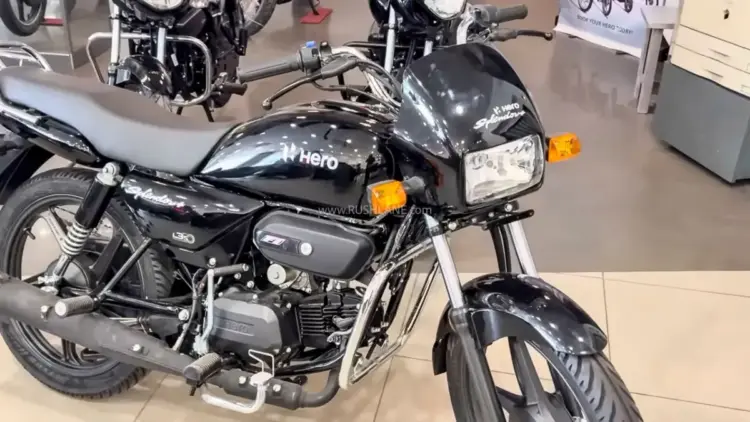
- Hero Splendor: Maintaining its legendary status, the Splendor clocked 4,31,279 units, up 12.49% from the previous year. It remains the backbone of rural and semi-urban transport, accounting for over 26% of the top 10’s total volume.
- Honda Activa: The standout performer of the month, the Activa saw a massive 48.19% YoY growth, jumping from 2.37 lakh units to 3.52 lakh units. The Activa’s gain of 1,14,555 units alone represented nearly two-thirds of the total net increase seen in the top 10 list.
The Middle Ground: Shine, Jupiter, and Pulsar
- Honda Shine: Secured the third spot with 1,89,941 units. While its growth was a modest 2.64%, it remains the preferred choice in the 125cc executive commuter segment.
- TVS Jupiter: Following the Activa’s lead, the Jupiter grew by 8.87%, reaching 1,54,725 units.
- Bajaj Pulsar: In a surprising turn, the Pulsar brand saw the largest decline in the top 10, dropping 12.51% to 1,36,313 units. Analysts suggest this may be due to internal cannibalization from newer Bajaj launches or a temporary supply chain realignment for specific Pulsar sub-variants.
The Premium and Niche Segments
The latter half of the top 10 highlights a growing appetite for performance and "lifestyle" motorcycles:
- TVS Apache: Recorded 61,148 units (up 14.67%).
- Royal Enfield Classic 350: Posted a strong 16.90% growth with 47,286 units, proving that the mid-capacity retro-segment remains resilient despite increasing competition from international brands.
- Hero HF Deluxe and Suzuki Access: Both saw marginal declines, with the HF Deluxe dropping 3.37% and the Access remaining virtually flat (-0.43%).
Segment Analysis: The Scooter Revolution
The most significant takeaway from the September 2026 data is the shifting tectonic plates between motorcycles and scooters. While motorcycles remain the largest category by absolute volume (14.12 lakh units), their YoY growth was a sluggish 2.79%.
In contrast, domestic scooter sales reached an all-time high of 9,95,576 units. This represents a phenomenal 34.07% YoY increase. Scooters now command a 40.42% share of the total domestic market, up significantly from previous years.
Why are Scooters Outpacing Motorcycles?
Industry experts point to three primary factors:

- Urban Congestion: The ease of "twist-and-go" automatic transmissions makes scooters the logical choice for India’s increasingly congested Tier-1 and Tier-2 cities.
- Gender Neutrality: Scooters continue to be the primary choice for multi-user households where both men and women share the vehicle.
- The "Premium Commute": Newer 125cc and 150cc scooters are offering features like Bluetooth connectivity, turn-by-turn navigation, and larger storage, luring buyers away from traditional commuter motorcycles.
Global Footprint: Exports Rise by 26.83%
India’s role as a global manufacturing hub for two-wheelers was further solidified in September 2026. Total exports reached 5,44,797 units.
- Motorcycles led the export charts with 4,65,163 units, growing at 24.42%.
- Scooters saw an even more aggressive export growth of 41.27%, though on a smaller base of 76,370 units.
- Quarterly Export Totals: For Q3 2026, exports rose 27.70% to 16.54 lakh units.
This growth in exports is particularly vital as it provides a hedge for Indian manufacturers against domestic seasonal fluctuations. Key markets in Africa, Latin America, and Southeast Asia continue to show a preference for Indian-made motorcycles due to their balance of durability and fuel efficiency.
Official Perspectives and Market Sentiment
While official statements from the Society of Indian Automobile Manufacturers (SIAM) emphasize "cautious optimism," the underlying data suggests a more aggressive recovery.
A senior analyst from a leading brokerage firm noted, "The September numbers are a reflection of high consumer confidence. We are seeing a ‘K-shaped’ recovery where the premium end (Classic 350, Apache) and the convenience end (Activa, Jupiter) are thriving, while the entry-level utility bikes (HF Deluxe) are seeing a slight saturation. The massive 48% jump in Activa sales suggests that urban replacement cycles are shortening."
Manufacturers have also been vocal about the impact of stable raw material prices—specifically steel and aluminum—which have allowed them to offer more competitive festive discounts without eroding margins.

Implications for the Future
The record-breaking performance of September 2026 carries several long-term implications for the Indian automotive landscape:
1. The EV Transition
Despite the dominance of Internal Combustion Engine (ICE) models like the Splendor and Activa, the high growth in the scooter segment provides a fertile ground for Electric Vehicles (EVs). Most of the YoY growth in scooters is currently being captured by ICE models, but as charging infrastructure expands, these "scooter-first" buyers are the most likely candidates to migrate to electric platforms in the next 3–5 years.
2. Premiumization Trend
The double-digit growth of the TVS Apache and Royal Enfield Classic 350 indicates that the Indian buyer is no longer just looking for a "point A to point B" tool. There is a clear shift toward motorcycles that offer an identity and a lifestyle. This will likely encourage manufacturers like Hero and Bajaj to continue investing in their premium portfolios (such as the Mavrick 440 or the Triumph-Bajaj partnership).
3. Rural Resilience
The 12.49% growth of the Hero Splendor is a definitive sign that the rural economy is stable. Following a favorable monsoon in 2026, rural disposable income has improved, leading to a renewal of the "first-time buyer" segment in village clusters.
4. Infrastructure and Safety
As the volume of two-wheelers on Indian roads nears 30 lakh units a month (including exports), the pressure on urban infrastructure will reach a breaking point. This volume surge will likely necessitate stricter safety regulations and perhaps a more aggressive push for dedicated two-wheeler lanes in major metropolitan projects.

Conclusion
September 2026 has set a new benchmark for the Indian two-wheeler industry. With domestic sales crossing 24.6 lakh units and Q3 totals surpassing 64 lakh, the industry is on track for a record-breaking calendar year. While the Hero Splendor remains the king of the road, the "Activa-led scooter boom" is the defining story of this era. As the festive season moves into full swing in October and November, all eyes will be on whether the industry can maintain this 20%+ month-on-month momentum or if the September surge was a peak of inventory stocking. For now, the Indian two-wheeler market is firing on all cylinders.