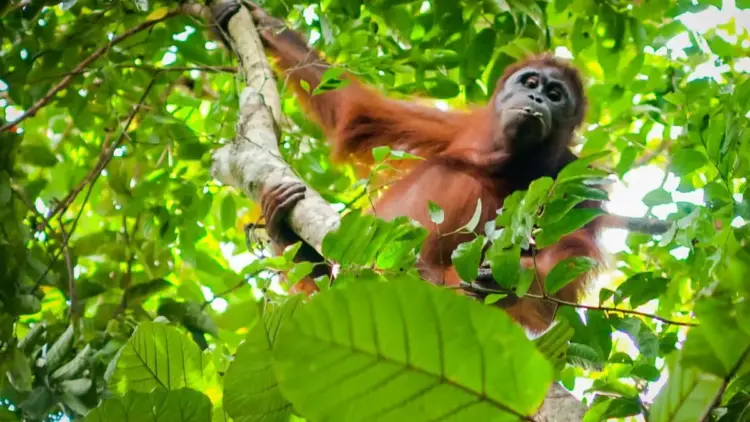
MUMBAI — In what marks a historic milestone for international wildlife conservation and law enforcement, a juvenile orangutan seized from a suburban Mumbai apartment two years ago is finally scheduled to return to his ancestral home in Indonesia. On October 19, 2026, the young primate will board a flight from India, concluding a protracted and complex bilateral effort to undo the damage caused by the illicit global trade in endangered species.
This operation represents the first successful repatriation of a seized CITES-listed (Convention on International Trade in Endangered Species of Wild Fauna and Flora) animal from Indian soil. It serves as a testament to the evolving cooperation between the Indian Ministry of Environment, Forest and Climate Change and Indonesian conservation authorities.
I. The Journey Home: Main Facts of the Repatriation
The repatriation of the infant orangutan is not merely a logistics exercise; it is a diplomatic and biological victory. The animal, whose identity has been shielded by the clinical nomenclature of wildlife seizure reports but who has become a symbol of the fight against trafficking, is slated to be transferred to the Sumatra Rescue Alliance (SRA) in Indonesia.
According to Yogesh Nilkand Warkad, the Assistant Management Authority of CITES in Mumbai, the operation has been years in the making. "This is the first successful repatriation of a seized CITES animal from India," Warkad stated. "My office did everything in our capacity to make it happen, navigating the complex legalities and biological requirements necessary for such a high-stakes transfer."
The animal’s destination, the Sumatra Rescue Alliance, is a specialized facility equipped to handle the delicate process of reintegrating captive primates into the wild. The SRA is a collaborative effort involving the Orangutan Information Centre (OIC) and other global conservation bodies. For the young orangutan, the flight on October 19 represents the end of a two-year "legal limbo" and the beginning of a multi-year rehabilitation process.
II. A Chronology of Seizure and Recovery
The story began in late 2024, when a coordinated raid on a 3-BHK apartment in Palava, Dombivli—a bustling residential hub on the outskirts of Mumbai—revealed a shocking discovery. Alongside a collection of endangered reptiles, authorities found a shivering, one-year-old infant orangutan. The primate had been smuggled into the country, likely through porous air or sea routes used by international trafficking syndicates.
The Initial Rescue (2024)
Upon seizure, the infant was in a precarious state. Removed from his mother at an age when orangutans are entirely dependent on maternal care, the animal exhibited signs of severe stress and malnutrition. Under the guidance of the then Chief Wildlife Warden, Vivek Khandekar, the infant was initially moved to the Gorewada Zoo in Nagpur, Maharashtra.

Health Crisis and Stabilization (2025)
The transition was difficult. At eighteen months of age, the juvenile developed a severe respiratory infection—a common and often fatal ailment for young primates in unfamiliar climates. Recognizing the need for specialized medical intervention, authorities transferred the orangutan to the Vantara Zoo in Jamnagar, Gujarat. Vantara, a massive wildlife rehabilitation and rescue project, provided the intensive veterinary care required to stabilize his condition.
The Diplomatic Push (2025–2026)
While the animal recuperated in Gujarat, a bureaucratic battle was being waged. Repatriating a CITES Appendix I species—the highest level of protection—requires rigorous proof of origin, health clearances, and a formal request from the home country. The process was further complicated by the discovery of five other baby orangutans abandoned in Odisha, which brought international media scrutiny to India’s role as a destination for exotic wildlife.
III. Supporting Data: India as a Hub for Exotic Trafficking
The repatriation comes amid a worrying trend. India has increasingly become a significant node in the global illegal wildlife trade, particularly for non-human primates and exotic birds.
The Rise of the "Exotic Pet" Culture
Data from wildlife monitoring agencies suggests that the demand for "exotic" pets among India’s affluent urban population is driving a surge in smuggling. Apes, particularly orangutans and gibbons, are highly prized. Unlike indigenous species, which are protected under the strict Wildlife Protection Act of 1972, exotic species previously occupied a legal "grey zone" until recent amendments to the Act aligned Indian law more closely with CITES regulations.
The Biological Cost
The trade is inherently violent. For every infant orangutan that reaches a buyer in Mumbai or Delhi, it is estimated that several others—and often their mothers—die in the process. In the wild, orangutan mothers carry their young for up to seven years, teaching them the complex skills needed for survival. Traffickers typically kill the mother to snatch the infant, leading to a "double loss" for the critically endangered population in the wild.
Comparison of Recent Seizures
The Mumbai case is not an isolated incident. The abandonment of five orangutans in Odisha in 2025 highlighted the scale of the crisis. While those five remain at the Nandankanan Zoological Park pending investigation, the Mumbai juvenile’s repatriation is being viewed as the blueprint for their eventual return.
IV. Official Responses and Institutional Roles
The success of this repatriation is the result of a rare alignment between Indian and Indonesian officials.

Panut Hadisiswoyo, the founder of the Orangutan Information Centre (OIC), noted that the international outcry following the Odisha incident was a turning point. "We approached the Indian authorities again following the Odisha incident," Hadisiswoyo said. "We have been preparing for this moment for two years. The juvenile’s return sets a vital precedent."
Indonesian authorities have been proactive, proposing a seven-member delegation—including veterinarians and primate specialists—to visit India. This team will not only facilitate the Mumbai juvenile’s transfer but also assess the health and genetic origins of the five infants currently held in Odisha.
Sinan Serhadli, a conservation scientist and adviser to the Yayasan Orangutan Sumatera Lestari-Orangutan Information Centre (YOSL-OIC), emphasized the technical nature of the return. "The animal will undergo a designated quarantine period upon arrival in Sumatra," Serhadli explained. "After that, he will be sent to a ‘jungle school’ to learn the social and survival skills he missed out on during his time in captivity."
V. The Path to Rewilding: Implications and Future Outlook
The ultimate goal of this repatriation is "rewilding"—the process of returning an animal to its natural habitat where it can live without human intervention. However, for a primate that has spent two of its three years in cages and clinics, the road is long.
The "Forest School" Concept
In Sumatra, the juvenile will join a forest school. These are controlled environments where rescued orangutans interact with their own kind. They are taught how to forage for forest fruits, identify predators, and, most importantly, build nests in the canopy. Expert handlers monitor their progress, slowly weaning them off human contact.
"If all goes to plan, he can be released in the wild in about four years," Serhadli noted. This timeline is crucial, as orangutans are highly intelligent and require significant cognitive development before they can survive the rigors of the Sumatran rainforest.
Policy Implications for India
This case has forced a re-evaluation of India’s border security and wildlife laws. The fact that an orangutan could be transported from Southeast Asia to a residential flat in Mumbai suggests significant gaps in airport and maritime customs.

The successful repatriation sends three clear messages:
- Zero Tolerance: India is no longer just a "holding ground" for smuggled wildlife; it will actively work to return animals to their rightful homes.
- Bilateral Cooperation: Wildlife crime is a transnational issue that requires shared intelligence and resources between origin and destination countries.
- Legal Evolution: The use of CITES frameworks to facilitate this return demonstrates that Indian authorities are becoming more adept at using international law to combat environmental crimes.
A Hopeful Precedent
As the October 19 departure date approaches, the eyes of the global conservation community remain on Mumbai. The successful return of this one juvenile offers a glimmer of hope for the thousands of other animals currently trapped in the illegal pet trade.
Hadisiswoyo and his team remain hopeful that the five orangutans in Odisha will soon follow. "We demand processes are in place to combat international illegal wildlife trade," he stated. "This repatriation is a start, but the goal is to stop the trade before the animals ever leave the forest."
For the young orangutan currently at Vantara, the journey from a cramped Mumbai flat to the lush canopies of Sumatra is more than a flight; it is a restoration of his dignity and a vital step toward the survival of his species.