As India cements its position as the world’s third-largest automobile market, a silent environmental crisis is gathering pace on its asphalt. Every time a vehicle accelerates, brakes, or turns, its tires shed microscopic fragments into the environment. While tire wear has long been recognized as a source of microplastic pollution, a specific chemical additive—6PPD—and its lethal byproduct, 6PPD-quinone (6PPD-Q), have emerged as one of the most significant threats to aquatic biodiversity discovered in decades.
Despite the rapid expansion of India’s road networks and vehicle fleet, the country remains in a "data vacuum" regarding the prevalence and impact of this toxin. While Western nations are already moving toward regulation and searching for alternatives, experts warn that India’s unique combination of erratic monsoons, aging drainage infrastructure, and skyrocketing tire production may be creating a perfect storm for an ecological disaster.
Main Facts: The Chemistry of a Hidden Killer
At the heart of this issue is a chemical called 6PPD (N-(1,3-dimethylbutyl)-N′-phenyl-p-phenylenediamine). For decades, 6PPD has been the "Goldilocks" compound of the global tire industry. It is an antiozonant—a preservative added to rubber to prevent it from cracking and degrading when exposed to ground-level ozone. Without 6PPD, tires would have a significantly shorter lifespan, posing safety risks to drivers.
However, the protection 6PPD provides to the tire comes at a devastating cost to the environment. As the surface of a tire wears down, 6PPD is exposed to the atmosphere. When it reacts with ozone ($O_3$), it undergoes a chemical transformation into 6PPD-quinone (6PPD-Q).
The Toxicity Profile
6PPD-Q is not just another pollutant; it is a highly potent acute toxin. Research has identified it as one of the most toxic substances known to aquatic organisms, particularly salmonids. In concentrations as low as a few parts per billion—equivalent to a few drops in an Olympic-sized swimming pool—it can cause rapid respiratory distress and death in sensitive fish species.
The Indian Context
India’s automotive sector is growing at a record pace. In the 2025-26 fiscal year, the industry saw a growth rate of 10.4%, with record sales across passenger vehicles, two-wheelers, and commercial trucks. Consequently, tire production in India rose by 21% in 2022 and another 6% in 2023. Yet, despite this massive increase in the volume of rubber on the road, there is currently zero public data on the concentrations of 6PPD-Q in Indian rivers, road dust, or urban runoff.
Chronology: From a 20-Year Mystery to Global Alarm
The discovery of 6PPD-Q’s toxicity is a story of persistent scientific detective work that began thousands of miles away from the Indian subcontinent.

2000–2020: The Salmon Mystery
For over two decades, biologists in the U.S. Pacific Northwest were baffled by a phenomenon known as "Urban Runoff Mortality Syndrome." Every time a heavy rainstorm hit cities like Seattle, up to 90% of the coho salmon returning to urban creeks to spawn would die within hours. The fish would appear disoriented, swim in circles, gasp at the surface, and perish before they could lay their eggs.
Initially, scientists investigated traditional culprits: rising water temperatures, pathogens, heavy metals like zinc, and agricultural pesticides. None of these factors, however, explained the consistency and speed of the mass die-offs.
December 2020: The Breakthrough
The mystery was finally solved in late 2020 when a landmark study was published in the journal Science. Researchers led by Jen McIntyre of Washington State University and Edward Kolodziej of the University of Washington identified 6PPD-quinone as the primary killer. By analyzing the chemical "fingerprint" of tire wear particles in stormwater, they were able to isolate the compound and prove its lethality through controlled toxicity trials.
2021–Present: Global Recognition
Following the 2020 study, the scientific community shifted its focus globally. Studies in Australia, Canada, and China confirmed the presence of 6PPD-Q in their respective waterways. In 2022, a global air-monitoring study examined 18 megacities, including Kolkata. While that specific study focused on tire-derived chemicals in the air using passive samplers, it found that Kolkata ranked first globally for concentrations of diphenylguanidine (another tire additive), signaling that Indian urban environments are heavily saturated with tire-related pollutants.
Supporting Data: The Scale of the Problem in India
The risk to India is magnified by the sheer volume of vehicles and the lack of specialized infrastructure to handle road runoff.
1. Market Dominance and Production
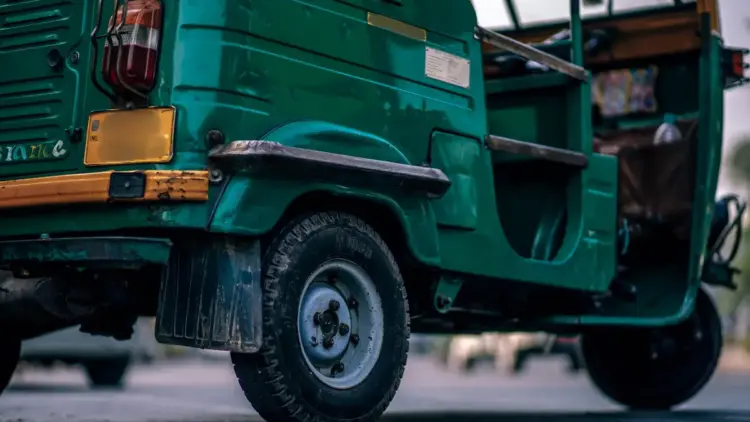
India has surpassed Japan to become the world’s third-largest automobile market. This shift is not just about the number of cars but the diversity of vehicles. Two-wheelers and three-wheelers, which dominate Indian roads, contribute significantly to tire wear due to frequent braking and acceleration in congested urban traffic. According to the Automotive Tyre Manufacturers’ Association (ATMA), the steady rise in production ensures that the "loading" of 6PPD into the Indian environment is at an all-time high.
2. The Crumb Rubber Factor
The problem extends beyond active vehicles. In India, old tires are frequently recycled into "crumb rubber." This material is used as infill for artificial turf in sports fields and playgrounds to provide cushioning. Recent studies in the U.S. have detected 6PPD and 6PPD-Q leaching from these fields. As the artificial turf market expands in India, children and athletes may be coming into direct contact with these chemicals, adding a human health dimension to the environmental concern.

3. Toxicity Rankings
Paul Sharp, a chemist and Professor Emeritus at the University of Missouri, notes that 6PPD-Q currently ranks second among the top 10 most toxic chemical compounds to aquatic life worldwide. Unlike many pollutants that require long-term exposure to cause harm (chronic toxicity), 6PPD-Q is an acute toxin, meaning it kills quickly after exposure.
Official Responses and Expert Perspectives
The response from Indian academic and regulatory circles suggests a mixture of growing concern and a lack of institutional readiness.
The Scientific Warning
N. Jayaraman, Professor and Chair of the Department of Organic Chemistry at the Indian Institute of Science (IISc) in Bangalore, emphasizes that the lack of data should not be mistaken for a lack of a problem. "To the best of our knowledge, no scientific data exists on the 6PPD-Q levels in Indian road dust, stormwater or water bodies," Jayaraman says. He attributes this lack of awareness to the "recent" nature of the discovery and the diversion of resources toward the COVID-19 pandemic and other geopolitical crises.
The "Goldilocks" Dilemma
When asked if Indian-made tires might be safer, Jayaraman is blunt: No. 6PPD is used globally because it is the most effective and affordable antiozonant available. Indian manufacturers utilize the same chemical formulations as their international counterparts to ensure their products meet durability and safety standards for both domestic use and export.
Regulatory Vacuum
Jayaraman further argues that India’s regulatory framework is ill-equipped to handle this specific type of pollutant. "India has weaker law enforcement than the Western world and lacks effective regulatory bodies to safeguard rivers, lakes, and ponds," he states. Without a mandate from the Central Pollution Control Board (CPCB) to monitor tire-wear additives, the chemical remains "invisible" to the law.
Implications: A Silent Threat to Indian Waterways
The implications of 6PPD-Q in India are particularly severe due to the country’s unique urban planning and climatic challenges.
The Stormwater Management Crisis
In most Western cities, stormwater is ideally managed through separate systems or treated before entering natural water bodies. In India, the reality is different. Most cities lack a dedicated Stormwater Management (SWM) system. Instead, storm drains often carry a mixture of untreated sewage, industrial waste, and rainwater.

As climate change makes Indian monsoons more erratic and intense, "flush events"—where the first heavy rains wash months of accumulated road dust into drains—become more dangerous. This concentrated slurry of 6PPD-Q and sewage enters rivers and lakes directly, potentially causing mass die-offs of indigenous fish species that have never been studied for their sensitivity to this toxin.
Biodiversity at Risk
While the U.S. focus has been on salmon, India is home to a vast array of freshwater biodiversity, including several endangered species of fish and amphibians. It is currently unknown how 6PPD-Q affects the Ganges River dolphin, the various species of mahseer, or the common carps that form the backbone of India’s inland fisheries. If these species are even half as sensitive as the coho salmon, the impact on India’s food security and riverine ecosystems could be catastrophic.
The Path Forward
The first step toward a solution is measurement. Experts agree that India must urgently begin quantifying 6PPD-Q levels in urban road dust and major river systems. Simultaneously, the tire industry faces a monumental challenge: finding a "green" alternative to 6PPD that offers the same safety benefits without the environmental lethality.
Until such an alternative is found and implemented, and until India’s urban drainage systems are modernized to filter out tire-wear particles, the nation’s automotive success story will continue to carry a hidden, toxic price tag. The "Goldilocks" chemical of the tire industry has become the "Achilles’ heel" of aquatic conservation, and for India, the clock is ticking to find an exit ramp from this looming disaster.