Dubai, UAE – November 15, 2026 – The dust has settled on the highly anticipated U19 Asia Cup 2026 final, where India emerged victorious over arch-rivals Pakistan in a pulsating encounter. While the thrilling last-ball finish captivated cricket enthusiasts worldwide, it was the raw, unbridled celebration of the Indian team that truly set social media ablaze. More than just the joy of lifting a trophy, this outpouring of emotion, as revealed by Indian player Yashveer Goud, carried the weight of a previous grievance, transforming a sporting triumph into a moment of poignant retribution.
The final, held on Saturday, November 14, saw India chase down a formidable target of 338 runs, etching their names in the tournament’s history with a display of resilience and nerve. However, the post-match scenes – a mix of exuberant shouts and pointed gestures directed towards their opponents – hinted at a deeper narrative, a simmering rivalry that transcended the boundaries of mere competition. Yashveer Goud’s subsequent revelation to Sports Today has now pulled back the curtain, confirming that the celebrations were a deliberate and cathartic response to a bitter exchange during a group stage match on Diwali.
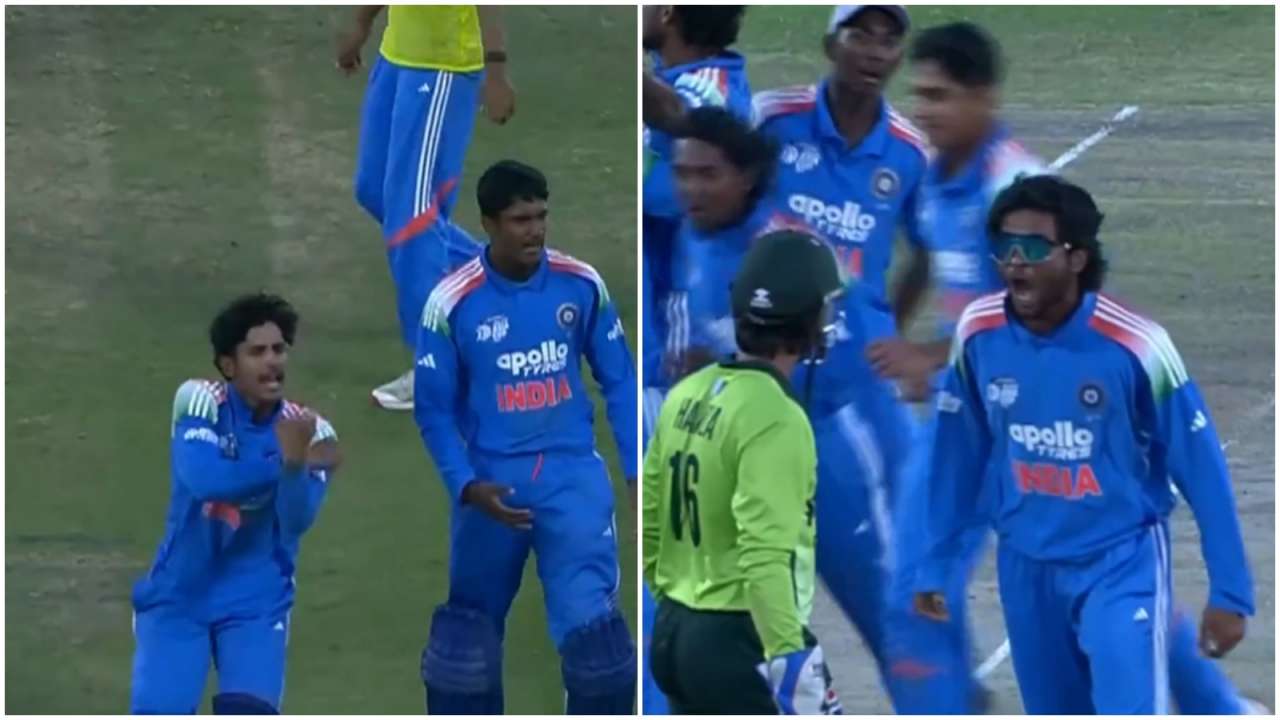
"We had lost the match on Diwali. There was some exchange of words between us, including abusive language. We couldn’t say anything after losing that match. We were waiting for the final. We wanted to perform well and show what India is capable of," Goud stated, providing a rare glimpse into the intense psychological battle waged off the field. He added, "We were doing the same thing they had done. They were silent, and we were silent too. We were wearing the Indian jersey. We were waiting for this moment. Everyone was emotional." This admission not only explains the viral celebrations but also underscores the profound emotional investment these young athletes bring to the most storied rivalry in cricket.
The Genesis of the Grudge: A Diwali Defeat
To fully grasp the intensity of India’s post-final celebrations, one must revisit the group stage encounter that set the stage for this dramatic revenge. The U19 Asia Cup, often a proving ground for future international stars, saw India and Pakistan clash earlier in the tournament, a match that coincidentally fell on the auspicious festival of Diwali. In what was already a high-stakes fixture, the contest spiraled beyond the confines of fair play.
While specific details of the group stage match remain less publicized than the final, sources close to the Indian camp suggest it was a fiercely contested affair, culminating in a narrow victory for Pakistan. It was during or immediately after this match, in the heat of the moment and perhaps fueled by the traditional rivalry, that the alleged "abusive language" was exchanged. According to Yashveer Goud, the Indian team felt disrespected and aggrieved by the conduct of their Pakistani counterparts. Losing a match is tough, but to lose it coupled with what they perceived as unsportsmanlike behavior and verbal abuse, particularly on a significant cultural holiday like Diwali, left a lasting sting.
The Indian U19 squad, then, carried this wound, this sense of injustice, throughout the remainder of the tournament. The desire for redemption wasn’t merely about winning the Asia Cup; it was about reclaiming pride, about delivering a silent, yet powerful, message on the biggest stage. The final was not just a match; it was an opportunity for a perfectly timed, emotionally charged riposte. The weight of that Diwali defeat, and the words exchanged, transformed the final into a personal crusade for the young Indian players.

The Thrilling Finale: India’s Unforgettable Chase
The U19 Asia Cup 2026 final provided a spectacle befitting the historical rivalry between India and Pakistan. Having suffered a defeat in the group stage, the Indian side entered the final with a dual motivation: to clinch the coveted trophy and to avenge their earlier loss.
Pakistan’s Batting Dominance:
Winning the toss, Pakistan elected to bat first, aiming to put a daunting total on the board. Their batsmen rose to the occasion, exhibiting a blend of aggression and composure. Opening batsmen, Abdullah Tariq and Hassan Ali, laid a solid foundation with a century stand, taking advantage of any loose deliveries. Tariq, in particular, was exceptional, crafting a magnificent 112 runs off just 105 balls, studded with elegant boundaries and powerful clears. Ali provided excellent support with a well-made 65.

Even after the openers departed, the momentum was maintained by the middle order. Captain Shahbaz Khan played a crucial cameo of 45 runs, accelerating the scoring rate in the crucial overs. Despite some tight bowling spells from India’s spin duo, including off-spinner Rohan Sharma and left-arm orthodox spinner Aryan Patel, Pakistan managed to maintain a healthy run rate. Their lower middle-order batsmen also contributed valuable runs, pushing the score past the 300-mark with relative ease. By the end of their allotted 50 overs, Pakistan had posted a formidable 337 runs for the loss of nine wickets, a total that, on most surfaces and against most opponents, would be considered match-winning. India’s bowlers, though showing flashes of brilliance, particularly medium-pacer Ishaan Verma who claimed three wickets, found it challenging to contain the flow of runs consistently against a determined Pakistani lineup.
India’s Herculean Chase:
Chasing 338 runs in a U19 final, especially against arch-rivals, is an Everest-like task. The pressure was immense, and the initial stages of India’s innings reflected this. Openers struggled to build a substantial partnership, and wickets began to fall at regular intervals, putting India on the back foot early. The formidable target seemed even more distant as the scoreboard read 75 for 3 in the 15th over, with key batsmen back in the pavilion.

However, the Indian team, perhaps fueled by the memory of the Diwali incident, refused to capitulate. Skipper Lakshya Raichandani, a dynamic right-hand batsman, took on the mantle of responsibility. He combined caution with calculated aggression, rotating the strike effectively and punishing bad balls. His innings was a masterclass in resilience, as he forged crucial partnerships that slowly but surely brought India back into contention. Raichandani’s gritty 80 runs, compiled under immense pressure, became the anchor of the chase.
He found an able ally in Aaryavir Sehwag, a flamboyant stroke-maker reminiscent of his famous namesake. Sehwag played a crucial role, injecting momentum into the innings with his aggressive 58 runs, ensuring the required run rate didn’t spiral out of control. Their partnership of over 100 runs for the fourth wicket resurrected India’s hopes, thrilling the sparse yet passionate crowd.

But cricket is a game of twists and turns, and the final was no exception. After Raichandani and Sehwag departed in quick succession, a mini-collapse ensued. The scoreboard, at one point, painted a grim picture: 252 for 8. India still needed nearly 80 runs off just 50 balls with only two wickets in hand. The Pakistani team, sensing victory, intensified their efforts, their bowlers and fielders brimming with renewed confidence. The atmosphere was electric, with shouts and cheers from both sides of the crowd reaching a crescendo.
The Nail-Biting Climax:
It was at this critical juncture that Mohit Ulva, a gutsy lower-order batsman, stepped up to play the innings of his life. With the support of the tail-enders, Ulva displayed incredible composure and power-hitting. He took calculated risks, finding gaps in the field and clearing the ropes when necessary. His unbeaten 49 runs were a testament to his mental fortitude and batting prowess under extreme pressure.

The match came down to the absolute wire. In the final over, with three runs needed off the last ball, every eye in the stadium and every viewer glued to their screens held their breath. The tension was palpable. Mohit Ulva, facing a full delivery, kept his nerve. He swung hard, connecting sweetly, and sent the ball hurtling towards the shorter side of the boundary. The ball crossed the rope, sealing a thrilling victory for India by two wickets. The Indian dugout erupted in joyous pandemonium, a release of pent-up emotion that had been building for weeks.
The Viral Celebrations and Social Media Frenzy
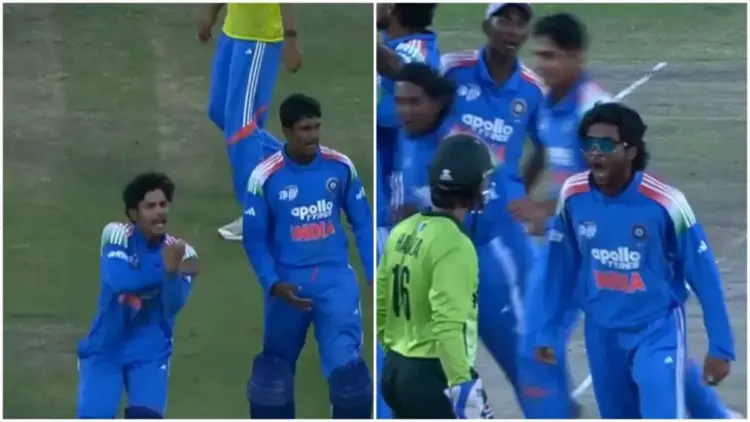
The moment Mohit Ulva’s bat made contact with the ball, signaling India’s victory, unleashed a torrent of emotions from the young Indian squad. What followed was not just a typical celebratory rush, but a highly charged and pointed display that immediately went viral across social media platforms.

The players, led by captain Lakshya Raichandani and including Yashveer Goud, sprinted onto the field, not just to embrace their heroes, but to face the Pakistani dugout. Their celebrations were characterized by passionate shouts, defiant gestures, and a palpable sense of triumph directed specifically at their opponents. Images and videos circulating online showed Indian players making strong eye contact with the Pakistani bench, some pointing to their chests adorned with the Indian jersey, others letting out roars of exhilaration. It was a silent retort to the alleged abuses suffered weeks prior, a visual manifestation of Yashveer Goud’s words: "We were doing the same thing they had done. They were silent, and we were silent too."
The virality of these celebrations was instant and immense. Hashtags like #U19AsiaCupFinal, #IndiaVsPakistan, and #YashveerGoud quickly trended, dominating discussions on Twitter (now X), Instagram, and other platforms. Fans from both nations reacted strongly. Indian supporters lauded the team’s spirit and courage, interpreting the celebrations as a justified response to perceived disrespect. Memes and short video clips of the triumphant gestures flooded timelines, amplifying the narrative of revenge and redemption.

Conversely, some Pakistani fans and a segment of the broader cricketing community expressed dismay, viewing the celebrations as unsportsmanlike, especially from U19 players who are expected to uphold the ‘spirit of cricket’. The debate quickly escalated, highlighting the fine line between passionate competition and perceived aggression, especially in the context of such a high-stakes rivalry. The intensity of the social media reaction underscored how deeply ingrained the India-Pakistan cricketing narrative is, even at the youth level, and how quickly any significant event can become a global talking point.
Official Responses and the Spirit of Cricket Debate
The highly charged nature of the celebrations and Yashveer Goud’s candid admission inevitably sparked a debate within cricketing circles regarding the "spirit of cricket," particularly concerning young players. While no immediate official statement from the International Cricket Council (ICC) or the respective national cricket boards (BCCI and PCB) was released condemning or endorsing the behavior, the incident undoubtedly opened discussions behind the scenes.

Typically, cricketing bodies promote fair play, mutual respect, and adherence to the game’s traditions. Incidents involving verbal exchanges or excessive celebrations, especially those perceived as provocative, are often reviewed under the ICC’s Code of Conduct. At the U19 level, there’s an added emphasis on nurturing young talent not just as cricketers but as ambassadors of the sport, instilling values of sportsmanship and respect.
However, the context provided by Goud’s revelation complicates a straightforward condemnation. If indeed abusive language was used by the opposing team in a previous encounter, the Indian team’s reaction, while perhaps not ideal in terms of traditional sportsmanship, can be seen as a direct emotional response rather than unprovoked aggression. This raises questions about how governing bodies should address such "tit-for-tat" incidents and the role of match referees in monitoring player conduct throughout a tournament, not just in isolated matches.

Experts and former cricketers offered varied perspectives. Some emphasized the need for U19 players to be coached on maintaining composure and dignity regardless of provocation, stressing that retaliatory behavior, even if justified in the players’ minds, sets a poor precedent. Others adopted a more pragmatic view, acknowledging the intense emotional pressures of an India-Pakistan match, particularly for young athletes. They argued that while ideal sportsmanship is desired, human emotions, especially after a hard-fought victory following a perceived insult, are difficult to suppress entirely. The incident serves as a reminder that the "spirit of cricket" is not just about rules, but also about the human element of competition, the emotional highs and lows that define sporting rivalries.
Implications for the Future of the Rivalry and Player Development
The U19 Asia Cup final, and the controversy surrounding its aftermath, carries significant implications for the future trajectory of the India-Pakistan cricketing rivalry and, crucially, for the development of the young players involved.

Deepening the Rivalry:
This incident has undoubtedly added another layer of intensity to the already storied India-Pakistan rivalry. While senior teams rarely play bilateral series due to political tensions, U19 tournaments and multi-nation events provide the only battlegrounds. The memory of the Diwali incident and the subsequent celebratory response will likely linger, potentially fueling future encounters at all levels. As these U19 players mature and potentially transition into senior national teams, these early experiences of intense competition and emotional exchanges will shape their approach to these marquee clashes. It transforms abstract rivalry into deeply personal narratives for the players involved.
Player Development and Mentorship:
For the young athletes, this experience is a double-edged sword. On one hand, it taught them resilience, the ability to perform under immense pressure, and the satisfaction of overcoming adversity. The final itself was a testament to their character and skill. On the other hand, the emotional outburst and the subsequent public discussion about sportsmanship highlight the critical need for robust mentorship and psychological conditioning. Coaches, team management, and national cricket boards have a vital role to play in guiding these young talents. They must teach them how to channel competitive aggression constructively, how to handle provocation without compromising the game’s integrity, and how to celebrate victory with grace and respect for opponents. This incident serves as a crucial learning opportunity for all involved in youth cricket development, emphasizing that mental fortitude extends beyond just performing under pressure to also maintaining composure and ethical conduct.

The Role of Media and Fan Culture:
The viral nature of the celebrations and the immediate social media discourse also underscore the immense scrutiny and pressure young athletes face in the digital age. Every action, every word, can be amplified globally within minutes. This demands greater media literacy and emotional intelligence from players, as well as a more nuanced understanding from fans and journalists. While passion is integral to sports, fostering a culture that encourages healthy competition and respectful rivalry, rather than escalating personal animosities, remains a collective responsibility.
In conclusion, the U19 Asia Cup 2026 final between India and Pakistan was far more than just a cricket match. It was a crucible of emotions, a narrative of revenge and redemption, played out by young men learning to navigate the complexities of elite sport. Yashveer Goud’s revelation has illuminated the human element of this iconic rivalry, reminding us that behind the statistics and the headlines, there are deeply felt emotions, personal histories, and the ongoing challenge of upholding the ‘spirit of cricket’ in the face of intense competition. As these young stars rise through the ranks, their experiences from this memorable final will undoubtedly shape their careers and contribute to the rich tapestry of India-Pakistan cricket.