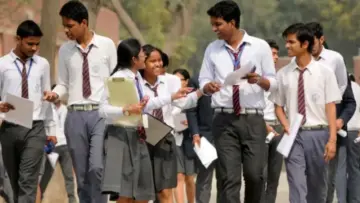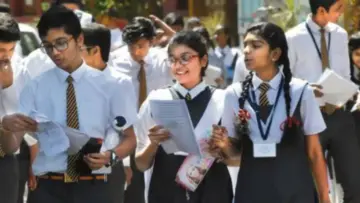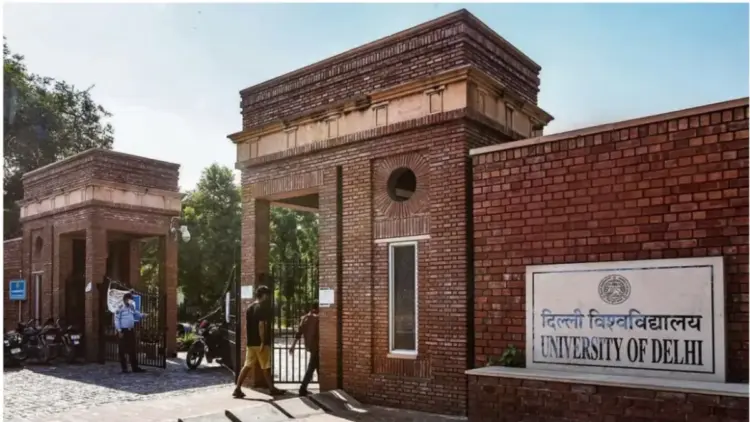
New Delhi, India – What began as a nascent proposal for a student union, backed by a humble Rs 150 grant in the weeks preceding India’s independence, has burgeoned into one of the nation’s most keenly observed campus electoral contests. The Delhi University Students’ Union (DUSU), a body that has mirrored and shaped student politics at one of India’s premier educational institutions, stands today as a testament to the transformative power of organized student voice. Its journey, spanning nearly eight decades, is a rich tapestry woven with financial struggles, constitutional overhauls, and an ever-increasing political significance.
The Genesis of a Student Voice: Humble Beginnings and Early Hurdles
The bedrock of DUSU was laid on August 6, 1947, a mere fortnight before the dawn of India’s freedom. On this pivotal date, the Vice-Chancellor of Delhi University formally conveyed to the Executive Council a proposal from a representative group of students yearning for a dedicated platform – a student union. The concept was embraced in principle, and the university administration pledged to establish a committee tasked with crafting the union’s foundational constitution and operational procedures. The initial financial commitment was modest, a grant of Rs 150 earmarked for the nascent body’s initial expenses. This was the seed from which a formidable student representative institution would eventually grow, encompassing students from across the diverse colleges and faculties of Delhi University.
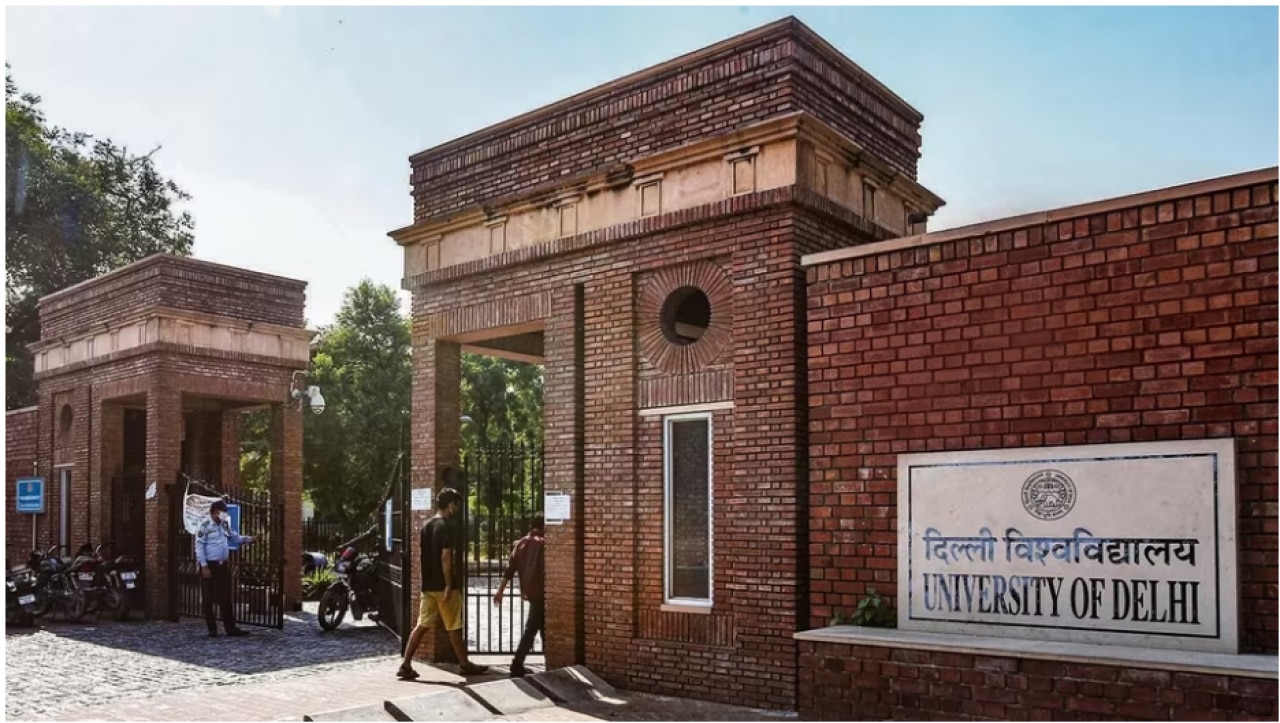
However, the early years of DUSU were far from a smooth ascent. Financial precariousness loomed large, casting a shadow over the union’s operational capacity. Records from March 27, 1953, reveal the Executive Committee deliberating on a plea for financial assistance from the University Students’ Union. The university noted that Rs 500 had already been disbursed that year, underscoring the urgent need for the union to cultivate financial self-sufficiency.
The fiscal chasm widened in the subsequent year. Minutes from March 14, 1954, starkly illustrated this disparity, detailing expenditures of Rs 1,995 against an income of a mere Rs 815. This financial deficit was juxtaposed with a significant administrative milestone: the formal adoption of a constitution and the successful execution of the union’s first-ever elections. To navigate the ensuing academic year, a caretaker committee was proposed to manage the union’s affairs, while stringent controls were to be imposed on further spending. An interim grant, capped at Rs 1,100, was also mooted to cover already incurred expenses, contingent upon the meticulous approval of all submitted bills. These early financial tribulations underscored the inherent challenges in establishing and sustaining a robust student representative body within the academic framework.
A Structural Overhaul: The 1973 Constitutional Reforms
Nearly two decades after its inception, DUSU’s organizational architecture underwent a significant re-evaluation. On August 2, 1973, the Executive Council convened to consider a proposal that would fundamentally reshape the union’s governance. The decision was made to effectively scrap the existing constitution and introduce a new, interim framework designed to bring greater order and accountability.
This pivotal constitutional revision ushered in crucial financial controls. Under the new regime, any expenditure exceeding Rs 100 necessitated the explicit approval of the union’s Executive Committee, a measure aimed at curbing unchecked spending. The reforms also meticulously defined the administrative roles and responsibilities within DUSU. The Vice-Chancellor of Delhi University was officially designated as the union’s patron, a role signifying the university administration’s oversight. Furthermore, the appointment of a Staff Advisor and a Treasurer was mandated, with these crucial positions to be filled by faculty members nominated by the patron.

The constitution also formally established the four elected office-bearers who would form the core of DUSU’s leadership: President, Vice-President, Secretary, and Assistant Secretary. These positions were designated for direct election by the broader DUSU membership, ensuring a democratic mandate for the union’s leadership. This constitutional reform marked a significant step towards formalizing DUSU’s structure, clarifying its operational parameters, and enhancing its accountability mechanisms.
The Pillars of DUSU: Key Office Bearers and Their Mandates
At the heart of the DUSU electoral process lie four central positions, each carrying distinct responsibilities and wielding considerable influence within the student community.

-
President: The President serves as the primary spokesperson and chief representative of DUSU. This role demands strong leadership, the ability to articulate student concerns effectively, and the capacity to engage with university authorities and external stakeholders. The President is the face of the union, responsible for championing student causes and advocating for their rights and welfare.
-
Vice-President: The Vice-President acts as a crucial deputy to the President, stepping in to assume the President’s duties in their absence. This role often involves supporting the President in their initiatives, managing specific projects, and providing a critical sounding board for strategic decisions. The Vice-President plays a vital role in ensuring continuity and effective leadership within the union.

-
Secretary: The Secretary is primarily responsible for the day-to-day administrative functioning of DUSU. This involves managing official correspondence, maintaining records, coordinating meetings, and ensuring the smooth execution of the union’s operational tasks. The Secretary’s role is indispensable for the efficient and organized functioning of the union.
-
Joint Secretary: In the current DUSU structure, the Joint Secretary shoulders significant responsibilities pertaining to communication, event management, and the articulation and resolution of student grievances. This role acts as a vital link between the student body and the executive, ensuring that the concerns and aspirations of students are effectively channeled and addressed.

Beyond these elected positions, the current DUSU constitution continues to recognize the Vice-Chancellor of Delhi University as the union’s patron. This enduring role signifies the university’s ultimate oversight and guidance for the student body. The constitution explicitly outlines the union’s core objectives, which prominently include representing student interests before various university authorities and actively promoting student welfare across all spheres of campus life.
The Evolving Cost of Representation: DUSU Membership Fees
The financial commitment required for students to be members of DUSU has seen a gradual, albeit significant, increase over the decades, reflecting both inflation and the evolving needs and services offered by the union. For many years, the subscription fee remained remarkably low, a testament to an era where student activism might have been less resource-intensive.

Students paid a nominal fee of Rs 5 until the academic year 2012-13. This modest sum provided them with the right to vote in DUSU elections and access the union’s services. In the academic year 2013-14, the fee saw its first significant hike, increasing to Rs 20. This adjustment likely reflected the rising operational costs and the need for greater financial resources to support student initiatives.
More recently, on June 21, 2024, university officials cited in various reports indicated a further revision of the membership fee, raising it to Rs 40. This latest increase, while still relatively modest in the grand scheme of educational expenses, signifies a continued effort to bolster DUSU’s financial standing and enable it to undertake more ambitious projects and provide enhanced support to the student community. This gradual evolution in membership fees mirrors the broader trajectory of DUSU itself – from a humble beginning to a more structured and financially engaged entity.

From Campus Polls to National Spectacle: The Escalating Political Significance of DUSU Elections
Over the decades, DUSU elections have transcended the confines of a typical campus poll to become a major fixture in Delhi University’s vibrant political and campus life. These elections have consistently served as a crucible for student politics, often reflecting broader national political currents and providing a training ground for future leaders.
The electoral landscape has traditionally been dominated by student groups with discernible affiliations to national political organizations. The Akhil Bharatiya Vidyarthi Parishad (ABVP), the student wing of the Rashtriya Swayamsevak Sangh (RSS), and the National Students’ Union of India (NSUI), the student wing of the Indian National Congress, have been perennial contenders, often engaging in spirited electoral battles. Alongside these dominant forces, Left-backed student groups, such as the All India Students’ Association (AISA) and the Students’ Federation of India (SFI), and a spectrum of independent candidates have also played significant roles, adding to the dynamic and often fiercely contested nature of DUSU polls.

The 2026 DUSU elections exemplified this heightened political contest. The election for the four central posts saw intense campaigning from major blocs including the ABVP, NSUI, and a prominent alliance between AISA and SFI. The electoral process commenced with voting on September 18, followed by the crucial counting of votes beginning at 8 am on September 19 at the Multipurpose Hall of the University Sports Stadium in North Campus. The election registered a voter turnout of 40.46%, a figure that, while perhaps not reflecting universal participation, still indicates significant engagement from the student electorate in a highly competitive environment. The intensity of the campaigns, the strategic alliances formed, and the national media attention garnered by these elections underscore DUSU’s evolution into a significant political platform.
The Pulse of Student Concerns: Issues Dominating the 2026 DUSU Election Discourse
The electoral campaigns for the 2026 DUSU elections were a clear reflection of the pressing concerns that weighed on the minds of the student populace. A confluence of issues related to safety, affordability, and the quality of campus life formed the bedrock of electoral manifestos and public discourse.

Student Safety and Accommodation: The tragic collapse of a five-storey building housing a boys’ Paying Guest (PG) accommodation in South Delhi’s Satya Niketan, which resulted in the loss of seven lives, including students, cast a somber shadow over the election. This devastating incident brought the critical issues of student accommodation safety and the overall security of off-campus living arrangements into sharp, and deeply felt, focus. Candidates and student groups alike pledged to address the inadequacies in housing regulations, advocate for stricter safety standards, and ensure that students had access to secure and affordable living spaces.
Affordable Living and Campus Facilities: Beyond safety, the economic realities faced by students were a recurring theme. Issues surrounding the affordability of accommodation, the cost of daily necessities, and access to essential campus facilities like libraries, canteens, and recreational spaces were prominently raised. Candidates promised to work towards subsidized housing options, improved student support services, and the enhancement of existing campus infrastructure to create a more conducive and equitable learning environment.

Transportation and Infrastructure: The daily commute for students, often a source of frustration, was another key electoral issue. Concerns regarding the availability and reliability of public transport to and from campus, as well as the internal campus transportation system, were voiced. Furthermore, the state of campus infrastructure, including academic buildings, laboratories, and common areas, was a subject of debate, with calls for upgrades and modernization to meet the evolving needs of a large student body.
Campus Security and Wellbeing: The broader aspect of campus security, encompassing both physical safety and the provision of mental health support services, was also a significant point of discussion. Students expressed a desire for a more robust security presence, improved grievance redressal mechanisms, and increased access to counseling and psychological support services to address the pressures of academic life and personal wellbeing.

The 2026 DUSU elections, therefore, served not just as a contest for leadership, but as a critical platform for students to voice their anxieties, articulate their aspirations, and demand tangible solutions to the multifaceted challenges they faced.
The Contenders: A Glimpse into the 2026 DUSU Electoral Arena
The 2026 DUSU elections witnessed a fierce contest, with the major political student outfits fielding their strongest candidates for the coveted posts.

-
Akhil Bharatiya Vidyarthi Parishad (ABVP): The ABVP nominated Yash Dabas for the post of President. For Vice-President, Ishu Maurya was fielded, while Riya Chhawadi contested for Secretary. Lakshya Raj Singh was their choice for Joint Secretary.
-
National Students’ Union of India (NSUI): The NSUI presented its slate with Vijay Shankar Meena as the presidential candidate. Vir Chatrath was nominated for Vice-President, Namrata Chaudhary for Secretary, and Gopal Choudhary for Joint Secretary.

-
AISA-SFI Alliance: Representing a significant Left consolidation, the AISA-SFI alliance put forth Ananya Raturi for President. Akshat Shikhar vied for Vice-President, Stanzin Deskyong for Secretary, and B Parijaat for Joint Secretary.
As the counting of votes commenced on September 19, the election results remained fluid, with leads fluctuating across the four key races. This dynamic unfolding of results underscored the closely watched nature of the DUSU elections, reflecting a keen contest where the mandate of the student body was being meticulously determined. The anticipation surrounding the final outcome mirrored the broader political significance attached to these campus elections, where the victors would be tasked with representing the collective voice and aspirations of thousands of Delhi University students.

From a Rs 150 Proposal to a Nationally Watched Election: The Enduring Legacy of DUSU
The trajectory of the Delhi University Students’ Union is a compelling narrative of institutional evolution and the ever-increasing significance of student representation. What began in 1947 as a modest proposal, tentatively backed by a Rs 150 grant, has blossomed into a structured, democratically elected body with a formalized constitution and a broad-based representation across the university’s vast academic landscape.
Today, DUSU elections command attention that extends far beyond the hallowed grounds of Delhi University. Student organizations, regardless of their political affiliations, utilize these contests as vital platforms to amplify critical issues concerning the quality of education, the paramount importance of student safety, the necessity of affordable and secure accommodation, and the fundamental rights and welfare of students. DUSU has transcended its origins to become a powerful catalyst for change, a barometer of student sentiment, and a crucial voice in the ongoing discourse on higher education in India. Its journey serves as a powerful reminder of the enduring impact that organized student activism can have on the fabric of academic and societal progress.