BUSINESS
In a landmark decision poised to reshape its burgeoning electric vehicle (EV) and renewable energy sectors, India has imposed an immediate ban on the export of lithium-ion battery black mass. This strategic prohibition, announced by the Directorate General of Foreign Trade (DGFT), marks a pivotal shift in the nation’s approach to critical mineral security and domestic resource valorisation. The move underscores India’s commitment to fostering a robust circular economy, reducing its reliance on imported critical minerals, and positioning itself as a leader in sustainable battery recycling.
The government’s decision transforms the export policy for specific categories of battery waste and scrap from ‘Free’ to ‘Prohibited’ under ITC (HS) Code 85491400, specifically targeting unsorted waste not containing lead, cadmium, or mercury, which primarily encompasses lithium-ion battery black mass. This policy amendment is not merely a regulatory adjustment; it is a declaration of intent to cultivate a self-reliant domestic ecosystem for critical mineral recovery, driving investments in advanced recycling infrastructure and securing the feedstock necessary for India’s ambitious clean energy transition.
The Immediate Mandate: Securing Critical Minerals
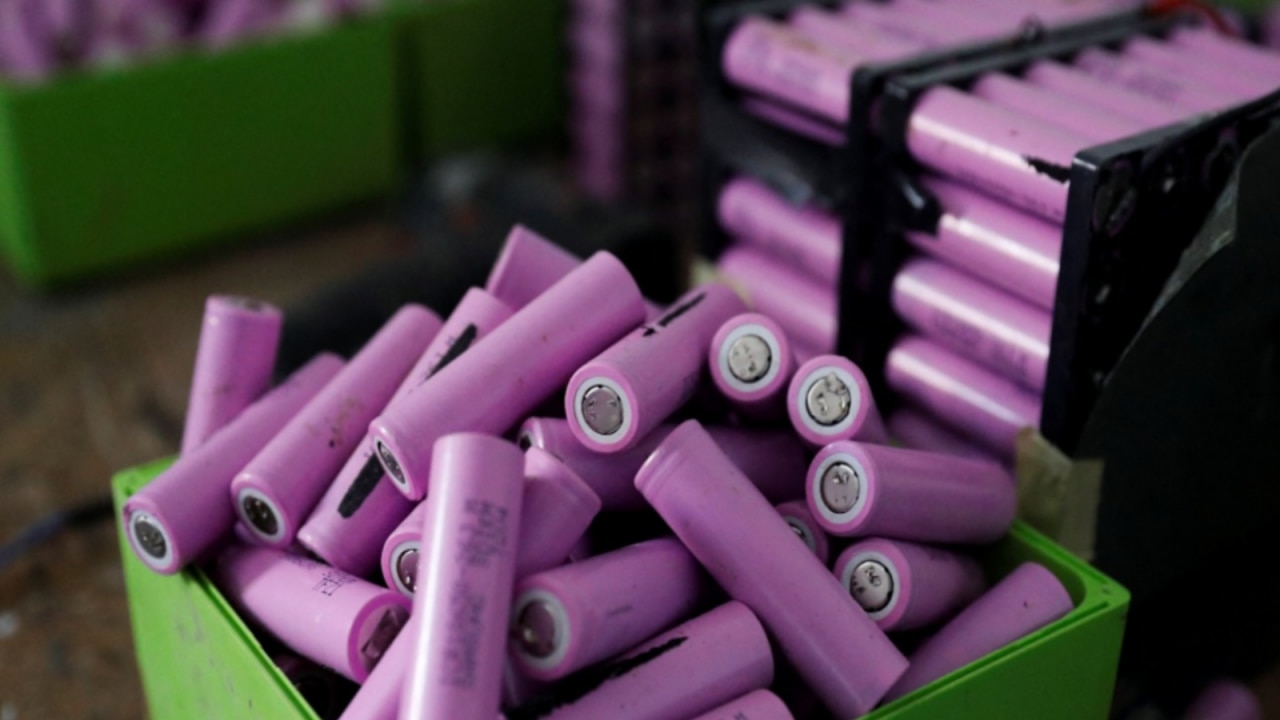
The core of the recent policy change lies in the immediate prohibition of exporting lithium-ion battery black mass. This material, a critical intermediate product in the battery recycling value chain, contains highly valuable elements essential for new battery manufacturing. By retaining this resource within its borders, India aims to unlock significant domestic value addition, mitigate supply chain risks, and foster an environment conducive to technological innovation in mineral extraction.
The notification, issued by the Directorate General of Foreign Trade (DGFT), amends the export policy under ITC (HS) Code 85491400. Previously, waste and scrap from primary cells, primary batteries, and electric accumulators, including spent batteries—specifically unsorted categories not containing lead, cadmium, or mercury, which includes lithium-ion battery black mass—were classified under the ‘Free’ category, allowing unrestricted export. The new directive explicitly shifts this classification to ‘Prohibited’ with immediate effect, and this restriction will remain in force until further orders. This decisive action ensures that a crucial raw material, previously exiting the country, now remains available for domestic processing and reuse.
The specific focus on "unsorted and not containing lead, cadmium or mercury (Lithium-Ion Battery Black Mass)" highlights the government’s targeted approach. It is not a blanket ban on all battery-related materials but a precise intervention to safeguard the precursor material for critical minerals vital to the next generation of energy technologies. This strategic differentiation demonstrates a clear understanding of the recycling process and the specific points at which value can be captured domestically.
Unpacking "Black Mass": A Treasure Trove of Future Energy
To comprehend the significance of this export ban, one must understand what lithium-ion battery black mass entails. Black mass is a finely ground, powder-like material derived from the mechanical processing of spent lithium-ion batteries. After batteries are collected, discharged, dismantled, and shredded, the resulting material undergoes a series of physical separation processes. The non-metallic components, plastics, and casing materials are removed, leaving behind a dark, carbonaceous powder—the black mass.
This powder is far from waste; it is a concentrated repository of invaluable critical minerals. Its composition typically includes significant quantities of lithium, cobalt, nickel, manganese, and graphite, alongside smaller amounts of copper, aluminum, and iron. These elements are the lifeblood of modern lithium-ion batteries, which power everything from electric vehicles and consumer electronics to grid-scale energy storage systems.
The true value of black mass lies in its potential for hydrometallurgical or pyrometallurgical processing. Through advanced chemical processes, particularly hydrometallurgy, recyclers can selectively leach and extract these valuable metals. They are then converted into high-purity compounds such as lithium carbonate, cobalt sulfate, nickel sulfate, and manganese sulfate, which can be directly fed back into the battery manufacturing supply chain. This closed-loop system is crucial for a sustainable future, reducing the environmental impact of mining virgin materials and ensuring a secure supply of essential resources. The ban, therefore, transforms what was once considered scrap into a strategic national asset, ready for domestic value addition.

A Chronology of India’s Mineral Security Initiatives
The prohibition on black mass export is not an isolated event but a critical piece in India’s broader, evolving strategy to bolster its critical mineral security and promote a circular economy. This recent directive builds upon a series of policy measures and initiatives aimed at fostering domestic capabilities in mineral recovery and advanced manufacturing.
The genesis of this strategic pivot can be traced back to India’s recognition of its growing dependence on imported critical minerals. As the nation aggressively pursues ambitious targets for electric vehicle adoption and renewable energy deployment, the demand for minerals like lithium, cobalt, and nickel is projected to skyrocket. Prior to this ban, despite domestic companies developing capacities for collection, dismantling, and shredding used batteries, the crucial downstream process of extracting valuable minerals from black mass remained nascent. Consequently, the mineral-rich black mass was often exported, allowing other nations to capture the higher value in mineral recovery.
A significant precursor to the current ban was the approval of the Incentive Scheme for Promotion of Critical Mineral Recycling by the Union Cabinet in September 2025. This ambitious scheme, backed by a robust Rs 1,500-crore outlay, was launched under the overarching National Critical Mineral Mission. Its primary objective is to catalyze investments in advanced facilities capable of extracting critical minerals from secondary sources. This includes not only spent lithium-ion batteries but also electronic waste and various forms of industrial scrap. The scheme aims to de-risk investments in this capital-intensive sector, providing financial incentives and a supportive policy framework to domestic players.

Further demonstrating its commitment, the government also used the Union Budget 2025-26 to introduce critical fiscal measures. In a move to further support domestic recycling and manufacturing, it removed basic customs duty on imports of specified lithium-ion battery scrap. This complementary policy creates a dual advantage: by restricting the export of domestically generated black mass, India secures its own feedstock, and by facilitating the import of other forms of battery scrap, it can potentially expand the raw material base for its nascent recycling industry. These coordinated policy actions underscore a comprehensive and forward-thinking approach to establishing a self-reliant critical mineral supply chain. The export ban on black mass is thus the culmination of a deliberate strategy to ensure that India’s domestic recycling infrastructure has access to the necessary feedstock to thrive and contribute to national economic goals.
The Rationale: Why the Government Took This Decision
The government’s decision to ban the export of lithium-ion battery black mass is rooted in a multi-faceted strategic rationale, addressing critical economic, environmental, and geopolitical imperatives. At its heart, the move is designed to plug a significant gap in India’s nascent battery recycling ecosystem and unlock the full economic potential of end-of-life batteries.
1. Boosting Domestic Recycling Capacity and Value Addition:
While India has seen a proliferation of companies capable of collecting, dismantling, and shredding used lithium-ion batteries, the crucial next step – the sophisticated chemical processing to extract valuable minerals from black mass – has lagged. Prior to the ban, much of this mineral-rich black mass was being exported to countries with more advanced hydrometallurgical or pyrometallurgical facilities. This meant India was exporting its raw material wealth, allowing other nations to capture the higher value in mineral recovery. The ban creates a captive domestic market for black mass, acting as a powerful incentive for Indian companies to invest in and develop these advanced downstream processing capabilities. It transforms black mass from an export commodity into a critical feedstock for a domestic industry, fostering value addition within the country.

2. Securing Critical Mineral Supply for a Growing Economy:
India’s economic growth trajectory is heavily reliant on critical minerals. The nation’s ambitious targets for electric vehicle adoption, the expansion of renewable energy projects, and the deployment of large-scale battery-based energy storage systems are projected to drive an exponential increase in demand for minerals like lithium, cobalt, nickel, and manganese. Currently, India is heavily dependent on imports for these minerals, making its clean energy transition vulnerable to global supply chain disruptions and price volatility. By restricting the export of black mass, the government aims to retain these valuable resources within the country, ensuring a more stable and secure domestic supply. This move directly contributes to India’s long-term energy security and reduces its strategic vulnerabilities.
3. Fostering a Circular Economy and Environmental Sustainability:
The ban is a strong endorsement of circular economy principles. Instead of extracting virgin minerals with significant environmental footprints, the policy promotes the recovery and reuse of materials already in circulation. This reduces the need for environmentally intensive mining operations, conserves natural resources, and minimizes waste generation. By incentivizing advanced recycling, India can mitigate the environmental impact of its growing battery consumption, prevent hazardous waste from ending up in landfills, and contribute to global sustainability goals. It aligns with the vision of a cleaner, greener India where resources are managed efficiently throughout their lifecycle.
4. Encouraging Investment and Technological Development:
The guarantee of a domestic supply of black mass provides a strong commercial incentive for private sector investment in advanced recycling technologies. Companies will be more willing to commit capital to building sophisticated hydrometallurgical plants if they are assured of a consistent and local feedstock. This investment will not only create jobs but also spur research and development in indigenous recycling processes, making India a hub for innovation in battery materials. The government’s incentive schemes for critical mineral recycling further sweeten the deal, de-risking investments and accelerating the establishment of a robust recycling infrastructure.

5. Strategic Autonomy and "Atmanirbhar Bharat" (Self-Reliant India):
Ultimately, this decision is a powerful step towards "Atmanirbhar Bharat," the vision of a self-reliant India. By strengthening its domestic capacity to recover critical minerals, India reduces its reliance on geopolitical volatile supply chains dominated by a few countries. It enhances its strategic autonomy in key industries of the future, from EV manufacturing to renewable energy generation. The ability to source a significant portion of its critical mineral needs from domestic recycling will provide India with a competitive edge and greater resilience in the global economy. The ban, therefore, is not just about waste management; it is about national strategic capability and economic sovereignty.
Supporting Data and Contextual Deep Dive
The rationale behind India’s export ban on lithium-ion battery black mass is powerfully reinforced by global and domestic trends in critical mineral demand, supply chain vulnerabilities, and the economic imperatives of a circular economy.
Global Race for Critical Minerals:
The world is in the midst of a critical minerals race, driven by the global energy transition. Demand for lithium, cobalt, nickel, and manganese is projected to surge by 400-600% by 2040, according to the International Energy Agency (IEA). This unprecedented demand is primarily fueled by the rapid expansion of electric vehicles (EVs) and grid-scale battery storage. Supply chains for these minerals are often concentrated in a few geographical regions, leading to geopolitical risks, price volatility, and ethical concerns around mining practices. For instance, a significant portion of global cobalt supply originates from the Democratic Republic of Congo, while lithium production is dominated by a few countries in South America and Australia. This concentration creates inherent vulnerabilities for importing nations like India.

India’s Soaring Demand:
Domestically, India’s ambitions are immense. The government aims for EVs to constitute 30% of private cars, 70% of commercial vehicles, and 80% of two and three-wheelers by 2030. To achieve this, the country needs to significantly scale up battery manufacturing. The Production Linked Incentive (PLI) scheme for Advanced Chemistry Cell (ACC) battery manufacturing, with an outlay of Rs 18,100 crore, aims to attract investments and establish gigafactories. These initiatives will inevitably lead to a massive increase in the consumption of critical minerals. Estimates suggest that India’s demand for lithium alone could grow from a few thousand tonnes annually to hundreds of thousands of tonnes by 2030. Without a robust domestic recycling mechanism, India would be forced to import nearly all of these minerals, leading to a substantial drain on foreign exchange and exacerbating supply chain risks.
The Economic Imperative of Recycling:
Black mass typically contains 10-20% lithium, 5-12% cobalt, 8-15% nickel, and 5-10% manganese by weight, depending on the battery chemistry. These concentrations make it an economically viable "urban mine." Extracting these minerals domestically not only saves import costs but also creates a new industrial sector. A comprehensive recycling value chain, from collection and shredding to hydrometallurgical extraction and cathode active material (CAM) production, can generate thousands of skilled and semi-skilled jobs. It fosters a domestic industry that is resilient to global commodity price fluctuations and supply shocks. Furthermore, recycled materials often have a lower carbon footprint than newly mined materials, aligning with India’s climate commitments.
Global Precedents:
Many developed nations are already implementing policies to secure their critical mineral supply chains. The European Union has stringent regulations on battery collection and recycling targets, aiming to create a circular economy for batteries. Countries like South Korea and Japan, heavily reliant on imported raw materials, have invested significantly in advanced recycling technologies and processes to extract value from spent batteries. India’s move aligns with these global trends, positioning it as a responsible actor in resource management and a proactive player in the global green economy. The ban is a clear signal that India intends to capture the economic and strategic advantages of its own waste streams, rather than allowing them to become a resource for other nations.

Official Responses and Policy Frameworks
The export ban on lithium-ion battery black mass is a direct manifestation of the Indian government’s overarching strategic vision for critical minerals and the circular economy. While specific quotes from high-ranking officials related to this immediate ban are yet to be widely disseminated, the policy aligns perfectly with existing declarations and initiatives.
The Directorate General of Foreign Trade (DGFT) notification serves as the official decree, translating the government’s policy intent into enforceable trade regulations. The language of the notification, amending the export policy from ‘Free’ to ‘Prohibited’ with immediate effect, underscores the urgency and strategic importance attributed to this measure. It signals a definitive shift from a laissez-faire approach to a controlled, nationalistic management of critical secondary resources.
The government’s implicit response and underlying philosophy can be clearly discerned from its broader policy frameworks:

1. The National Critical Mineral Mission: This mission, established to ensure a secure and sustainable supply of critical minerals essential for India’s economic growth and national security, provides the strategic umbrella for the black mass export ban. The mission emphasizes domestic exploration, mining, processing, and recycling of critical minerals. The ban directly supports the recycling pillar, ensuring that valuable secondary sources remain within the country for recovery.
2. Incentive Scheme for Promotion of Critical Mineral Recycling (September 2025): This Rs 1,500-crore scheme is a proactive measure to encourage investments in facilities capable of extracting critical minerals from secondary sources. The black mass export ban provides a crucial "pull" factor for this scheme, guaranteeing a steady supply of feedstock for the recycling units that will be established under its aegis. It is a clear signal to potential investors that the government is committed to creating a viable domestic market for recycled critical minerals.
3. Union Budget 2025-26 and Customs Duty Adjustments: The removal of basic customs duty on imports of specified lithium-ion battery scrap in the recent budget is another complementary policy. While the export ban secures domestic black mass, the import duty removal facilitates the availability of other forms of battery scrap for domestic recyclers. This two-pronged approach aims to maximize the raw material input for India’s recycling industry, demonstrating a holistic understanding of the supply chain.

4. "Atmanirbhar Bharat" and Make in India Initiatives: The policy resonates deeply with the "Atmanirbhar Bharat" (Self-Reliant India) campaign, which seeks to boost domestic manufacturing and reduce import dependence across key sectors. By fostering a domestic critical mineral recycling industry, India moves closer to self-sufficiency in battery manufacturing and associated clean energy technologies. It also aligns with the ‘Make in India’ initiative, encouraging indigenous technological development and production capabilities in a high-tech sector.
5. Environmental Commitments: While primarily an economic and strategic move, the government’s stance also reflects its commitment to environmental sustainability and a circular economy. Policies promoting recycling align with India’s broader climate change goals and its efforts to transition to a greener economy, reducing reliance on virgin resource extraction.
Collectively, these policy frameworks and the latest export ban illustrate a coherent and determined governmental approach. The message is clear: India views its spent lithium-ion batteries not as waste to be discarded or exported, but as a strategic national resource to be meticulously recovered and reused, bolstering its economic sovereignty and environmental stewardship.

Far-Reaching Implications of the Ban
The prohibition on lithium-ion battery black mass export is a multi-faceted policy with profound implications across India’s economic, environmental, strategic, and industrial landscapes.
1. Economic Implications:
- Reduced Import Dependence: The most immediate economic benefit will be a gradual reduction in India’s reliance on imported critical minerals. As domestic recycling capacity scales up, a portion of the demand for lithium, cobalt, and nickel can be met through secondary sources, leading to significant foreign exchange savings.
- Value Addition and Job Creation: By retaining black mass domestically, India ensures that the higher-value processes of mineral extraction occur within its borders. This will spur investment in advanced recycling plants, creating new industries and thousands of skilled and semi-skilled jobs in manufacturing, R&D, and operations.
- Investment Magnet: The guaranteed availability of feedstock will act as a powerful magnet for both domestic and international investors looking to set up critical mineral recycling and processing facilities in India. This could lead to a surge in capital expenditure and technological transfer.
- Competitive Advantage: A robust domestic supply of recycled critical minerals could give Indian battery manufacturers a cost advantage and more stable pricing compared to relying solely on volatile international commodity markets.
2. Environmental Implications:

- Resource Conservation: Recycling critically needed minerals reduces the need for new mining operations, which are often environmentally destructive and resource-intensive.
- Reduced Waste and Pollution: Proper domestic recycling prevents spent batteries from ending up in landfills, where they can leach hazardous chemicals into the environment. It promotes responsible waste management and circular economy principles.
- Lower Carbon Footprint: Producing metals from recycled materials generally requires significantly less energy and generates fewer greenhouse gas emissions compared to primary mining and refining. This contributes to India’s climate change mitigation efforts.
3. Strategic Implications:
- Enhanced Energy Security: By securing a domestic supply of critical minerals, India enhances its energy security, making its transition to electric vehicles and renewable energy less vulnerable to geopolitical disruptions or supply chain shocks in global mineral markets.
- Geopolitical Leverage: Reduced dependence on external sources for critical minerals strengthens India’s strategic autonomy and potentially provides it with greater leverage in international trade and diplomatic relations.
- Positioning in Global Supply Chains: This move positions India as a significant player in the global battery value chain, not just as a consumer or manufacturer, but also as a hub for sustainable mineral recovery.
4. Industrial Implications:
- Boost for Domestic Recycling Industry: The ban provides a clear impetus for the growth and maturation of India’s nascent battery recycling industry. Companies will now have a compelling reason to invest in advanced hydrometallurgical technologies.
- R&D and Innovation: The need to efficiently extract minerals from black mass will spur domestic research and development in material science, chemical engineering, and process optimization.
- Integration with Battery Manufacturing: A strong domestic recycling sector can forge symbiotic relationships with India’s upcoming gigafactories, creating a truly integrated, closed-loop battery ecosystem.
- Challenges: While the opportunities are vast, challenges remain. These include the significant capital investment required for advanced recycling plants, the need for skilled labor and technological expertise, ensuring efficient collection and logistics for spent batteries, and developing standardized recycling processes. Regulatory oversight will also be crucial to prevent illicit trade and ensure environmentally sound practices.
In conclusion, India’s ban on lithium-ion battery black mass export is a bold and strategic maneuver that reflects a comprehensive vision for national self-reliance, environmental stewardship, and economic resilience. It is a critical step towards building a circular economy for batteries, securing vital resources for its green energy transition, and cementing its position as a responsible and innovative leader in the global race for critical minerals. The success of this policy will hinge on effective implementation, continued government support, and robust private sector investment, ultimately paving the way for a more sustainable and secure future for India.