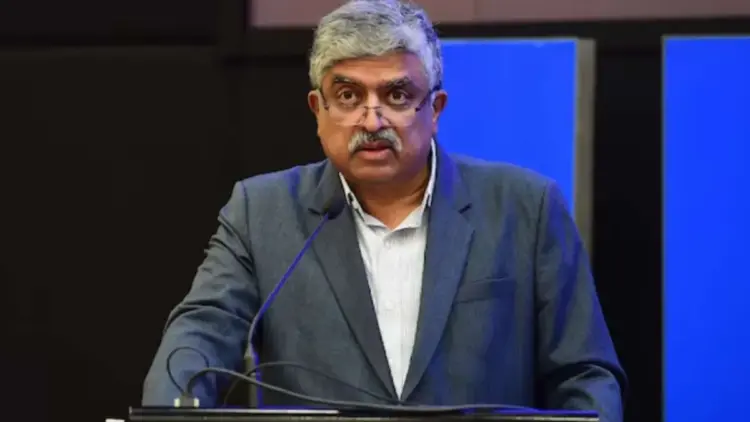
New Delhi, India – October 14, 2026 – In a bold move to combat the pervasive issue of examination paper leaks, Nandan Nilekani, the distinguished co-founder of Infosys and a key figure in India’s digital revolution, has put forth a groundbreaking proposal: the creation of question papers using Artificial Intelligence (AI) at the eleventh hour, immediately before examinations commence. This radical suggestion, unveiled at the Bloomberg New Economy Forum 2026, signals a significant paradigm shift in how India approaches its vast and often beleaguered examination system. Nilekani, who is currently spearheading a high-powered six-member task force on exam reforms, established by the central government in July, believes this technological intervention could be a potent antidote to the recurring scandals that undermine the credibility of national assessments.
The underlying principle of Nilekani’s proposal is to eliminate the economic incentive that fuels paper leaks. By generating question papers dynamically, just moments before students begin their tests, the very concept of a "predetermined" paper, which can be leaked and sold for profit, would theoretically cease to exist. This visionary approach hinges on the widespread adoption of computer-based testing (CBT) across all major examinations, a transition that Nilekani’s task force is actively exploring.
The AI Antidote: A Last-Minute Paper Generation System
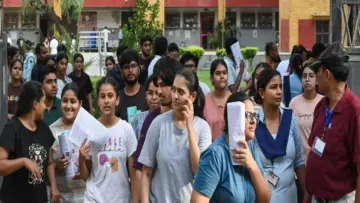
The persistent menace of paper leaks has cast a long shadow over India’s educational landscape, impacting millions of aspiring students and eroding public trust in examination bodies. From the National Eligibility cum Entrance Test (NEET) to various recruitment examinations for government jobs, the pattern of leaked papers has become alarmingly common, leading to widespread protests, cancellations, and investigations.
Nandan Nilekani, drawing upon his extensive experience in technology and governance, articulated his vision during his address. "Why do we need to have something called ‘a question paper’?" he pospered, posing a fundamental question that challenges the status quo. "Because that creates an economic incentive for it to be sold. One way to look at how to solve it is to have a massive bank of questions, and only at the last minute generate the question paper for the day."
This concept envisions a vast repository of meticulously vetted questions, categorized and tagged by subject matter, difficulty level, and learning objectives. Sophisticated AI algorithms would then be employed to curate unique question papers for each examination session, drawing from this extensive database. The process would be designed to be swift and secure, with the generated paper only becoming accessible to examination centres at the designated start time. This "just-in-time" generation would render any prior leak attempts futile, as the paper itself would not exist in a tangible form until the very moment of its use.
While Nilekani did not explicitly detail how the integrity of the massive question bank itself would be safeguarded against potential leaks, the focus of his proposal lies in disrupting the market for pre-examination question papers. The assumption is that a leak of the entire question bank, while still a concern, would be a more complex and less immediately profitable endeavor than obtaining a specific set of questions for a particular exam. The economic viability of leaking a question paper would diminish significantly if the paper itself is a fleeting, dynamically created entity.

The Imperative of Computer-Based Testing (CBT)
The successful implementation of Nilekani’s AI-driven paper generation system is inextricably linked to the widespread adoption of computer-based testing (CBT). He emphasized this crucial dependency, stating, "The committee is looking at how to make sure all exams are done on CBT. That requires a network of locations. We have 1,50,000 locations where young candidates can take a test and that needs to be expanded."
Transitioning to CBT offers several inherent advantages that align with the goal of enhancing exam security. Firstly, it allows for more sophisticated anti-cheating measures, such as proctoring software, randomized question order, and timed question displays. Secondly, it facilitates the dynamic generation and delivery of question papers, as proposed by Nilekani. Thirdly, it can streamline the examination process, from registration and admit card issuance to result declaration, potentially reducing administrative loopholes.

However, the transition to a nationwide CBT infrastructure presents significant challenges, particularly in a country with a vast and diverse population. The digital divide, where access to reliable internet and computing devices remains a significant barrier for a substantial portion of the student population, especially in rural and remote areas, is a primary concern. Nilekani’s statement acknowledges the need for an expanded network of testing locations, hinting at a strategy to leverage existing infrastructure, possibly including government institutions, to create accessible testing centers.
Reports indicate that the National Testing Agency (NTA), the apex body responsible for conducting various entrance and recruitment examinations, is actively collaborating with the All India Council for Technical Education (AICTE) to identify suitable IT infrastructure and government institutions for establishing standardized testing centers. The decision to avoid private centers, due to prevailing integrity concerns, underscores the government’s commitment to building a robust and trustworthy examination ecosystem.

Chronology of Reform Efforts: From Protests to Proposals
The urgency behind Nilekani’s ambitious proposal is rooted in a series of high-profile paper leak incidents that have rocked the nation. The catalyst for the formation of the exam reforms task force was the resignation of Union Education Minister Dharmendra Pradhan in July, following widespread protests and public outcry over repeated paper leaks.
July 26, 2026: The central government establishes a six-member task force on exam reforms, entrusting Nandan Nilekani with its leadership. The mandate of the task force is to identify systemic weaknesses and propose comprehensive solutions to prevent future leaks and enhance the overall integrity of the examination process.

Within Weeks of Formation: The task force embarks on an intensive period of deliberation and stakeholder engagement. It conducts 18 internal meetings, delving into the intricacies of the current examination system and exploring various technological and administrative solutions. Crucially, the committee engages with over 40 stakeholders, including students, parents, educators, and representatives from examination bodies such as the National Recruitment Agency (NRA), the Staff Selection Commission (SSC), and the Railway Recruitment Boards (RRB). This broad consultation process garners over 50,000 suggestions, providing a rich tapestry of perspectives and ground-level realities.
October 10, 2026: Nandan Nilekani addresses the Bloomberg New Economy Forum 2026, unveiling his forward-thinking proposal for AI-generated, last-minute question papers, contingent on a shift to computer-based testing. This marks a significant public articulation of the task force’s potential direction.

Ongoing: The task force continues its work, with its three-month reporting deadline approaching. The insights gathered and the proposals formulated are expected to shape the future of examinations in India, aiming to restore faith and ensure fairness for millions of aspirants.
Supporting Data and the Scale of the Challenge
The scale of the challenge facing India’s examination system is staggering. Millions of young individuals appear for various entrance and recruitment examinations annually, each aspiring for a brighter future. The impact of paper leaks extends beyond the financial loss incurred by examination bodies; it inflicts deep psychological distress on genuine candidates who are systematically disadvantaged, fostering disillusionment and a sense of injustice.

While specific data on the financial losses due to paper leaks is often difficult to quantify comprehensively, the cost of re-conducting examinations, administrative investigations, and the associated public relations fallout runs into crores of rupees. More importantly, the intangible cost in terms of lost opportunities and damaged aspirations is immeasurable.
The task force’s initiative to gather over 50,000 suggestions highlights the widespread concern and the desire for systemic change among the student community and other stakeholders. This collective voice underscores the pressing need for innovative solutions that can effectively address the deep-rooted issues plaguing the examination ecosystem. The diversity of suggestions likely encompasses a range of ideas, from technological interventions to administrative reforms and stricter penal provisions for offenders.

Official Responses and the Path Forward
While official responses to Nilekani’s specific proposal of AI-generated papers are still nascent, the formation of the task force itself signifies the government’s recognition of the gravity of the situation. The active involvement of prominent figures like former ISRO chief S. Somanath and former IB director Tapan Deka lends significant weight and credibility to the reform efforts.
The NTA’s engagement with AICTE to establish standardized testing centers indicates a proactive approach to building the necessary infrastructure for CBT. The deliberate exclusion of private centers suggests a focus on creating a more transparent and controlled examination environment.

The task force’s mandate to report within three months implies a commitment to delivering actionable recommendations in a timely manner. The comprehensive engagement with stakeholders suggests that the final report will be well-informed and grounded in the realities faced by students and examination bodies alike.
The success of Nilekani’s proposal will ultimately depend on several factors:

- Technological Robustness: The AI algorithms and the question bank management system must be highly sophisticated, secure, and capable of generating diverse and relevant question papers.
- Infrastructure Development: The expansion of a reliable CBT network, addressing the digital divide, is paramount. This may require significant investment in digital literacy programs and accessible testing centers.
- Cybersecurity: Robust cybersecurity measures will be essential to protect the AI systems, the question bank, and the transmission of question papers.
- Adaptability: The system must be adaptable to different examination formats and syllabi across various subjects and disciplines.
- Legal and Ethical Framework: Clear legal frameworks and ethical guidelines will need to be established to govern the use of AI in examinations and to address any potential biases or unintended consequences.
Implications for India’s Future
Nandan Nilekani’s proposal to leverage AI for last-minute question paper generation, coupled with a transition to computer-based testing, represents a visionary leap towards securing the integrity of India’s examination system. If successfully implemented, this approach could:
- Restore Public Trust: Significantly reduce paper leaks, thereby restoring faith in the fairness and credibility of examinations.
- Promote Meritocracy: Ensure that deserving candidates are selected based on their knowledge and abilities, rather than their ability to access leaked papers.
- Enhance Efficiency: Streamline the examination process, leading to faster results and reduced administrative burdens.
- Foster Innovation: Drive technological advancements in the education sector, encouraging the adoption of cutting-edge solutions.
- Level the Playing Field: By creating a more secure and transparent system, it can help to level the playing field for students from all socio-economic backgrounds.
The path ahead is undoubtedly challenging, requiring substantial investment, meticulous planning, and a concerted effort from all stakeholders. However, the potential rewards – a more just, equitable, and credible examination system – are immense. Nandan Nilekani’s bold vision offers a glimmer of hope in the ongoing battle against examination malpractices, paving the way for a future where merit and hard work are the sole determinants of success.