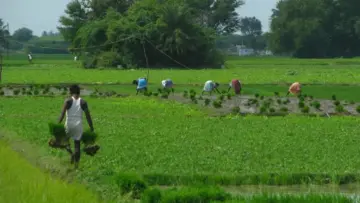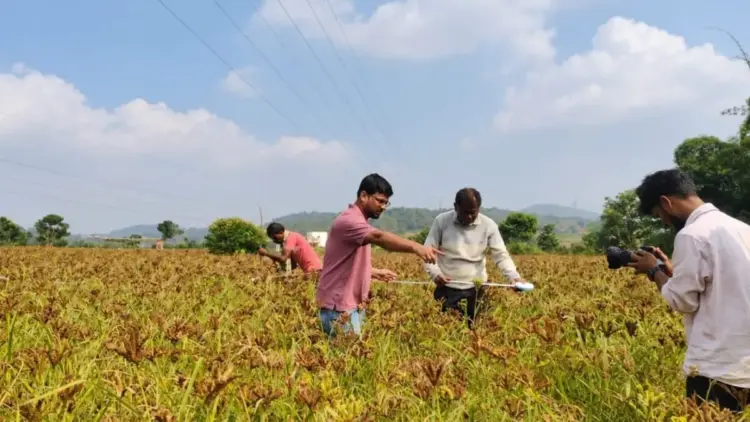
KORAPUT, ODISHA – On a steep, emerald-green hillside in southern Odisha’s Koraput district, a farmer named Budra tends to a dense tapestry of biodiversity. His single plot of land is a riot of finger millet (mandia), little millet (suan), niger seed, and local pulses. He follows a method of multi-tier intercropping known locally as dangar chasa, a practice passed down through generations.
When asked about his use of synthetic fertilizers, Budra gestures toward his cattle pen. His soil has never been touched by a bag of urea or DAP. He is not a "certified organic" farmer by training; he is a traditionalist by heritage. However, in the eyes of the global agricultural market, Budra is an invisible titan. He is sitting on a goldmine of "naturally organic" land that meets the stringent environmental standards farmers in California or Germany spend years and thousands of dollars to achieve. Yet, because he lacks a formal document, Budra sells his chemical-free harvest at standard, bottom-tier commodity prices, indistinguishable from crops grown in chemically saturated industrial belts.
This is the central paradox of agriculture in the Global South: the world’s most pristine, carbon-sequestering, and chemical-free landscapes are often the least valued because they exist outside the formal architecture of global certification.
1. Main Facts: The Economic Gap in the Organic Frontier
The global organic market is currently valued at approximately 145 billion euros ($160 billion) annually, according to the latest FiBL-IFOAM survey. This massive economy is built on a specific regulatory mechanic: the "Conversion Model."

Under standard international protocols, a conventional farmer wishing to enter the organic market must undergo a mandatory two-to-three-year "transition window." During this period, the farmer must stop using synthetic inputs, but they cannot yet label their produce as organic. They typically suffer a "yield dip" as the soil microbes recover, and they must bear the high costs of third-party inspections and traceability audits.
However, in the hill tracts and indigenous domains of India’s Eastern Ghats, chemical absence has been maintained by design, poverty, and geographic isolation. These regions represent the planet’s largest reserves of "never-converted" farmland. In places like Koraput, the soil is not "recovering" from chemicals because the chemicals never arrived.
Despite this, the structural gap remains. While a wellness brand in Delhi or an exporter in Hamburg might sell organic finger millet at a 300% premium, the farmer in Koraput receives no such windfall. Without certification, their heritage crop is just another commodity.
2. Chronology: From Heritage Designation to Policy Innovation
The journey to recognize these landscapes has been a slow evolution of international recognition followed by domestic policy experimentation.

- 2012: The FAO Recognition: The United Nations Food and Agriculture Organization (FAO) designated the Jeypore tract in Koraput as a Globally Important Agricultural Heritage System (GIAHS). It is one of only 90 such sites worldwide, recognized for its irreplaceable gene pool of indigenous landrace rice varieties and sustainable tribal farming practices.
- 2017-2018: The Odisha Millets Mission (OMM): The Government of Odisha launched a pioneering mission to revive millets, focusing on decentralized procurement and minimum support prices (MSP). While successful in providing price stability, it primarily focused on the output rather than the certified status of the land.
- 2020-2021: The Introduction of Large Area Certification (LAC): Recognizing the prohibitive costs of individual farm audits, India’s Ministry of Agriculture introduced a revolutionary policy instrument. Rolled out under the Paramparagat Krishi Vikas Yojana (PKVY), LAC allows the government to certify entire contiguous landscapes in a single administrative sweep.
- 2021-2022: The Dantewada Success Story: Chhattisgarh’s Dantewada district became the first major mainland trial of LAC. The local administration certified 110 villages—roughly 65,000 hectares—in one go. It proved that if the land has a documented history of being chemical-free, the mandatory three-year waiting period could be waived.
3. Supporting Data: The Cost of Recognition vs. The Cost of Conversion
The economic logic of Large Area Certification rests on a comparison of two vastly different financial baselines.
The Standard Model (Conversion)
- Transition Time: 3 years.
- Yield Impact: 15% to 30% drop during soil adjustment.
- Audit Costs: High, often requiring expensive private third-party agencies.
- Prerequisite: Assumes the land is "contaminated" by default.
The LAC Model (Recognition)
- Transition Time: Zero (Instantaneous certification).
- Yield Impact: None, as farming practices remain unchanged.
- Audit Costs: Fractional, handled through the Participatory Guarantee System (PGS-India) and regional councils.
- Prerequisite: Verifies a "clean baseline" through historical land use and community testimony.
In Koraput, the biological data is staggering. The region is home to thousands of indigenous landrace rice varieties, including Kalasur, Machhakanta, and Haladigundi. These are not just crops; they are climate-resilient genetic assets. Currently, these varieties are sold at local haats (weekly markets) alongside commercial hybrids, fetching no premium despite their superior nutritional and ecological profiles.
4. Official Responses and the Policy Landscape
The Ministry of Agriculture and Farmers’ Welfare has positioned LAC as a tool for "ease of doing business" for smallholders. By utilizing the Participatory Guarantee System (PGS-India), the government shifts the burden of proof from the individual farmer to the community and the state.
In Odisha, officials associated with the Odisha Millets Mission (OMM) have begun to acknowledge that LAC is the "natural regulatory completion" of their work. While the OMM has secured the "floor" (the minimum price), certification is required to reach the "ceiling" (the global organic premium).

However, experts point out an administrative bottleneck. "Recognition is administratively simpler than conversion, but our global certification systems are still psychologically designed around the idea of ‘cleaning up’ a mess," says a senior agriculture officer. "There is no established global pipeline for ‘recognition’ yet, meaning Indian states must lead the way in creating these supply chains."
The Government of Odisha has received international acclaim for its tribal-centric policies, but the implementation of LAC in Koraput remains in the pilot or discussion stages, even as other districts like Dantewada have moved forward.
5. Implications: The High Price of Delay
The window of opportunity for Koraput is closing. The Eastern Ghats are facing a quiet but steady encroachment from the "input economy."
The Threat of the Chemical Frontier
As younger generations migrate to cities for work, older farmers are left with acute labor shortages. This makes labor-intensive organic weeding difficult. Into this gap step local traders offering "seed and fertilizer packages" on credit.

- Glyphosate Encroachment: A canister of broad-spectrum herbicide, costing a few hundred rupees, can replace three days of grueling manual weeding. For a struggling household, this is a rational short-term choice.
- The Irreversibility Factor: Once a landscape is touched by synthetic herbicides and fertilizers, its "clean baseline" is destroyed. To certify that land later would require the full, expensive three-year conversion process.
Socio-Economic Impact
If Koraput fails to claim Large Area Certification now, it is effectively forfeiting a massive ecological subsidy. Certifying the district today costs almost nothing because the "work" of maintaining organic integrity has already been done by the ancestors of farmers like Budra. Waiting ten years will turn this current asset into a future liability, requiring massive public subsidies to bridge the transition gap.
Conclusion: A Document for Resilience
On Budra’s hillside, the intercropping of legumes (which fix nitrogen) and drought-hardy millets is a masterclass in ecological design—a system that modern agricultural science is only now trying to reconstruct.
The resilience is there. The heritage is there. The market demand is there. What is missing is the administrative alignment to put a stamp of "Certified Organic" on a reality that has existed for centuries. For the Eastern Ghats, Large Area Certification is not just a policy; it is the most cost-effective conservation fence available to protect a global heritage before the chemical frontier claims it for good.
As Budra continues his work, unaware of the billion-dollar markets that covet his soil, the clock ticks on a policy decision that could determine the economic future of Odisha’s tribal heartland. Recognition, it seems, is the ultimate form of conservation.