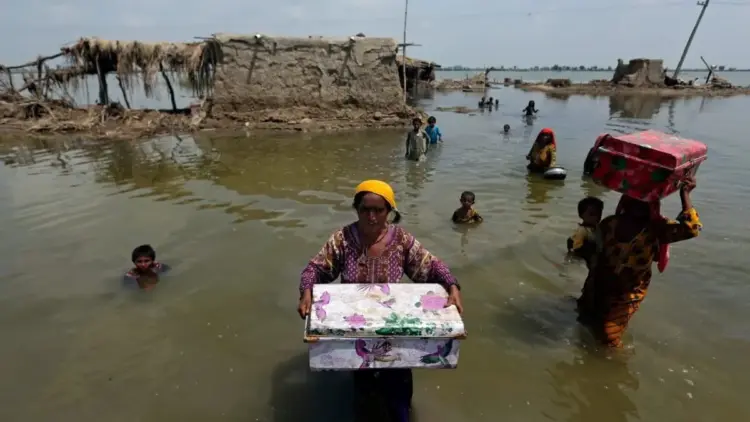
ANTALYA, TÜRKİYE — As the annual United Nations climate summit opens in the coastal city of Antalya, the discourse surrounding global warming has shifted from the theoretical to the visceral. For Abdul Khalique Laghari, a farmer from Pakistan’s Sindh province, the "climate crisis" is not a line graph or a policy brief; it is the six feet of stagnant water that transformed his ancestral home into an island in 2022. Four years after the catastrophic floods that submerged a third of Pakistan, Laghari and thirty of his peers are still waiting for the world to make good on its promises of compensation.
Their struggle highlights a widening chasm in international diplomacy: the gap between the "Loss and Damage" fund’s aspirations and the grim reality of those living on the front lines of a heating planet. As delegates from nearly 200 countries gather in Türkiye, the human costs of climate change—both the sudden violence of storms and the slow, silent encroachment of rising seas—have become the central moral and financial challenge of the decade.
The Human Face of a Global Crisis
The experience of the Sindh farmers illustrates how climate damage reaches far beyond the immediate aftermath of a disaster. When floodwaters destroy a crop, the loss is compounded by the evaporation of the income needed to feed families and the inevitable spiral of debt used to purchase seeds for a next season that may never come.

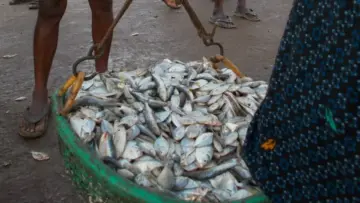
In South Asia, this cycle of destruction is becoming the norm. In coastal Bangladesh, particularly in the Shyamnagar region, the crisis is invisible but no less devastating. Saltwater intrusion has turned once-fertile rice paddies into saline barrens. Drinking water is contaminated, leading to a surge in health issues, while fishing communities see their traditional catches vanish as the sea’s chemistry changes.
Further north, in Nepal’s Bhote Koshi valley, the trauma is more recent. An August 2026 glacier collapse triggered flash floods that claimed over 1,400 lives. For these communities, "loss and damage" refers to more than just infrastructure; it refers to the erasure of entire villages and the permanent displacement of survivors who no longer have a mountain to call home.
A Chronology of Broken Promises and Rising Tides
The path to the current negotiations in Antalya has been marked by decades of advocacy from developing nations. For over thirty years, vulnerable countries argued that while "mitigation" (reducing emissions) and "adaptation" (preparing for future hits) were necessary, they did not address the "residual" damage that had already occurred.
- 2022 (COP27, Egypt): A historic breakthrough occurs with the formal agreement to establish a "Fund for Responding to Loss and Damage." This was hailed as a victory for climate justice.
- 2023-2025: The fund’s operational framework was debated, and a board was established. However, contributions remained voluntary, leading to a "pledge-and-wait" dynamic.
- 2025: A landmark legal case in Switzerland involving residents of Indonesia’s Pari Island against the cement giant Holcim was declared admissible, signaling a new era of climate litigation where corporations are held accountable for environmental damage.
- 2026 (The Present): The World Meteorological Organization (WMO) confirms that the past 12 years are the warmest on record. In Antalya, the first major "replenishment" discussions begin, as the initial pool of money proves woefully inadequate.
Supporting Data: The Financial Disparity
The scale of the financial need is staggering compared to the resources currently available. According to UN negotiation documents and recent economic assessments, the "Loss and Damage" fund is currently functioning more like a symbolic gesture than a recovery mechanism.

The Funding Gap:
- Requests vs. Allocation: In its first funding round, the fund received 176 requests from 119 countries, totaling $2.8 billion in immediate needs. The fund had set aside only $342 million—roughly 12% of the requested amount.
- Pledges vs. Receipts: As of July 31, 2026, governments had pledged approximately $822.71 million. However, only $485.77 million has actually been received by the fund’s secretariat.
- The Nepal Disparity: The World Bank estimates that Nepal’s recovery from the 2026 glacier floods will cost $4.8 billion. To date, the Loss and Damage fund has provisionally set aside just $21.6 million for the country—less than 0.5% of the required reconstruction budget.
Furthermore, the nature of the funding is under fire. Harjeet Singh, global convenor of the "Fill the Fund" campaign, describes the current state of the fund as "a lifeboat with no oars." He notes that while developed nations prefer to provide support through loans or insurance schemes, vulnerable nations require direct grants. Loans, Singh argues, only serve to deepen the "climate debt trap," forcing impoverished nations to pay interest on disasters they did not cause.
Official Responses and the Legal Frontier
The rhetoric from the podiums in Antalya has been somber. Nepal’s Foreign Minister, Shisir Khanal, delivered a stinging rebuke to the international community during the opening plenary. "I come here from a nation still in grief," Khanal told the assembly. "This is the time to put sympathy into the system and promises into action. We cannot rebuild our mountains with apologies."
The UN Climate Change loss and damage team has remained largely tight-lipped regarding the slow disbursement of funds, citing the need for "rigorous review processes" to ensure transparency. However, these delays are precisely what critics say render the fund ineffective. For a farmer in Sindh or a displaced family in Nuwakot, a three-year approval process for a reconstruction grant is a lifetime.

Outside the halls of the UN, the battle is moving to the courts. On Pari Island, Indonesia, where 4,000 residents are watching their 41-hectare home vanish under tidal flooding, the lawsuit against Holcim represents a shift in strategy. Residents are no longer just asking for charity; they are seeking legal compensation for the "existing and inevitable" damage caused by industrial emissions. While Holcim has appealed the 2025 admissibility ruling, the case has already set a precedent that could see fossil fuel and carbon-intensive companies subpoenaed for climate-related losses globally.
Implications: What Money Cannot Replace
Perhaps the most challenging aspect of the negotiations in Antalya is the concept of "non-economic losses." The fund is designed to repair bridges and replant crops, but it is ill-equipped to address the erosion of culture, language, and identity.
In the Pacific Islands, the threat is existential. A report by the Secretariat of the Pacific Regional Environment Programme (SPREP) released this month documents losses across 14 nations that go beyond the ledger. When an island becomes uninhabitable due to saltwater intrusion, the community loses more than land; they lose the burial grounds of their ancestors and the geographic context of their oral traditions.
"Our land is more than the space we occupy," says Kirsten Madison, a loss and damage coordinator from the Marshall Islands. "It holds our identities and our connection to generations before us. When the sea takes the land, it takes our history."

The implications of failing to properly fund and manage Loss and Damage are twofold. First, it risks a total breakdown in trust between the Global North and the Global South, potentially stalling all other climate negotiations, including crucial agreements on carbon markets and emission targets. Second, it guarantees a future of mass migration and regional instability as millions of people, like Laghari, find their livelihoods permanently extinguished.
As the summit in Antalya continues, the choice for world leaders is stark. They can continue to treat Loss and Damage as a philanthropic sideline, or they can recognize it as a core component of global security. For the farmers of Sindh and the villagers of Nepal, the time for "voluntary pledges" has passed. They are no longer asking for help; they are demanding the settlement of a debt.