

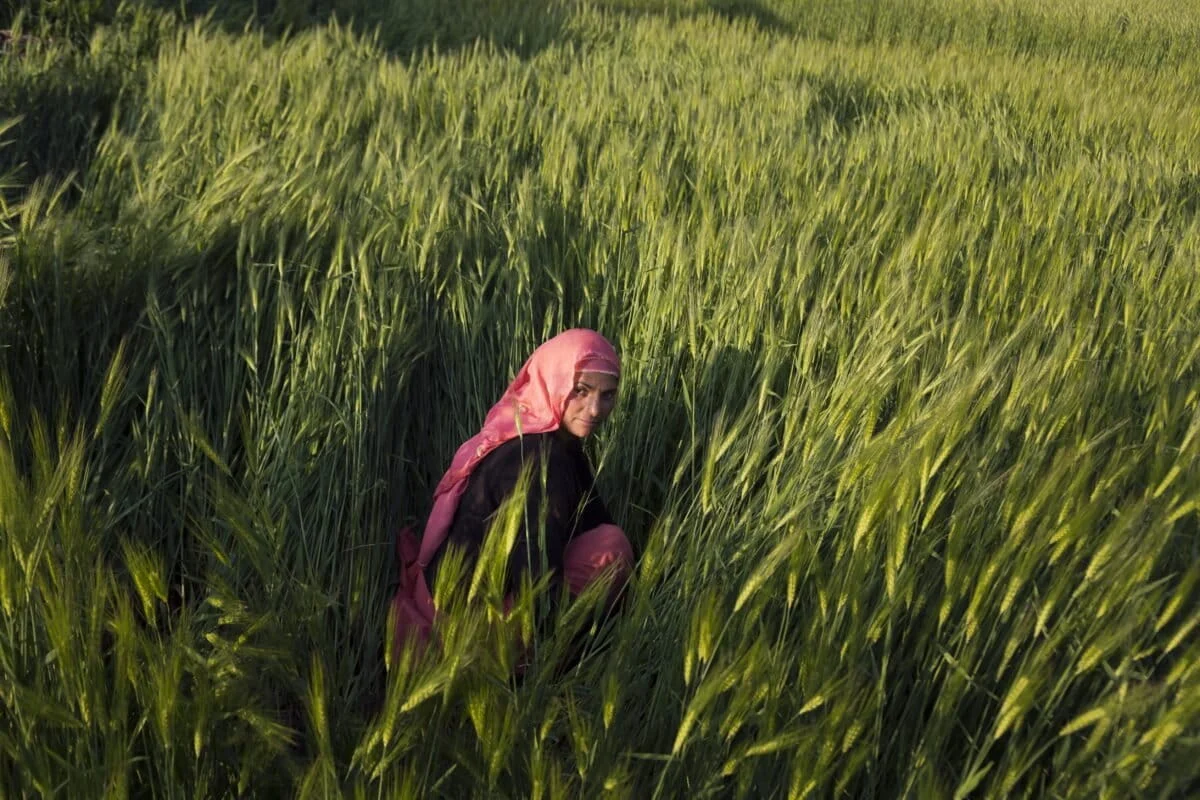
BIR, HIMACHAL PRADESH — For centuries, the rhythmic arrival of the monsoons and the predictable chill of the Himalayan winter dictated the pulse of life in Bir. In this perched valley of the Kangra district, the agricultural calendar was a sacred, unwritten contract between the farmer and the elements. Today, that contract is being unilaterally rewritten.
As the world looks toward the peaks of the Hindu Kush Himalaya as the "Third Pole" of climate vulnerability, the residents of Bir-Billing are witnessing the frontline of ecological collapse. A dual pressure of erratic climatic shifts and a runaway tourism boom is hollowing out the region’s traditional agrarian economy, leaving farmers to wonder if the land that fed their ancestors for generations has a future.
Main Facts: A Landscape in Flux
The Bir-Billing area, situated at an altitude of approximately 1,525 metres, is internationally renowned as one of the world’s premier paragliding destinations. However, beneath the colorful canopy of gliders lies a terrestrial crisis. The primary challenges facing the region include:
- Climatic Decoupling: Traditional sowing and harvesting cycles no longer align with weather patterns. Rains that once nourished winter crops now arrive months late, while summer temperatures have reached unprecedented highs.
- Water Insecurity: Traditional mountain irrigation systems, known as kuhls, are drying up. This is driven by both reduced glacial/spring discharge and the diversion of water to support a burgeoning tourism infrastructure.
- Land-Use Transformation: Farmland is being rapidly converted into guesthouses, cafes, and hotels. The soaring value of real estate, driven by Bir’s status as a "digital nomad" and adventure hub, has made subsistence farming economically unattractive for the younger generation.
- Biodiversity Loss: Local residents report a sharp decline in avian populations and pollinators, a phenomenon supported by global studies linking habitat fragmentation and chemical usage to the collapse of mountain ecosystems.
Chronology of Change: From Rhythms to Rupture
To understand the scale of the transformation, one must look through the eyes of Bir’s elders, who remember a time when the weather was a reliable partner rather than a volatile adversary.
The Era of Predictability (Pre-1990s)
For 86-year-old Ram Das, a farmer and cobbler who has lived in Bir his entire life, the past was defined by "the right rain at the right time." In the mid-20th century, the agricultural cycle was stable. January brought the winter rains necessary for the flowering of wheat and barley. The natural springs fed a robust network of kuhls that ensured even the lower terraces had enough water for thirsty crops like paddy.

The Transitional Decade (2000–2010)
The turn of the millennium saw the beginning of Bir’s global ascent as a paragliding hub. As the 2015 Paragliding World Cup approached, infrastructure began to expand. Simultaneously, farmers began noticing subtle shifts. The "winter" rains began sliding into February. Summers felt longer, and the snowline on the Dhauladhar range seemed to retreat earlier each year.
The Current Crisis (2015–Present)
The last decade has seen an acceleration of these trends into a full-blown ecological crisis. "The rain that used to come in January now comes in March," says Ram Das. "There is a difference of nearly three months."
This three-month shift is catastrophic for mountain agriculture. When crops require the warmth of the sun to ripen, they are instead pelted by untimely rain or hail. Conversely, during the critical germination phase, the soil remains parched. Sarla Devi, 60, a local farmer, notes that the heat has become oppressive. "Earlier, the rains came at the right time. Now, when crops need sunshine, it rains instead. Summers have become hotter too," she observes.
Supporting Data: The Science of Himalayan Fragility
The anecdotal evidence from Bir is corroborated by a growing body of scientific research highlighting the vulnerability of the Hindu Kush Himalaya (HKH) region.
The IPCC Perspective
The Intergovernmental Panel on Climate Change (IPCC) Sixth Assessment Report (AR6) specifically identifies mountain regions as being at high risk. The report notes that the HKH is experiencing warming at a rate higher than the global average. This "elevation-dependent warming" triggers a domino effect: changing precipitation patterns lead to altered water availability, which in turn disrupts the phenology (timing of life cycle events) of both crops and wild species.

The Water-Tourism Nexus
A critical factor in Bir’s agricultural decline is the "Tourist-Water Paradox." As Bir and Billing have grown into a hospitality powerhouse, the demand for water has skyrocketed.
"Earlier, our irrigation channel flowed well. Now it has dried up," explains Ram Das. He points to the upstream development as a primary cause. "There were fewer people before. Now, many hotels have come up, with tanks storing water above. Very little reaches the fields below."
When kuhls dry up, high-water-intensity crops like paddy—once a staple of the local diet—become impossible to grow. Farmers are forced to switch to maize or vegetables, but even these are failing due to "short, intense bursts" of rainfall that cause soil erosion rather than deep infiltration.
The Pollinator Collapse
The environmental degradation extends beyond the soil. Pawna Kumari, State Secretary of the Himachal Ghumantu Pashupalak Mahasabha, highlights a quieter loss: the silence of the fields. "Birds have reduced. Earlier, you could hear them across the fields. Now in many places you hear none," she says.
Scientific literature, including reports from the Intergovernmental Science-Policy Platform on Biodiversity and Ecosystem Services (IPBES), suggests that mountain pollinators are in decline due to a combination of habitat loss, the expansion of monocultures, and the increased use of chemical weedicides. In Bir, the shift toward market-driven cash crops has often come at the expense of traditional, biodiverse cropping systems, further straining the local ecosystem.
Official Responses and Expert Perspectives
Experts argue that the situation in Bir is a microcosm of a larger Himalayan crisis where policy has failed to keep pace with environmental change.

Saurabh Bhardwaj, Director of the Climate Change Hub at WWF-India, emphasizes the unique sensitivity of these systems. "Mountain farming systems are especially sensitive to shifts in rainfall and water availability because they depend heavily on seasonal cycles and local ecological balance," he states. He warns that when these cycles are broken, the "ecological fragility" of the entire region increases, making it less resilient to extreme weather events like flash floods or prolonged droughts.
The Shift to Cash Crops
Pawna Kumari observes that the very philosophy of farming in the valley is changing. "Earlier, people farmed mainly to feed their families. Now, many grow according to the market and move towards cash crops and vegetables," she says. While this may offer higher short-term returns, it often leads to "abandoned fields" when the market fluctuates or the weather fails. The sight of empty, weed-choked terraces is becoming increasingly common in Bir as families decide that the labor-to-yield ratio of farming no longer makes sense.
The Permaculture Alternative
In response to this systemic failure, some grassroots initiatives are attempting to find a third way. Jeewika Bhat, founder of "Seeds and Deeds," operates from Shunya Farm, one of the region’s oldest permaculture sites. Her initiative focuses on regenerative living and mixed cropping—techniques designed to retain soil moisture and build resilience against climate shocks.
"We aim to build a community of farming practitioners who see farmland as an ecosystem where all species thrive," Bhat says. Her goal is to create a blueprint for small Himalayan farms that can survive the 21st century by reducing dependence on external inputs like chemical fertilizers and expensive seeds.
Implications: A Future Without Farmers?
The transformation of Bir-Billing from a self-sustaining agricultural valley into a service-oriented tourism hub carries profound implications for the region’s long-term security.

1. Loss of Traditional Knowledge:
As the younger generation moves away from the "mud" and toward service jobs in cafes and paragliding schools, centuries of localized knowledge regarding seed saving, soil health, and water management are being lost. If the tourism economy ever falters, the community may find it lacks the skills to return to the land.
2. Food Insecurity:
The transition from growing staples like paddy and wheat to relying on market-bought food makes the mountain population vulnerable to supply chain disruptions and price volatility. Bir is effectively outsourcing its food security to the plains, even as those regions face their own climate challenges.
3. Unregulated Urbanization:
The conversion of permeable farmland into concrete guesthouses reduces the land’s ability to absorb rainwater, increasing the risk of flash floods—a danger that has already manifested in devastating ways across other parts of Himachal Pradesh in recent monsoon seasons.
4. The Limits of Adaptation:
While permaculture and regenerative farming offer a glimmer of hope, residents acknowledge that adaptation has its limits. If the "three-month shift" in rainfall becomes the permanent norm, or if the natural springs dry up entirely due to over-extraction by the tourism sector, no amount of clever farming can sustain the population.
Conclusion
The story of Bir is a cautionary tale for the entire Himalayan belt. It is a place where the "spectacle" of the mountains—the paragliding, the cafes, the sunsets—is increasingly at odds with the "substance" of the mountains—the soil, the water, and the farmers.

As Ram Das looks out over a valley where hotels now stand where paddy once swayed, the tragedy is not just the loss of a crop, but the loss of a way of life that understood the limits of nature. For the farmers of Bir, the sky is no longer a source of life-giving rain, but a source of unpredictable threats. Unless there is a concerted effort to balance tourism with ecological preservation, the paragliders of Bir may soon be soaring over a landscape that can no longer feed itself.
