

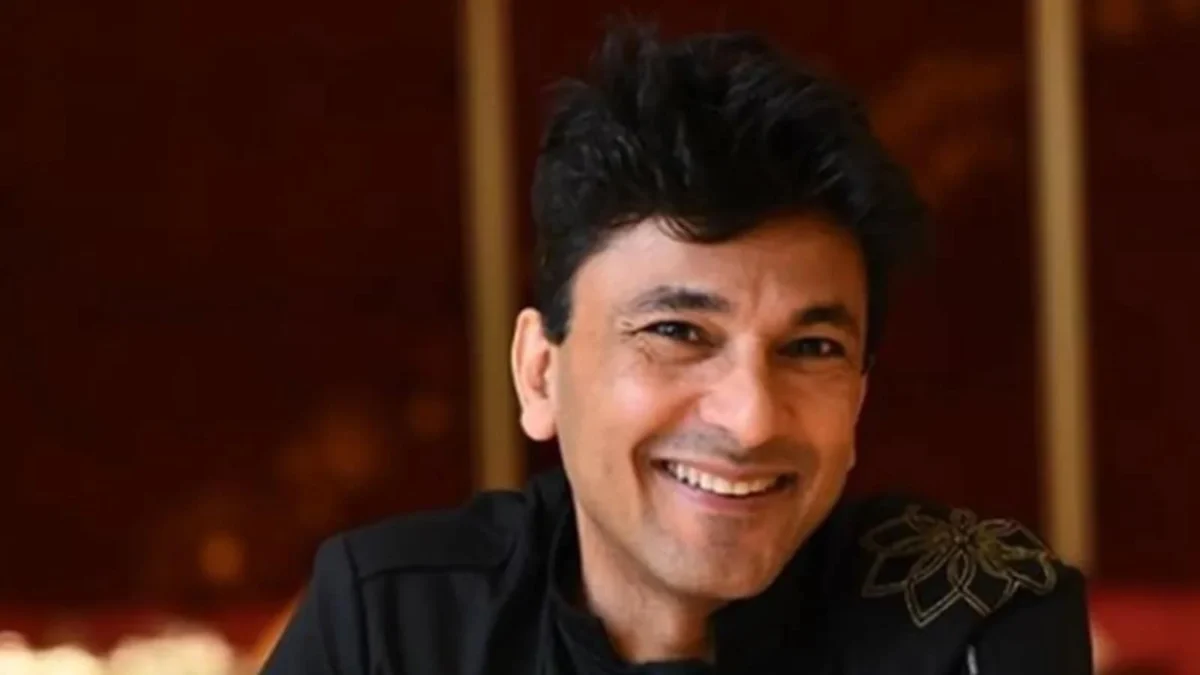
NEW DELHI — In the high-octane world of global gastronomy, few names resonate with as much cultural authority as Vikas Khanna. Recently honored on TIME Magazine’s prestigious list of the 100 most influential people in the world, the Michelin-starred chef and restaurateur has become a de facto ambassador for Indian heritage. In a revealing new dialogue with Culinary Culture Reco, Khanna peeled back the curtain on the specific geographical locations, childhood flavors, and philosophical underpinnings that have defined his journey from the narrow lanes of Amritsar to the pinnacle of New York City’s fine-dining scene.
The conversation served as more than just a list of recommendations; it was a masterclass in the "underestimated" geography of Indian taste, highlighting cities like Indore and Surat as pivotal hubs of culinary innovation. From the technical nuances of the perfect Dahi Ke Kebab to the sentimental pull of Methi Aloo, Khanna’s reflections offer a comprehensive look at how traditional Indian roots are being transplanted and transformed on the global stage.
Main Facts: The Pillars of Khanna’s Culinary Philosophy
At the heart of Khanna’s recent revelations is a desire to redirect the global spotlight toward the regional authenticity of India. While metropolitan giants like Delhi and Mumbai often dominate the narrative, Khanna identifies the "soul" of Indian food in the heartlands.
The key takeaways from his recent discourse include:
- The Indore Revelation: Khanna identifies Indore as a critically underestimated food destination, specifically citing Sarafa Bazaar and Chappan Dukan as mandatory pilgrimages for any serious gourmand.
- The Surat Connection: He highlighted Sasuma in Surat as a pinnacle of regional excellence.
- The New York Dosa Dilemma: Despite the popularity of the South Indian staple in Manhattan, Khanna argues that the West has yet to fully "understand" the complexity and regional variations of the dosa.
- The Signature Dish: Of all his creations, the chef points to Dahi Ke Kebab as his crowning achievement due to its delicate balance of texture and spice.
- The Mentor and the Muse: Khanna credited legendary chef Sanjeev Kapoor as a figure of deep respect and cited his mother as the person with whom he wishes to share his final meal.
Chronology: A Journey of "Promise" and Evolution
Vikas Khanna’s career has moved in a distinct arc: from learning the ropes in his grandmother’s kitchen to achieving international stardom. This trajectory is currently anchored by his New York restaurant, Bungalow. For Khanna, the name Bungalow represents more than just a physical space; it signifies a "promise"—a commitment to bringing the authentic, unadulterated spirit of Indian homes to a global audience.
The chronology of his influence can be traced through his advocacy for regional ingredients. His recent inclusion in the TIME 100 serves as a culminating milestone, validating a decades-long effort to prove that Indian cuisine is not a monolith but a vast, interconnected web of micro-cultures. This evolution is also visible in his personal dining habits. Even as a global celebrity, Khanna maintains a quiet, low-profile presence in the New York dining scene, frequenting institutions like Veselka (a Ukrainian staple in the East Village) and Russ & Daughters, showcasing a palate that values history and community over social media trends.
Supporting Data: The Hidden Science of Indori Cuisine
A significant portion of Khanna’s recent commentary focused on the culinary landscape of Indore, a city in Madhya Pradesh that is frequently celebrated by locals but often overlooked by international tourists. To understand why Khanna champions this region, one must look at the specific flavor profiles that define it.
The Magic of Jeeravan Masala
To provide technical depth to Khanna’s endorsement, consultant chef Gautam Kapoor, a veteran with 30 years of experience, elaborated on the specific ingredients that give Indore its "signature kick." The secret, according to Kapoor, lies in Jeeravan Masala.
While many are familiar with Chaat Masala, Kapoor notes that Jeeravan is a vastly different beast. "Indore offers a hidden treasure," Kapoor explained. "While Chaat Masala relies heavily on Amchoor (dried mango powder) and black salt for its tanginess, Jeeravan Masala offers a more complex profile. It provides a unique combination of flavors, blending the tang of Chaat Masala with the warmth of Garam Masala, roasted cumin, and a hint of clove."
This multi-layered seasoning is what elevates Indori street food—such as Poha and Bhutte Ka Kees—into a gourmet experience. The "warmth" mentioned by Kapoor refers to the thermogenic spices that provide a lingering aftertaste, a stark contrast to the sharp, immediate acidity of standard commercial seasonings.
The Hubs: Sarafa and Chappan Dukan
Indore’s food scene is anchored by two distinct ecosystems:
- Sarafa Bazaar: A jewelry market by day that transforms into a bustling street food night market after 8:00 PM. It is a rare example of a "no-waste" urban space that caters to thousands of diners nightly.
- Chappan Dukan: Literally translating to "56 Shops," this precinct is a dedicated food street offering everything from Johnny Hot Dog (a local legend) to elaborate traditional sweets.
Official Responses: Respecting the Pioneers
In an industry often characterized by fierce competition, Khanna’s "official" stance on his peers is one of profound humility. He singled out Sanjeev Kapoor as the chef he respects most in India. Kapoor, who pioneered televised cooking in India through Khana Khazana, laid the groundwork for the modern celebrity chef era. By citing him, Khanna acknowledges the bridge between the traditional home-cooking era and the modern globalized industry.
Furthermore, Khanna’s reflection on his own best dish—the Dahi Ke Kebab—serves as a professional manifesto. In the world of fine dining, where "more is more" is often the trend, Khanna’s choice of a yogurt-based kebab highlights a preference for technical precision. Achieving the perfect texture—a crisp exterior with a molten, creamy interior—requires a level of moisture control that many chefs struggle to master. It is a dish that represents the "wedding staple" elevated to an art form.
Implications: The Future of Indian Hospitality on the Global Stage
The most poignant part of Khanna’s discourse was his reflection on Atithi Devo Bhava (The Guest is God). He stated unequivocally, "I have never witnessed any country with this level of hospitality," referring to India.
The "Dosa" as a Cultural Metric
Khanna’s observation that New York "embraces but does not understand" the dosa has significant implications for how international food journalism approaches Indian cuisine. It suggests that while Indian food has achieved "popularity," it has not yet achieved "literacy." The implication is that the next frontier for chefs like Khanna is education—moving beyond the "curry and naan" stereotypes to explain the fermented chemistry of a dosa or the regional specificity of a Surat thali.
The Emotional Economy of Food
Perhaps the most telling aspect of the interview was Khanna’s admission that his ultimate comfort food is Methi Aloo (fenugreek and potatoes) and his "last meal" would be with his mother. This underscores a growing trend in the global culinary world: the return to "Grandmother Cooking." As fine dining becomes increasingly clinical and experimental, leaders like Khanna are pivoting back to the emotional and domestic roots of the craft.
Economic and Touristic Impact
Khanna’s endorsement of Surat and Indore is likely to have a tangible impact on "food tourism" in India. As one of the TIME 100, his recommendations carry the weight of a global tastemaker. We can expect an uptick in international interest in the Madhya Pradesh and Gujarat food circuits, moving the needle of the Indian tourism economy toward Tier-2 cities.
Conclusion
Vikas Khanna’s recent reflections offer a roadmap for the future of Indian gastronomy. It is a future that is deeply local yet unapologetically global. By championing the complex spices of Indore, the hospitality of the Indian home, and the technical rigor of North Indian appetizers, Khanna is not just feeding people; he is narrating the story of a nation.
As he continues to build his "Bungalow" in the heart of New York, the promise he speaks of is clear: to ensure that the world finally understands that Indian food is not just a meal, but an ancient, evolving, and deeply hospitable philosophy. Whether it is through a sprinkle of Jeeravan Masala or a simple plate of Methi Aloo, the message remains the same—the most influential flavors are those that taste of home.
