

PUNE/MUMBAI – In the volatile world of wealth creation, the narrative of the "missed opportunity" is a common one. However, in the Indian real estate sector, these missed windows often stem not from a lack of capital, but from a fundamental misreading of economic signals.
Take the case of Priya, a 46-year-old entrepreneur from Pune. A seasoned investor with a keen eye for equity markets, Priya entered 2020 with a significant corpus, waiting for the COVID-19 pandemic to "break" the property market. She anticipated a 2010-style correction, holding her funds in liquid instruments while expecting a 30% price drop. By the time she realized that the "crash" had been replaced by a "surge" driven by historic low interest rates and infrastructure pushes, the market had moved 18% beyond her reach.
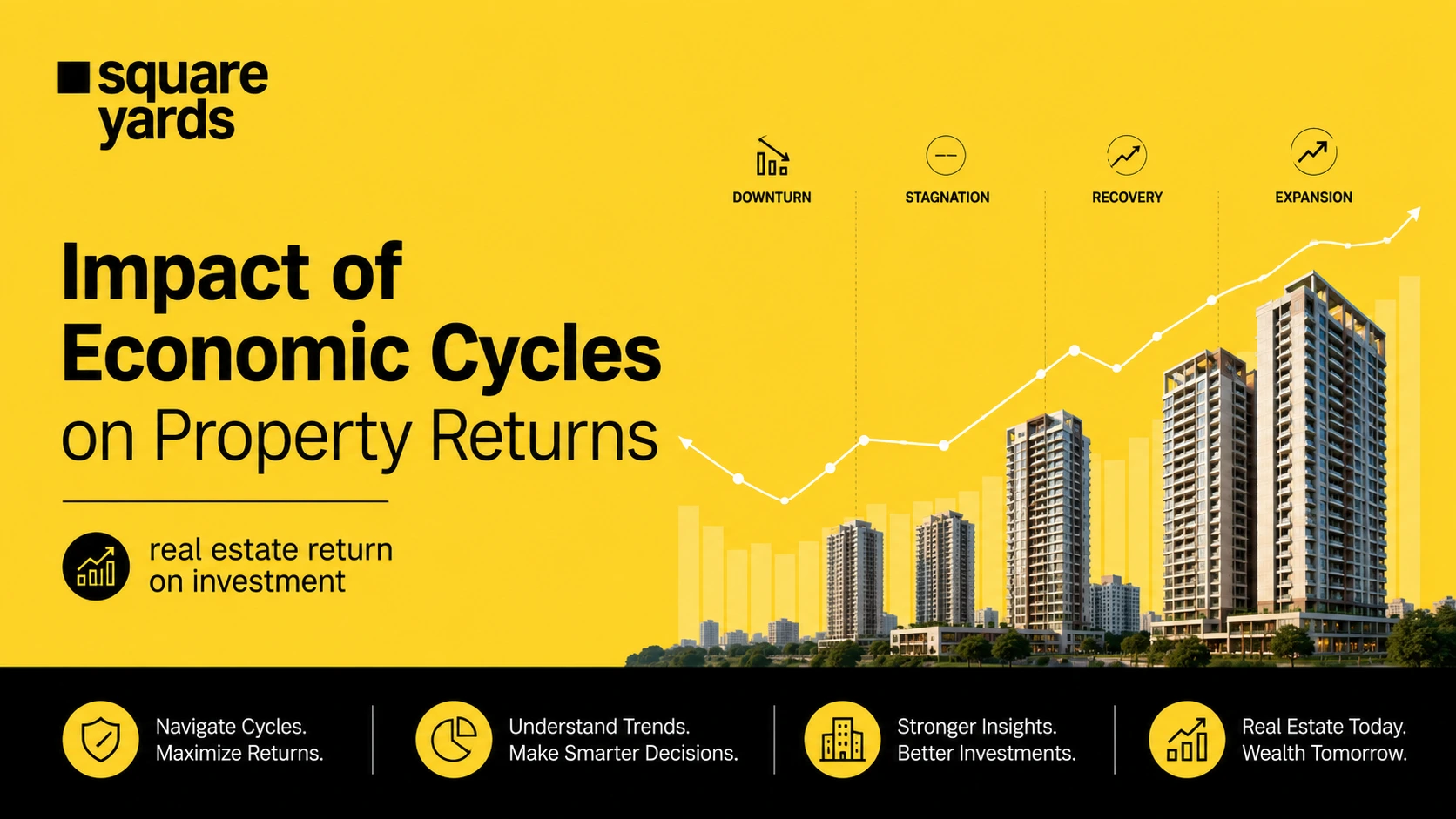
As of May 2026, the Indian residential market finds itself in a sophisticated "Early-to-Mid Expansion" phase. For investors like Priya, and the thousands of others looking to maximize their Real Estate Return on Investment (ROI), the lesson is clear: Property cycles do not mirror equity cycles. Understanding the underlying economic indicators is the only way to navigate the next decade of urban growth.
Chronology: The Great Decoupling (2020–2026)
To understand where the market stands today, one must look at the unconventional trajectory of the last six years.
The Pandemic Pivot (2020-2021): While global economies shuttered, the Reserve Bank of India (RBI) slashed repo rates to decadal lows. This created a "hidden discount." Even if sticker prices remained flat, the cost of borrowing dropped so significantly that the effective cost of ownership fell by nearly 15%. Investors who waited for a price drop missed the "interest rate window."
The Consolidation Phase (2022-2024): As the world reopened, inflation concerns forced the RBI to hike rates. Simultaneously, the Real Estate (Regulation and Development) Act (RERA) and market pressures led to a massive consolidation. "Grade A" developers—those with clean balance sheets and proven delivery tracks—began to dominate the supply. This period saw the end of the "speculative launch" era, replacing it with demand-driven growth.
The Infrastructure Acceleration (2024-2025): The Union Government’s consistent focus on Capital Expenditure (Capex), culminating in the landmark ₹11.11 lakh crore allocation in the FY26 budget, shifted the focus from city centers to "emerging corridors." Peripheral areas of Mumbai, Pune, and Bengaluru, once considered "long-term bets," became immediate hotspots as metro lines and highways neared completion.
The Current Easing (2025-2026): By early 2025, with inflation stabilizing, the RBI began a new rate-easing cycle. We are currently 14 months into this tailwind, which has historically been the "sweet spot" for residential absorption.
Supporting Data: The Four Pillars of Property ROI
Professional investors no longer look at "gut feel" or local hearsay. Instead, they track four primary economic indicators that dictate the health of the Indian property market.
1. The RBI Repo Rate Trajectory
The repo rate is the most powerful lever in the Indian context. A 100-basis-point (1%) reduction in home loan rates typically translates to a saving of approximately ₹600–₹700 per month per ₹10 lakh borrowed on a 20-year tenure.
- Current Status: With the easing cycle that began in 2025, borrowing costs are currently in a "buyer-friendly" zone. This increases the eligibility of mid-income earners, who form the backbone of the Indian housing market.
2. GDP Growth vs. Residential Absorption
There is a near-perfect correlation between a GDP growth rate above 6.5% and double-digit growth in housing absorption.
- The 2026 Signal: India’s projected GDP growth of ~6.4% for the current fiscal year suggests a stable environment. Unlike the oversupplied period of 2015–2018, the current market is characterized by "disciplined supply," meaning demand growth translates more efficiently into capital appreciation.
3. Infrastructure Budget Allocation (The ₹11.11 Lakh Crore Factor)
Real estate value is essentially a derivative of accessibility. The Union Budget’s sustained infrastructure spending is the leading indicator for "Micro-Market ROI."
- The Data: In FY26, the government maintained a massive ₹11.11 lakh crore capex. For an investor, this isn’t just a number; it represents the completion of the Delhi-Mumbai Expressway segments, the expansion of the Pune Metro, and the Navi Mumbai International Airport ecosystem. These projects create "value catchments" where property prices often outpace the national average.
4. Quarters to Sell (QTS) and Inventory Overhang
The "Quarters to Sell" (QTS) metric measures how long it would take to sell the current unsold inventory at the current absorption rate.
- Market Health: Nationally, the QTS currently sits at 5.8 quarters. Historically, any figure below 6 quarters indicates a "Seller’s Market" or a "Balanced Market" with upward price pressure. This is a stark contrast to 2017, when some cities faced a QTS of over 12 quarters.
Official Responses and Institutional Sentiment
Institutional players and developers have shifted their strategies to align with these macro signals.
A senior analyst at PropsAMC, the research arm of Square Yards, notes: "The 2026 market is defined by ‘Rational Exuberance.’ We are seeing a move away from pure speculation. Investors are now using data-backed tools to identify micro-markets where infrastructure delivery coincides with an easing interest rate environment. This is the most stable we have seen the ROI trajectory in over a decade."
Government officials have also emphasized that the "Housing for All" mission has evolved into "Quality Housing for a Growing Middle Class." The focus on RERA compliance has filtered out fly-by-night operators, leaving a market where the "risk premium" for under-construction properties has significantly decreased. This has encouraged more "Early Recovery" phase buying, where investors enter at the launch stage of a Grade A project to capture the maximum appreciation.
The Structural Difference: Why Property isn’t Equity
A recurring error among retail investors is waiting for a "market crash" similar to the Nifty or Sensex. Experts point out three reasons why this rarely happens in Indian real estate:
- Downward Rigidity: Unlike a stock that can be sold with a click, a home is both an asset and a shelter. Indian homeowners are culturally "diamond-handed"; they would rather hold an asset for years than sell at a 20% loss. This creates a price floor.
- Transaction Costs: With stamp duty, registration, and brokerage, the cost of entry and exit is high (8–10%). This prevents the high-frequency "panic selling" seen in equity markets.
- The Credit Buffer: Most Indian home purchases are leveraged. Banks do not "margin call" a home loan if the property value dips slightly, unlike a loan against shares. This prevents forced liquidations that drive prices down in a recession.
Implications for Investors: Positioning for 2027 and Beyond
As we move through the mid-expansion phase of 2026, the implications for portfolio allocation are significant.
For the Residential Investor: The focus should be on "Infrastructure Corridors." The current easing of interest rates provides a window to lock in long-term financing at lower costs. New launches by Grade A developers in cities like Mumbai, Pune, and Bengaluru are currently offering the best balance of risk and reward.
For the Commercial Investor: With the rise of hybrid work stabilizing into a "hub-and-spoke" model, Grade A office spaces and premium warehousing near new expressways are showing yields that outperform traditional residential rentals.
The Strategy for the Current Cycle:
- Early Recovery/Mid Expansion (Now): Accumulate. Focus on new launches in areas with 12–24 month infrastructure completion horizons.
- Late Expansion (Anticipated 2028+): This is when speculation usually peaks. At that stage, the advice shifts to reducing exposure and evaluating exits.
Conclusion: Data Over Dogma
The story of Priya serves as a cautionary tale for the "wait-and-watch" investor. In the Indian context, the property market doesn’t wait for the hesitant. It moves on the back of repo rates, cement consumption, and government budgets.
As of May 2026, the indicators are flashing green for those who prioritize long-term ROI over short-term timing. By leveraging market intelligence platforms—like Square Yards’ PropsAMC—investors can now see through the noise of the "market crash" headlines and focus on the cold, hard data of absorption volumes and credit growth.
In the high-stakes game of real estate, the most expensive mistake isn’t buying at the "wrong" price—it’s staying on the sidelines while the economic cycle builds a new floor.
