

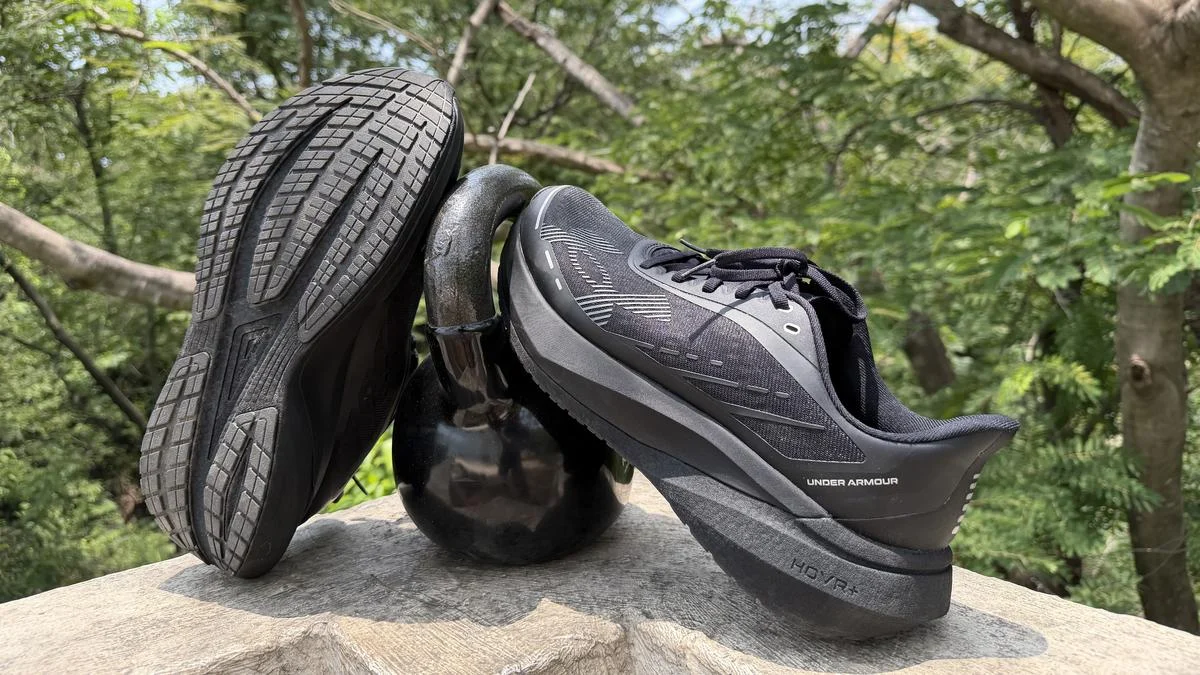
Under Armour, a brand consistently striving to carve a more prominent niche in the competitive running shoe landscape, has introduced its latest contender for the high-mileage, long-run segment: the Velociti Distance. While technically proficient and capable of delivering moments of brilliance, this shoe is characterized by a distinct tension between its well-executed features and a polarizing stability system that is poised to divide opinions sharply among runners. The Velociti Distance doesn’t shy away from making strong design choices, and it is this very dichotomy that defines the overall running experience it offers.
First Impressions: A Robust Build for the Long Haul
Upon first handling the Under Armour Velociti Distance, its substantial build is immediately apparent. Weighing in at 298 grams, it positions itself as a shoe that doesn’t pretend to be a featherweight in a market increasingly dominated by minimalist designs. This perceived heft is not without purpose; it’s a testament to the shoe’s commitment to absorbing the demands of high mileage. Beneath the foot lies a generous 38mm stack of Under Armour’s proprietary Hovr+ foam, a supercritical TPU material that forms the foundation for what is undeniably a shoe engineered for distance.
The upper of the Velociti Distance showcases a level of craftsmanship that is genuinely impressive. A breathable woven mesh material is strategically employed in the forefoot, ensuring ample airflow. This ventilation is a crucial element for comfort, particularly during extended runs when ambient temperatures can escalate. The design further incorporates a gusseted tongue that remains securely in place, a well-padded and structurally sound heel counter for enhanced support, and an overall lacing system that provides a confident and secure lockdown without inducing a feeling of restriction.
In contrast to the accommodating and relaxed fit often associated with brands like New Balance, the Velociti Distance leans heavily into a secure embrace. This feeling of being held is precisely what many runners seek on their longest efforts, providing a sense of stability and control. However, a minor detraction from an otherwise premium feel is the quality of the laces themselves, which appear somewhat lower in quality compared to the meticulously engineered components of the rest of the shoe. This is a subtle point, but one that discerning runners might notice.
Performance on the Pavement: Cushioning Meets Responsiveness
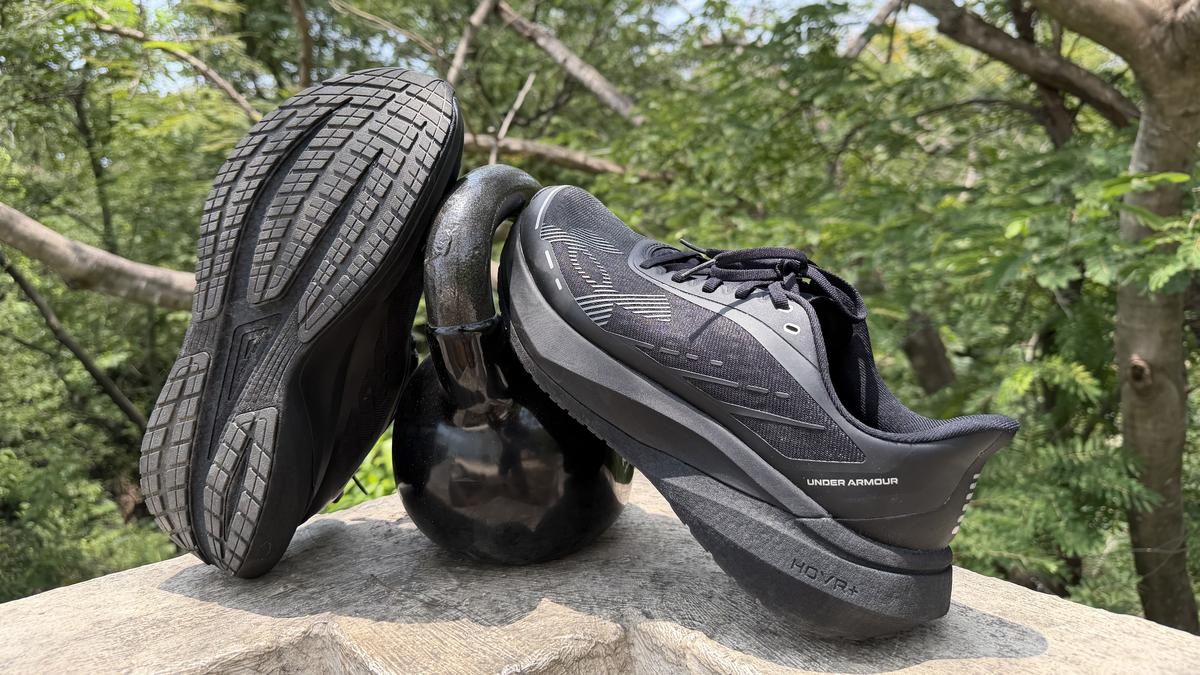
Stepping out for a run in the Velociti Distance immediately validates the promise of the Hovr+ foam. This supercritical TPU compound, a material also found in Under Armour’s elite racing shoes, delivers a ride that is both soft and remarkably firm. The cushioning excels at absorbing impact, effectively mitigating the repetitive stress of high mileage. Crucially, it also provides a sufficient energy return, ensuring that turnover feels lively and propulsive rather than sluggish or dead.
What elevates the Velociti Distance beyond the realm of a typical max-cushion shoe is its versatility across different running intensities. While explicitly marketed as a long-run trainer, the shoe demonstrates a commendable ability to perform well during tempo efforts and steady-state runs. This adaptability suggests that the Velociti Distance could serve as a more universal trainer in a runner’s weekly rotation, rather than being relegated solely to those dedicated Sunday long runs.
The outsole’s construction is another area where Under Armour has clearly prioritized durability and confidence. The brand has been generous with its rubber coverage, a decision that, while contributing to the shoe’s overall weight, translates directly into a shoe that confidently grips both gravel paths and paved roads. This robust outsole is highly likely to withstand significant mileage, offering a compelling advantage for runners who have experienced premature wear on less protected outsoles. The longevity of the outsole in relation to the midsole is a significant selling point for those who prioritize value and a shoe that can endure demanding training schedules.
The Stability Conundrum: A Feature That Divides
The true defining characteristic, and indeed the most polarizing aspect, of the Velociti Distance lies in its integrated stability rails. These are firm TPU inserts strategically positioned along both the lateral and medial sides of the midsole. The engineering intent behind these rails is to guide the foot through its natural gait cycle, thereby mitigating excessive motion within the plush Hovr+ foam. In theory, this represents a sensible engineering solution to enhance stability in a soft shoe. However, in practice, the implementation of this guidance system proves to be more assertive than the term "guide" might suggest.

For runners whose natural foot mechanics align harmoniously with the biomechanical prescription of these stability rails, the experience is likely to be one of enhanced support and controlled motion. The shoe will feel like an extension of their natural stride, providing a welcome sense of security. Conversely, for individuals whose natural gait deviates from the path dictated by these inserts, the Velociti Distance can impose a supinated landing that feels jarring and fundamentally unnatural. This is not a subtle correction; the shoe possesses a strong, almost opinionated, perspective on how a foot should move. When this engineered motion clashes with a runner’s innate biomechanics, runs that should feel effortless can transform into sources of discomfort, detracting from the restorative aspect of running.
This pronounced stability system places the Velociti Distance in a competitive landscape alongside many established daily trainers that hail from brands with longer pedigrees in the running shoe industry. Many of these competitors offer a more neutral and forgiving ride, free from the potentially divisive influence of such an assertive stability system. The choice between the Velociti Distance and its peers will hinge on a runner’s individual biomechanical needs and their willingness to adapt to the shoe’s guiding principles.
Implications for the Running Community
The Under Armour Velociti Distance presents a compelling case for runners seeking a high-mileage shoe that offers a blend of plush cushioning and a degree of responsiveness, enabling them to push beyond easy paces without the need to switch to a different shoe. Its robust construction, effective cushioning, and durable outsole are undeniable strengths that cater to the demands of serious training.
The critical consideration for any potential buyer rests on the shoe’s unique stability architecture. Runners with bio-mechanically neutral gaits, or those who exhibit mild pronation and find that the specific guidance of the rails aligns with their natural motion, are likely to discover a capable and genuinely rewarding training partner in the Velociti Distance. The shoe’s ability to provide a secure and controlled ride over long distances could prove to be a significant advantage.

However, for those runners who have historically favored neutral shoes and have found comfort in a naturally unrestricted range of foot motion, approaching the stability system of the Velociti Distance with a degree of caution is strongly advised. The potential for discomfort or an unnatural sensation during runs is a tangible risk if the shoe’s strong opinions about foot movement do not align with the runner’s own established biomechanics.
Ultimately, Under Armour has engineered a technically impressive shoe with the Velociti Distance. It is a product that showcases the brand’s growing capabilities in performance footwear. The crucial question that remains is whether its technically superior design is technically the right fit for an individual runner. This decision will be entirely predicated on whether the shoe’s assertive guidance system resonates with a runner’s personal biomechanical experience and preferences. The Velociti Distance is not a shoe that attempts to be all things to all runners; rather, it is a precisely engineered tool that demands a considered and informed choice from its user.
