

New Delhi, May 2026 – The Indian motorcycling landscape continues to undergo a seismic shift toward "premiumization," as evidenced by the latest sales data for the 350cc to 450cc segment. April 2026 has proven to be a landmark month for the industry, with total volumes reaching 1,19,022 units—a staggering 42.04% year-on-year (YoY) growth compared to the 83,793 units sold in April 2025.
While Royal Enfield remains the undisputed sovereign of this category, holding a lion’s share of the market, the narrative of the month is the aggressive expansion of challengers. Honda and Triumph have registered triple-digit and high-volume growth, respectively, signaling that the "retro-modern" and "lifestyle" motorcycling segments are no longer a one-horse race.
1. Main Facts: A Segment in Overdrive
The 350cc-450cc category has officially transitioned from a niche enthusiast market to the new "mass-premium" heart of the Indian two-wheeler industry. The growth is not merely annual; even on a month-on-month (MoM) basis, the segment showed resilience with a 0.81% increase over March 2026’s 1,18,060 units.
Key Market Highlights:
- Total Segment Sales: 1,19,022 units.
- Dominant Leader: Royal Enfield (83.54% market share).
- Fastest Gainer (Brand): Honda (118.71% YoY growth).
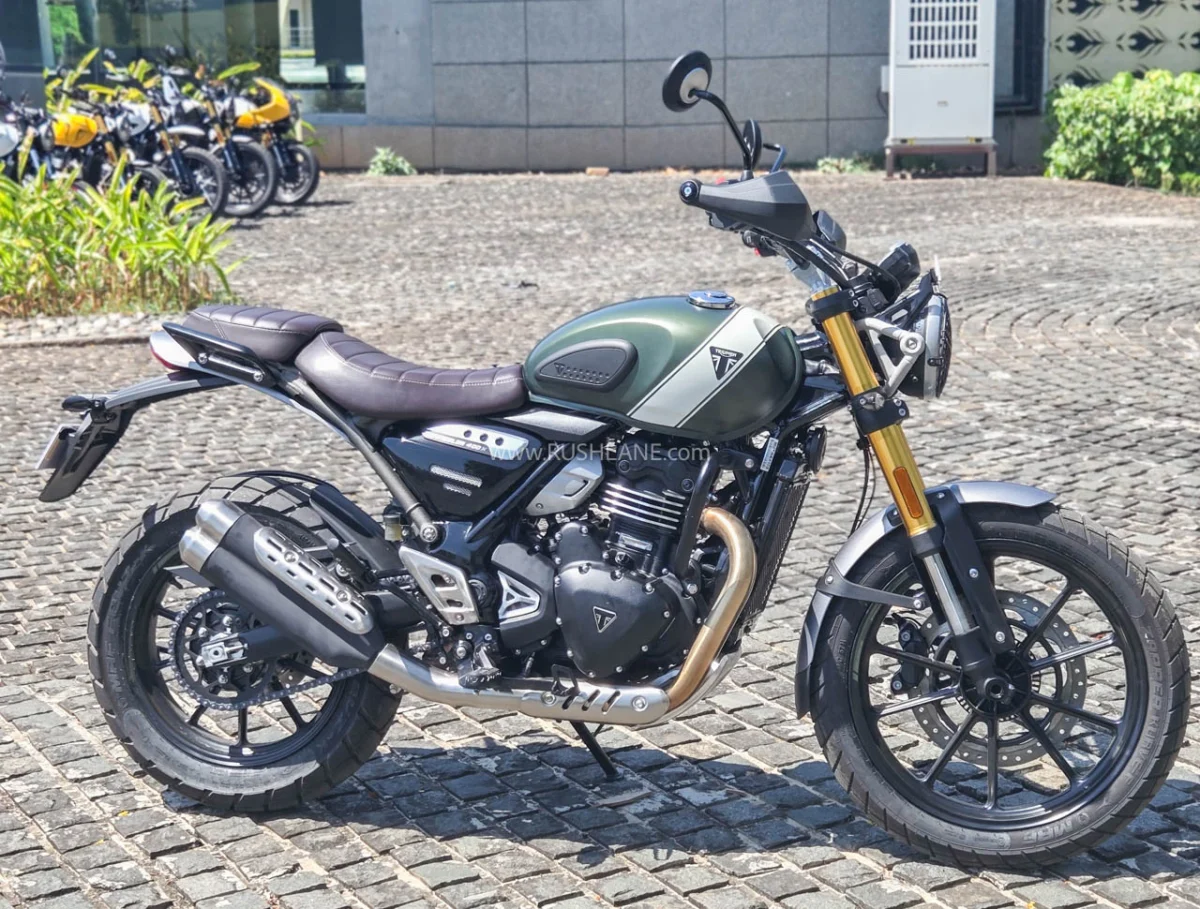
- Strategic Pivot: Triumph’s successful transition from the 400cc to the 350cc platform to challenge the Classic 350 directly.
- Premium Performance: A noticeable cooling of interest in high-strung performance machines like the KTM 390, contrasted by a surge in lifestyle and scrambler-style motorcycles.
2. Chronology of a Revolution: How the Market Shifted
The journey to April 2026’s record-breaking numbers began approximately 24 months ago when global manufacturers realized that the 350cc-450cc range was the "sweet spot" for the Indian middle class.
In early 2025, the market was largely defined by the Royal Enfield Classic and the Himalayan. However, by late 2025, the introduction of the Triumph 350 range and the expansion of Honda’s BigWing network began to eat into the fringes of the segment.

By January 2026, the "lifestyle" movement reached a fever pitch. Commuters who previously looked at 150cc-200cc motorcycles began opting for the status and torque of the 350cc class, aided by easy financing and a culture of weekend touring. This led to the explosive YoY growth seen this April, where the segment grew by nearly 35,000 units in just twelve months.
3. Supporting Data: The OEM Breakdown
To understand the dynamics of the market, one must look at the performance of the individual players who are shaping this 1.2-lakh-unit-per-month segment.
The Royal Enfield Moat
Royal Enfield’s performance in April 2026 reinforces its status as a cultural phenomenon rather than just a motorcycle brand. With 99,429 units sold, the company grew its volume by 38.72% YoY.
- Classic 350: Remains the "Gold Standard" with 37,967 units (41.66% growth). It alone accounts for nearly 32% of the entire segment.
- Bullet 350: The legendary moniker saw a 51.86% jump to 25,040 units, proving that heritage remains a primary selling point.
- Hunter 350: Targeting younger, urban riders, the Hunter clocked 21,947 units.
- Guerrilla 450: The standout performer in terms of growth percentage, the Guerrilla surged by 168.91% to 2,474 units. This indicates a growing appetite for RE’s more modern, liquid-cooled Sherpa engine platform.
Honda’s "BigWing" Offensive
Honda has finally found its rhythm in the mid-capacity segment. After a slow start years ago, the Japanese giant’s focus on the "CB" brand is paying dividends.
- CB350 & H’ness CB350: Combined, these models moved over 6,000 units. The H’ness CB350, in particular, grew by 129.55% YoY. Analysts attribute this to Honda’s aggressive expansion of its premium BigWing dealerships into Tier-II and Tier-III cities.
The Triumph-Bajaj Synergy
The partnership between Bajaj and Triumph has fundamentally altered the segment’s hierarchy.

- Triumph 350: This newly introduced range recorded 3,965 units in April.
- The 400cc Transition: Interestingly, the Triumph 400 saw a 96.82% decline to just 110 units. This is not a failure of the product but a calculated strategic shift. As Triumph transitioned its volume-driving focus to the 350cc range to compete more aggressively on price and fuel efficiency, the 400cc models have moved into a more exclusive, niche position.
The Challenger Pack: Harley, Jawa, and Aprilia
- Harley-Davidson X440: The Hero-Harley collaboration continues to thrive, with 1,505 units sold (up 129.07%). The X440 has successfully brought the Harley-Davidson brand to a price point accessible to the Indian masses.
- Classic Legends (Jawa/Yezdi/BSA): This group saw a robust 82.48% growth, reaching 4,520 units. The revival of the BSA brand and updates to the Jawa 350 line have helped the company regain lost ground.
- Aprilia: In the premium performance sub-segment, the RS457 recorded 233 units. While small in volume, it represents a high-margin, aspirational category for the brand.
4. Official Perspectives and Market Sentiment
While official statements from the "Big Three" (Royal Enfield, Honda, and Bajaj) emphasize "customer-centric innovation," industry analysts provide a more nuanced view of these figures.
Industry Analyst View:
"The April 2026 data suggests that the 350cc motorcycle has become the new ‘commuter’ for the aspirational Indian," says Vikram Shrivastava, a senior automotive consultant. "We are seeing a decline in the 390cc-400cc high-performance sportbikes, like the KTM 390 which fell 56.82%. This tells us that the Indian buyer is currently prioritizing comfort, low-end torque, and ‘retro’ aesthetics over raw horsepower and track-focused dynamics."
The "Bajaj Strategy":
Internal sources at Bajaj Auto suggest that the combined performance of Triumph, Pulsar, and Dominar (totaling over 7,200 units) is part of a "multi-pronged attack" to chip away at Royal Enfield’s dominance. By offering the Pulsar 400 for value seekers and the Triumph 350 for brand seekers, Bajaj is attempting to surround the market leader from both ends.
5. Implications: What Lies Ahead for 2027?
The explosive 42% YoY growth in the 350cc-450cc segment carries several long-term implications for the Indian automotive industry.
The Death of the "Executive Commuter"?
As the price gap between high-end 150cc bikes and entry-level 350cc bikes narrows due to competitive pricing from brands like Triumph and Honda, the traditional 150cc-250cc "executive" segment may face stagnation. Riders are increasingly willing to pay a premium of ₹30,000–₹50,000 for the added prestige and power of a 350cc machine.

The Infrastructure Tailwinds
The rapid expansion of India’s national highway network is a direct contributor to these sales figures. With more "Expressways" banning low-capacity two-wheelers, the 350cc+ segment is becoming the minimum entry requirement for enthusiasts who wish to engage in long-distance touring.
Future Product Wars
With the Guerrilla 450 and Himalayan showing strong growth, Royal Enfield is successfully migrating its customer base from air-cooled to liquid-cooled engines. However, the triple-digit growth of Honda and Harley-Davidson suggests that brand loyalty is no longer absolute. In 2027, we can expect:
- More Scrambler Variants: Following the success of the Triumph Scrambler 400X and RE Guerrilla.
- Feature Parity: Retro bikes will likely start featuring tech usually reserved for sportbikes, such as cornering ABS and traction control, to differentiate themselves in a crowded market.
- Electric Transition? While the 350cc-450cc segment is currently dominated by Internal Combustion Engines (ICE), the high margins in this category may tempt players like Ultraviolette or even Royal Enfield to introduce "electric equivalents" by late 2027.
Conclusion
April 2026 has set a high bar for the Indian motorcycling industry. With 1.19 lakh units sold in a single month, the 350cc-450cc segment is no longer a "luxury"—it is the new heartbeat of Indian motorcycling. While Royal Enfield’s throne is secure for now with an 83% market share, the rapid rise of Honda and the strategic maneuvers of the Bajaj-Triumph alliance ensure that the battle for the Indian road is only just beginning. For the Indian consumer, this means more choice, better technology, and more competitive pricing in the years to come.
