

New Delhi, May 27, 2026 – Wednesday, May 27, 2026, marked a significant day in India’s rapidly evolving technology landscape, with a flurry of major announcements spanning consumer electronics, smart devices, educational initiatives, and creator-focused platforms. From Samsung’s ambitious expansion of AI-powered televisions to Google’s groundbreaking educational partnership and Philips’ immersive audio offerings, the day showcased India’s pivotal role as both a market and a hub for technological innovation. This comprehensive roundup delves into the key features, strategic implications, and market impact of these pivotal launches.
The announcements underscore a clear trend: the increasing integration of artificial intelligence into everyday devices, a growing demand for immersive home entertainment, and a strategic focus on cultivating a skilled workforce capable of driving the next wave of digital transformation. Industry analysts are already hailing May 27th as a microcosm of India’s burgeoning tech ecosystem, where global giants and local innovators converge to push the boundaries of what’s possible.
Samsung Unveils 2026 Vision AI TV Lineup: A New Era of Intelligent Entertainment
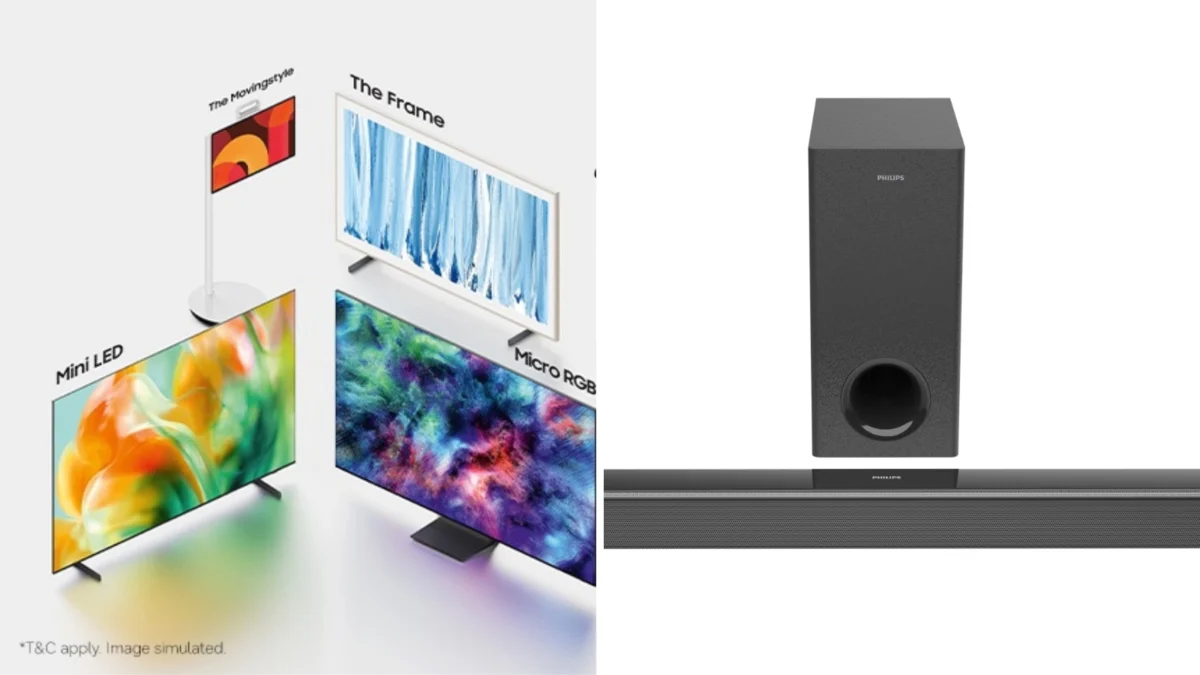
Leading the charge, Samsung officially launched its 2026 Vision AI TV lineup in India, introducing an astounding 72 new models. This extensive range spans premium categories including Micro RGB, OLED, Neo QLED, The Frame, Mini LED, and UHD, signaling Samsung’s commitment to catering to every segment of the discerning Indian consumer base. The core of this new portfolio is the widespread integration of artificial intelligence, with the rollout of the Vision AI Companion (VAC) platform across all 4K-and-above models.
Main Facts & Supporting Data:
The Vision AI Companion (VAC) platform represents a significant leap forward in smart TV technology. It seamlessly integrates advanced AI services such as Bixby, Perplexity, and Microsoft Copilot, transforming the television from a passive viewing device into an interactive, intelligent hub. Key AI-powered features include:
- AI Upscaling Pro: Utilizes deep learning algorithms to enhance lower-resolution content to near-4K or 8K quality, ensuring stunning clarity regardless of the source.
- Colour Booster Pro: Dynamically analyzes and optimizes colour saturation and vibrancy, delivering a more lifelike and engaging visual experience.
- AI Soccer Mode: Specifically designed for sports enthusiasts, this mode automatically detects and optimizes picture and sound settings during live matches, enhancing the stadium experience right in the living room.
- AI Sound Controller Pro: Personalizes audio experiences by adapting sound output to the room’s acoustics and content type, ensuring crystal-clear dialogue and immersive soundscapes.
A significant technological highlight is Samsung’s debut of its new Micro RGB technology in India, featured in the R95H and R85H series. Available in sizes ranging from 55 inches to a colossal 115 inches, Micro RGB promises unprecedented colour precision through individually controlled red, green, and blue micro LEDs. This innovative display technology, combined with advanced glare reduction and AI-based picture optimization, is set to redefine visual benchmarks for premium television viewing.
The 2026 lineup also expands Samsung’s critically acclaimed OLED portfolio with the S95H, S90H, and S85H models, offering superior contrast and true blacks. Upgraded Neo QLED and Mini LED televisions continue to push boundaries in brightness and local dimming zones, while the popular The Frame series returns, offering art-focused users access to over 3,000 curated artworks, seamlessly blending technology with aesthetics.
For the burgeoning gaming community, select OLED models now boast gaming-focused features such as Motion Xcelerator 165Hz, AMD FreeSync Premium Pro, and NVIDIA G-SYNC support, ensuring ultra-smooth, tear-free gameplay. Neo QLED and Mini LED TVs also support high refresh rates of up to 144Hz on certain variants, catering to competitive gamers.
Official Responses & Implications:
"India is a strategic market for Samsung, and our 2026 Vision AI TV lineup reflects our deep understanding of the evolving consumer demands here," stated a Samsung India spokesperson. "By integrating cutting-edge AI across our diverse portfolio, we are not just offering televisions; we are delivering intelligent entertainment experiences that adapt to our users’ lifestyles. The introduction of Micro RGB technology further cements our leadership in display innovation, promising a visual fidelity previously unimaginable."
The launch signifies Samsung’s aggressive strategy to maintain its dominance in India’s competitive smart TV market, leveraging AI as a key differentiator. The wide price range, starting from Rs 36,990 for UHD TVs to Rs 1,24,990 for Micro RGB models, ensures accessibility across various consumer segments, further solidifying Samsung’s market penetration. The new TVs are immediately available across retail stores, Samsung.com, and other online channels.
TVP Technology Unveils Six New Philips Soundbars: Elevating Home Audio to Cinematic Heights
In the realm of home entertainment audio, TVP Technology India Pvt. Ltd., the licensee for Philips Audio, announced the launch of six new Philips soundbars in India. This expansion aims to significantly bolster its home audio portfolio, offering consumers a range of options to create immersive cinematic experiences within their homes. The new lineup includes both 2.1 and 5.1 channel configurations, designed to meet diverse user preferences and room sizes.
Main Facts & Supporting Data:
The new Philips soundbars deliver audio output ranging from 100W to a powerful 600W. Connectivity is comprehensive, featuring Bluetooth for wireless streaming, USB for media playback, HDMI (ARC) for seamless TV integration, optical, and AUX inputs, ensuring compatibility with a wide array of devices.
The 2.1 channel category introduces five models, each equipped with a dedicated subwoofer for impactful bass response and enhanced audio clarity:
- TAB4301/94 Soundbar: 100W output with a 5.5-inch subwoofer, ideal for smaller spaces.
- TAB5321/94 Soundbar: 200W output, powered by a 5.5-inch subwoofer, and supporting Dolby Audio for richer sound.
- TAB4361/94 Soundbar: 160W output with a 5.5-inch subwoofer, designed for impactful bass and greater audio clarity.
- TAB4230/94 Soundbar: A robust 300W output with a 6-inch subwoofer and Dolby Audio, offering a more dynamic soundstage.
- TAB5341/94 Soundbar: The flagship 2.1 model, delivering 400W output through an 8-inch subwoofer with Dolby Audio support, promising a truly powerful audio experience.
At the pinnacle of the launch is the Philips TAB5651/94, a sophisticated 5.1-channel home theatre soundbar system. This powerhouse delivers up to 600W of output, paired with an 8-inch wired subwoofer and dedicated satellite speakers, creating a true surround sound performance. With Dolby Digital decoding and multiple connectivity options, it’s engineered to transform any living room into a private cinema.
Official Responses & Implications:
"The Indian consumer’s appetite for premium home entertainment continues to grow, and immersive audio is a critical component of that experience," remarked a TVP Technology India spokesperson. "Our new Philips soundbar lineup offers a perfect blend of power, precision, and performance across various price points. We are committed to bringing world-class audio solutions to Indian homes, ensuring every movie, game, or music session is a truly engaging one."
Pricing for the TAB5321/94, TAB4230/94, and TAB5341/94 has been announced at Rs 17,999, Rs 19,999, and Rs 29,999, respectively, positioning them competitively in the mid-to-high range segment. While prices for other models are yet to be disclosed, the lineup is available through Flipkart and select offline retail stores, ensuring wide accessibility for consumers nationwide. This launch reinforces Philips’ commitment to capturing a larger share of India’s booming home audio market, driven by increased content consumption and demand for high-quality sound.
Google and Polaris School of Technology Launch India’s First Google-Certified Cloud & Big Data Program
In a landmark development for technical education in India, Google has partnered with the Polaris School of Technology, Bengaluru, to introduce what is being hailed as India’s first Google-certified program focused on cloud and big data engineering. This strategic collaboration is designed to bridge the chasm between traditional computer science education and the rapidly evolving demands of the global technology industry.
Main Facts & Supporting Data:
The four-year computer science program at Polaris will now integrate Google’s robust cloud infrastructure, advanced AI ecosystem, and industry-recognized certifications directly into its curriculum. This initiative aims to equip students with highly sought-after skills in cloud computing, data analytics, and artificial intelligence, addressing a critical talent gap in the tech sector.
Key components of this pioneering program include:
- Google-Certified Specialization: Students will earn a Google-certified specialization in Cloud and Big Data, with curriculum inputs meticulously aligned with Google’s cloud and AI ecosystem standards.
- Industry-Led Learning: Academic modules and semester-long projects will be co-led by experienced Google engineers and partner faculty, providing students with real-world insights and mentorship.
- Access to Cutting-Edge Tools: Students will gain unparalleled access to Google Cloud and Gemini AI, Google’s advanced AI model, enabling hands-on experience with enterprise-grade platforms.
- Valuable Certifications: The program includes pathways to Google certifications valued up to Rs 10 lakh, significantly enhancing students’ employability and professional credentials.
- Startup Incubation Support: Polaris will facilitate up to Rs 25 lakh worth of Google Cloud credits for selected student-led startups and projects, fostering innovation and entrepreneurship by allowing students to build and scale applications on robust cloud infrastructure.
Beyond classroom learning, students will receive extensive exposure to distributed systems, AI-native workflows, and large-scale data environments. They will also actively participate in Google’s vibrant developer ecosystem through technical events, workshops, and conferences, further enriching their practical experience and networking opportunities.
Official Responses & Implications:
A Google India spokesperson commented, "The digital transformation journey of India hinges on a skilled workforce. Our partnership with Polaris is a testament to Google’s commitment to fostering talent and innovation in the country. This program is designed to create a pipeline of cloud and big data experts who are not just theoretically sound but are also practically proficient and ready for the demands of the global tech industry."
The Director of Polaris School of Technology added, "This collaboration with Google marks a pivotal moment for technical education in India. We are moving beyond conventional learning to provide our students with a curriculum that is dynamic, industry-relevant, and globally recognized. By immersing them in Google’s ecosystem, we are empowering them to become the architects of tomorrow’s digital world."
This initiative holds profound implications for India’s education sector and its digital economy. It will significantly enhance the quality of engineering graduates, making them job-ready for high-demand roles in cloud architecture, data science, and AI development. Furthermore, by supporting student startups, the program is poised to ignite a new wave of innovation, potentially leading to the creation of indigenous tech solutions and companies.
Other Notable Innovations Across the Spectrum
Beyond these major announcements, May 27, 2026, saw several other significant product launches and initiatives, signaling a broader push for technological advancement across diverse sectors.
Sony’s BRAVIA 3II Television Lineup: Cognitive Intelligence Elevated
Sony officially unveiled its new BRAVIA 3II television lineup, an evolution of its acclaimed BRAVIA series. Building on its legacy of superior picture and sound quality, the BRAVIA 3II models integrate an enhanced Cognitive Processor XR, which now boasts even more sophisticated scene analysis and content optimization. These next-generation TVs feature advanced QD-OLED and Mini LED panels, offering unparalleled brightness, contrast, and colour accuracy. New additions include an AI-driven ambient optimization feature that intelligently adjusts picture and sound settings based on the room’s lighting and acoustics, providing a truly personalized viewing experience. Furthermore, the BRAVIA 3II series introduces deeper smart home integration, allowing seamless control of other IoT devices, and an upgraded Acoustic Surface Audio+ technology for a more immersive sound directly from the screen. Sony aims to solidify its position in the premium TV segment, targeting audiophiles and videophiles who demand the absolute best in home entertainment.
Amkette’s Mozen Wireless Chargers: Powering the Future, Wire-Free
Amkette, a well-known Indian accessories brand, introduced its new range of Mozen wireless chargers. These innovative charging solutions are designed to cater to the growing ecosystem of Qi-enabled devices, offering faster, more efficient, and multi-device charging capabilities. The Mozen lineup includes sleek desktop pads, versatile stands, and compact travel chargers, all featuring advanced foreign object detection and temperature control for enhanced safety. With support for up to 15W fast wireless charging and the ability to charge multiple devices simultaneously (e.g., smartphone, smartwatch, and earbuds), Amkette is addressing the modern consumer’s need for convenience and clutter-free charging. The brand emphasized the use of eco-friendly materials and minimalist designs, aligning with contemporary consumer preferences for sustainable and aesthetically pleasing tech accessories.
OPPO’s Filmmaker Accelerator Programme: Nurturing Creative Talent
OPPO announced its new filmmaker accelerator programme, a strategic initiative aimed at empowering aspiring and independent filmmakers in India. Recognizing the vibrant creative talent within the country, OPPO’s programme will provide a comprehensive platform offering mentorship from acclaimed industry veterans, access to cutting-edge filmmaking equipment (including OPPO’s own advanced smartphone camera technologies), and crucial seed funding for selected projects. The accelerator will focus on short films, documentaries, and innovative digital content, encouraging creators to explore new narratives and visual styles. OPPO’s vision is to foster a new generation of storytellers, providing them with the resources and exposure needed to bring their unique visions to life and contribute to India’s burgeoning digital entertainment landscape.
Conclusion: A Glimpse into India’s Tech Trajectory
Wednesday, May 27, 2026, will be remembered as a day that vividly illustrated India’s dynamic and forward-looking approach to technology. The collective announcements from Samsung, TVP Technology (Philips Audio), Google, Polaris School of Technology, Sony, Amkette, and OPPO paint a clear picture of a market that is not just adopting global innovations but is actively shaping them.
From the intelligence embedded in our living room screens and the immersive soundscapes of our homes to the foundational education driving future tech leaders and the platforms empowering creative voices, the technological advancements unveiled today signify more than just product launches. They represent strategic investments in India’s digital future, promising enhanced consumer experiences, a more skilled workforce, and a vibrant ecosystem of innovation. As India continues its trajectory as a global tech powerhouse, days like these serve as powerful indicators of the nation’s immense potential and unwavering commitment to progress.
