

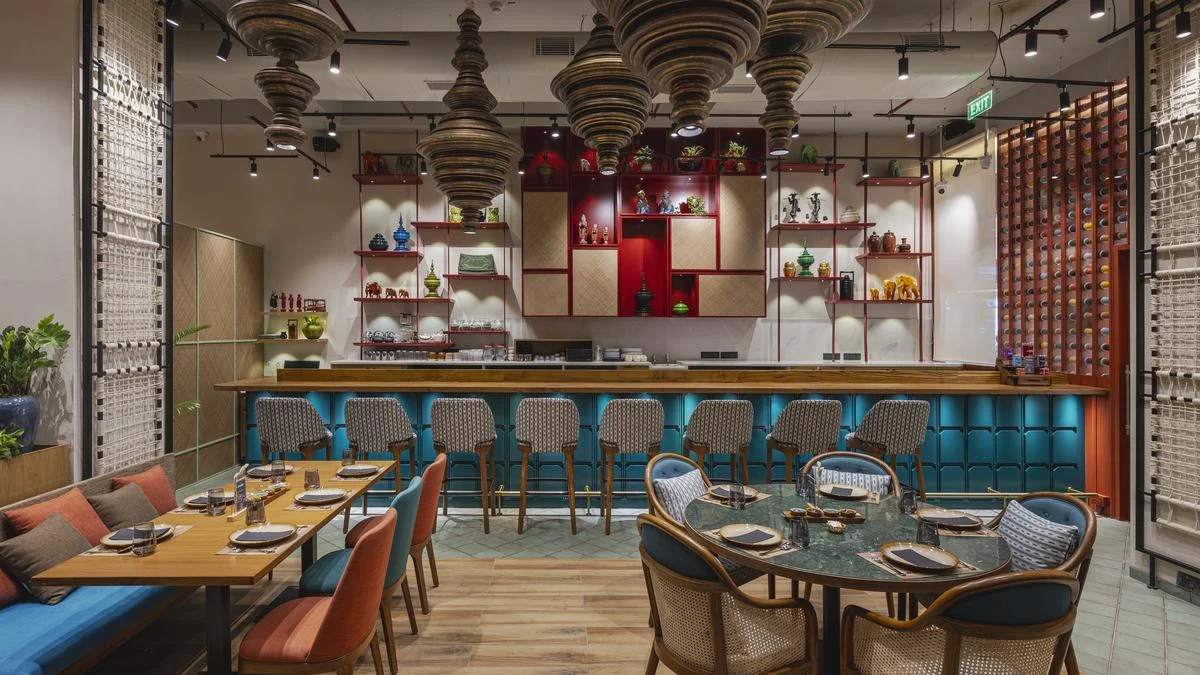
Ahmedabad, a city long celebrated for its rich heritage and a spirit that has traditionally championed temperance, is undergoing a profound gastronomic metamorphosis. Far from being a mere stopover on the road to Gujarat’s more widely recognized tourist destinations, the city is emerging as a vibrant weekend destination, attracting connoisseurs of high-end, zero-proof gastronomy. This shift is characterized by an audacious ambition in dining, a meticulous focus on culinary artistry, and an unparalleled scale of dining experiences that rival those found in global metropolises.
The Dawn of Ambitious Gastronomy
At the forefront of this culinary revolution is Sora, an Asian-Peruvian restaurant that immediately signals Ahmedabad’s evolving gastronomic landscape. Spanning an impressive 11,000 square feet and adorned with Art Deco flourishes, Sora transcends the notion of a neighborhood eatery, exuding an aura of sophistication that evokes the grandeur of establishments in Dubai. This is not just a restaurant; it’s a statement.
The absence of alcohol, once perceived as a constraint in the hospitality industry, has become a potent catalyst for innovation in Ahmedabad. Restaurateurs are channeling their energy into creating unparalleled culinary theater and meticulously crafted dining experiences. Sora is a prime example of this new wave, demonstrating that a city where the "spirit" has always been strictly zero-proof can foster a vibrant, high-end dining scene. This is a city that has outgrown its traditional comfort zones and is now charting a course towards specialized, sophisticated gastronomy, attracting discerning diners and establishing itself as a destination in its own right.

Beyond the Thali: A New Era of Culinary Specialization
For generations, Ahmedabad’s culinary identity has been deeply intertwined with its iconic street food and the hearty, abundant Gujarati thali. However, the city is now witnessing a dynamic evolution, transforming into a hub for innovative dry gastronomy. Without the revenue streams traditionally buoyed by alcohol sales, restaurateurs are compelled to elevate the quality of their food and the immersive nature of the dining experience. This has led to a deliberate departure from the "multi-cuisine" model, giving way to a burgeoning trend of micro-specialization. There’s a palpable and growing appreciation for the provenance of ingredients and the precision of culinary techniques.
Sora, for instance, delves into the intricate world of Nikkei cuisine, a sophisticated fusion of Japanese culinary techniques and Peruvian ingredients. The Yuzu Panca Soup, a testament to this culinary exploration, is brewed tableside using a siphon – a two-glass chamber device commonly found in specialty coffee bars. This theatrical presentation involves vegetable stock ascending to meet marinated vegetables before filtering back down into a crystal-clear broth, finished with a bright, invigorating burst of yuzu. The result is a soup that is not merely performative but thoughtfully constructed, offering a clean, spice-flecked flavor profile that speaks volumes about the restaurant’s dedication to craft.
Just a stone’s throw away, on what is now being dubbed "Billionaire Street," stands Cacaoté. This sprawling 15,000-square-foot chocolate brasserie is a veritable Willy Wonka Chocolate Factory brought to life in Ahmedabad. The establishment sources premium cacao from Central America, South America, and Africa, which is then expertly roasted and conched in France. Subsequently, these exquisite beans are transformed into an array of delectable creations within the Ahmedabad patisserie, including intricate bonbons, decadent cakes, delicate petite gâteaux, and artisanal chocolate tablets.

The city’s burgeoning appetite for these immersive, high-concept dining establishments has also paved the way for other notable ventures. Bottega, known for its authentic Malvani cuisine, and Burma Burma, which has successfully introduced the nuanced flavors of Kayan and Shan cuisines to the city, are further testament to this trend. The latest sensation is Komo by Kaffa, a monumental 23,000-square-foot café boasting vaulted ceilings, sweeping pillars, and atmospheric mood lighting. The sheer scale and polish of this establishment are a far cry from what one typically associates with neighborhood cafés, signaling a significant shift in the city’s hospitality standards.
The Business of Grandeur: Space as a Strategic Asset
This pronounced trend towards massive, high-design dining spaces is not merely an aesthetic choice; it is underpinned by a unique and highly effective business model. According to Sujit Mehta, co-founder of We Serve, a prominent restaurant consultancy firm based in Ahmedabad, "The biggest draw for restaurateurs here is the luxury of space." While a substantial footprint of 18,000 to 45,000 square feet would be commercially unviable in cities like Mumbai or Bengaluru, it allows for a multi-pronged revenue stream in Ahmedabad. These large-scale establishments often incorporate a restaurant, a banqueting hall, and a catering unit all under one roof.
"The dynamics work because each segment has a different season," explains Sujit. "When the restaurant experiences a lull, the catering and banqueting operations seamlessly pick up the slack." While the initial investment for establishing these high-spec spaces is significant, typically ranging from ₹5-7 crore, the returns are remarkably swift. "Most restaurateurs see a full return on investment within 1.5 to 2 years," Mehta adds. This rapid turnaround is facilitated by an average spend of ₹1,200-1,500 per person and the security offered by nine-year land leases. These long-term leases shield owners from the financial volatility associated with frequent lease renewals, providing a stable foundation for business growth.

A Palate for Precision: The Rise of Technique and Provenance
While long leases and expansive square footage provide the structural backbone for Ahmedabad’s burgeoning dining scene, the acceleration of this growth is also deeply rooted in a fundamental shift in domestic habits. Mihir Shah, owner of Bottega, observes, "In the aftermath of the pandemic, we witnessed a surge in home cooking. The easy availability of exotic ingredients – from aged cheeses and mushrooms to specialty flours, nori sheets, and even cactus – empowered individuals to engage with global cuisines in their own kitchens." This newfound culinary exploration at home created a natural imperative for restaurants to adapt. "Restaurants had no choice but to adapt to these changing tastes to keep pace with their guests," Shah notes.
Gujaratis, known for their penchant for travel and their inherent curiosity for new culinary experiences, now bring these elevated expectations back home. Ankit Gupta, co-founder of the Burma Burma chain, reflects on the significant transformation: "When we opened two years ago, specialized dining concepts were rare. Today, we are witnessing an influx of niche formats, from Korean eateries to dedicated dessert cafés. New dining hubs like Sarkhej-Gandhinagar Highway and Prahlad Nagar have also fueled this change." This receptivity has positioned Ahmedabad as a strategic launchpad for culinary innovation, with Ankit often testing new menus in the city before national rollouts.
Food consultant and cookbook author Kamini Patel identifies social media aesthetics and evolving domestic habits as key drivers behind this paradigm shift. As family units become smaller and interest in traditional home cooking wanes, dining out has transitioned from an occasional indulgence to a fundamental lifestyle choice. "The audience is ready to spend on quality," Kamini emphasizes, pointing to the city’s youth as the primary engine of this transformation. Armed with higher disposable incomes and a discernible preference for elevated cuisine, this younger demographic is consistently opting for premium dining experiences over conventional meals.

Mocktails 2.0: The Art of Zero-Proof Elixirs
In a state that eschews alcohol, the zero-proof beverage scene is experiencing a remarkable efflorescence. Mixologists are moving beyond simple sugary concoctions, embracing sophisticated botanicals, smoked syrups, and clarified juices to craft complex and nuanced mocktails. These beverages are presented with the same theatrical flair as their alcoholic counterparts, employing techniques such as dry ice, artisanal ice blocks, and house-made bitters.
At Sora, the classic Thai dessert mango sticky rice is reimagined in a glass. A base of mango and pandan is clarified with coconut milk and then crowned with a warm rice foam dispensed from an iSi siphon. This creates a delightful interplay of textures and temperatures – the coolness of the clarified base meeting the comforting warmth of the creamy rice foam. The popular Peruvian drink Chicha Morada is served sangria-style in a wine glass, enveloped in a dramatic cloud of dry ice. "Making non-alcoholic drinks is far more difficult than people realize," admits Sanyog Nikharge, head mixologist at Sora. "I personally enjoy a spirit-forward drink, so I wanted to create the same complexity, acidity, and mouthfeel minus the ethanol."
For Sanyog, the philosophy is to accord the same level of respect to a zero-proof creation as one would to a top-shelf spirit. The presentation is meticulously designed to mirror the ritual of traditional drinking. One of his signature creations, "Shrooms," is an inventive interpretation of the Old Fashioned. It substitutes the characteristic burn of whiskey with an apple and shiitake mushroom reduction, offering a deep, meaty umami bite balanced by soy and finished with the sharp tang of fermented Umeboshi (pickled Japanese plum).

At Burma Burma, the culinary rigor extends to their zero-proof beverage program, where the only thing absent is the hangover. The bar employs advanced techniques such as agar-agar clarified gins and sous-vide herb extractions, alongside edible leathers and activated charcoal. Paired with a dice-based drinking game, these creations offer a playful yet sophisticated reminder that zero-proof does not equate to a lack of character or excitement.
Design in a City of Architects: Crafting Immersive Ambiance
Ahmedabad, renowned as a city of architects, is witnessing a harmonious integration of its built environment with its burgeoning culinary scene. Many of the new restaurants are housed in architecturally significant spaces, ranging from striking brutalist structures and meticulously restored havelis to minimalist interiors. This deliberate design approach ensures that the ambiance is as captivating as the menu, creating a holistic and memorable dining experience. The city’s dining aesthetic, once deeply rooted in traditional settings, is now embracing a modern and often futuristic sensibility.
Cacaoté, for instance, is a prime example of this global design influence. Designed by the Australian firm Storm Worldwide with interiors by London’s LEQB, the space is a literal immersion into the world of cacao. A dramatic ceiling artfully mimics the flow of molten chocolate, while the display units are sculpted to echo the organic curves of cacao pods. Sora, in contrast, embraces the elegance of Art Deco. Tufted-leather booths, fluted pillars, and gold-mesh screens serve as translucent dividers, creating a sense of spaciousness without compromising intimacy. The lighting is equally theatrical, with clusters of cloud-like pendants suspended from slender cables, all contributing to a space meticulously designed for the theater of dining.

Sujit Mehta notes a burgeoning preference for open-air settings and outdoor dining experiences. Departing from the enclosed, air-conditioned spaces of the past, newer establishments are prioritizing expansive, airy layouts that artfully blur the boundaries between the interior and the external environment. Mehta is currently collaborating with renowned design heavyweights, including Mumbai-based Sumessh Menon and Tanya Chutani of Delhi’s Pantone Collective, who are infusing Ahmedabad’s dining spaces with a more global and luxurious visual language.
The anticipation surrounding the 2030 Commonwealth Games and a potential bid for the 2036 Olympics is already a significant catalyst for infrastructure and hospitality development in the city. In the more immediate future, Ankit Gupta predicts that the growth of GIFT City and the impending arrival of the Bullet Train will propel Ahmedabad’s dining scene to rival the scale and sophistication of Mumbai and Bengaluru. "The city is ready for more single-cuisine restaurants," agrees Sujit Mehta. "The potential here is still largely unrealized."
While the city embraces these new gastronomic frontiers, the Gujarati thali remains its undeniable culinary soul. For those seeking to experience this traditional cornerstone of Ahmedabad’s cuisine, a curated selection of renowned thali establishments offers an unforgettable journey through local flavors:
- Agashiye, The House of MG: Priced at ₹1,695, offering a regal dining experience.
- Vishalla, Opp. APMC Market: Available for ₹848, a beloved classic known for its authentic ambiance.
- Pakwan, Sarkhej – Gandhinagar Highway: At ₹400, a popular choice for its value and taste.
- Raj Thaal, Bopal: Priced at ₹450, offering a diverse spread.
- Rajwadu, Malav Talav: Available for ₹1,050, known for its traditional setting and extensive menu.
- Gordhan Thal, Sarkhej – Gandhinagar Hwy: At ₹425, a well-regarded option for its quality.
- Gopi Dining Hall, Prahlad Nagar and Elis Bridge: Priced at ₹425, offering a consistent and satisfying experience.
- Chandravilas, Gandhi Rd, Old City: At ₹350, a historic eatery in the heart of the old city.
- Ananda, Sindhu Bhavan Road: Available for ₹1,155, representing a more premium thali experience.
