

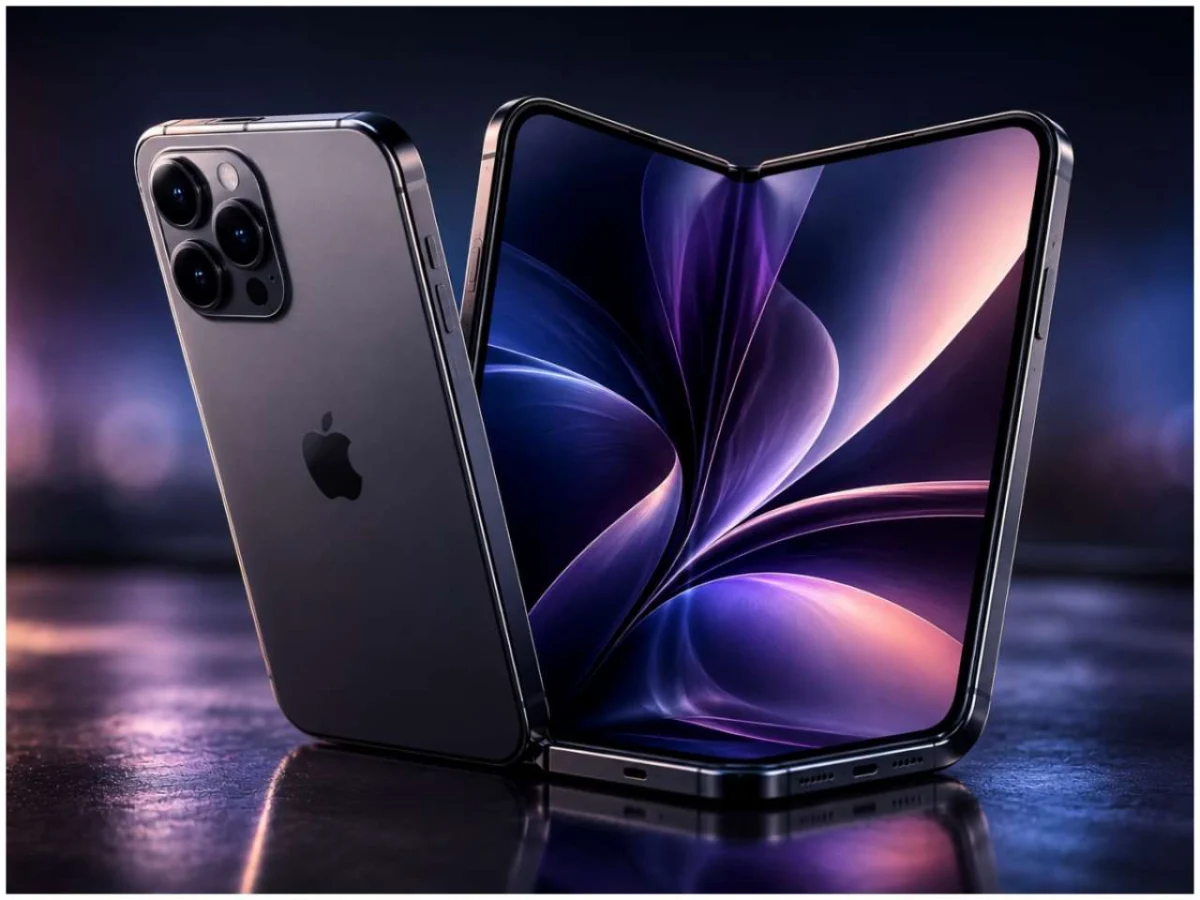
CUPERTINO, CA – The long-whispered notion of an Apple foldable iPhone has roared back into the global spotlight, fueled by a torrent of intriguing clues unearthed within the first developer beta of iOS 27. As developers meticulously dissect the preliminary software, cryptic code references and interface enhancements have ignited fervent speculation that Apple’s highly anticipated entry into the foldable smartphone market could be closer than ever, potentially arriving as soon as later this year. This latest development marks a significant acceleration in the narrative surrounding Apple’s foldable ambitions, moving beyond mere patents and analyst predictions to tangible software indicators.
For years, the tech world has debated if and when Apple would embrace the foldable form factor that has been pioneered by competitors like Samsung and Huawei. Now, the discovery of specific software mechanisms and hardware support hints within iOS 27 is being widely interpreted as a definitive signal that Cupertino is not only working on such a device but is actively laying the foundational software groundwork for its debut.
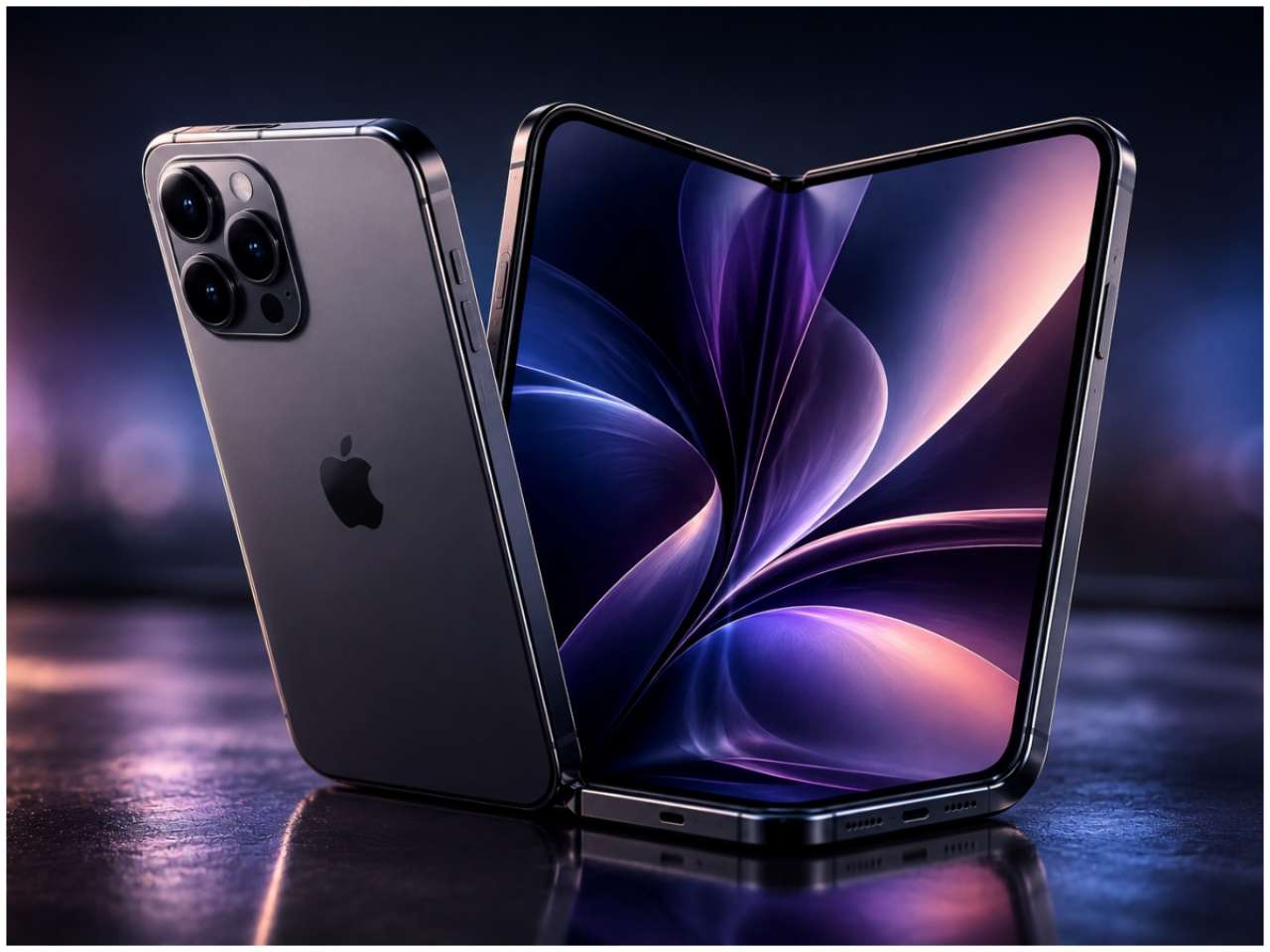
Main Facts: The iOS 27 Revelation
The genesis of the renewed excitement stems directly from developers diving into the iOS 27 beta. Early reports indicate that the software contains unmistakable references pointing towards a device with a flexible display and multiple screen configurations. Key among these discoveries are internal code strings such as ‘Foldslate’ and ‘AngleDegrees’. While seemingly innocuous, these terms are highly suggestive of functionalities essential for a foldable device. ‘Foldslate’ likely refers to the operational state of a device that can be folded or unfolded, distinguishing it from traditional monolithic screens. ‘AngleDegrees’, conversely, points to the system’s ability to detect and respond to the precise angle of the device’s hinge, allowing for dynamic UI adjustments and content presentation based on how open or closed the phone is.
Beyond these direct references, developers have also uncovered broader support for devices featuring "more than a single display." This is particularly significant as current iPhones operate with a single, primary display, sometimes augmented by external monitors or Apple Watch. The inclusion of repair tools and software support explicitly designed for multi-display iPhones further reinforces the notion that Apple is preparing for a new class of hardware. The existence of repair protocols within a beta suggests a product nearing readiness for mass production and subsequent service, a critical phase that typically precedes a public launch.
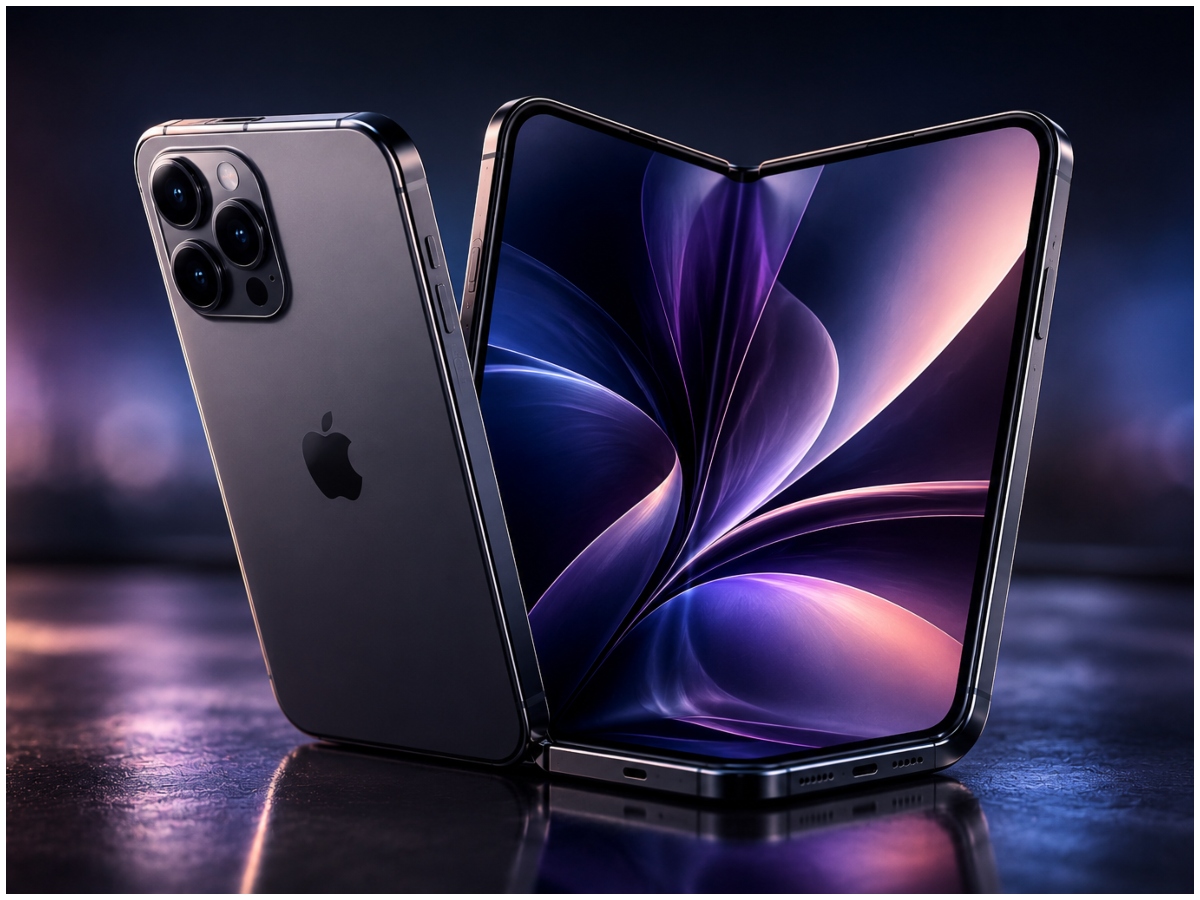)
The collective weight of these software breadcrumbs has led many industry observers and tech enthusiasts to believe that Apple could unveil its much-awaited foldable iPhone as early as September, alongside the expected iPhone 18 Pro and iPhone 18 Pro Max. This timeline, if accurate, would represent a strategic shift for Apple, which has historically been a latecomer to emerging hardware categories but typically perfects them upon entry.
Chronology: Apple’s Long Road to Foldable Innovation
The concept of a foldable Apple device is far from new. For over a decade, Apple has been quietly, yet extensively, exploring flexible display technologies and hinge mechanisms through a myriad of patent filings. These patents offer a fascinating glimpse into the company’s long-term strategic thinking and its methodical approach to innovation.

Early Explorations and Patent Filings (2010s):
Apple’s first notable patents related to flexible displays emerged as early as 2013, depicting devices with bendable screens that could fold in half. Subsequent filings detailed intricate hinge designs, self-healing display materials designed to mitigate creasing, and innovative battery configurations for foldable form factors. These patents often showcased various folding styles, from clamshell designs akin to the Samsung Galaxy Z Flip to book-like formats resembling the Galaxy Z Fold. This extensive patent portfolio demonstrates a deep and sustained research and development effort, suggesting that a foldable iPhone has been a long-term project rather than a recent reaction to market trends.
Industry Context and Competitive Landscape (Mid-2010s to Present):
While Apple has been deliberating, the foldable market has steadily matured, albeit with its share of early challenges. Samsung launched the first mainstream foldable, the Galaxy Fold, in 2019, followed by numerous iterations and the clamshell Z Flip series. Other major players like Huawei, Xiaomi, Oppo, and Google (with the Pixel Fold) have also introduced their own foldable devices, each grappling with issues of durability, hinge design, software optimization, and price. This competitive landscape has provided Apple with a unique vantage point, allowing it to observe the market’s pitfalls and successes, potentially informing its own design and engineering choices to deliver a more refined and robust product. Apple’s traditional approach has been to wait for a technology to mature before entering the market with a polished, premium offering, and the foldable space appears to be reaching that inflection point.
)
Analyst Predictions and Supply Chain Whispers (2020-2023):
The wait for an Apple foldable has been punctuated by frequent predictions from prominent industry analysts. Ming-Chi Kuo, a highly respected Apple analyst, has consistently offered insights into Apple’s foldable roadmap, initially suggesting a foldable iPhone might arrive around 2024, then pushing the timeline further. Display analyst Ross Young has similarly weighed in, providing details on potential display suppliers and form factors, often indicating Apple’s interest in larger, iPad-like foldable devices before a foldable iPhone. Mark Gurman of Bloomberg, known for his accurate Apple reporting, has also alluded to Apple’s ongoing work on foldable prototypes, emphasizing the engineering challenges involved in meeting Apple’s stringent quality standards. These expert analyses, combined with sporadic supply chain leaks concerning flexible display components or hinge prototypes, have kept the foldable iPhone narrative alive, building anticipation for years. The general consensus among these experts has been that Apple would eventually enter the market, but only when the technology was sufficiently advanced to meet its premium brand promise.
Supporting Data: Diving Deeper into iOS 27 and Hardware Speculations
The clues embedded within iOS 27 are not merely isolated code strings but form part of a larger tapestry that hints at a significant architectural shift in Apple’s mobile operating system, designed to accommodate a new device paradigm.
)
Detailed iOS 27 Analysis:
The ‘Foldslate’ and ‘AngleDegrees’ references are critical because they indicate a low-level system understanding of the device’s physical state. For instance, ‘Foldslate’ could trigger different UI modes: a compact mode when folded (utilizing the outer display), and an expanded tablet-like mode when unfolded (leveraging the inner display). ‘AngleDegrees’ would allow for advanced functionality such as "Flex Mode" (similar to Samsung’s) where the device can be partially folded and propped up for specific applications like video calls or media consumption, with the UI dynamically splitting across the two halves of the folded screen. This granular control over the hinge angle suggests sophisticated software-hardware integration.
The references to ‘multiple displays’ and dedicated ‘repair tools and software support’ are perhaps the most compelling. Apple’s iOS is meticulously optimized for single-screen interaction. Adapting it for a device that seamlessly transitions between one and two distinct display areas (when folded/unfolded, or even conceptually as an inner and outer screen) requires fundamental changes to the operating system’s display manager, input handling, and app rendering pipelines. The emphasis on repair support underscores Apple’s commitment to product longevity and serviceability, suggesting that the company is confident in the durability of its foldable design to the extent that it’s preparing for post-purchase maintenance. This is a crucial step for any new hardware category, particularly one as complex as foldables.
)
New Software Features Hinting at a Larger Screen:
Beyond explicit foldable mentions, iOS 27 introduces several features that appear to be tailor-made for a larger, adaptable screen. While specific details are still emerging, these features likely include enhanced multitasking capabilities, more intuitive split-screen layouts, and redesigned widgets that can scale dynamically. For instance, improved drag-and-drop functionality between apps, a more robust Stage Manager-like experience for iPhone, or even new gesture controls could greatly benefit from the increased screen real estate offered by an unfolded device. These features would feel constrained on current iPhone screen sizes but would unlock new levels of productivity and media consumption on a larger, flexible display.
macOS 27 Integration and iPhone Mirroring:
The improvements to iPhone Mirroring in macOS 27 further bolster the theory. The ability for users to "resize the mirrored iPhone screen into a wider format on Macs" is highly suggestive. Current iPhones have a relatively tall aspect ratio. A foldable iPhone, especially one designed to open into a tablet-like form, would likely adopt a wider, more square, or even traditional tablet aspect ratio (like 4:3 or 3:2). Mirroring such a device onto a Mac screen would naturally benefit from a "wider format" option to accurately represent the foldable’s unfolded display. This cross-ecosystem optimization points to a concerted effort to integrate the foldable iPhone seamlessly into Apple’s broader hardware and software ecosystem.
)
Hardware Leaks and Design Speculations:
Complementing the software clues, recent hardware leaks, notably obtained by Mac Rumours, provide a potential glimpse into the physical attributes of the foldable iPhone. These images and reports, though unconfirmed by Apple, suggest a device with a "book-like design" and a "4:3 aspect ratio" when unfolded. This form factor is common among larger foldables and would offer a generous viewing area for productivity, web browsing, and media.
The reported display dimensions are particularly interesting: an "outer display expected to be around 5.5 inches" and a "7.8-inch OLED screen on the inside." The 5.5-inch outer display is comparable to smaller iPhones or many traditional smartphones, providing a convenient single-handed experience when folded. The 7.8-inch inner OLED screen is noteworthy as it positions the device as "a smaller version of an iPad." For context, the iPad mini features an 8.3-inch display. A 7.8-inch foldable screen would bridge the gap between a large iPhone and a small iPad, potentially creating a new product category that offers the best of both worlds: smartphone portability with tablet-level screen real estate. This could be a strategic move to address user demand for larger screens without sacrificing pocketability.
)
Further design details include an "ultra-thin 4.5 mm titanium frame," emphasizing Apple’s pursuit of premium materials and slim profiles. Titanium, known for its strength-to-weight ratio, would be crucial for a durable yet lightweight foldable device. The rumored placement of "volume buttons on the top edge" and the absence of Apple’s Action Button (introduced with the iPhone 15 Pro) suggest a unique design language tailored for the foldable form factor, perhaps to accommodate the hinge mechanism or optimize ergonomics when folded/unfolded. The initial leak also suggests the foldable iPhone might debut in a "single white colour only," a strategy Apple sometimes employs for new product categories to streamline initial production or emphasize a clean, iconic aesthetic.
While the article mentions "expected launch in 2026" for the hardware leaks and "later this year" for the overall launch speculation, this discrepancy is typical of the rumor mill. It could signify different models in Apple’s long-term roadmap, or simply the fluidity of information. It’s plausible that an initial announcement or limited release could occur later this year, with broader commercial availability and refined models (like the specific one described in the leaks) arriving in 2026.
)
Potential Processor and Camera Innovations:
Given Apple’s history, a foldable iPhone would undoubtedly be powered by its latest, most powerful A-series chip, likely the A18 or A19 Bionic, to handle the complex processing required for dual-screen operation, advanced multitasking, and high-fidelity graphics. Camera technology would also be paramount. Apple might need to innovate with new sensor placements or optical systems to accommodate the folding mechanism, potentially introducing under-display cameras or unique multi-camera arrays optimized for both folded and unfolded use.
Official Responses: Apple’s Characteristic Silence
In typical Apple fashion, there has been no official comment, confirmation, or denial regarding the iOS 27 findings or the existence of a foldable iPhone. Apple maintains a notoriously tight lid on its unreleased products, a strategy that paradoxically fuels speculation and anticipation even further. This culture of secrecy is deeply ingrained in the company’s DNA, often leading to grand reveals at meticulously orchestrated product launch events.
)
Historically, Apple has often "teased" major hardware innovations through subtle software changes or developer frameworks months or even years before the product’s official unveiling. The clues in iOS 27 align perfectly with this pattern, suggesting that while Apple won’t confirm anything until it’s ready, the groundwork is unmistakably being laid. Past examples include the early hints of the Apple Watch in iOS updates or the underlying technologies that paved the way for the Vision Pro. This deliberate silence, therefore, is not an absence of activity but rather an indicator of a significant project nearing fruition.
Implications: Market Impact, User Experience, and Future Trajectories
The potential arrival of an Apple foldable iPhone carries profound implications for the technology industry, the competitive landscape, and the future of mobile computing.
)
Market Disruption and Legitimacy:
Apple’s entry into the foldable market would undoubtedly legitimize the category on a global scale. While Samsung has made significant strides, Apple’s endorsement would instantly elevate foldables from a niche, experimental segment to a mainstream, premium offering. It would likely trigger a surge in consumer interest and adoption, forcing other manufacturers to redouble their efforts in design, durability, and software optimization. Apple’s brand power and ecosystem integration could single-handedly transform the perception of foldable devices, making them a more desirable and reliable choice for a wider audience.
Competitive Landscape:
Competitors, particularly Samsung and Google, would face intensified pressure. Samsung, as the current market leader, would need to innovate even faster to maintain its edge. Google, with its Pixel Fold, would be challenged to differentiate its software experience and hardware design against Apple’s renowned polish. The increased competition would ultimately benefit consumers, leading to more robust, feature-rich, and potentially more affordable foldable options across the board.
)
Apple’s Strategic Rationale: Why Now?
Apple’s timing could be a calculated move. The company typically enters markets when technology has matured and a clear user benefit can be delivered without compromising its premium quality standards. The current generation of foldables has largely overcome early durability issues, and flexible display technology has advanced significantly. Entering now allows Apple to leverage these advancements while still being early enough to capture a significant market share and define the premium foldable experience. Furthermore, a foldable iPhone could address the growing demand for larger screens for productivity and media consumption, without forcing users to carry two devices (iPhone and iPad). It could also represent Apple’s answer to the plateauing innovation in traditional smartphone design, offering a fresh form factor to re-excite the market.
User Experience: Pros and Cons:
)
- Pros: The primary benefit for users would be the versatility of having a large, tablet-sized display for media consumption, multitasking, and creative work, seamlessly folding into a pocketable smartphone. This convergence could redefine productivity on the go. Imagine a single device for all your needs: a phone for calls and quick tasks, and a mini-tablet for serious work or entertainment. Apple’s meticulous software optimization would likely ensure a fluid transition between folded and unfolded modes, with apps adapting intelligently.
- Cons/Challenges: Despite advancements, durability remains a concern for foldables, particularly regarding the display crease and hinge longevity. Apple would need to deliver an exceptionally robust product to meet user expectations. The cost would also be a significant barrier; foldables are inherently expensive due to complex engineering and specialized components. An Apple foldable would likely command a premium price, potentially starting well above the current Pro Max models. Software optimization, while hinted at in iOS 27, will be crucial to ensure a consistent and intuitive experience across different screen states and aspect ratios, avoiding the fragmented experiences seen in some early foldable implementations.
Pricing and Market Positioning:
Given the current market for foldables and Apple’s premium pricing strategy, a foldable iPhone would undoubtedly be positioned at the very high end of its product lineup. Prices could potentially start from $1,500 to $2,000 or even higher, reflecting the advanced technology, premium materials, and brand cachet. This would firmly place it in the luxury tech segment, appealing to early adopters and users who prioritize cutting-edge innovation and a converged device experience.
Future Outlook and Sustainability:
The launch of a foldable iPhone could pave the way for other innovative form factors from Apple, potentially including foldable iPads or even MacBooks. It signals Apple’s continued commitment to pushing the boundaries of hardware design and user interaction. However, the complexity of foldable devices also raises questions about repairability and environmental impact. Apple has been working to improve its sustainability efforts, and a highly complex, expensive-to-repair foldable device could present challenges to these initiatives, requiring new approaches to design for longevity and end-of-life recycling.
)
In conclusion, the clues within iOS 27 are more than just whispers; they are strong indicators of Apple’s serious intent to enter the foldable smartphone arena. While official confirmation remains elusive, the convergence of software groundwork, persistent hardware rumors, and Apple’s strategic patterns suggests that the foldable iPhone is no longer a distant dream but a tangible reality on the horizon, poised to reshape the mobile technology landscape. The coming months will be critical as the tech world eagerly awaits Apple’s next move, anticipating what promises to be one of the most significant product launches in its recent history.
Find your daily dose of All Latest News including Sports News, Entertainment News, Lifestyle News, explainers & more. Stay updated, Stay informed- Follow DNA on WhatsApp.
