

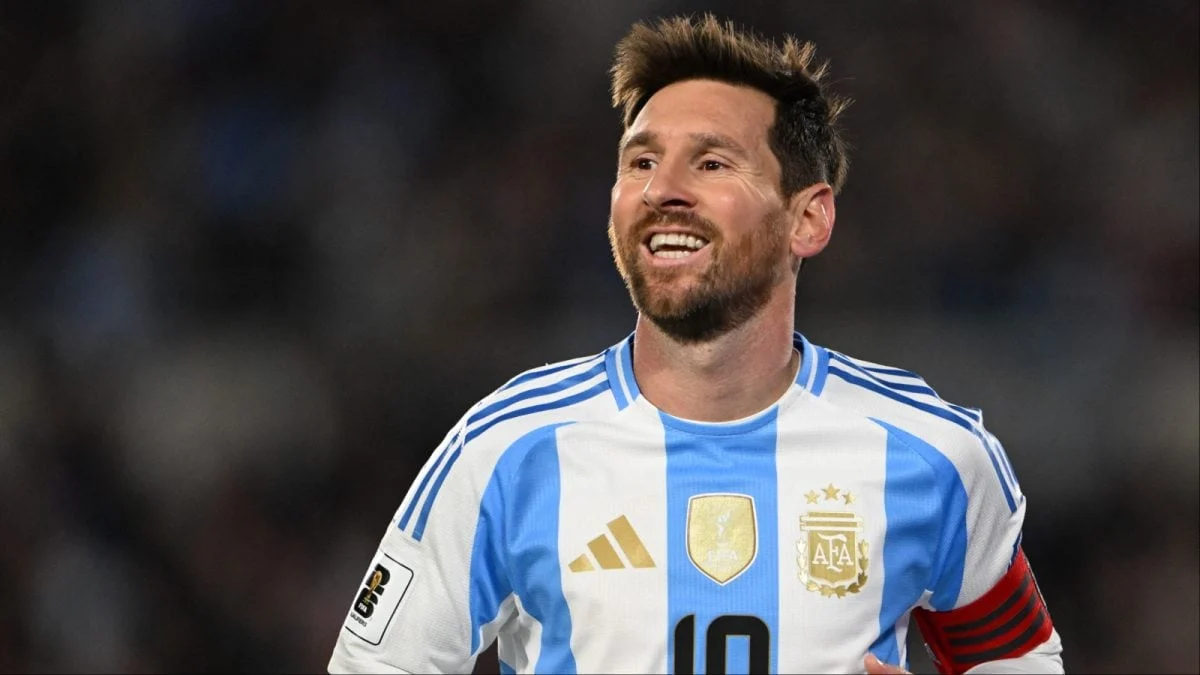
Oviedo, Spain – June 3, 2026 – In a momentous announcement reverberating across the globe, Argentine football superstar Lionel Messi has been named the recipient of the 2026 Princess of Asturias Award for Sports. The esteemed 38-year-old maestro was bestowed with this distinction by the Spanish Foundation, which annually celebrates international excellence across various fields from its base in Oviedo. The recognition comes as a testament to Messi’s unparalleled career achievements, his enduring commitment to the beautiful game, and his significant philanthropic contributions that extend far beyond the pitch.
The decision, made by a distinguished jury from a competitive field of 27 nominations, underscores Messi’s status as a transcendent figure in sports history. The award celebrates not only his extraordinary talent and record-breaking statistics but also his embodiment of sportsmanship, dedication, and a profound impact on society through his charitable endeavors. The announcement on June 3, 2026, places Messi among an elite pantheon of individuals whose lives and work have profoundly influenced the world, arriving just as the football world braces for the FIFA World Cup 2026 in the USA, Canada, and Mexico, where Messi is expected to lead Argentina in defense of their hard-won title.
A Career Forged in Legend: The Chronology of a Sporting Icon
Lionel Messi’s journey from Rosario, Argentina, to the pinnacle of global sports is a narrative woven with prodigious talent, relentless hard work, and an unyielding will to succeed. His career, spanning over two decades, has redefined what is possible in football, setting benchmarks that may never be surpassed.
The Genesis: La Masia and Barcelona’s Golden Era
Messi’s odyssey began in earnest when, as a scrawny 13-year-old with immense potential, he joined FC Barcelona’s famed La Masia academy in 2000. Overcoming initial health challenges, he rapidly ascended through the youth ranks, his extraordinary dribbling, vision, and goal-scoring prowess evident from an early age. His senior team debut came in 2004, and it was not long before he established himself as an indispensable figure.
Under the tutelage of visionary coaches like Frank Rijkaard and later, Pep Guardiola, Messi spearheaded Barcelona’s most successful era. He became the central architect of a team that captivated the world with its intricate tiki-taka style, winning numerous La Liga titles and four UEFA Champions League crowns (2006, 2009, 2011, 2015) during his tenure. Individually, the accolades poured in, starting with his first Ballon d’Or in 2009, an award he would go on to win a record eight times – a testament to his sustained dominance and consistent brilliance. His goal-scoring records for Barcelona, including becoming the club’s all-time leading scorer, cemented his legacy as a Catalonian legend.
The Pursuit of International Glory: Overcoming Adversity
While club success flowed abundantly, international glory with Argentina remained an elusive dream for many years. Messi faced intense scrutiny and pressure, enduring heart-breaking defeats in four major finals: the 2007, 2015, and 2016 Copa América finals, and the 2014 FIFA World Cup final. These near misses fueled narratives of a perceived incompleteness in his otherwise flawless career, prompting even a temporary international retirement in 2016.
However, Messi’s resolve was unwavering. He returned to the national team, determined to lead his country to glory. The tide began to turn with Argentina’s victory in the 2021 Copa América, ending a 28-year trophy drought for the Albiceleste and marking Messi’s first major international title. This triumph was a crucial psychological breakthrough, paving the way for the ultimate prize.
The Ultimate Triumph: FIFA World Cup 2022
The culmination of Messi’s international aspirations arrived at the FIFA World Cup 2022 in Qatar, a tournament that saw him etch his name permanently into the annals of football history. At 35, he captained Argentina with a renewed sense of purpose, delivering a series of masterclass performances that rallied his nation.
Argentina’s campaign began with a shocking 1-2 loss to Saudi Arabia, an unexpected stumble that ignited fears of an early exit. However, under Messi’s inspirational leadership, the team displayed remarkable resilience. They quickly recovered with a crucial 2-0 victory over Mexico, where Messi scored a pivotal long-range goal, followed by another 2-0 win against Poland to secure their place in the knockout stages.
In the Round of 16, Argentina overcame Australia 2-1, with Messi showcasing his individual brilliance. The quarter-final clash against the Netherlands proved to be a thrilling, tension-filled encounter, ending 2-2 after extra time before Argentina prevailed 4-3 in a dramatic penalty shootout. Messi’s audacious assist and composed penalty kick in that match were defining moments. The semi-final saw Argentina overpower Croatia with a dominant 3-0 performance, setting the stage for a dream final against the defending champions, France.
The final on December 18, 2022, was an epic spectacle, widely regarded as one of the greatest football matches ever played. Messi scored twice for Argentina, including a penalty and a crucial extra-time goal, while Angel Di Maria also netted. On the other side, France’s Kylian Mbappé delivered a stunning hat-trick, pushing the game to its absolute limit. The match finished 3-3 after extra time, leading to a nail-biting penalty shootout. Emiliano Martínez’s heroics in goal and Argentina’s flawless execution from the spot saw them clinch a decisive 4-2 victory, securing their third World Cup title and Messi’s crowning moment.
The image of Messi, finally lifting the coveted golden trophy, draped in a traditional bisht, became an iconic symbol of perseverance, destiny, and unparalleled achievement. It silenced any remaining doubts about his status as the greatest player of all time, fulfilling a lifelong dream and uniting a nation in celebration.
Post-Barcelona Eras: PSG and Inter Miami
Following his emotional departure from Barcelona in 2021, Messi embarked on a new chapter with Paris Saint-Germain (PSG). Though his time in France brought two Ligue 1 titles, it was a period of adaptation, and he found a different rhythm in a new league. In 2023, he made a groundbreaking move to Major League Soccer (MLS), joining Inter Miami. His arrival instantly transformed the league’s profile, drawing unprecedented global attention and leading Inter Miami to their first trophy, the Leagues Cup, within weeks of his debut. His impact on American football, both on and off the field, has been immense, solidifying his role as a global ambassador for the sport.
Beyond the Pitch: Philanthropy and Global Impact
While his sporting achievements are legendary, the Princess of Asturias Award also significantly acknowledges Lionel Messi’s profound impact through his charitable activities. Messi has consistently used his platform and resources to make a tangible difference in the lives of vulnerable children and communities worldwide, embodying the spirit of social responsibility.
The Leo Messi Foundation: A Beacon of Hope
Established in 2007, the Leo Messi Foundation is the primary vehicle for his philanthropic efforts. Its mission is clear and impactful: to ensure that children around the world have access to healthcare, education, and sports. The foundation operates under the belief that every child has the right to reach their full potential, and it works tirelessly to remove barriers that prevent them from doing so.
Through partnerships with leading organizations such as UNICEF, the Leo Messi Foundation has funded numerous critical projects. These include constructing and renovating hospitals, providing medical equipment, facilitating cancer treatment for children, and supporting research into rare diseases. In the realm of education, the foundation has built schools, provided scholarships, and supplied educational materials, particularly in his native Argentina and other underserved regions. Furthermore, it promotes sports as a tool for social inclusion and development, organizing sports camps and providing access to facilities for disadvantaged youth. His personal contributions and active involvement in fundraising events underscore his deep commitment to these causes.
Broader Charitable Endeavors and Role Model Status
Beyond his own foundation, Messi has lent his support to countless other charitable initiatives. He has participated in numerous charity matches, awareness campaigns, and public service announcements, using his global recognition to highlight pressing social issues. His quiet demeanor off the field belies a strong sense of empathy and a desire to give back to the communities that have supported him.
Messi’s conduct, both as a sportsman and a humanitarian, has cemented his status as a global role model. His humility, dedication, and resilience in the face of adversity inspire millions, particularly young aspiring athletes. He demonstrates that true greatness encompasses not just talent but also character, integrity, and a willingness to contribute positively to the world. This dual excellence — sporting and philanthropic — is a cornerstone of his Princess of Asturias Award recognition.
The Princess of Asturias Awards: A Beacon of Global Recognition
The Princess of Asturias Awards are among the most prestigious international honors, designed to acknowledge scientific, technical, cultural, social, and humanitarian work carried out by individuals, institutions, or groups of individuals worldwide. Established in 1980 by the then Prince of Asturias (now King Felipe VI) and named after the heir to the Spanish throne, the awards are presented annually in Oviedo, Spain.
Prestige and History
The awards are divided into eight categories: Arts, Communication and Humanities, Social Sciences, Sports, Letters, Scientific and Technical Research, International Cooperation, and Concord. Each laureate receives a Joan Miró sculpture representing the award, an insignia, a diploma, and a monetary prize. The awards ceremony, presided over by Her Royal Highness Princess Leonor, is a grand affair, bringing together laureates, dignitaries, and cultural figures from across the globe. Over the decades, the awards have recognized luminaries such as Nelson Mandela, Stephen Hawking, Woody Allen, and the Spanish national football team, among many others.
Previous Sporting Laureates and Selection Process
The Sports category has historically celebrated athletes and institutions that exemplify sportsmanship, fair play, and exceptional achievement. Previous laureates include tennis icon Rafael Nadal, Formula 1 legend Michael Schumacher, Olympic runner Carl Lewis, and the Spanish national basketball team, alongside individual giants like Iker Casillas and Pau Gasol. Messi’s inclusion places him firmly within this elite group, reinforcing the award’s commitment to honoring not just athletic prowess but also the values that sport can instill and project globally.
The selection process for the Princess of Asturias Awards is rigorous and meticulous. Nominations are submitted by experts, institutions, and previous laureates from around the world. These nominations are then reviewed by a distinguished jury for each category, composed of prominent figures from various fields. The jury’s decision is based on comprehensive evaluations of the candidates’ careers, their contributions to their respective fields, and their broader impact on humanity. Messi’s selection from 27 highly qualified nominees underscores the profound impression his career and character have made on the international community.
Official Responses and Acclaim
The announcement of Lionel Messi as the 2026 Princess of Asturias Award laureate has been met with widespread acclaim, particularly from the footballing world and his native Argentina.
FC Barcelona’s Heartfelt Congratulations
Among the first to publicly congratulate Messi was his former club, FC Barcelona, which posted a heartfelt message on social media:
"Congratulations, Lionel Messi, on receiving the 2026 Princess of Asturias Award for Sports 👏 A well-deserved recognition of an extraordinary career, defined by your legendary legacy at Barça and a journey filled with success with our Club."
This message encapsulates the enduring bond between Messi and the Catalan giant, acknowledging his formative years and the indelible mark he left on the club’s history. It reflects the sentiment of millions of Barcelona fans worldwide who witnessed his unparalleled magic for nearly two decades.
The Foundation’s Commendation
A spokesperson for the Princess of Asturias Foundation elaborated on the jury’s decision: "Lionel Messi represents the epitome of sporting excellence, combining sublime talent with an unwavering commitment to humanitarian causes. His journey from a young boy with a dream to a global icon who uses his fame to uplift others is truly inspiring. He embodies the values of effort, humility, and solidarity that the Princess of Asturias Awards seek to recognize."
Voices from the Sporting World
The news prompted an outpouring of praise from figures across the sporting landscape. Pep Guardiola, Messi’s former coach at Barcelona, reportedly stated, "Leo is simply the best, not just as a player but as a person. This award recognizes not only his genius on the field but the good he does off it. He truly deserves it."
Former Argentina teammate Javier Mascherano added, "This award is a fitting tribute to a man who has given so much joy to the world. His dedication to his craft and his country, coupled with his generosity, make him a unique figure. He’s an example for us all." Even rival players and pundits offered their congratulations, acknowledging the universal respect Messi commands.
Argentine Pride
In Argentina, the news was met with immense pride and celebration. The Argentine Football Association (AFA) issued a statement expressing their joy, while political figures and cultural icons lauded their national hero. "Messi has once again brought immense joy and honor to Argentina," commented the nation’s President. "This award is a global affirmation of his greatness, not just as an athlete but as a humanitarian who embodies the best of our nation’s spirit."
Implications: A Legacy Further Cemented
The conferral of the Princess of Asturias Award on Lionel Messi carries significant implications, further cementing his already legendary status and highlighting the evolving understanding of what constitutes true greatness in the modern era.
Transcending Football: A Legacy of Excellence and Empathy
This award elevates Messi’s legacy beyond the confines of football. While his eight Ballon d’Ors and a World Cup title firmly establish him as one of, if not the, greatest player of all time, the Princess of Asturias Award recognizes a different dimension of his character. It acknowledges the totality of his impact – his sporting genius combined with his consistent dedication to philanthropy and his role as a global ambassador for positive change. It sends a powerful message that true excellence encompasses both unparalleled performance and profound social responsibility. Messi’s name will now stand alongside Nobel laureates and cultural giants, marking him as a figure of universal significance.
Inspiration for Future Generations
Messi’s journey, culminating in such prestigious recognition, serves as an immense source of inspiration for future generations. It teaches that success is not merely measured by trophies and individual accolades but also by the positive influence one wields. Young athletes can look to Messi not just for his breathtaking dribbles and goals, but also for his humility, his perseverance, and his commitment to using his platform for the greater good. His story reinforces the idea that sports can be a powerful vehicle for personal growth and societal improvement.
The Award’s Endorsement of Multi-Faceted Excellence
For the Princess of Asturias Foundation, recognizing Messi reaffirms its commitment to celebrating individuals who embody multi-faceted excellence. It underscores the award’s philosophy that contributions to humanity can come in many forms, and that sporting heroes, when they combine their athletic prowess with humanitarian efforts, are worthy of the highest global honors. It highlights the growing recognition of football’s cultural and social significance, acknowledging its capacity to unite people and inspire collective action.
The Future: Defending the Crown at FIFA World Cup 2026
The timing of this award, on the eve of the FIFA World Cup 2026 in the USA, Canada, and Mexico, adds another layer of significance. Messi will lead Argentina as they seek to defend their World Cup title against formidable opponents, including European giants like star-studded France and synchronous Spain. Receiving such a prestigious honor just as he embarks on perhaps his final major international tournament provides an incredible emotional boost and a powerful narrative. It frames his participation not just as an athletic endeavor but as a continuation of a storied career that has consistently delivered beyond expectations, both on and off the field.
In essence, the 2026 Princess of Asturias Award for Sports is more than just another trophy for Lionel Messi. It is a profound acknowledgment of a truly unparalleled career, a testament to his enduring character, and a celebration of a man who has not only redefined football but has also used his extraordinary platform to make the world a better place. His legacy, already etched in gold, now shines even brighter, illuminated by the light of humanitarian distinction.
