


The Indian Athletics Series Final: A New Dawn for Domestic Track and Field
New Delhi, India – September 9, 2026 – The Jawaharlal Nehru Stadium, a venerable amphitheater of Indian sport, buzzed with an unusual energy on the eve of the inaugural Indian Athletics Series Final. Far from a typical practice session, this was a dress rehearsal for a landmark event poised to redefine the landscape of domestic track and field. With a state-of-the-art Mondo track laid out and a substantial prize purse on offer, India’s elite athletes converged, not just for competition, but for a pivotal moment signalling a more professional and rewarding future for the sport.
The one-day, invite-only event, scheduled for September 10, 2026, marked a significant departure from traditional national meets. Designed as a high-stakes, season-ending spectacle, it brought together the top performers across 30 disciplines, excluding long-distance and combined events. Beyond the immediate glory, the competition served as a crucial proving ground and a final tune-up for many of the nation’s brightest talents just weeks before their departure for the highly anticipated Asian Games.
Pre-Event Buzz: Athletes Acclimatize to a World-Class Surface
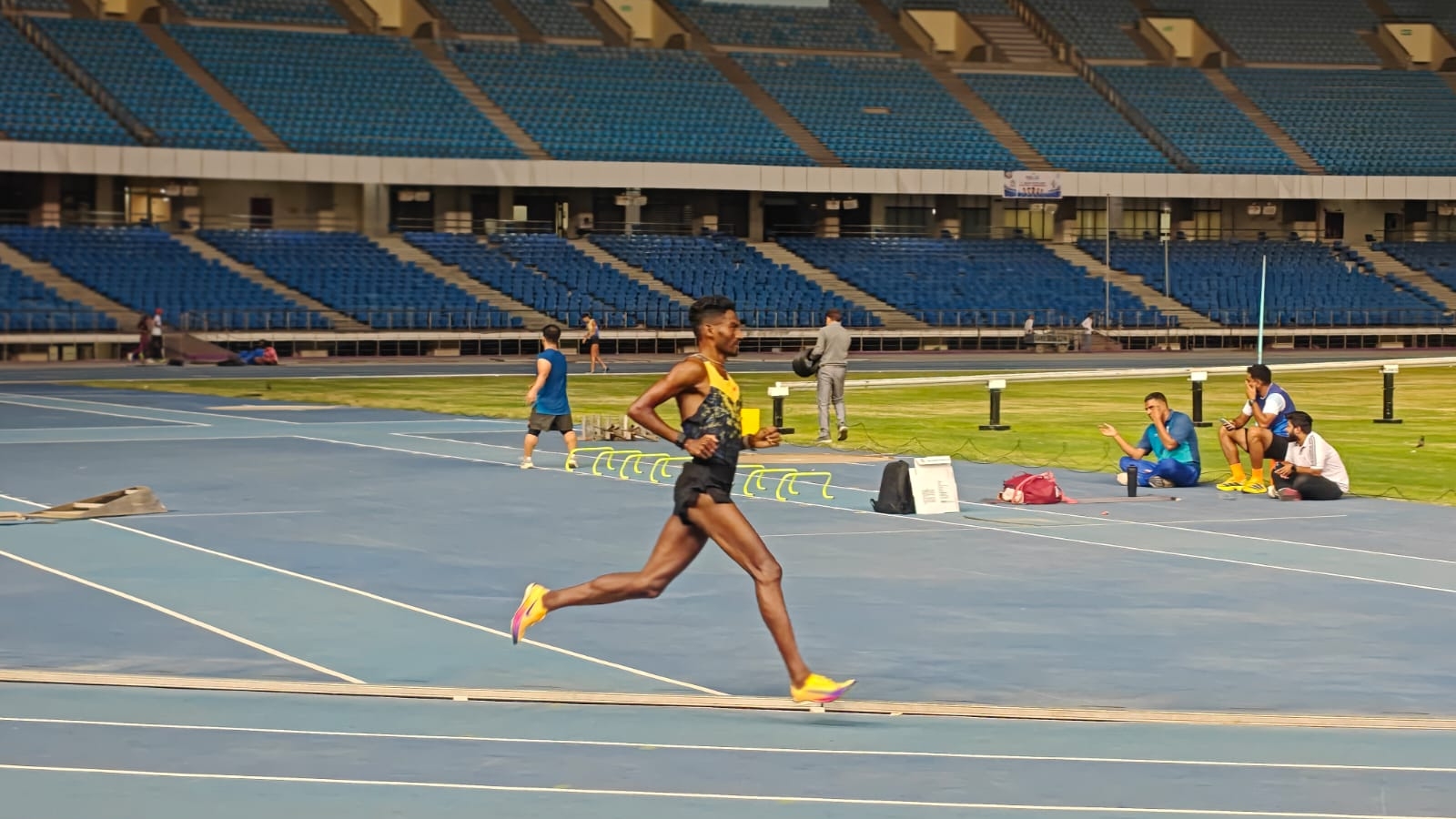
As dusk settled over the capital on Wednesday evening, the stadium offered a glimpse into the meticulous preparations underway. Avinash Sable, India’s celebrated steeplechaser, was among the first to experience the freshly laid Mondo track. Moving with a fluid, measured stride, he completed a reconnaissance lap, his focus unwavering as he gauged the surface. "The track feels good. I have competed on Mondo tracks only outside of India. It is good to have a world-class track here," Sable shared with The Indian Express, a hint of satisfaction in his voice. His sentiment was particularly poignant, as the event marked his first national competition following an extended injury layoff. "It is speedy and a little bumpy when it comes to running, but I am happy to make a comeback tomorrow," he added, underscoring the high stakes of his return.
Elsewhere on the track, Gurindervir Singh, the national record holder in the 100m sprint, demonstrated a blend of relaxed confidence and focused intensity. After obliging a few young, aspiring athletes with autographs, he transitioned seamlessly into resistance training on the starting blocks, a testament to the meticulous preparation required at this elite level. His presence, alongside other sprinting stalwarts like Animesh Kujur and Vishal TK, promised a thrilling display of speed on the new, fast surface.
The field events saw similar careful assessment. Pole vault national record holders Dev Meena and Sindhusree G meticulously gauged the runway, executing several short runs towards the jumping pit. "Mondo tracks are different everywhere, and I just wanted to check how the track feels when I start my run-up with the pole," Meena explained, highlighting the subtle nuances that can define success or failure in their highly technical discipline. Their coach, Ghanshyam Yadav, articulated the broader strategic importance of the event, stating, "It will be a good competition, and the timing is apt given the Asian Games are near now. I think it serves as a perfect warm-up for the Asian Games, and the prize money adds more value to the story." His words echoed the dual purpose of the series final: immediate competition and crucial preparation for international challenges.
The atmosphere was electric, a blend of pre-race jitters and palpable excitement. Athletes from various disciplines – sprinters, throwers, jumpers – mingled, some stretching, others engaging in light drills, all keenly aware of the significance of the platform. The presence of such a concentrated pool of talent, all vying for top honors and substantial rewards, transformed the typically solemn pre-meet routine into a vibrant showcase of athletic prowess and anticipation.
A New Paradigm: Prize Money and Professionalization
The most striking feature of the Indian Athletics Series Final, distinguishing it from almost all previous domestic competitions, was its unprecedented prize money pool. A staggering total of 65 lakh rupees (approximately USD 78,000) was allocated, distributed among the top six finishers in each of the 30 disciplines. The winner in each event stood to pocket a significant one lakh rupees (approximately USD 1,200), a sum that, while modest by international standards, represents a substantial incentive within the Indian athletic ecosystem. Second-place finishers would receive Rs 50,000, while those placing third, fourth, fifth, and sixth would be awarded Rs 25,000, Rs 20,000, Rs 15,000, and Rs 10,000 respectively.
This substantial financial incentive reflects a strategic shift by the Athletics Federation of India (AFI) towards professionalizing the sport and better supporting its athletes. As a top AFI official elucidated, "The idea is to keep the athletes motivated, and we wanted it to be the season-ender for the newly incorporated Athletics series. The prize money adds more value to the event as the event will have the top athletes competing in it." This statement underscores a clear intent to elevate the status of domestic competitions, making them not just stepping stones to international events but valuable platforms in their own right.
While this level of prize money is a groundbreaking development, it isn’t the AFI’s first foray into financial incentives. The official also recalled a previous initiative in the 2009 season, where the federation offered prize money to the top three finishers in the three Indian Grand Prix series. Back then, winners received Rs 15,000 each, amounting to an aggregate prize purse of Rs 15 lakh. Comparing the two, the current 65-lakh pool represents a more than four-fold increase, illustrating the AFI’s renewed and significantly bolder commitment to financial recognition for its athletes. This progressive step is expected to not only incentivize top performances but also provide much-needed financial stability for athletes, allowing them to focus more intensely on training and competition without the constant burden of economic insecurity.
The State-of-the-Art Mondo Track: A Leap Forward in Infrastructure
Central to the excitement surrounding the event was the installation of the new Mondo track at the Jawaharlal Nehru Stadium. Mondo, an Italian company renowned globally for its high-performance athletic surfaces, is the official supplier for numerous Olympic Games and World Championships. These tracks are engineered for optimal energy return, superior shock absorption, and consistent performance, enabling athletes to achieve faster times and reducing the risk of injuries.
Avinash Sable’s comments about the track feeling "speedy and a little bumpy" are characteristic of the initial experience on a new, high-grade synthetic surface. Athletes often need a brief period to adapt to the specific characteristics of different Mondo installations, as subtle variations in elasticity and texture can exist. However, the overall consensus among elite athletes is that Mondo tracks provide a competitive edge, allowing for more explosive starts, sustained speed, and efficient stride patterns.
The presence of such a world-class track in India is a significant infrastructural upgrade. For years, Indian athletes often had to travel abroad to experience the kind of surfaces that are standard at major international competitions. Having a Mondo track domestically means that athletes can train and compete on the same quality of surface they will encounter at the Asian Games, Olympics, and World Championships, thereby eliminating a significant disadvantage. This investment signals a broader commitment from the AFI and sports authorities to bring India’s athletic infrastructure up to global standards, fostering an environment conducive to elite performance and record-breaking achievements. It also serves as a statement of intent, indicating that India is serious about nurturing its athletic talent and preparing them for global success.
The Field of Stars: Absences and Anticipation
The Indian Athletics Series Final attracted the "who’s who" of Indian athletics, a testament to its growing prestige and prize money. However, a few prominent names were notably absent, underscoring the delicate balance between domestic competition and international commitments or injury management. Long jumper Sreeshankar Murali, high jumper Sarvesh Kushare, and triple jumper Praveen Chithravel were among those not participating. While specific reasons for their absence weren’t detailed, it’s common for top athletes to manage their competition schedule carefully, prioritizing major international events or recovering from niggles.
The most significant absence, and one that cast a slight shadow over the javelin competition, was that of reigning Asian Games champion Neeraj Chopra. Chopra, whose historic Olympic gold medal has inspired a generation, pulled out due to an injury, underscoring the physical demands placed on elite athletes. His absence, however, opened the door for others to shine. Commonwealth Games medallist Yashvir Singh was added to the javelin field at the last minute, joining Rohit Yadav in what was still a strong lineup for the event. Their performances would be keenly watched, not just for the immediate competition but also as an indicator of India’s javelin depth in Chopra’s temporary absence.
In the sprinting events, the stage was set for a thrilling showdown. Three of India’s fastest men – Gurindervir Singh, Animesh Kujur, and Vishal TK – were poised to ignite the Mondo track, promising fierce competition and potential record attempts. Their head-to-head battles are crucial for pushing national standards and preparing them for the intense rivalry they will face on the international stage. Similarly, the pole vault competition featuring national record holders Dev Meena and Sindhusree G was expected to be a highlight, showcasing the technical precision and explosive power required in their discipline.
The Road to Aichi-Nagoya: Final Preparations for the Asian Games
Beyond the immediate excitement of the Indian Athletics Series Final, the overarching context for many participating athletes was the impending Asian Games. The event served as a critical final dress rehearsal, a chance to test form, technique, and mental fortitude against top domestic rivals before facing the continent’s best.
The logistical planning surrounding the Asian Games further highlighted the meticulous approach being taken. Athletes were scheduled to depart for Japan on Saturday, just two days after the series final, for a short acclimatization camp at the University of Tsukuba. This strategic move aims to help them adjust to the time difference, climate, and local conditions, minimizing the impact of travel fatigue and maximizing their readiness. Following the acclimatization period, the contingent will arrive in Aichi-Nagoya on September 21, two days before the commencement of the athletics events at the Asian Games. This carefully planned itinerary underscores the importance placed on optimal preparation for what promises to be a challenging yet rewarding international competition.
Coach Ghanshyam Yadav’s emphasis on the event being a "perfect warm-up" for the Asian Games resonated deeply with the athletes and the AFI’s strategic vision. For many, it was the last opportunity to simulate a high-pressure competitive environment, fine-tune their race strategies, and build confidence. The competitive intensity of the Series Final, coupled with the prospect of significant prize money, was designed to mirror the stakes of an international championship, thereby providing invaluable experience.
Implications: Elevating Indian Athletics to Global Standards
The introduction of the Indian Athletics Series Final, with its substantial prize money, world-class facilities, and strategic timing, carries profound implications for the future of Indian athletics.
Professionalization of the Sport: The most immediate impact is the significant step towards professionalizing athletics in India. By offering substantial financial rewards, the AFI is creating a viable career path for athletes, reducing their reliance on external support or government jobs. This financial independence can allow athletes to dedicate themselves fully to training, access better coaching, nutrition, and sports science, and ultimately prolong their careers. It signals a shift from amateurism to a more structured, professional ecosystem.
Motivation and Performance Standards: The allure of a 65-lakh prize pool and individual event winnings is a powerful motivator. It encourages athletes to perform at their peak consistently throughout the season to qualify for the invite-only final, thereby raising the overall standard of domestic competition. This increased competition, in turn, pushes athletes to strive for personal bests and national records, gradually closing the gap between Indian performances and international benchmarks.
Athlete Welfare and Development: Beyond immediate financial gains, such initiatives contribute to improved athlete welfare. By investing in top-tier infrastructure like Mondo tracks and offering tangible rewards, the AFI demonstrates a commitment to valuing its athletes. This can foster a sense of belonging and appreciation, encouraging more young talent to pursue athletics seriously and reducing the brain drain of promising athletes seeking better opportunities abroad.
Bridging the Gap to International Competitions: The Series Final acts as an essential bridge. Competing on a Mondo track, under pressure, against the nation’s best, simulates the conditions of major international events. This experience is invaluable for preparing athletes mentally and physically for the higher stakes of the Asian Games, Commonwealth Games, and Olympic Games, making the transition less daunting.
Enhanced Visibility and Fan Engagement: A high-profile, well-funded event featuring top athletes naturally garners more media attention and public interest. This increased visibility can attract sponsorships, expand the fan base, and ultimately contribute to the commercial viability of athletics in India. The "season-ender" concept, akin to diamond league finals, creates a narrative arc for the domestic season, keeping fans engaged.
Challenges and Future Outlook: While highly commendable, the initiative also faces challenges. The exclusion of long-distance and combined events, while perhaps necessary for the inaugural edition’s focus, highlights an area for future expansion. Ensuring equitable opportunities across all disciplines will be crucial for the long-term success and inclusivity of the series. Furthermore, consistent funding and continued commitment from the AFI will be vital to sustain and expand this new model.
In conclusion, the Indian Athletics Series Final represents a pivotal moment for Indian track and field. It is a bold statement of intent from the AFI, signaling a new era of professionalism, enhanced athlete support, and heightened competitive standards. As the athletes prepare to take to the track and field on September 10, 2026, they are not just competing for medals and prize money; they are part of a larger narrative – one that promises to elevate Indian athletics to unprecedented heights on both the national and international stages. The road to Aichi-Nagoya for the Asian Games begins, in earnest, right here at the Jawaharlal Nehru Stadium, on a world-class track, under the watchful eyes of a nation eager for sporting glory.
