

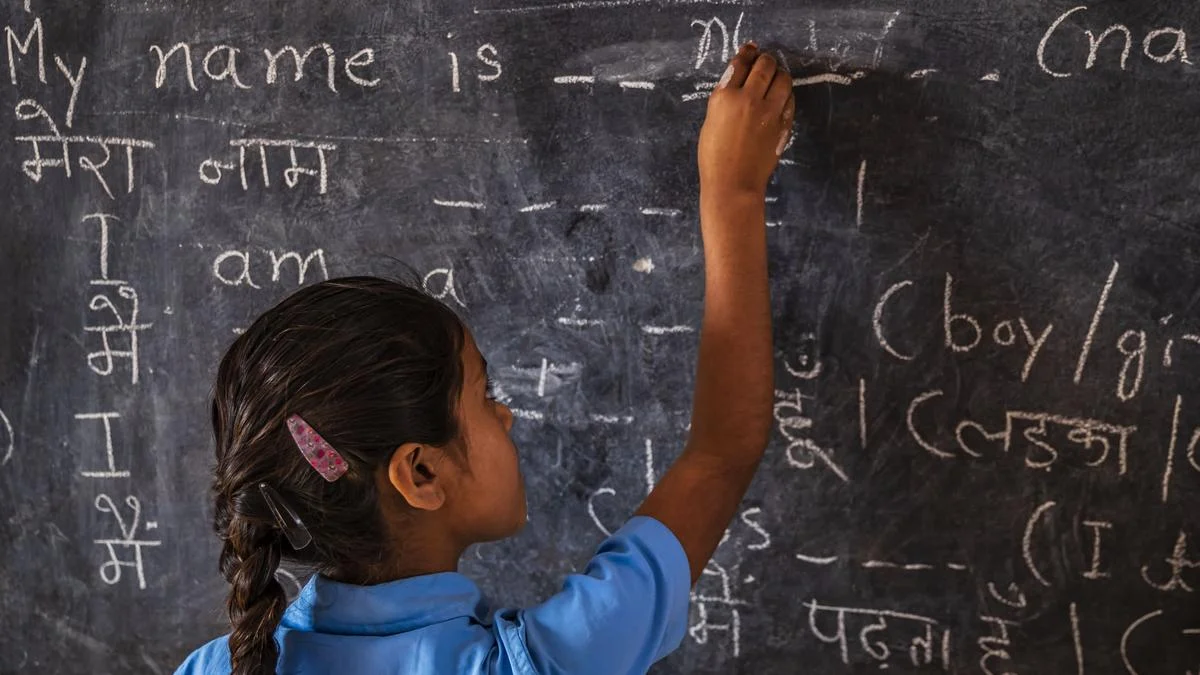
CHENNAI, INDIA – The everyday query, "Nani, aaj kya banaya?" (Grandma, what did you cook today?), encapsulates a vibrant reality for millions of Indians. It’s a simple question, yet it’s steeped in a tapestry of language, accent, and often, a seamless blend of Hindi and English – a phenomenon known as code-switching. Now, imagine posing this question to an artificial intelligence assistant. Would it comprehend not just the words, but the subtle inflection, the regional accent, or the unique syntax of Tulu, Bundeli, Kodava, or Santali?
While artificial intelligence has made monumental strides in understanding human language, translating, and even generating creative text, its capabilities are often skewed. The vast majority of AI systems are trained on colossal digital datasets – books, websites, videos, and conversations – predominantly in English. For India’s incredible linguistic diversity, particularly its hundreds of regional languages and thousands of dialects, this digital "treasure trove" is either scarce or non-existent. This glaring data deficit creates a significant barrier to making advanced AI truly accessible to over a billion people.
This formidable challenge has been embraced by researchers at AI4Bharat, a pioneering research lab nestled within the prestigious Indian Institute of Technology Madras (IIT Madras). Their mission is nothing short of audacious: to engineer AI that can genuinely understand, speak, and translate India’s myriad languages, thereby democratizing technology for millions. Through a meticulous, ground-up approach, AI4Bharat is teaching AI to speak India, one voice, one conversation, and one language at a time. As Kaushal Bhogale, a PhD researcher at AI4Bharat, articulates, their work is about "making technology inclusive for everyone, irrespective of the language they speak."
The Unseen Barrier: Why India’s Languages Pose Unique Challenges for AI
When the public contemplates artificial intelligence, there’s a common misconception that it possesses an inherent, universal understanding of all languages. The reality is far more nuanced: AI’s proficiency is directly proportional to the quality and quantity of data it learns from. This fundamental principle underscores the unique hurdles presented by India’s linguistic landscape.
Low-Resource Languages and the Data Desert:
Languages like English enjoy an immense advantage in the digital realm. The internet is saturated with an astronomical volume of English content: billions of books, countless websites, exhaustive subtitle libraries, podcasts, news articles, and videos. This provides AI with an almost limitless supply of examples to discern patterns, grammar, and semantics. In stark contrast, many Indian languages are classified as "low-resource languages." This designation signifies a critical shortage of digital content available for AI training. "Many Indian languages are considered low-resource languages," confirms Kaushal Bhogale, highlighting the core problem. The digital footprint for these languages is often minimal, making it exceedingly difficult for AI models to learn effectively.
A Kaleidoscope of Dialects and Accents:
Beyond the sheer lack of data, India’s linguistic diversity presents a complexity unparalleled almost anywhere else on Earth. The nation is home to 22 official languages, over 120 major languages, and an estimated 1,600 mother tongues and dialects. The spoken form of a language can transform dramatically every few hundred kilometres. Accents shift from district to district, and within the same language, regional variations introduce unique vocabularies and idiomatic expressions. Furthermore, many communities use words and phrases daily that have no standardized written form, making traditional transcription-based learning impossible.

Consider the challenge of code-switching, where speakers seamlessly blend two or more languages within a single conversation – a common occurrence in India’s multilingual society. An AI system must not only recognize individual words but also understand the grammatical structures and cultural context of multiple languages interwoven in real-time. This dynamic linguistic environment is akin to asking an AI to master cricket without ever witnessing a match, only reading its rulebook. To truly comprehend, an AI model demands thousands, often millions, of authentic, real-world examples to recognize patterns, grasp meaning, and respond with accuracy and cultural sensitivity. This intricate complexity is precisely why the systematic collection of diverse language data across India is not just important, but absolutely vital to AI4Bharat’s groundbreaking work. It’s not merely about teaching AI new words; it’s about imbuing machines with an understanding of the profound richness and inherent diversity of how India truly speaks.
The Great Voice Hunt: Building India’s Living Linguistic Archive
How does one embark on the monumental task of teaching an AI to understand the multifarious ways people communicate across a country as linguistically diverse as India? The journey, for AI4Bharat, begins with an fundamental act: listening. This commitment has propelled the team across the length and breadth of the nation, traversing more than 500 districts to meticulously collect speech data. This isn’t a mere technical exercise; it’s a deep dive into the heart of India’s linguistic soul, capturing voices from individuals of varying ages, regional backgrounds, and linguistic affiliations.
A Community-Centric Approach:
The process is far from a simple matter of deploying microphones. AI4Bharat’s methodology is deeply rooted in community engagement. The team first establishes connections with local colleges, universities, and grassroots community organizations. These partnerships are crucial for building trust and facilitating participation. Once rapport is established, recording booths are set up, inviting volunteers from diverse linguistic backgrounds to contribute their voices.
Crucially, participants are not asked to merely read pre-scripted, generic sentences. Instead, researchers encourage them to speak organically about their lives, their traditions, and their everyday experiences. Volunteers might recount how their family celebrates Diwali, describe the unique dishes prepared during local festivals, share intricate wedding traditions, or narrate stories about their village and community. This approach yields invaluable, naturally occurring speech data, rich with authentic accents, dialects, idiomatic expressions, and cultural nuances that define each language and community. "People are happy to share their life experiences," notes Kaushal Bhogale, reflecting on an aspect of the project that, surprisingly, became one of its most rewarding dimensions. What the team anticipated as a significant hurdle – encouraging individuals to speak freely and openly – transformed into a vibrant exchange, highlighting the innate human desire to share and preserve one’s cultural narrative.
The Indispensable Role of Human Transcribers:
Behind the scenes, every single audio recording undergoes a critical, labor-intensive process. Human transcribers, often native speakers of the recorded language, meticulously listen to the audio and transcribe every word, nuance, and utterance with absolute precision. These carefully curated speech-and-text pairs form the bedrock of the AI training material. They serve as the definitive "answer key" for the AI models, teaching them to accurately associate spoken sounds with their corresponding written forms, thereby enabling the machine to learn how to convert spoken language into text and vice versa. In essence, AI4Bharat is not just collecting voices; it is diligently constructing a dynamic, living archive of how India speaks, one deeply personal conversation at a time, ensuring that the echoes of its diverse linguistic heritage resonate in the digital future.
Demystifying AI Learning: Patterns, Examples, and Neural Networks
At first glance, the ability of an AI to recognize human speech or seamlessly translate between complex languages can appear almost magical. However, the fundamental learning mechanism employed by AI is remarkably similar to how humans acquire knowledge, albeit on a vastly accelerated and data-intensive scale.

Consider a young child learning to identify a "cat." No one explicitly explains the intricate details – the whiskers, the pointed ears, the long tail. Instead, the child is exposed to hundreds of examples: pictures of cats, real cats, cats in books and on screens. Over time, the child’s brain, a sophisticated biological neural network, instinctively begins to discern patterns, associating these visual cues with the concept of "cat," enabling instant recognition.
AI learns in a strikingly analogous fashion. Instead of merely hundreds, it processes thousands, or more typically, millions of examples. Researchers feed these systems colossal amounts of data, empowering the AI to discover intricate patterns and relationships autonomously. For language AI, these examples manifest as paired speech recordings and their corresponding written transcripts. As the AI iteratively processes more and more of these speech-and-text pairs through its neural networks – complex algorithms inspired by the human brain – it progressively establishes connections between phonetic sounds and words, words and their meanings, and entire sentences with abstract ideas. This iterative learning process refines its understanding, allowing it to gradually improve its ability to transcribe spoken conversations, accurately translate between languages, or generate coherent responses to queries. "Researchers found that as we keep showing the AI more examples, its ability to recognise patterns becomes better," explains Kaushal Bhogale, underscoring the paramount importance of data collection. Each conversation recorded by AI4Bharat is not just a piece of data; it is a crucial lesson for the AI, meticulously honing its ability to comprehend the countless ways India articulates itself, bringing it closer to achieving true linguistic fluency.
The Unwritten Words: Documenting India’s Oral Heritage
The extensive "voice hunt" across India by AI4Bharat yielded a profound and unexpected revelation: not every spoken word, expression, or dialect possesses a standardized written form. This discovery illuminated a critical gap in traditional language documentation and presented a unique challenge for AI training.
Following each recording, human transcribers undertake the painstaking task of accurately capturing every spoken word in written text, forming the essential speech-to-text pairs for AI learning. However, many Indian communities, particularly those with rich oral traditions, utilize words and expressions that are commonplace in daily conversation but are rarely, if ever, committed to writing. Some regional dialects lack any universally accepted spelling conventions, while others diverge significantly from the formal, standardized written language, creating a chasm between the spoken and written word.
Rather than attempting to force these unique linguistic elements into pre-existing, often inadequate, rules, the AI4Bharat team demonstrated remarkable foresight. They collaboratively developed entirely new transcription guidelines specifically designed to record these unwritten or non-standardized words and expressions with utmost accuracy and fidelity. This innovative approach ensures that the AI learns from the authentic, living language rather than a sanitized or simplified version. "The spoken language is very different from the written language," explains Kaushal, further emphasizing, "This is especially true for Indian languages because of their many accents and dialects."
In this meticulous process, AI4Bharat is doing more than just training advanced AI models; it is actively engaged in a vital act of cultural and linguistic preservation. By systematically documenting and creating written representations for previously unwritten or poorly documented linguistic forms, the project is contributing significantly to the safeguarding of India’s extraordinarily rich and diverse linguistic heritage. This work bridges the gap between oral tradition and digital technology, ensuring that these unique voices are not only understood by machines but also preserved for future generations, serving as a testament to the dynamic evolution of human language.

Beyond Translation: A Spectrum of AI-Powered Solutions for Digital India
The groundbreaking work undertaken at AI4Bharat extends far beyond the realm of mere language translation. The comprehensive suite of tools and models being developed by the lab is designed to address a wide array of linguistic challenges, forming the bedrock for a truly inclusive digital India. These innovations are poised to revolutionize how millions interact with technology and access essential services.
Diverse Applications, Real-World Impact:
AI4Bharat’s technologies encompass:
- Speech-to-Text Conversion: Accurately transcribing spoken words into written text, enabling voice assistants, automated transcription services for media, and accessibility solutions for individuals with hearing impairments.
- Text-to-Speech Generation: Converting written text into natural-sounding voices across various Indian languages, powering audiobooks, navigation systems, and interactive voice response (IVR) systems that feel intuitive and local.
- Transliteration: Converting words between different scripts (e.g., Hindi written in Devanagari script to Hindi written in Roman script), crucial for cross-script communication and search functionalities.
- Chatbots and Conversational AI: Empowering intelligent chatbots for customer service, educational applications, and government information dissemination, allowing users to interact in their preferred Indian language.
- Educational Apps: Creating dynamic learning tools that can adapt to a student’s native language, making education more accessible and engaging, particularly in rural and linguistically diverse areas.
- Government Services: Facilitating citizen interaction with government portals and services in local languages, bridging the gap between governance and the grassroots, fostering greater transparency and participation.
- Document Processing: Developing advanced optical character recognition (OCR) technology that can accurately read and process printed documents in diverse Indian scripts, digitizing vast archives and enabling seamless data entry.
The Power of Open Source and National Integration:
What makes AI4Bharat’s contributions particularly transformative is its unwavering commitment to the open-source philosophy. The lab makes its sophisticated models, datasets, and tools freely available to researchers, developers, and startups. This collaborative approach fosters an ecosystem of innovation, allowing others to build upon AI4Bharat’s foundational work, accelerating the development of language technologies across India.
Furthermore, many of these cutting-edge tools are integrated into Bhashini, the Government of India’s ambitious language technology platform. Bhashini aims to create a national public digital platform for language AI, enabling the development of digital services that function seamlessly across India’s many languages. By contributing to Bhashini, AI4Bharat is directly supporting the government’s vision of a truly multilingual and digitally empowered nation, ensuring that technology serves as a unifier rather than a barrier. This synergy between academic research, open-source principles, and government initiatives positions India at the forefront of inclusive AI development.
India’s AI Trajectory: A Decade of Foresight and Strategic Investment
While generative AI tools like ChatGPT have only recently captured global attention, painting AI as a sudden phenomenon, India’s journey in preparing for this technological wave began far earlier, demonstrating remarkable foresight and strategic planning. The nation’s academic and research institutions have been quietly laying the groundwork for over a decade.
IIIT Hyderabad: A Pioneer in AI Education:
A prime example of this long-term vision is the International Institute of Information Technology Hyderabad (IIIT Hyderabad). In 2016, long before AI became a household term, the institute launched its pioneering Summer School on AI. This program was designed to equip researchers with a deep understanding of a rapidly evolving field. At the time, the AI landscape was dramatically different: deep learning was still an emerging concept, Graphics Processing Units (GPUs) were unfamiliar to many researchers, and the ready-made, user-friendly AI tools prevalent today simply did not exist. Early sessions of the summer school even included practical workshops on how to physically assemble a GPU-powered computer – a testament to the foundational nature of the curriculum.

Over the years, the program at IIIT Hyderabad has continuously evolved, mirroring the rapid advancements in AI. What began with core topics in deep learning, machine learning, and computer vision has expanded to encompass cutting-edge areas such as large language models (LLMs), vision-language models, multimodal AI, and foundation models. The school’s reach has also grown significantly. From a modest 33 external participants in its inaugural year, the program now attracts around 200 external participants annually, including a diverse cohort of students, researchers, professors, and industry professionals. Even with the proliferation of countless online AI courses, the IIIT Hyderabad program continues to draw participants eager to delve into the fundamental research and theoretical underpinnings of the technology. Today’s students, thanks to the accessibility of online resources and open-source tools, arrive with a far more robust foundational understanding of AI compared to their counterparts a decade ago.
This history underscores a crucial point: India’s AI community has not merely reacted to the global AI surge; it has been proactively learning, experimenting, and strategically preparing for it for years. This sustained investment in AI research and education, exemplified by institutions like IIIT Hyderabad and initiatives like AI4Bharat, has positioned India as a significant player in the global AI landscape, fostering indigenous innovation and ensuring that the country is not just a consumer, but a creator of future AI technologies. This deep-rooted commitment is an official response to the potential of AI, translating into concrete educational and research programs that build human capital capable of navigating and shaping the AI revolution.
Every Voice Matters: Towards a Truly Inclusive Digital India
India, a land of unparalleled linguistic diversity, is home to hundreds of languages and thousands of dialects. Yet, for too long, the digital realm has largely operated best in English, creating a significant digital divide. If artificial intelligence continues to learn predominantly from a select few languages, millions of people, particularly those from marginalized communities or rural areas, risk being left behind, unable to fully participate in the burgeoning digital economy and access essential services.
AI4Bharat’s audacious goal is to fundamentally alter this narrative. By meticulously developing and deploying advanced language technologies, their mission is to make technology universally accessible in the languages people use every single day. As Kaushal Bhogale eloquently articulates, the overarching aim is to elevate language technology for Indian languages to a level comparable to what already exists for English, thereby democratizing access to information and innovation.
The implications of this work are profound and far-reaching. By breaking down linguistic barriers, AI4Bharat is not only fostering greater digital inclusion but also empowering communities, preserving endangered languages, and unlocking immense socio-economic potential. Imagine a farmer accessing critical weather updates or market prices in their native Bundeli, a student learning complex subjects in their mother tongue of Tulu, or an elderly citizen interacting with government services in Santali. These scenarios, once distant dreams, are rapidly becoming tangible realities thanks to the dedication of researchers at AI4Bharat.
Every single voice recorded today, every conversation meticulously transcribed, is a vital brick in the foundation of tomorrow’s inclusive AI. It represents a step closer to an AI that truly understands the nuanced symphony of India’s languages, ensuring that the digital future is a reflection of its rich and diverse linguistic heritage. In this grand endeavor, AI4Bharat is not just building technology; it is weaving a digital bridge, one voice at a time, connecting every corner of India to the promise of an equitable and accessible digital age.
